Political Science
A Review of Mostafa Malekian's Socio-Political Theory – Part Five
Meysam Badamchi critiques Malekian's theory of tolerance for failing to distinguish between the private and public spheres and for its emphasis on the primacy of culture—an approach that has led to political disengagement and is ill-suited for consensus-building in democratic politics.
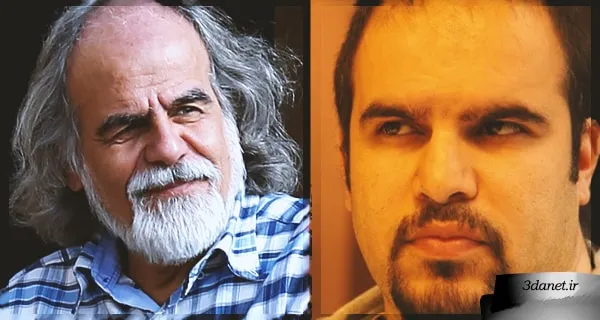
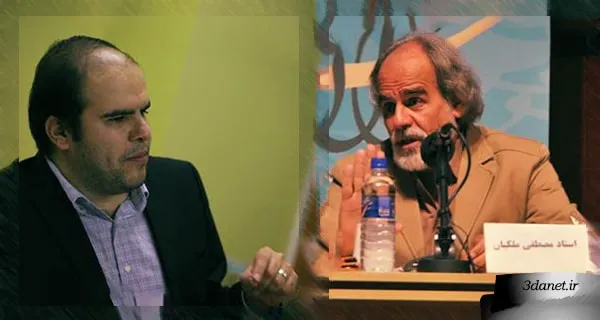
Malekian is a creative philosopher whose theories possess a unique originality. In his theorizing, he imitates no one, and his theory of tolerance is no exception to this rule. Nevertheless, the pinnacle of his intellectual project must still be considered the theory of rationality and spirituality. It seems that Malekian has derived his theory of tolerance and political secularism (which was explained in the previous note) by extending certain elements of the theory of rationality and spirituality (which we addressed in the first to third notes) to the political sphere. However, rationality and spirituality is, above all, a project concerning action in the individual sphere and civil society, and on this basis, as I will explain further on, this extension does not appear to have occurred without problems.
A Review of Mostafa Malekian's Socio-Political Theory – Part Five[1]
A Critique of Malekian's Theory of Tolerance: The Lack of Distinction Between the Realm of Civil Society and the Realm of the State
Author: Meysam Badamchi
A Critique of the Primacy of Culture
First, it is necessary to explain and critique Malekian's doctrine of the primacy of culture. According to the doctrine of the primacy of culture, the greatest cause, or the cause of causes, of a society's problems is its cultural problems; that is, the greatest problems of a society occur when its individuals hold "beliefs" that they should not hold, possess "feelings and emotions" that they should not possess, and have "desires" that they should not have. In other words, "the greatest cause (if not the sole cause or the cause of causes) of the order or disorder in human life, whether in the collective sphere or the individual sphere, is his beliefs" ("The Reduction of Truth and the Narration of Suffering," p. 14).
In Malekian's emphasis, this point is also one of the common teachings of world religions and denominations. That is, any objective transformation must be preceded by a subjective transformation. In other words, until our inner selves are transformed, nothing in the outer world will find the desired transformation. (See, for example, the lecture "The Cultural Foundations of Democracy" at the University of Tehran)
The theory of the primacy of culture is built upon a kind of psychologism, according to which all our issues and problems have psychological and moral roots, and "even if our social institutions do not have the system they ought to have, it is because those involved in those institutions are, psychologically or morally, or both, unhealthy and flawed." ("The Restless Spirit of an Intellectual," Malekian's interview in the May-June 2012 issue of Andisheh Pouya, p. 25) Malekian emphasizes that "there is no social, including political, issue or problem that does not, through one, two, three, or several intermediaries, lead back to a psychological or moral issue or problem." (ibid.) And from this perspective, in his works, he constantly places the greatest emphasis on the mental health and moral perfection of citizens.
This psychologism and primacy of culture, although possessing many strengths in its own right, has also led to a kind of political evasion and apolitical stance in Malekian's intellectual system: "Let me say honestly: I have never commented on political matters with heartfelt and inner willingness, desire, and interest, and I have only done so when I have seen myself morally obliged to comment, and that is when a political matter has clear effects and consequences on people's psyche and morality. For instance, violence or clear deception explicitly target the mental and moral health of citizens. But apart from violence, which is the most heinous form of violating human freedom, and deception, which is the ugliest game with human theoretical rationality, I leave everything else that happens in the world of politics to its experts." ("The Restless Spirit of an Intellectual," pp. 25-26)
I want to conclude that this belief—that the main root and foundation of all a society's problems is culture, and the rest of the problems are superstructural—has caused Malekian to advance theorizing in the field of political philosophy with some negligence. On this basis, Malekian has shone brilliantly in the field of individual or social ethics with the theory of rationality and spirituality, but in the political sphere, he has presented a theory of tolerance that has significant flaws. We will address these flaws in what follows. In my critique, I will draw upon certain themes from Rawls's political liberalism.
A Critique of Malekian's Theory of Toleration
The main problem with Malekian's theory of toleration, in the author's view, is that it conflates the mode of action in the private sphere[2] or civil society with the mode of action in the public[3] or political sphere.[4] In Political Liberalism[5] and especially in his theory of public reason,[6] Rawls has clearly shown that the mode of agency in the public sphere and civil society are not the same, and each has its own requirements. In Rawlsian terms, a theory of toleration based on the division of propositions into the potentially and actually objective and the subjective—that is, Malekian's theory—is a comprehensive[7] and controversial doctrine that cannot serve as a basis for action and consensus in the public sphere of democratic politics. According to political liberalism, principles of justice in the public sphere must be expressed solely in a political language, that is, a language that can be accepted by the maximum number of individuals with diverse and varied comprehensive doctrines.
It seems that what virtuous citizens are duty-bound to resolutely pursue in terms of truth-seeking is truth in the private sphere or civil society, that is, when we are in our solitude and privacy, or gathered with family or friendly or professional civil associations in civil society. Similarly, the idea that democracy must be based on the pursuit of justice as the foundation of our decision-making becomes meaningful above all in the actions of the public sphere, and one cannot ascribe any definite meaning to resorting to the ballot box in the private sphere, when we are alone and in our existentialist solitude.
The conclusion is that, despite Malekian's neglect and in accordance with political liberalism, different types of rationality are necessary for the individual sphere and the political sphere: a maximal theory of rationality, such as the theory of rationality Malekian presents in Rationality and Spirituality and which is manifested in his theory of toleration through the division of propositions into the potentially and actually objective and the subjective, is a comprehensive theory of rationality that is entirely applicable to the private sphere or civil society. Conversely, in the political or public sphere, adhering to a kind of minimal public reason based on reasonableness is sufficient for decision-making, and there is no need to resort to stronger theories of rationality upon which consensus among the citizens of a democratic society is exceedingly difficult (such as Malekian's epistemological theory of toleration) for decision-making in the political sphere. According to political liberalism, in the public sphere, we must either base collective decision-making solely on reasonableness and set aside truth (Rawls's view), or allow truth into politics only in a minimal sense, which we call political truth (Joshua Cohen's view).[8]’[9] According to political liberalism, it is necessary to consider truth-seeking as part of the concept of the good for virtuous citizens in their private sphere, and in the public sphere, to resort to less controversial concepts such as justice, reasonableness, and public reason. Malekian is more a formidable moral philosopher than a political philosopher.
In closing, it is not out of place to briefly mention Malekian's critique of Richard Rorty's political thought, which took the form of his article "The Priority of Philosophy over Democracy," written in response to the translation of Rorty's article "The Priority of Democracy to Philosophy" during Rorty's visit to Iran in 2004.[10] Although Malekian's critique contains salient and important points, it is not free of misunderstandings of Rorty's aforementioned article, which, as it happens, is also his commentary on Rawls's political liberalism. The author does not agree with Rorty's anti-metaphysical reading of Rawls, but neither does he consider Malekian's reading of Rorty to be without flaws. In response to Rorty, Malekian rightly emphasizes that, especially in countries like Iran where a strong democratic tradition is lacking, there is a serious need for a philosophical defense of tolerance (p. 199), and he asks Rorty—who believes that the defense of liberalism requires no philosophical foundation—what he would have to say to a fundamentalist in an Islamic country where the democratic tradition is not yet strong enough, who claims that one should not be tolerant and that opponents should be dealt with violently? Rorty has only two options: either, without entering into rational discussion, arbitrarily and dogmatically demand that human beings continue moving toward becoming ever more liberal-democratic; or, engage in philosophical debate and seek to defend the epistemic and moral rightness and justification of liberal-democratic tolerance. Both paths are undesirable for Rorty—for the first path is a disregard for and an insult to the spirit of tolerance that Rorty himself champions, and the second path necessitates recourse to philosophical anthropology and the adoption of a theory of human nature, from which, as Malekian has explained, Rorty shies away. (Malekian, "The Priority of Philosophy over Democracy," pp. 187-188) These critiques of Rorty's anti-metaphysical view and his reading of Rawls are entirely valid, but a point in Rorty's commentary on political liberalism that Malekian overlooks in his rebuttal, and which, as noted above, is also the bane of his own theory of tolerance, is that introducing comprehensive and controversial philosophical theories and strong conceptions of truth into public politics (which should not be conflated with political activity in civil society) can lead to factionalism and division in a democratic society and hinder consensus, and on this basis, it should be avoided as much as possible in the public sphere (I emphasize again, not the sphere of civil society or the private sphere).
.
.
[1] The series of writings of which this article is the fifth and final part are a Persianized portion of a more extensive chapter on Malekian's political thought and social ethics, which will be published in English this year in the author's book entitled Post-Islamist Political Theory: Iranian Intellectuals and Political Liberalism in Dialogue, Springer Publishing, 2017.
[2] private
[3] public
[4] On the distinction between the political sphere and the sphere of civil society, see Part Two, Chapter Nine of this work: Will Kymlicka, Contemporary Political Philosophy, OUP, 2002. This work has been translated into Persian by the author and Mohammad Mobasheri and is to be published soon by Negah-e Moaser Publishing.
[5]See especially Chapter Six and the introduction to the 1996 edition of this work: John Rawls, Political Liberalism, Columbia University Press, expanded edition, 2005. Rawls's Political Liberalism has recently been translated into Persian by Musa Akrami and published by Sales Publications.
[6] Public reason
[7] comprehensive
[8] See Joshua Cohen, “Truth and Public Reason”, Philosophy and Public Affairs, Vo. 37, No. 1, 2009.
[9] Malekian might well defend himself by saying that he advocates scientocracy within a democratic society, and that the truth he insists must not be compromised in a democracy is scientific truth, nothing more. However, given the developments in the philosophy of science since the logical positivists, this claim does not necessarily seem defensible. For instance, Popper argues that we can be more certain of the falsehood of some scientific statements through their falsification than we can be of the truth of scientific statements; or Kuhn and Feyerabend extend a kind of relativism regarding the concept of truth to the domain of science itself. On Popper, see The Logic of Scientific Discovery; on Kuhn, see The Structure of Scientific Revolutions; on Feyerabend, see Science in a Free Society
[10] See Mostafa Malekian, "The Priority of Philosophy over Democracy," Naqd, Khordad-Mordad 1383; pp. 167-192.
Richard Rorty, “The Priority of Democracy to Philosophy” in Objectivity, Relativism, and Truth, Cambridge University Press, 1990, pp. 175-196. This article has been translated into Persian by Khashayar Deyhimi and published by Tarh-e No Publishing as a book titled The Priority of Democracy over Philosophy.
.
.
Related Articles:
A Review of Mostafa Malekian's Socio-Political Theory – Part One
A Review of Mostafa Malekian's Socio-Political Theory – Part Two
A Review of Mostafa Malekian's Socio-Political Theory – Part Three
A Review of Mostafa Malekian's Socio-Political Theory – Part Four
A Review of Mostafa Malekian's Socio-Political Theory – Part Five
.
.

Discussion0 comments
No comments yet; let yours be the first voice.