Political Science
Mostafa Malekian's Critiques of Seyyed Javad Tabatabai (2): Iranian Modernity
Mostafa Malekian does not consider Seyyed Javad Tabatabai's 'Iranian Modernity' project successful; our fundamental problems are internal and cannot be solved by modernity, and the very concept of Iranian modernity is ambiguous because modernity cannot accommodate indigenous components.
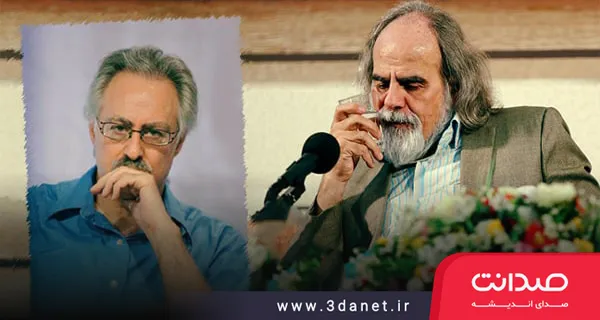
The publication of an interview with Mostafa Malekian by Hooman Dorandish about Dr. Seyyed Javad Tabatabai stirred up controversies. In that interview, his intellectual project was not subjected to critique, but prior to this, Mostafa Malekian had criticized Seyyed Javad Tabatabai's intellectual project, namely "Iranian Modernity" and the "Theory of Decline," elsewhere. We deemed it not inappropriate to republish these critiques in the current climate.
It is worth recalling that since these critiques were made over a decade ago, some of their points may no longer apply to Dr. Tabatabai, who has since expanded, and at times corrected and critiqued, his own views and theories.
Mostafa Malekian's second critique of Dr. Javad Tabatabai took place during a Q&A session he had with members of the Totem Andisheh Society on September 27, 2006. You can download this critique from here or read it below.
Akbar Dastanpour: On Thursday, September 1, 2006, when Mostafa Malekian attended a gathering of the Totem Andisheh Society and answered various questions from the audience, I did not imagine that his response to a question about "Iranian Modernity"—the project pursued by Dr. Seyyed Javad Tabatabai—and its subsequent publication by Masoud Borjian on his personal blog, Payam-e Iranian, would become so controversial. As these debates intensified, I found fallacies in some of them, which prompted me, despite all personal preoccupations, to transcribe the text of the master's speech and publish it in the virtual space, hoping thereby to contribute to greater clarity in the discussion and the disputes surrounding it.
It should be noted that the text which follows includes only those parts of Master Mostafa Malekian's conversation with members of the Totem Andisheh Society that address the subject in question: Iranian Modernity. I hope that at a suitable opportunity, with the master's permission, I can also commit to this page the other topics raised in that session—especially where it deals with the behavioral and discursive analysis of Iranian intellectuals.
Mr. Doctor, what is your opinion on the project that Dr. Seyyed Javad Tabatabai and some other Iranian thinkers pursue under the title of Iranian Modernity?
I once said in an interview with the newspaper I Think, Yas-e No, that I am opposed to it—opposed, of course, not in the sense of physically preventing it, but in my view, this project is not a successful one. I am opposed to it from two perspectives (and I have, of course, discussed this with them myself). I fundamentally do not accept, on principle, that our afflictions and problems have an objective (external) aspect that could be resolved entirely through modernity (whether Iranian, non-Iranian, indigenous, or non-indigenous). We have subjective (internal) issues and problems, and those issues and problems cannot be solved by Iranian modernity, non-Iranian modernity, or anything else; they require a different method. In fact, they require a kind of psychology, a kind of deontology, a kind of axiology, and a kind of, so to speak, philosophical and mystical anthropology. It is through these that we can solve human problems. Therefore, not all of our problems belong to the category of external problems (such as political, social, legal, and educational problems), and it is not only these that have brought us to this state, such that we could say we are creating a project called modernity that will more or less organize these external problems. Our fundamental problems lie within ourselves. This is what I have sometimes referred to as the primacy of culture, and therefore my first problem with him is that he does not believe in the primacy of culture.
But there is a second point as well, which we can assume exists even if we disregard the first problem, and that is: what does Iranian modernity mean? Both conceptually and in terms of its referents, it is ambiguous to me what Iranian modernity signifies. Does it mean the modernity that Iranians possess? That would not be the meaning of Iranian modernity, because if modernities do not differ, but a number of modern individuals live in Iran and another group in Japan, that makes no difference.
Perhaps you mean to say that Iranian modernity means that the components of being Iranian have influenced it, and therefore Iranian modernity differs from Japanese modernity. But here, too, several problems arise: the first problem is whether modernity can admit non-modern components and allow them to become integral to it? And assuming the first problem is resolved, one must answer: what are the components of being Iranian? I still do not understand what Dr. Tabatabai and nationalists in general mean by being Iranian. I have also seen this in the works of Dr. Soroush or Shayegan, where they have said that the three components that constitute us are our being Iranian, being Islamic, and being modern. But I do not understand what the components of this being Iranian are. In what respect do we Iranians differ from others that we would count as Iranian components? Therefore, my first objection is that modernity cannot become Iranian, because modernity, by virtue of being modernity, cannot take on the color of a particular place. And even if we assume it can take on a color, what color can we Iranians impart to modernity? What has our being Iranian created in us that has made us different from Arabs or the Japanese...
Therefore, I do not see this project as successful. This, of course, does not mean that Dr. Tabatabai's efforts have been futile. These efforts have their own academic value and are research in philosophy and, even beyond that, research in a kind of philosophical anthropology. However, an Iranian civilization or indigenous civilization—that is, indigenous civility or indigenous modernity—does not emerge from the heart of this project.
Can we not name its history as among the Iranian components?
Well, what do you mean? Are you saying that Iranians have waged wars? Well, the Japanese have also waged wars. What do we have that is different...
For example, our myths...
The Japanese also have a set of myths. Pay attention: all of us here might have eaten different breakfasts this morning, but what effect does this difference have on my beliefs, my feelings and emotions, and my needs and desires? Yes, we have fought wars with the Mongols, and in Latin America they have never fought wars with the Mongols; they have fought with another group that we have never fought. We had the Zoroastrian religion at one time and then turned to Islam, and another country, for example Mexico, had one religion at one time and another religion at another time.
Let me put it another way: (?) the recording is unclear) In the nineteenth century, there was a psychologist who first devised a psychology called crowd psychology, and this later expanded and branched into numerous subfields, one of which is the psychology of nations. And I want to say that if you believe Iranians have a psychology different from that of other countries, such as Germans or others, you must demonstrate what this different psychology is, and if you believe they have a different sociology, you must demonstrate that as well. Whenever I consult myself, I see that not only Dr. Tabatabai but fundamentally our own nationalists also rely on an illusory matter. We have no essential difference from Arabs, and Arabs have no essential difference from Germans, and so on… Yes, some say that being Iranian consists in, for example, our having Sizdah Bedar while Germans do not; this is true. We have many things that others do not. We have Mount Damavand, but Japan, for instance, does not, and they, in turn, have things that we do not. But the point is what effect these have on our beliefs, or our feelings and emotions, or our needs and desires. Unless something has an effect on these three, it is of no consequence; it comes and goes, like a breeze that passes over the skin of my body but does nothing to me. I have no doubt that our history, climate, and geography differ, but you must show that this difference we have in the historical, geographical, or any other realm has been able to penetrate the domain of our beliefs, the domain of our feelings and emotions, and the domain of our needs and desires. If you can demonstrate this, the objection I raised is resolved.
Which traditions, Doctor? The education we receive from these traditions?
- Which traditions?
For example, the fact that from childhood I am engaged with the name and commemoration of the tragedy of Imam Hussein.
- That becomes Islam, and I have no problem with Islam. I understand Islam and modernity; I have a problem with Iran and modernity.
Doctor, what about our myths? The fact that we are taught that one of your best models of manhood is Rostam… and these things influence our education.
- For example, what does it do? How are Arabs, who have someone else instead of Rostam, any different? If you can show this difference, the objection I have is resolved. I do not wish to deny our distinction from other nations; I even wish to deny our differentiation from other nations. Do not think Malekian has come to say we are superior to others. Rather, I want to say we are not even different from others. Yes, you will say that if you take n photographs of an Iranian, a Japanese, an Englishman, and so on, and place them side by side, we can tell this one is Iranian, that one is Japanese, and so on. I accept this as well; these are like geography and climate, which are different. But the question is whether, for example, this skin color has an effect on our beliefs such that we could then say our modernity is also different, and so on. If we want this modernity to become Iranian, this modernity must have either beliefs, or feelings and emotions, or needs and desires different from the rest, and I deny this…
Excuse me, Professor; in this very domain you are speaking of, the pre-Islamic dualistic thinking came to my mind, which they link to the way of thinking and beliefs we had before Islam, which is part of our Iranian identity, or the fact that they connected rulers to the heavens and attributed a divine glory (farr-e izadi) to them…
- I have two responses: first, how is it that we consider pre-Islamic religious beliefs as belonging to our Iranianness, but we do not consider post-Islamic religious beliefs as belonging to our Iranianness? How is it that whatever Zoroastrian and Manichaean beliefs we have belong to our Iranianness, but Muslim beliefs do not belong to our Iranianness? Why do we consider the discussion of good and evil and the dualistic thinking found in Manichaeism and, to a lesser extent, in Zoroastrianism, as part of Iranianness? Why do you consider a religious belief that belongs to the pre-Islamic era as part of Iranian beliefs, but you do not consider post-Islamic beliefs as part of your Iranian beliefs?… And secondly, others, such as the Cathars, also have dualistic beliefs of good and evil like ours…. And the divine grace (farr-e izadi) you mentioned, we even see in pictures of Latin American kings; behind them, too, there is this divine grace... This is like me staying at home and not letting my children receive any information from outside, and then telling them I am the first philosopher, my dear! The first theologian, the first artist, and these children, who know no other philosopher or artist, will accept it, but if they are given a little information, they will understand that their father is not only not the first, but not even the last. As long as we are by ourselves, we think this way: yes, sir, we had some things that others did not have…
Let me put it to you more seriously: on what grounds do we attribute one part of our history to Iran and another part to Islam? Why does one piece of our history belong to us and the rest belong to Islam?… Unless you have already made a value judgment that whatever Islam brought was misery, and since humans always attribute bad things to others, you say whatever Islam gave us did not belong to us and has nothing to do with our Iranianness, and if we were Iranian, we were very noble and….
(? The recorded audio is unclear) ...
- You mentioned various points, and I must unpack them: one point you referred to was that, for example, Iranians before the Arab invasion were lively and cheerful people, and afterward became languid and dispirited people. I assume that the historical reality has been reported correctly (this is just an assumption, of course) and that before the Arab invasion we were very cheerful, active, and agile, but later became dispirited and languid. Assuming the correctness of this argument, why is this agility attributed to Iranianness, but the languor is not attributed to Iranianness? Why do we consider two thousand years of agility as belonging to our Iranianness, but we do not consider the subsequent languor as belonging to our Iranianness? That is, what logical criterion exists for this statement... Given that Iranians were agile in one historical period and languid in another, why do we attribute one to Iranianness and the other to non-Iranianness?
(? The recorded audio is unclear) ....
- So it turns out you want to say that the non-Muslim Iranian is Iranian, and if you want to say this, it has no logic. For what reason is the non-Muslim Iranian Iranian, but the Muslim Iranian is not Iranian?
(? The recorded audio is unclear) ....
- Well, the Iranian of before, who did not have this religion, what religion did they have?
Zoroastrian
- Then say we have one element of Zoroastrianism and one element of Islam, because Iranianness was present in both, so you should have said we have three elements, for example (which, of course, has its own specific problems.), one element of Zoroastrianism, one element of Islamism, one element of modernity, but you were saying Iranism, and I have a problem with this. My second point is also this: to what extent have Iranians been Zoroastrian? Iranians have changed their religion seven times so far, and why is being Zoroastrian the criterion? This is an unjustified preference.
But the third point is that you said we had a culture and civilization. One of the greatest lies we have told history is that we had a great culture and civilization. My dear friend, culture and civilization require evidence. If the Greeks did not have a single book by Plato, a single book by Aristotle, or… if they did not have the Pantheon, did not have great architectural works, and then said, “We Greeks had a culture whose greatness you cannot imagine,” and we all stood there with our mouths watering, would we not, in all fairness, say to them, “Everything requires evidence”? In all fairness, from what you see within the realm of Iran, apart from a number of buildings that all historians have said the Romans built for us—like Persepolis, where historians have said the Achaemenids brought a number of Roman engineers and architects and they built these for us—if you set these aside, show me a single philosophical work. Show me a single great religious work. Show me a single artistic or mystical work. Some might say all of these were burned, but the one who claims we had them must demonstrate this. Did we have a top-tier pre-Islamic physician? Did we have a top-tier pre-Islamic philosopher, a top-tier artist… All we have from before Islam are three things: one is Persepolis and the architecture found in that area, which all historians have said the Romans built—though let us suppose Iranians built it. We have a painter, Mani, whose paintings also have not survived, but it has been widely transmitted that he was a great painter, and we also consider him a prophet. And one is the Academy of Gondishapur (or, more correctly, Jondishapur), where they say the field of medicine was very strong. Of course, you also know that when the Christians were attacked, they retreated eastward and came and built Jondishapur and… Now compare these with Greece. We do not have a hundred pages of writing comparable to Greek culture; we do not even have five pages...
And the next point is, where is Iran, anyway? You who speak so much of Iran having such-and-such a history, from what point onward do you call it Iran, and from what point onward do you say it is not Iran? I mean geographically. Is Afghanistan considered part of Iran? Is Transoxiana part of Iran? During the Achaemenid era, Iran had one expanse; during the Sasanian era, it had another expanse. During the times of the Medes or the Parthians, it had another expanse; during the Buyid dynasty, it had yet another expanse. To point to any one of these and say, “This expanse that existed at that time, we call this Iran,” is a preference without a preponderant reason and lacks logic. For example, suppose we now consider Avicenna to be Iranian. But interestingly, in the former Soviet Union, they also held commemorations for Avicenna because they believed he belonged to them. Why? They said that although Avicenna was born in Hamadan, the whole world knows that he completed all his studies in Bukhara, and Bukhara belongs to us (belongs to the Soviet Union). Well, now, is Avicenna Bukharan or Iranian? Bukhara is not currently part of Iran. And fundamentally, with what methodology can this dispute be settled? Or, for example, Abu Rayhan al-Biruni. Where is Birun? It belongs to Khwarazm, and where is Khwarazm? Khwarazm is now located in Turkmenistan. And now the question is, is Abu Rayhan al-Biruni Iranian or non-Iranian? Yes, you might say that at that time it was part of Iran. But if the king of that time had power and was able to hold that territory, does that make it Iran, and then when a weak king lost them, did they become non-Iranian? That is, when we lost the Caucasus during the Qajar era, were the Caucasians Iranian until that time, but afterward became non-Iranian and ceased to be Iranian? …Look, this is not the methodology of academic research. You cannot investigate something whose geographical, historical, psychological, and sociological boundaries are not clear in this manner.
There was another point in your remarks, and that was that we should look for the threads of modernity in our past history, such as the works of Nizam al-Mulk or the newspapers of the early Constitutional era, and then say these are the roots or threads of modernity, and then say, O Iranians, modernity is a good thing because your ancestors also had it. I say this too is illogical. Firstly, as the Quran says, when the prophets came and invited a people to guidance, that people would answer that our fathers and forefathers were like this, so why do you want to do this? Then the Quran says, even if your fathers and mothers were ignorant, you should not abandon them.
My first question is this: I assume that our Dr. Tabatabais can show that our ancestors had threads of modernity in their works. Well, firstly (?) (the recorded audio is unclear) and the second point is that just as the threads of modernity can be shown in the works of the past, the threads of several other things can also be shown. Were our superstitions few? If our fathers had superstitions from the beginning, must we also accept that we should have superstitions? This has no logic. If we can find the threads of modernity in our ancestors, we can also find the threads of dozens of other things. I now have a treatise from my student days that collects superstitions in the works of Persian literature from the time of Rudaki to the early Safavid era […], what works physicians wrote, what works astronomers wrote, what works mystics wrote, or philosophers, or theologians wrote… Believe me, their volume now, without repetitions, has reached five thousand four hundred pages. Now, if Dr. Tabatabai says these are the threads of modernity, I also say these are the threads of our superstitions. If we must become modern because our fathers were modern, well, our fathers were also superstitious, so must we also become superstitious? That our fathers were like this is no logic for us to be like this. The threads of hundreds of other things also exist in them, such as tradition, superstitions, or… and even something that can be interpreted as a kind of collective ignorance, which, God knows, exists even in the works of Avicenna.
And there was another point you mentioned, and that is that an individual is born and raised in Iran, or in this very Isfahan, and his brother is born and raised in America, and you say they grow up differently. This is completely obvious, but the discussion is about whether, for example, the pride you gave as an example… If you can show that every Iranian, by virtue of being Iranian, is, for example, humble and modest, and on the other hand, every American or German has pride, your statement is correct, and we have something called Iranianness, one of whose components is humility—provided, of course, that you show this humility does not belong to our Islamicness or our modernity, and then you can show that in America everyone has pride. But the issue is that this is not statistically researchable, meaning in America you also have the humble, and in Iran you also have the arrogant. Here, there are those who look upon humility with contempt and view arrogance in a positive light, and the reverse is also true.
Of course, there is a discussion, and that is that we have an individualism and a self-centeredness, and what you said, independence belongs to individualism, not to self-centeredness. We must be individualistic but not self-centered… and there is a difference between a person who has self-confidence and a person who has vanity….
But in any case, if we could show that Americans are all like this and Iranians are all like that, then we could say one component of us Iranians is our humility, and a component of being American is, for example, their arrogance…. But it is not like this, and in both places, the arrogant and the humble exist…
Of course, you also mentioned another point, and that is that moral judgment also differs, which I accept, but this difference is not due to nationalities; rather, its difference is due to ethical perspectives. That is, in America too, if someone has a virtue-oriented ethical perspective, they consider arrogance bad, but this is no longer due to nationalities…. Whoever has a virtue-oriented ethical perspective, wherever they are in the world, considers vanity bad, and if they have another ethical perspective, another moral judgment.
And the final point I wish to make, upon which you should reflect, is this: you said that we should discover certain components in the Iranianness of our forefathers and channel them into modernity, so that it becomes Iranian modernity. I say that modernity is constituted by a set of matters that do not permit us to introduce just anything into it. That is, let us suppose there are certain characteristics among Iranians, but modernity does not allow us to incorporate them; if we introduce them into modernity, it is no longer modernity. It is not the case that I can channel anything into modernity and it will be compatible with modernity. To give an example, one of the components of modernity is rationality, and one of the components of rationality is argumentation. Well, many things that exist among Iranians, if you wish to channel them into modernity, are incompatible with rationality, and therefore it is not the case that you can inject any component into it. That is, it is not like a sponge that accepts any needle inserted into it from any side… It has a certain solidity of its own…
I can almost say that I discussed more than half of these points with Dr. Tabatabai himself, but he told me he was not convinced. However, he also gave an answer that did not convince me either, and since he has said this elsewhere, I will mention it. He said: if these analyses and hair-splitting could invalidate a theory, Hegel’s work would have been undone two hundred years ago, yet Hegel is still Hegel in the world and retains his greatness. And he said, I am just the same… I replied, yes, Hegel is great, but not for me—rather, for you…

.webp)
Discussion0 comments
No comments yet; let yours be the first voice.