Philosophy
A Sterile Critique of a Sound Argument
Hamed Farnaghizad examines a dossier from Farhang-e Emrooz titled 'The Sterile Proof' that critiques the views of Mostafa Malekian, focusing on Seyyed Javad Tabatabai's criticism of nationalism—criticisms that lack coherent reasoning and precise definitions.
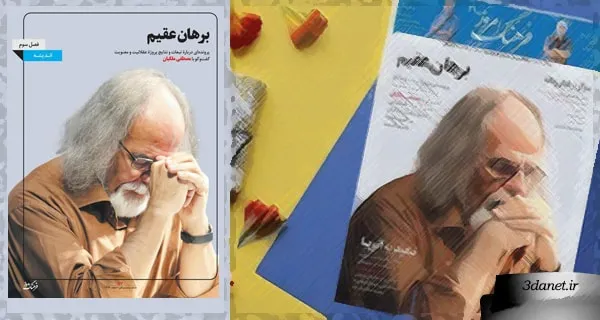
Hamed Farnaghizad: The monthly journal of culture and humanities, Farhang-e Emrooz (Culture Today), in its 21st issue—the final issue of the year 1396 (2017–2018)—has dedicated a section to the critique of Mostafa Malekian's views. The third chapter of this issue, devoted to this matter, begins with the phrase: "A Sterile Argument; A dossier on the consequences and results of the Rationality and Spirituality Project." In this section, following a short introduction by the journal's editor-in-chief, five articles and two interviews critiquing Malekian's views are included, and one interview has also been conducted with Malekian himself. The order of the material in this section is unclear and lacks any arrangement or sequence. Although in most dossiers of this kind, the interview with the person being critiqued or an article by them is placed at the beginning of the dossier, in this dossier the interview with Malekian is the second item. Studying this dossier and the opinions offered in critique of Malekian's views prompted me to write some points in criticism of these critiques. The first point that catches the eye in this dossier is its title, "A Sterile Argument." It is as if the person responsible for the dossier, who appears to be the monthly's editor-in-chief, is announcing to the reader in advance that Malekian's argument for the Rationality and Spirituality Project is a sterile argument. The next point is that three of the articles in this dossier are unrelated to the Rationality and Spirituality Project and critique other aspects of Malekian's views. In what follows, I will critique each of the articles and the interviews conducted with Malekian. At the end of the introduction, it is necessary to point out that my effort in this article is not to prove Malekian's views, but to demonstrate the baselessness of the critiques leveled against Malekian's views in this dossier. I hope that in the not-too-distant future I can write an article on the relationship between religious intellectualism and Malekian's Rationality and Spirituality.
Seyyed Javad Tabatabai, Critic of Malekian's Cosmopolitanism
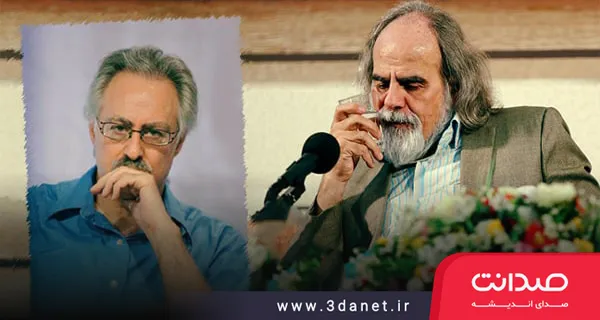
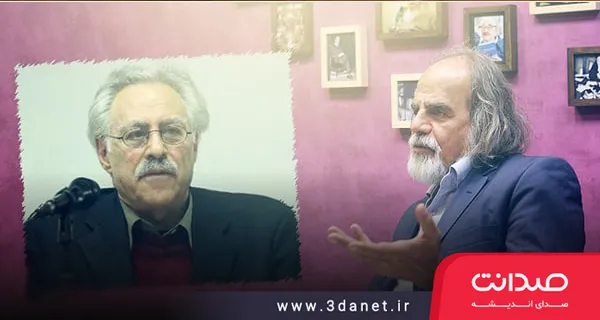
The first article in this dossier is devoted to Seyyed Javad Tabatabai. This article has nothing to do with Malekian's discussion of "Rationality and Spirituality"; rather, it is an article in which Tabatabai seeks, in his acerbic, Fardid-esque style, to critique Malekian's lecture on nationalism at the University of Zanjan. The title of Tabatabai's article is "Crucified by the Arrows of Delusion," with an ironic subtitle, "A Note on the Unprecedented Prevalence of Diversion." At the beginning of his article, Tabatabai writes about the precedence of commitment over expertise in Iran. "In Iran, the discussion of the precedence of commitment over expertise was taken up by rabble-rousers like Al-e Ahmad from French writers, especially Jean-Paul Sartre, and the theory of committed literature and art was employed as an effective weapon against the existing regime, and thereafter, commitment was accepted as a criterion in the purging of the university and its reopening, and was implemented in due course." Tabatabai offers this introduction in order to reach his main target. With much sarcasm, Tabatabai writes: "In Iran, where everyone has an opinion about everything, everyone, as a committed individual, says whatever they want, such that the narrator of the Masnavi is as much a critic of neoliberalism as the proponent of vulgar Marxism, and both equally imagine they are criticizing the country's economic system, while neither has read even a single article on economics and they do not know what they are talking about." Tabatabai's language becomes harsher as he continues. "Until now, by Iran's good fortune, there has never been a national media outlet, research institute, or alma mater that, by issuing a decree, could elevate groups of the rabble to the rank of artist, researcher, and professor so that, with adze and axe in hand, they might cut at the branch they sit on, and lack even the modicum of sense to know where their own interests lie! For if the country had any foundation, these could not be its artists, researchers, and professors!" Although he himself, in the very country he has described, was selected for the Farabi Award and received a certificate of appreciation from the hands of the president. Continuing, with a reference to an "unknown artist," by whom he means Mohammad Hossein Mahdavian, he defends Ferdowsi and laments that "a short-statured person with a clod of dirt in hand" called Ferdowsi a fascist. Although Mahdavian did not call Ferdowsi a fascist but said one could have a fascist reading of the Shahnameh, these things seem not to matter to Tabatabai; what matters is attacking this and that. Up to this point, Tabatabai has said nothing about Malekian and has merely recounted the opinions and critiques of others. Tabatabai then enters his main topic: a critique of Mostafa Malekian's lecture at the University of Zanjan on "Nationalism." Tabatabai's own views also sometimes take on a polemical rather than argumentative aspect. In Tabatabai's view, "if tensions have arisen among some of the people of this country [Iran] in certain periods, they have mostly had religious origins, and the Iranians' tolerant disposition has also never allowed the catastrophic events that occurred in Europe and the United States due to extremist nationalist ideologies to be repeated in Iran." Tabatabai states this sentence without any argumentative backing, which, of course, pleases many people but does not substitute for reasoning. Continuing, Tabatabai, as if realizing the weakness of his statement, especially from a historical perspective, writes: "Historically, many improper acts have also been committed by Iranians, but Iranians have not expressed their distinctions from others in the language of extremist ideology." Tabatabai then again sarcastically and with inappropriate language refers to "many teachers of ethics [who] have put their ethics in their suitcases and fled," without mentioning that the proponents of the "ethics of the gods" were compelled against their will to pack their suitcases and emigrate, not that they fled.
Tabatabai’s critique is very scattered and lacks the systematic quality of Malekian’s remarks. Tabatabai merely laments the negative consequences and corrupt implications of Malekian’s words without even pointing to a single one of these corrupt implications. Under the article’s title, it is also written in red: “Notes on the unfortunate consequences that Mostafa Malekian’s remarks on nationalism could entail,” yet he makes no reference to the unfortunate consequences but merely repeats that unfortunate consequences exist! Furthermore, while Tabatabai accuses Malekian of not understanding nationalism and not providing a correct meaning of it, he himself also does not state a correct definition of nationalism from his own perspective in his critique. Tabatabai refers to a part of Malekian’s speech where he applies the same argument he has for “Khuzestan’s oil and the northern forests for all of Iran” to the preference for cosmopolitanism, and writes: “There is no doubt about the correctness of this premise, because there should be no distinction among all the people of a country; just as everyone is free and equal before the law, they must also be able to benefit from all the country’s resources, but until further notice, we have no reason, and it is contrary to common sense, to divide all the country’s resources among all the people of the world.” By writing that “it is contrary to common sense,” Tabatabai shirks the burden of arguing for his statement. He seems to be aware of this issue himself, as he continues: “That, as moral people, cosmopolitanism should be our ideal, perhaps, perhaps, is defensible in the realm of theoretical ethics, but I doubt that in practice even the speaker [Malekian] himself could act upon his claim for a single day.” Tabatabai, who has so far presented no argument in response to Malekian’s argument, then becomes harsh again and says one “must weep for the Zanjan student who wasted his time and the university’s resources to listen to nonsense that can lead to nothing but a catastrophe for the country and for himself.” But what truly is this catastrophe that Tabatabai so frightens the reader with? Why does Tabatabai not lift a corner of the veil on these catastrophes so that everyone can see how close the catastrophe is to us? Tabatabai himself knows that he has been unable to provide an answer to Malekian. For in the end, by appealing to the politics of the day, he is forced to confess that “it goes without saying that one must have moral ideals and seek the truth, but as long as all of humanity has not reached such conclusions, one must be more realistic so that the moral ideal does not turn into political idiocy. Too much ethics in current global relations can be risky, and it is more prudent to practice moderation even in being ethical so that we do not regret it, for it will be of no use.”
In the article he wrote criticizing Malekian, Tabatabai has engaged in polemics rather than argumentation. His article has neither coherence nor a clear conclusion. It is unclear whether his target is Malekian’s reasons or the consequences of Malekian’s conclusions. He has also used harsh and inappropriate language in this article, unbecoming of a political science professor. Malekian’s sarcastic remarks that in Iran everyone wants to speak are also intended to sarcastically ask why Malekian spoke about nationalism when he has not studied political science, but he has forgotten, or cynically overlooked, that Malekian is a philosopher, and his specialty is precisely moral philosophy, and indeed his critique of various readings of “nationalism” is also from an ethical perspective; therefore, Malekian is speaking exactly within his area of expertise. However, the notion that others who lack formal academic expertise or education on a subject should not speak is an evasion of accountability and a critique of arguments. Even if these words were spoken not by Mostafa Malekian but by someone else with an inappropriate educational background, it is incumbent upon the professors who have criticisms of those remarks to reveal the weaknesses and deficiencies of the words with appropriate language, rather than engaging in sophistry with metaphors and allusions.
Seyyed Mohammad Al-e Ahmad – Reasonable Submission
The next critic is a researcher in the field of Shi‘i history studies who, in a single page of a monthly magazine, has offered “a critique of Mostafa Malekian’s interpretation of religious devotion.” The author believes that Malekian has equated the religiosity and devotion of Christians with the devotion of Muslims. “In the midst of this, it is unclear why Malekian has paid no attention to the backstage of religious devotion in Islam and considers the teachings of Christian theology in defining faith according to the irrational instances of the distorted religion of Christ to be identical with Islam?” The author himself acknowledges that the basis of religiosity is being devout, but he calls the religiosity of Muslims rational devotion, as indicated in the title of the article. To prove his view on the rationality of devotion, the author addresses the issue of taqlid (emulation). “Here, perhaps this question might arise for Malekian: devotion and acceptance without reason is also a common matter in the modern world and is entirely endorsed by reason; so why does he consider this matter incorrect regarding religion?” Al-e Ahmad confuses emulation in objective matters (in the sense of the empirical sciences) with emulation in subjective sciences. Distinguishing between these two types of emulation or devotion requires a separate article, and Professor Malekian himself has, in his talks, differentiated between these two types of emulation and devotion, and I will not speak on this matter; rather, the flaw in the author’s words lies elsewhere. In his paragraph, the author writes: “Among the early beliefs of Shi‘ism, there is talk of rational argumentation regarding the station of the infallibility of the Prophet and the Imams (peace be upon them); that is, it is first proven with the help of rational—and not merely philosophical—argumentation that the Prophet possesses the station of divine knowledge and infallibility, and for this reason, the Prophet’s reports about the states of the world, the quality of human life’s duration, and the path he delineates for a life leading to guidance possess legal and rational authority.” These sentences are very strange when directed at Mostafa Malekian, who spent a period of his life in the seminaries and was both a student and a teacher there. It is as if Malekian is unaware of such obvious matters and has gone astray. The main problem that invalidates the esteemed author’s entire article is that he has confused rationality in the sense of “reasonable” with rationality in the sense of “rational.” The author makes a strenuous effort to show that religious devotion—and, of course, the devout religiosity of Muslims—is rational in the sense of “reasonable” (logical), whereas Malekian’s discussion concerns rationality in its other sense, the explanation of which requires a broad scope.
Mehdi Abdollahi – Tilting at Windmills
The next item is an interview with Hujjat al-Islam Mahdi Abdollahi, director of the Department of Philosophy of Islamic Humanities at the Iranian Institute of Philosophy and Wisdom, headed by Hujjat al-Islam Abdolhossein Khosropanah, about whose presidency much has been said these days. The fact is that this interview is more like a recapitulation of introductory textbooks on religious studies. It is as if Malekian has expressed his views on rationality and spirituality as someone completely unfamiliar with the religion of Islam. He, like Al-e Ahmad, has fallen into the same grave error, saying, “The important issue is to see whether obedience, or in other words, imitation of others, is always blameworthy, incorrect, and an irrational act and behavior, or whether one can demonstrate a type and kind of obedience and imitation that in no way contradicts rationality, but is, on the contrary, a rational obedience, and our reason guides us to this type of obedience.” He then, too, redirects the issue to Christian theology. In his view, “In fact, the main and fundamental teachings of Christianity are caught in the challenge of irrationality. Teachings such as original sin hold that Prophet Adam fell into sin and transgression, whereas in the Islamic perspective, we do not believe that Prophet Adam fell into transgression and sin.” Although his speaking on behalf of the “Islamic perspective” and offering a particular interpretation of the story of Adam and Eve is itself noteworthy and requires another occasion for examination. He, too, bases all his remarks on the conflation of two concepts of rationality. All his words are another version of the preliminaries of Islamic theology as presented in the religious textbooks of the seminaries: “Our reason leads us to religiosity [and presumably, in his view, all those who do not arrive at a specific religion are irrational]; we begin with reason. But when, through reason, you prove certain matters and gain knowledge of them, that same reason dictates that the God whose existence I have proven and understood through reason, and to whose existence I have attained knowledge, must perform a specific act called the sending down of books, the dispatching of messengers, and the revelation of scripture; and again, that same reason proves that this revelation must reach us humans from the divine source without the slightest alteration.” What does this kind of talk—explaining preliminaries, failing to refer to any writing or statement by Malekian, and criticizing a subject that has been misunderstood without defining the concepts used in those statements—demonstrate, if not a Quixotic tilting at windmills?
Sadegh Peyvasteh – The Critic’s Distress
The next item is an article whose author seeks to offer “a reflection on serious methodological errors in the works and statements of Mostafa Malekian.” He emphasizes that “what follows is not a quibble over sentences and passages from his statements, but rather indications of serious, recurring methodological errors, and that from a professor who teaches the methodology and philosophy of the humanities.” Yet the author himself knows what a grand claim he has made and what a heavy stone he has lifted, for immediately after these sentences he writes: “In the present writing, I have focused on his interview with Andisheh Pouya magazine in Ordibehesht 1391 (April/May 2012), published under the title ‘The Restless Soul of an Intellectual: An Account of an Intellectual Life,’ and later made available on the Sedanet website, because in this interview, not only are there indications of most of what I wanted to point out from his other works, but his expressions in this interview are also clearer.” It is interesting that the author of this article, on the previous page, introduces Malekian as a thinker who has “more than 20 authored works, over 10 translations, and dozens of articles, critiques, and opinions presented in various circles,” yet for examining his serious methodological errors, he confines himself to a single interview, and interestingly, throughout the entire article, he makes no reference to Malekian’s books. It is unclear what kind of method this is that he has employed in a serious critique of Malekian’s method of thought and reflection?
A more interesting issue is that, instead of critiquing the “method,” the author has tried to attack the results of Malekian’s reflections. And what an incomplete and confused attack it is. For example, when the author wants to criticize Malekian’s view on the benefit of the “Rationality and Knowledge” project, instead of addressing Malekian’s method and his opinion, he attacks the example Malekian gave in that interview, namely the work culture in Japan. To prove the incorrectness of Malekian’s example (and not Malekian’s argument and method), he writes that “nevertheless, we know of no society that has been transformed in this way (by injecting spirituality into human beings).” It is as if the author sees the pre-Islamic Arab society of the Age of Ignorance, before the advent of the Prophet of Islam and the injection of spirituality into their thinking, as identical to the society that came after it. Although he himself contradicts this statement later on. He writes, “Japan and many other societies that culturally value work accept many immigrants, and sometimes their workforce is often composed of young labor from other countries. How do those young people, upon arrival, enter the orbit of Japanese spirituality (as Malekian claims)? That is the question.” The author seems to know himself that he has gotten into a predicament by criticizing this example of Malekian’s. On the one hand, he has said that no society changes through the injection of spirituality; on the other hand, he confirms the existence of Japanese spirituality and its effect on immigrants to that country. Most importantly, it is not at all clear why the author has addressed this example of Malekian’s? And fundamentally, what does this example have to do with the essence of Malekian’s speech and his intellectual method? Almost the other half of this article deals with the issue of rationality, but this author has also repeated the same error of previous critics in this regard. It seems the confusion of this article stems from the fact that the author made a grand claim at the outset.
Hujjat al-Islam Hamidreza Mazaheri Seif – Spirituality and Rationality
The next piece in this dossier is an interview with the head of the Spiritual Health Research Institute. In his view, “the definition Mr. Malekian has offered cannot cover the spiritual aspects.” He defines spirituality according to his own view and incorporates the states of Islamic mystics into his own spirituality, then states that “he [Malekian] believes that spirituality must enhance the quality of human life. What is quality of life, and how can quality of life be assessed? This is where the worldview of human beings and the depth of their thinking determines what they see as quality of life.” He then links happiness, without any source, to Malekian’s definition of spiritual life and states that “sometimes that spiritual state and those spiritual experiences may be sorrowful experiences.” In fact, he uses the mystical state of qabz (contraction) to express that happiness is not among the criteria of spirituality and links this issue to the entire definition of spirituality offered by Mostafa Malekian. Meanwhile, he has also based his argument on the definition of spirituality that he himself has provided.
After addressing Isan's spirituality, he turns to rationality. Here again, a definition of rationality is attributed to Malekian without any source, and they say, "Malekian says [where? in which lecture or writing?] that dogmatism and holding firm beliefs are the opposite of rationality, and rationality means not being dogmatic, not holding firm beliefs, and living in doubt." The interviewee also brings up falsifiability, although it is unclear whether he actually means falsifiability in the sense Popper articulated or has his own definition of falsifiability in mind. The interviewee says, "He [Malekian] defines rationality based on the characteristics of Maslow's self-actualized person. Maslow says self-actualized people are those who like to grapple with various problems, do not remain in one situation, and seek new issues. They pursue doubt, and therefore scientists are like this, and it is also a kind of falsificationism." It is strange why the weighty discussion of falsificationism, whose meaning many students and even some philosophy professors still do not precisely understand, is brought up. Especially in the context of rationality and skepticism, which is fundamentally not the domain of falsificationism, and it basically seems the interviewee has considered the meaning of falsificationism merely through the literal translation of the word 'falsification' rather than the definition Popper gave it. At the end, he also points to a dynamic religious life, stating that "in order to have a dynamic religious life, we do not need to resort to doubt; we must resort to truth, considering that truth is unlimited, and this conception of spirituality can only be understood when we have God in our intellectual system." But he forgets what this truth fundamentally is? And fundamentally, what is wrong with Malekian's theory in his view? Has Malekian erred in his definition, or in the connection between rationality and spirituality? This interview, like the previous one, is much ado about nothing and tilting at windmills. Neither is the statement of Malekian's claim clear, nor is it clear whether the criticisms are directed at the conclusions or the reasons? Are the definitions problematic, or is the connection between rationality and spirituality? And many other questions.
Ruhollah Eslami – Intellectuals Playing in the Politicians' Field
The last piece in this dossier is an article by a faculty member of the Political Science Department at Ferdowsi University of Mashhad. This article, like Seyyed Javad Tabatabai's article, not only has no connection to Malekian's "Rationality and Spirituality" project, but also makes no mention of "Mostafa Malekian" or even any reference to him, and it is not at all clear what this piece is doing in a dossier about Malekian's thoughts! This article is more of an indictment, or rather a diatribe, by politicians against intellectuals in general.
This one-page article begins with a sentence defining the author's profession and with a grand claim, namely that "Politics is the path to salvation, it is the first and last solution, and whatever path you take, you will arrive at the gate of politics. Politics is attractive and problem-solving, but equally disgracing and scandalous." The author does not specify what this stormy opening fundamentally means. What is the path to salvation through politics, and salvation from what? This is a general, populist statement that does not specify the limits and boundaries of politics. And fundamentally, why only politics? Why do sociology and psychology not have such power? The author has not even bothered to provide a definition of "politics."
The author then goes on to define intellectuals as follows: “Intellectuals, in the sense of an elite group of thinkers who have the audacity to think and present their intellectual achievements to the masses; this group considers itself superior. In Europe, particularly when they sought to overcome intellectual and political despotism, intellectuals placed new and future ideas before the people’s eyes so they might transform from subjects into citizens. Like the encyclopedists, intellectuals taught the people the power of critique and the audacity to challenge tradition, preparing them for the transition to the modern era.” This esteemed faculty member defines intellectuals in the simplest and most vulgar manner possible, and then proceeds to address their strategic errors! With a tone far removed from professorial dignity and full of entitlement, he writes: “The strategic errors of Iranian intellectuals are endless. One of the factors that has caused development plans to fail, expert elites to flee the country, and our poor rankings in economic and cultural indicators and components of statecraft, are the erroneous and harmful thoughts and ideas that Iranian intellectuals produced and injected into society and the government.” In this way, the esteemed author has managed to absolve his own peers of the country’s problems and blame everything on the intellectuals living within society. The author seems to have forgotten his own definition from a few lines above and, contrary to the definition he previously gave of intellectuals, considers them enemies of progress, writing: “Intellectuals are anti-expertise and, believing they have commitment and concern, they talk and write about the most specialized subjects—budgets, public finance, diplomacy, international relations, policymaking, culture, music, architecture, and everything else.” This extravagant claim by the author demonstrates the depth of his disregard for the issue. If an intellectual has studied philosophy, and particularly moral philosophy, they must speak on various subjects from an ethical perspective. This esteemed faculty member certainly knows that philosophy is a form of knowledge vastly different from other sciences, and belongs to the domain of those who have contemplated philosophy. For example, the philosophy of political science is explicated not by politicians but by philosophers; the philosophy of science must also be formulated not by scientists but by philosophers of science—individuals who may never have conducted a single scientific experiment in their lives. According to his claim, figures like Popper were mistaken to speak about scientific method and the philosophy of science, because all matters pertaining to science should be articulated by scientists working in laboratories! This statement stems from a lack of knowledge, indeed ignorance, and the shallow depth of his understanding of the work of intellectuals and philosophers. This accusatory letter continues with various slanders against all intellectuals (whether religious or non-religious). According to his writing, “Intellectuals are infatuated with power and often harbor stereotypical dichotomies of tradition and modernism in their minds... there are intellectuals who have accomplished nothing but the destruction of thought and the disruption of the political scene in Iran. Intellectuals are extremist liars and disruptors of the country’s language, and have been and are delusional idealists and unplanned fantasists who merely play language games. An arrogant and lazy bunch who displaced and misled many generations, leaving behind only criticism and a sense of entitlement without effort, and one should speak to them only in this language.” He provides not even a single example for these claims and insults. His position is clear from this literature and writing, in which, truly, not even one epistemological sentence can be found. My astonishment is directed at the editor-in-chief and managing director of this monthly magazine for publishing such a piece—and at the end of a dossier on Professor Mostafa Malekian, no less. A piece that neither mentions Malekian nor possesses any epistemological value. My further regret concerns what the future political scholars of the country are learning from their teachers, and what they will do with the future of the country and the intellectuals and philosophers of this land?
Conclusion
In the view of the author of these lines, the dossier of Farhang-e Emrooz monthly in the section concerning the critique of Malekian contains only two noteworthy pieces. The first is the interview with Professor Malekian, and the second is an article by Sajjad Afshar titled “Is Malekian a Separationist?”. In this article, Sajjad Afshar has examined the similarities and differences between Malekian’s theories and those of the adherents of the Separation school, and in his short article he has tried to do justice to the subject, although it is also open to criticism, which I have not addressed. On the whole, this dossier possessed neither a high scholarly aspect nor a useful critical one. The writers and interviewees were either ignorant of the concepts used by Mostafa Malekian, or they wrote and spoke without any framework, reference, citation, or sourcing, and it can essentially be said that they did not direct any criticism at Malekian and did not observe fairness. My expectation was that a magazine with four years of publication history could produce a worthy dossier on the thoughts of Mostafa Malekian and publish pieces from strong thinkers familiar with Malekian’s foundations. It goes without saying that I have dealt only with the third chapter of this publication, and the criticism made does not apply to the rest of the contents of this monthly.
*Since the dossier of Farhang-e Emrooz monthly occupies pages 57 to 84 of the magazine, I have refrained from citing sentences placed within parentheses to avoid cluttering the text.
.
.
A Sterile Critique of a Sound Argument
Author: Hamed Farnaghizad
Source: Niloofar
.
.

Discussion7 comments
از بین اساتیدی که استفاده کرده ام متواضع تر و پرمطالعه و تتبع تر از آقای ملکیان نیافته ام. البته این به معنای بی ارج کردن دیگر اساتید نیست اما شایسته است در نقد چنین افرادی تامل بیشتری داشت و تمامی اشکالات همراه با ادب و احترام باشد و قطعا با شناختی که از ایشان دارم اگر نقدها را مشاهده نموده و وارد بدانند حتما به آن اذعان نموده و یا پاسخ میدهند.
سلام به مناسبت فرارسیدن عید یک پیشنهاد دارم: شاید بهتر باشد تصویر اساتید عزیز مصطفی ملکیان، سروش، مجتهد شبستری را به همراه عکس یک سفره هفت سین در آغازین قسمت صفحه ی این سایت قرار دهید و از درسگفتارهای فیلسوف دروه ی مان یعنی ملکیان که تا کنون در جایی منتشر نشده است، به عنوان عیدی در سایت قرار دهید که بسیار بسیار عالی خواهد بود انشالله که سال خوب و خوشی در پیش روی همۀ علم دوستان و ایرانیان باشد
سلام. نقدها به قدری ضعیف بود که فقط جا دارد انسان بخندد. با این حال از آقای فرنقی زاد تشکر میکنم. من نمی دانم منتقدان چه تصوری از مصطفی ملکیان داشته اند. شاید فکر کردند خسروپناه است که می توان با اندک تاملی نقدهای جدی به او وارد کرد!!!
دوست عزیز تعصب تعصب است. تعصب جامعه دانشگاهی هم به اعتبار دانشگاه از کورترین تعصب های موجود است.
سپاس از آقای فرنقی زاد که عقیمی و لئیمی نقدهای عده ای را که نفهمیده و نسنجیده بر استاد ملکیان تاختند، روشن ساختند.
نقدهای وارد شده به قدری ضعیف بودند که بیشتر بر اعتبار گفته های ملکیان میافزایند . از افاضات فیلسوف ارجمند پروفسور طباطبایی بگذریم که بیشتر پرخاشگری و جیغ و داد بودند تا نقد . قویترین نقدی که از ملکیان خوانده ام از امیر صائمی بود که البته پاسخ ملکیان هم نیرومند بود .
طباطبایی گمان میکند با توهین و تحقیر دیگران دانش فراوان خود را به رخ همگان میکشد در حالیکه فقط ضعف های اخلاقی و شخصیتیش را به نمایش میگذارد . هیچ کس کسی را تحقیر نمیکند مگر اینکه پیش از آن حقارتی عمیق تر را در درون خود احساس کرده باشد . گمان نمیکنم این چنین نقدهایی اعتبار آکادمیکی برای کسی فراهم کند . تنها حسی که خواندن نقد طباطبایی در انسان صاحب وجدان و خرد ممکن است برانگیزد اشمئزاز است به همراه تاسف .