In religious culture, not only does thinking not occur, but the very possibility of its occurrence is negated.


Life and Thought
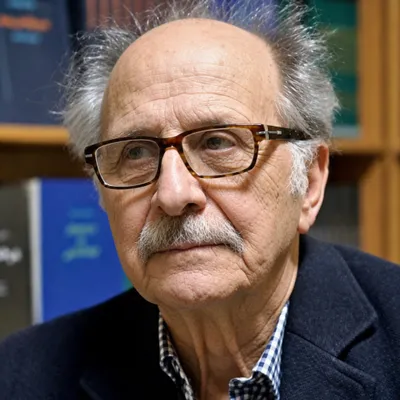
Aramesh Dustdar (1931–2021) was an Iranian philosopher and writer known for his critique of religious culture and the Iranian intellectual tradition. The concept of 'religiosity' (din-khuyi) and the phrase 'the impossibility of thought in religious culture' are among his most important ideas.
Aramesh Dustdar, an Iranian philosopher, writer, and intellectual, was born on May 23, 1931, in Tehran and died on October 27, 2021, in Cologne, Germany. He was one of the controversial figures of contemporary Iranian thought, and his primary renown stems from his sharp critique of religious culture, the Iranian intellectual tradition, and the relationship between religion and the possibility of questioning and thinking. Persian-language media, in reporting his death, also introduced his standing largely through this critique of religious culture.
Dustdar was born into a Baha'i family but later became an atheist. In 1958, he went to Germany to study philosophy and attended the University of Bonn. He received his doctorate in philosophy, psychology, and comparative religion in 1971. His doctoral dissertation was on the relationship between ethics and the will to power in the works of Nietzsche.
After returning to Iran, he taught in the philosophy department at the University of Tehran from 1972 to 1979. Following the revolution and amid academic and political transformations, he was dismissed from the university and went back to Germany. Thereafter, he spent most of his intellectual life in exile, and his major works were also published outside Iran.
The core of Dustdar's thought is the concept of 'din-khuyi' (religiosity). With this term, he described a cultural condition in which pre-given beliefs replace questioning and independent thinking. In his view, religious culture has permeated not only the formal or institutional sense of religion but also the deeper layers of Iranian language, habits, value judgments, and ways of living. It was from this perspective that he proposed the famous interpretation 'the impossibility of thought in religious culture.'
Dustdar distinguished between 'questioning' (porsesh) and 'inquisition' (estekhbar). In his view, a genuine question arises when an individual is ready to be transformed and to question their own foundations; but inquisition is merely a demand for a pre-determined answer. He argued that a religiosity-prone culture engages more in inquisition than questioning, and therefore cannot achieve independent philosophical thought.
His views provoked numerous reactions. Some have considered him one of the most serious critics of the Iranian intellectual tradition, while others have deemed his perspective overly general, harsh, one-sided, or inattentive to the historical and social complexities of Iranian culture. Nevertheless, concepts such as 'din-khuyi' (religiosity), 'na-porsayi' (non-inquisitiveness), and 'the impossibility of thought' have endured in Iranian intellectual discourse, placing his name alongside influential figures in the critique of Iranian culture.
Bibliography
Writings and transcribed lectures5 titles
Philosophical Considerations on Religion and Science
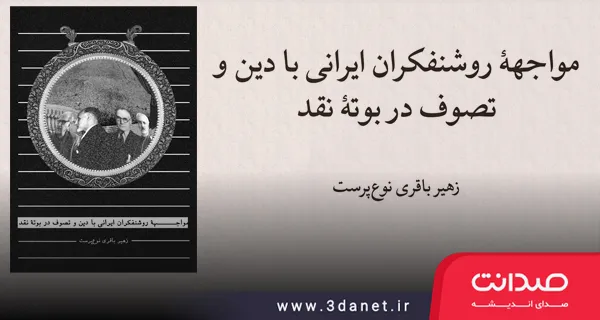
The Refusal of Thought in Religious Culture
Dark Brilliances
Hidden Kinship
Language and Pseudo-Language, Culture and Pseudo-Culture