Philosophy
Interview with Reza Davari Ardakani: The Philosopher Is Free from All Ideologies
Reza Davari Ardakani stresses that he has never been satisfied with his writings and considers himself a student of philosophy. In defence of Ahmad Fardid, he says: 'Because Fardid was not political, he never attained any position in politics,' and raised issues such as tradition and modernity.
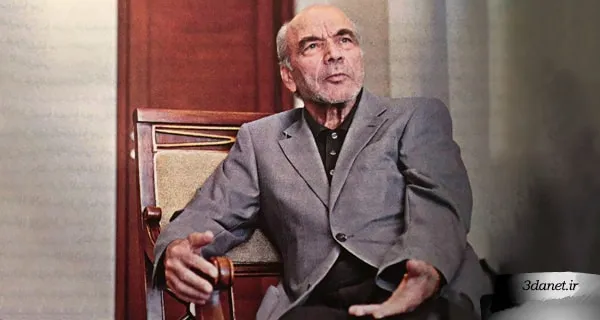
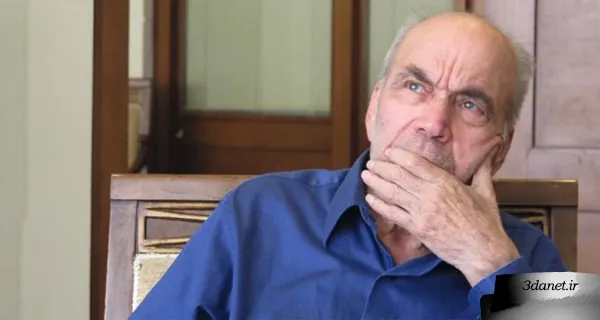
“Once I said to Professor Ha’eri Yazdi, ‘Give us your photograph to publish in the journal…’ He replied, ‘A particular negative has no photograph.’ Now your photographer is taking pictures of this particular negative that is me.” Dr. Davari says this to Mohammadreza, who is taking photographs during the interview, and it reveals the humility of a man who, despite all the years of research, study, and teaching behind him and all his academic titles, still considers himself a student of philosophy. “…Whenever and wherever I have been, I have never been separated from books. From early youth I had an inclination toward poetry and philosophy, and fortunately, when I read books, my aim was not merely to become learned; rather, I had questions and looked at everything with a critical eye… I studied in Ardakan for nine years. I went to the preliminary teacher training college in Isfahan for two years. I became a teacher. I came to Tehran. I took the entrance exam for the Faculty of Literature and Humanities (1955) and earned a bachelor’s degree in philosophy. Sometimes I would also get permission to attend the classes of professors from other disciplines, because I deemed it necessary to see them up close and realize the good fortune of their presence. In fact, I considered it a pity that Badi’ al-Zaman Foruzanfar and Homa’i and others were teaching at the Faculty of Literature and I was not hearing their words…” This conversation took place several years ago. It was supposed to be published at that time in a dossier examining the thoughts and opinions of Seyyed Ahmad Fardid, but it was not. “I have no interest in reprinting my writings, because when I read my previous writings I think that I should have written them differently. Even if I read the printed sample of an article ten times, each time I delete things and add something else to it. Now imagine what my situation is with something I wrote thirty years ago. When someone does not approve of his yesterday, what does he do with a relatively distant past? I know that if self-conceit is bad, fault-finding with oneself is neither a virtue nor an excellence, and perhaps psychologists would consider it a kind of self-torment, but what can I do? I have never been satisfied with myself or my writing.” Dr. Reza Davari Ardakani, who is one of the luminaries and great figures of Iranian philosophy, although he is lashed by the cudgel of words wielded by his critics, still follows the path of a dervish and is undoubtedly one of the most prominent figures in the field of contemporary thought. Dr. Fardid spoke ill of no one to the extent that he spoke ill of Dr. Abolhassan Jalili and Davari, yet these two have always observed his right as a teacher. Of course, I have no right to comment on Dr. Jalili, but someone might say that all this forbearance and gratitude could be construed as spinelessness, yet we learned a great deal from him. Of course, we sometimes debated with him as well. In any case, his dignity was preserved for all of us who participated in the Fardidiyeh sessions. One of the gentlemen, who joined this circle somewhat late, for three years fixed his eyes on Dr. Fardid’s mouth during the sessions. But I do not know what happened and what came to pass that suddenly or gradually Dr. Fardid turned into an illiterate driveler and a speaker of nonsense. So, on that day when you were listening to his words, were those words not nonsense? If they were nonsense, why were you a listener to nonsense? You could have discerned it at the time; you were not a child, you were in your thirties. These are political words, and politics is bad. It is a vulgar supposition that Fardid has a position in current Iranian politics and they want to destabilize that position and thereby create instability within the government; whereas, because Fardid was not political, he never found any position in politics. And you see what the opponents of the Islamic Republic do to him and how they take revenge on him. The supporters, too, never had and still have nothing to do with him. In the memorial service held for Dr. Fardid at the Faculty of Literature, only 17 people participated. Do you know what I mean by 17 people? I mean I counted one, two, three, four, five until it reached Davari, and Davari was the seventeenth person. If Fardid were political and the ideological backbone of the Islamic Republic, at the very least the media would have announced that tens of thousands attended his memorial service.
● Dr. Davari, it seems there were even problems with the media when announcing his death? That's right. Never mind Fardid, some newspapers, if the name Davari appears in a list, they remove it. If, for example, there is talk of the philosophy department at the University of Tehran, when they write the names and members, they remove Davari from it. Fardid was, a fortiori, someone to be erased. Besides, at that time the lines and factions were not yet very clear. The current leftist group did not accept him at all. When Mr. Ashouri writes an article, some newspapers become happy and publish the piece... When you think of Islamic philosophy, Avicenna, al-Farabi, Suhrawardi and others immediately come to mind, but when contemporary philosophy is mentioned, what comes to your mind? Has anyone said anything? In Islamic philosophy, nothing is currently being said. In old and new European philosophy, only Foroughi came and wrote the book 'The History of Philosophy in Europe' and reported on it. What have others done? They have translated articles and books, haphazardly, well or badly, from Bergson, Kant, Hegel. But is there anyone in Iran who has spoken a philosophical word other than what remains from our direct heritage? If you can find one person, that one person is Fardid. He asked what are historical legacies? Fardid asked what our relationship with the West is, he said what historical situation we are in. Issues that are currently raised in philosophy, such as tradition and modernity, globalization, secularism and humanism, were all raised by Fardid. Before Marcuse wrote the book 'One-Dimensional Man,' Fardid spoke of the dimensions of human existence and the dominance of the human dimension. Even if these were adaptations from the West, he gave a particular order to the material and had his own philosophy and was a man of opinion. The late Dr. Zaryab Khoei did not get along very well with Fardid, and even if he did, their disagreements were greater than their agreements. But because he was a man of learning, he wanted to know what Fardid was saying and sometimes asked me about his words. Once, Farhang magazine interviewed me about the East and West. Afterwards, Fardid said, 'Don't publish your piece. I will speak, and let it be transcribed anew and published.' That is, he said in a veiled way that my words and yours are very similar. You are saying the same things I say. So let me say it, why should you say it? I said: 'I have no objection. If I had known from the beginning that you would answer, I would not have written anything at all. Now I will edit your dictation, and I prepared that piece, and it was published.' The late Zaryab Khoei saw me one day and said from a distance: 'Thank you very much. For several years I had been trying to see what Mr. Fardid was saying, but I did not understand, and I am very grateful that you wrote this and I understood something.' You see, Zaryab Khoei was also seeking to see what Fardid was saying!! If it were all nonsense, a man like Zaryab Khoei would not try to find out who he is and what he is saying.
● Of course, the book that the late Madadpour published, titled 'The Visitation of Divine Splendor and the Revelations of the End Times,' contained the words of the late Fardid. Yes, but the publication of that book was a bad thing. I had reminded the students of the late Dr. Fardid two or three times that the great man was extremely meticulous about publishing his written works, and they should know that if they print the contents of his lecture tapes, Fardid's spirit will be distressed. What you say about Dr. Fardid's words is apt and correct, but all this ill that is spoken of Fardid, and they usually target his weak points and attack them, goes back to opposition to his philosophy. Fardid was sometimes very bitter in personal ethics. Living with Fardid was not easy; it was natural that the sensitive souls would be offended from the very beginning. Another problem was that when he spoke, he was not content with one or two hours; he was ready to talk for ten hours straight. He wanted, in the one session he was in, to say everything he was thinking. Dr. Fardid read many books and his mind was like a boiling pot, and the material came out in that same boiling state, and now few people are capable of organizing and arranging this material. For example, in one class, at the beginning of his speech, Fardid makes an allusion to the late Engineer Bazargan. Then he remembers a word from Gadamer and quotes it and criticizes it – harshly or gently – and passes on and turns to another matter. When the listeners hear this material, the tone of the speech helps their understanding, but when the oral material is written down and reaches the reader, a young reader who has not seen Fardid and does not know him, even if he is a student of philosophy, will not understand anything from it.
● What do you say about Mr. Dariush Ashouri's article, which was later published as a book? Are Ashouri's remarks about the late Fardid acceptable? The issue is not about acceptance. Those who attended Fardid's gatherings and were all ears should not deny him, because in doing so they deny themselves. Dr. Fardid was sharp-sighted, perceptive, a man of insight, and deeply concerned; he also read a great deal, and most importantly, he was a man of deep concern. I say without exaggeration: if you asked him something about a European philosopher, he would give an answer that, had you wanted to arrive at it yourself, you would have had to read several hundred pages, sometimes over a thousand pages, to reach the two sentences of his answer. He would say two sentences. These are things that can and should be said about Fardid. You say he was ill-tempered! He was impatient, political, ambitious—Fardid was not ambitious, but he more or less knew his own worth and standing. He was not political, and I do not know why people attach so much importance to and cite his political remarks; he was a professor of philosophy. These things should not be conflated. Political ambition in itself is not a flaw either. Max Weber also wanted to become a politician but did not; yet he was a great political thinker. Dr. Fardid, in fact, was not a political person at all, because politics did not suit his temperament. Those who imagine Fardid was flattering the Islamic Republic did not know him. The Doctor could not flatter at all, and if he paid someone a compliment, he would immediately point out their flaw. He was a person who could not conceal his inner self, so how could he have been a politician? He simply could not play a role. You would go to his house, he would sit reading a book, with no intention of being rude. You would say hello, and he would say, look what this... has written?! He would call on the phone, and after the initial greetings, he would start talking. Once when I saw him, I greeted him. Instead of returning the greeting, he said: Popper is an existentialist. I was taken aback, because it was difficult for me to grasp how Popper is an existentialist, since he considered himself a rationalist. I asked: Popper is an existentialist? He sat down and, without paying attention to whether I was listening or not, spent an hour explaining why Popper is an existentialist and what commonalities he has with Sartre. Having not digested the material, I said: Do you think Russell is also an existentialist? He started shouting that no, Russell is different from Popper. I said: I know they are different, but ultimately this freedom in the view of Sartre, Russell, and Popper becomes one, and the discussion remained unfinished. That day it had occurred to him that Popper is an existentialist. Dr. Fardid was a man who lived with philosophy. The respect I had for Fardid was respect for a man of insight who spent his entire life studying and thinking. Not everyone can live this way, and perhaps some would say this is madness. If so, many of history's great figures were mad. Nietzsche was mad, Edgar Allan Poe was mad. Look at the life of Virginia Woolf—utterly mad. Why do we conflate these things? Are we God to issue the final judgment? Who are we to judge such persons in this way? Do we not ourselves have loves and hatreds, grudges and malice? One must treat people of insight differently. If Fardid insulted someone, why do you insult him? If insulting is bad, do not do it. If he said something to you personally that you disliked, you should have answered him that very day. Those who attended Fardid's gatherings said nothing at all. Dr. Fardid would say the same things to Amir Hossein Jahanbegloo, who was older than us, that he said to us young people. He too said nothing. Back then, the gentlemen did not answer him. Now they answer. He would repeatedly say: You don't understand, you don't know philosophy, you don't read books, and so on. Well, if these words upset you, you should have answered him that very day. Fardid wrote about me in Kayhan newspaper: "This Jew-struck, Baha'i-struck, Mason-struck"—of course, he said worse things to them. When he said this to me, he said even worse things to them. Very well, you should have answered him. I answered with a verse from the Holy Quran. But now, after his death, this is all in the past; speak well of your dead. These words are finished and gone. If you have a discussion about the content, please go ahead.
● A point is raised by Mr. Mohammad-Mansour Hashemi in his book Identity Thinkers and the Intellectual Legacy of Ahmad Fardid regarding Fardid's not writing. He says that Fardid's not writing, from the perspective of his proponents, was due to the constant renewal of his thought, and from the perspective of his opponents, it was to avoid leaving a paper trail—a view I do not accept, because if that were the case, he would not have allowed recordings. What I can say is that he was extremely meticulous about writing, but spoke without such meticulousness.
● But he says something, which is that Fardid spoke well in conversation, but in writing, he had linguistic complexity. Perhaps that is why he did not write much. Mr. Hashemi is right. Although Fardid did not have a pleasant tone in speech, because he had insight and taste, and especially because his speech contained aphorisms within his discourse, his words were listened to. In any case, many times we would sit, for example from nine until one after midnight, and Fardid was the sole speaker. Neither did he grow tired of speaking, nor did we become weary of listening. We all listened. The most playful among us was Dr. Hamid Enayat, and the rest were all ears, and the most attentive of all was the youngest and latest arrival. In that gathering, no one was a disciple, but everyone listened. We even asked few questions. In the gathering we had, no talk other than philosophy was spoken. In our gathering, neither politics was discussed nor any other non-philosophical talk. Fardid spoke and everyone listened. You pointed out that he was eloquent; after all, thought and language are not separate. One who has new thought also has its language. If he had not insisted on speaking in a particular language, it might have been even better, but he was somewhat insistent on speaking in a specific language. I, too, am more or less meticulous in this regard. But regarding writing; one night he called me and said, "Can you come to our house?" I said I am not feeling well, I have just arrived home. He said: "Very well. Come tomorrow." Fardid usually did not say come tomorrow like that. I said no, if it is a specific matter and necessary, I will come right now. He said: "No, I had written something I wanted to read," I said then I will certainly come. The distance from our house to his was not great either. I went to his house and he began to read. He started the subject of the sentence. He read, read, and turned the page, still had not delivered the predicate of the sentence. When he wrote the subject of the sentence, he would bring a parenthetical clause, a parenthetical within a parenthetical, an explanation within an explanation. When he turned the page, he suddenly threw the paper away. I saw his whole face was wet with tears. The problem he had was not a problem of grammar; he knew the Persian language better than many literary figures. He was very well-versed in Persian and Arabic literature. He had read Muhyiddin, but his problem was that he was a holistic thinker and saw the whole. Analytic philosophers write more fluently. Look at the English analytic philosophers; it is because they see the details. When you see the whole, you see vaguely; when you want to see the whole, because you do not have mastery over the whole, you see it summarily and ambiguously. Fardid wanted to express everything, but he could not. He would say I do not have its language. I do not have the language to speak it. This did not mean that I do not know Persian as well as so-and-so. No, he knew Persian well; an example is the prose of the book Social Sciences and Its Developmental Course, edited by Fardid. This book Metaphysics by Paul Foulquié, which Dr. Mahdavi translated – who, in my opinion, is the greatest prose writer of philosophy in Iran – and the translation of this book – we are not concerned with the book's content – can serve as a model and example for all translators of philosophy, because Dr. Mahdavi was a first-rate prose writer and literary figure. But he gave his book to Dr. Fardid, and he edited some thirty pages, and if Fardid had edited the book to the end, Dr. Mahdavi would have applied Fardid's edits. Look at that language and do not say Fardid could not write. In fact, if Fardid wrote, he wrote well. Bozorgmehr was a translator and one of the best translators of philosophy. Among the works he translated was a treatise on Hume. This treatise was initially published in theoretical philosophy. Dr. Mahdavi edited the treatise that Bozorgmehr had translated and published it without the translator's name. Of course, he mentioned in the introduction that a man of heart had given this to him... and 'man of heart' was Bozorgmehr's pen name. Compare those two translations, see how much distance there is between Bozorgmehr's work and Mahdavi's. This Mahdavi, who edits the work of one of our greatest and most knowledgeable translators of philosophy and elevates this translation to the level of one of the best translations, entrusts the editing of his book to Dr. Fardid. If he was meticulous in writing his own thoughts, perhaps it was due to complexity, lack of clarity, and being summary. But these are not things for which a person should be blamed. I have a thought that is summary, not mature, and I cannot express it; I have committed no sin. Fardid had the necessary conditions of a philosopher. His mastery of Persian poetry was astonishing. He read Hafez more, not that he had not read Nezami, Ferdowsi, and Saadi, or did not know Anvari. He read Hafez more because he had devotion to Hafez. Denying these things is an injustice.
ما که نمیخواهیم بازخواست و استنطاق کنیم، ما اگر به فردید میپردازیم، بدانجهت است که یک آدم صاحبنظری بود. اگر کسی هم با آرای او مخالف است، مخالفتش را بنویسد.● Did the late Fardid deliberately refrain from writing? Attention to the historical situation had made writing difficult for Dr. Fardid, and we all share more or less in this predicament, not knowing what business we have with philosophy, what we should do with it, and what it does with us. I encountered a predicament that you must remember. Regarding Popper, whenever an occasion arose, I would explain that I have no particular business with Popper, but because Popper is introduced in Iran in this way, I address him for that reason and out of that consideration. I am in Iran and I live here. I have nothing to do with Popper personally. Whoever wishes may read and teach his works. In the world of philosophy, one cannot say read this and do not read that. Talk of this sort—that this philosophy is useful, this philosophy is hygienic, that philosophy is unhygienic—has nothing to do with philosophy. With such talk, they restrict thought. I am a teacher of philosophy. I want to read Aristotle, Bergson, and Lyotard. The amusing thing is that someone reads these very thinkers themselves and then says Kant is more hygienic for us. Hygienic Kant—Kant is the history of philosophy. If you get to the essence of Kant, then the German poet's words ring true when he said Kant is the Robespierre of Germany. Heine said: "Kant is the Robespierre of Germany." Kant's philosophy is never hygienic. If you are looking for something hygienic, do not study philosophy at all. Philosophy is pain, it is affliction, it is rebellion. Those gentlemen who say do not read this, we have not yet reached modernism; what business do we have with postmodernism, would do better to go and prepare the preliminaries for their own modernization. I have nothing to do with history. I am a teacher, a student; I read and write books. We are not of the seventeenth century. With which century of Europe do we match our own situation? We are none of them. Should we say nothing at all? In technology, we use the latest technical tools. Whatever technical device comes on the market, we are its customers and consumers. Under these conditions, what opportunity remains for turning toward philosophy?
● Leaving Fardid aside, tell us a little about your youth I did not have a youth. I was a tasteless person, and Saadi's beautiful verse: Never have I envied any rank or wealth Except for one who attains union with a beloved I would act coy and recite it as: Never have I envied any position or wealth Not even for one who attains union with a beloved Aside from the coyness, there is something else in this appropriation and distortion, and that is that I did not have a youth. Now, I am not dissatisfied with my life. You know, my generation has tested the entirety of history. I was born during the first Pahlavi era. I was born in a place where people lived exactly as they did two thousand years ago. With the same tools, the same means and instruments of labor, and now, belonging to your generation and being your contemporary, I am testing the principle of electronics, and in this test, I have arrived at things I could never have imagined. Sophocles was right; "Man is the strangest being."
● In this history, have you sometimes leaned in a direction that you later regretted? Of course, a thousand times... In my adolescence I was enamored of asceticism and abstinence. Later I became interested and inclined toward leftist politics, I developed an admiration for Mosaddegh, and the coup of 19 August 1953 happened. Well, life was an experiment; we were not political figures and held no office. One’s line and connection become clear in practice. Someone who does not act also makes no mistakes, but I have always known, and know in my own experience, that I was in a state of experimentation. When I went to the Faculty of Letters I was a seeker. I became slightly acquainted with Durkheim, and Durkheim captivated me. After a year I became interested in Bergson. It was in 1957 that Dr. Fardid came to the University of Tehran. After he taught a few sessions, I only grasped that he possessed something and wanted to say something that my classmates and I did not understand, and of course I sensed that I was no longer a socialist, nor a Durkheimian, nor a Bergsonian, but that I had another lost object of search. The discovery of Husserl’s phenomenology was very important for me. We are, in any case, a people with a brilliant history of thought, culture, and politics behind us. I truly did not know what was to be done with Islamic philosophy? And what place does it have alongside modern philosophy? Durkheim told me it belongs to the past. Even Bergson and Hegel said the same. When philosophy is the history of philosophy and the actualization of spirit, Islamic philosophy must have become the matter of the history of modernity. The first spark from Fardid’s discourse that affected me was precisely this matter of the historical legacies of the past. The issue is not whether the philosophy of Avicenna and Mulla Sadra is correct or incorrect. Nor is it important whether we accept Khwaja Nasir al-Din Tusi and affirm his statements to the letter or not; rather, the issue is that without Avicenna and Ferdowsi and Suhrawardi and Sa‘di and Khwaja Nasir and others... we cannot think. They are alive. That is, without this bond, without being in a history, without connection and linkage, in a word, without the atmosphere of thought and knowledge, one cannot think. It is here that a thousand problems arise, and these problems must be solved. Now, am I not in the history of Ferdowsi and Avicenna and Hafez and Suhrawardi and Nasir al-Din Tusi? Am I not in Islamic history? Am I not in the history of modernity? The problem becomes serious when the history of modernity advances. This history is not a continuation of Iranian-Islamic history, but it must be in relation to that history, for if this history of modernity remains half-formed, then it becomes a history that is a disjointed appendage of Western history. This history of modernity becomes an appendage of Western history, which is then no longer truly the history of modernity. It becomes a history of fragmentation and confusion; a history of being neither here nor there.
● Dr. Davari, when I picture your youth, I see a person whose head is in books, research, lessons, and the university. There was also poverty and work; it was not only reading books. I read books, I read a great deal, but I was compelled to work to earn a living, yet I have never lived without books.
● In what year did you come to the University of Tehran? In 1955; two years after the coup of 19 August 1953. In that same year, Dr. Eqbal replaced Dr. Siyasi as president of the University of Tehran and exempted students from paying tuition. In that year, the esteemed Mr. Abdolazim Khan Gharib, Jalal Homa’i, Badi‘ al-Zaman Foruzanfar, Fazel Tuni, Seyyed Kazem Assar, and others... were alive and teaching.
● I heard somewhere that in your youth you were drawn to Guénon? Guénon became a problem for me when I was 25 or 26. Guénon astonished and amazed me. Not that I was greatly fascinated by him; I was amazed that a European dared to speak about modern science and civilization in such a way. Now, if I speak of poverty and annihilation, I speak of my forebears. If I speak of Muhyi al-Din, he has a place in our intellectual tradition, but what place does Bayazid Bastami have in the intellectual tradition of René Guénon? And besides, I do not dare to comment on Western science and civilization with such intensity and severity and say that it is satanic. I first became curious and interested in this intellectual domain. I engaged less with Schuon because Schuon is more moderate. He does not have Guénon’s frankness and outspokenness, and perhaps he did not believe, as Guénon did, that the West is satanic. The West is misguided. In any case, I have more or less read books in this domain, but I have never been a Guénonian.
● Dr. Davari, some accuse Dr. Fardid's students and supporters of his intellectual spectrum of despotism, claiming that Fardid's thought leads to despotism. The question of philosophy's relationship with despotism and violence is a difficult one. In some of my writings, I have tried to clarify this relationship to some extent. Unfortunately, Dr. Fardid sometimes spoke harshly, but philosophy is the realm of freedom. Those familiar with contemporary philosophy know more or less that within the inner essence of Western thought, there is something that has different and contradictory manifestations and appearances; just as one person sees democracy, justice, and welfare in the inner essence of this modernity, another might see violence; in the inner essence of Western thought and in the project of possessing and dominating the world and humanity, not in the outward appearance of Western civilization. It can be said that these two aspects exist together. Even Kant, I suspect, had understood that these two can coexist; now we forget this and say it is all kindness, mercy, and compassion. Of course, if someone says that the West is entirely violence and that the undeveloped world is preferable to Western democracy, I do not accept that. The West is violence, but it is also modern order. Some friends should pay attention to this point. Of course, seeing these contradictions together is difficult. When I said that Dr. Fardid was a holistic thinker and that holistic thinking and seeing matters together is very difficult, I had the thought of violence in mind and wanted to say that philosophy precedes ideology, and the philosopher is free from all ideologies, and philosophy is freedom itself.
.
.

Discussion2 comments
فلسفه هم دچار ایدئولوژی فلسفه است. آزاد بودن از ایدئولوژی خود بالاترین ادعا و بالاترین ایدئولوژی است.
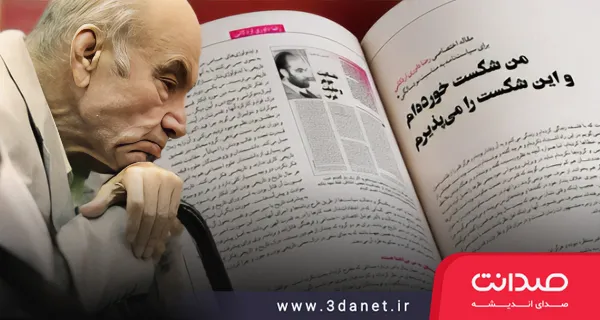
« رضا داوری اردکانی ... از فحول و اعاظم فلسفه ایران« گفته اند : « من علاقهای به تجدید چاپ نوشتههای خود ندارم، زیرا وقتی نوشتههای سابق خود را میخوانم فکر میکنم که میبایستی طور دیگری مینوشتم. من اگر نمونه چاپی یک مقاله را دهبار هم بخوانم، هربار چیزهایی را حذف میکنم و چیز دیگری بر آن میافزایم. اکنون درنظر بیاورید که تکلیف من با نوشتهای که سیسال پیش نوشتهام چه میشود. وقتی کسی دیروز خود را نمیپسندد، با گذشتهای بالنسبه دور چه میکند؟ من میدانم که اگر خودپسندی بد است، بهانهگیری از خود هم حسن و فضیلت نیست و شاید روانشناسان آن را نوعی خودآزاری بدانند، ولی چهکنم که هرگز از خود و از نوشته خود راضی نبودهام » ، « ... در این تاریخ گاهی اوقات به یک طرفی گرایش پیدا کردید که بعدها پشیمان شوید؟ البته هزار بار ... » ؛ اما گویا دیگران حق ندارند در روند بازاندیشی ، پشیمان شوند و به نظر و رأی دیگر برسند و دیروز خود را انکار کنند : « ... یکی از آقایان هم که قدری دیر به این جمع پیوست، مدت سهسال در جلسات، چشمش را به دهان دکتر فردید میدوخت. اما نمیدانم چه شد و چه پیش آمد که ناگهان یا بهتدریج دکتر فردید تبدیل شد به یاوهگوی بیسواد و هرزهدرا. پس آن روزی که به حرفهایش گوش میدادید، آن حرفها یاوه نبود؟. اگر یاوه بود، چرا یاوهشنو بودید؟ خب همان موقع تشخیص میدادید، بچه که نبودید، سیوچند سال داشتید. اینها حرفهای سیاسی است و سیاست بد است » ، « کسانی که در مجلس فردید حاضر میشدند و سراپا گوش بودند درست نیست که او را انکار کنند زیرا در این صورت خود را انکار میکنند » .