Religion
Abdolkarim Soroush's Interview with Professor Morteza Motahhari (Audio and Transcript)
Abdolkarim Soroush asks Morteza Motahhari why the referendum concerns an Islamic Republic rather than a republic plain and simple. Defining revolution as a revolt against the ruling order, Motahhari argues that the Iranian Revolution is Islamic in nature, with political and social dimensions.
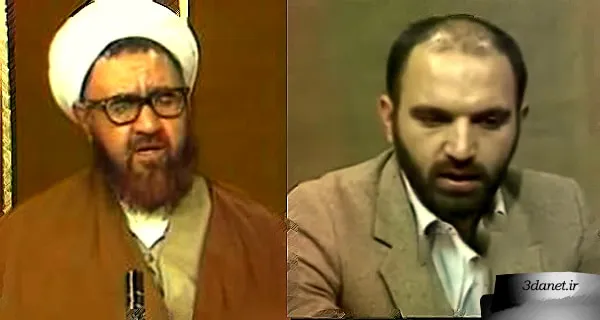
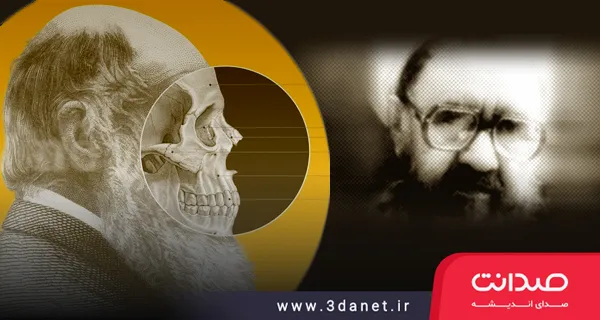
Some time ago, the Tebyan website published two audio files titled "Interview about the Islamic Republic," in which Dr. Abdolkarim Soroush interviews Professor Morteza Motahhari. Subsequently, the Tarikh-e Irani website published its transcript...
.
The following text is part of a conversation with Professor Morteza Motahhari, prepared in 1979 by Dr. Abdolkarim Soroush for the Revolutionary Radio and Television. In a program he produced for television in those years, Soroush would converse with figures considered ideologues of the Islamic Republic, asking them about the nature of what was on the revolutionaries' minds. The social relations of human beings, historical materialism, the concept of the Islamic Revolution and its ideological and doctrinal roots are among the topics discussed and examined in Soroush's conversation with Motahhari. The transcript of this conversation was previously published in the book "Concerning the Islamic Revolution."
Dr. Soroush: Many and varied questions have been raised about the Islamic Republic, some of which have also appeared in the press. In the conversations we have had with Mr. Motahhari, some of the most important of these questions have been put to him. Among the issues raised in previous sessions was whether the Islamic Republic contradicts democracy or not? And whether adding a qualifier to the Islamic Republic deprives it of being democratic? In the present session, we will discuss other questions raised about the Islamic Republic with him. Another question, as important as the one above, is this: regardless of the Islamic Republic being democratic, why do we pose a yes or no question about the Islamic Republic? Why don't we give the people the choice to say yes or no to a republic in absolute terms? And why don't we ask whether they agree with a republic as opposed to other methods of governance?
Professor Motahhari: I think it is better to start the matter from another point and, after mentioning some preliminaries, arrive at the answer to your question. First, we must see whether the Iranian people who made the revolution made an Islamic revolution or an absolute revolution? If they made an absolute revolution, well, it is natural that after the revolution, what the people want is also an absolute republic. But if the Iranian people made an Islamic revolution, then the referendum question must also be about the Islamic Republic. Therefore, the answer to your question comes back to determining the nature of the Iranian Revolution. Hence, it is necessary first to briefly provide a simple definition of revolution, then to concisely examine the theories raised about revolution from a philosophical aspect, and finally to analyze the Iranian Revolution.
May I ask whether this view of yours holds true for every revolution or not? That is, if a revolution occurs somewhere that could be given a name other than Islamic Revolution, in that case, in your view, do the revolutionaries there have the right to act in the same way regarding the referendum they want to hold?
They certainly have such a right. If another revolution in which the overwhelming majority of the people participated had a specific character, it is obvious that the people, in the referendum they want to hold—even though they have already given their answer to this referendum beforehand—have the right to pose their question in such a way: in our revolution of this kind, a republic of this kind, yes or no? This matter is not exclusive to the revolution being Islamic. And as for the definition of revolution, I think that a revolution is a rebellion and an uprising in a society against the established order dominating that society.
Do you mean the political order?
Any rebellion against the existing order is a revolution, and this is not confined to the political order. There can be a literary revolution, meaning writers and poets rebel against the existing literary order, overturn it, and create a new style and method. As that famous poet who objected to the literary revolution at the beginning of the Constitutional era said:
A literary revolution has erupted / Literature has become a hodgepodge
There can be an artistic revolution, just as there can be an industrial or scientific revolution. The Renaissance is an example of an intellectual, cultural, and scientific revolution. Beyond these, there can be a religious revolution. Of course, if we consider a religious revolution solely from the aspect of its religiousness, it is interpreted as a revolution against the dominant religious system; that is, a group has a certain method in their worships, prayers, sacrifices, and devotions, and then they come and change it, removing one religion and replacing it with another, without any change or transformation occurring in other social institutions. However, if by a religious revolution we mean a revolution like the movement of early Islam, then the concept changes. The revolution of early Islam, while being a religious revolution, was also a political, social, economic, and even literary revolution. The Quran itself became the basis and origin of a new literature. This revolution also presented a new culture to the world and became the founder of a new civilization in the world.
In your view, is it possible to have a religious revolution that is not accompanied by a revolution in other aspects and dimensions of society?
In religion in the general sense that sociologists speak of, yes. But in the religion brought by the true prophets, no. Of course, I mean the prophets who possessed a sharia and a book, the so-called Ulul 'Azm prophets. From the time of Noah (PBUH), every prophet who came and overturned the existing religious order also paid attention to the social order and sought to reform it. The Quran, in particular, emphasizes in this regard: "We have sent Our messengers with clear proofs, and sent down with them the Scripture and the Balance, so that people may uphold justice" (Verse 25 - Surah Al-Hadid). That is, overturning an existing corrupt order and establishing a desirable, just order has been the goal of all missions and prophethoods, though this matter is more evident and distinct in the finality of Islam.
Although this question somewhat diverts us from our discussion, I would like to ask, from a sociological perspective, does the mere occurrence of a religious revolution not itself indicate a revolution in other aspects? Regardless of whether the religion itself had such a goal or not?
Your question is based on whether social institutions are independent of one another and whether their births and deaths are independent of each other, or whether these institutions do not grow independently and there is a relationship between them, and in fact, one drags the other along? Then the question arises: does the meaning of "one drags the other along" imply that one is always the principle and the others are parasitic and subordinate, or is there another possibility? I will clarify the answer to this question in the continuation of my remarks.
We said that revolution means rebellion and insurrection against the existing dominant order, and such a rebellion and insurrection has occurred in our Iran. Now we must see: does this revolution have a purely economic-material nature, or does it have only a political nature? Or is it a religious revolution? Of course, religious in the sociological sense, meaning a religion that is inherently separate from other institutions of society, and if it does drag other institutions along, it is, so to speak, secondary and incidental? Or is the revolution a comprehensive and complete revolution whose spirit is formed by Islam?
I must also mention another point, which serves as a prelude to our main discussion, and that is the fundamental question of what, in general, is the origin and root of revolutions. For a revolution, like any other social phenomenon, is not exempt from the rule and law of causality; that is, in the words of the Quran, a revolution must come into being based on a sunnah. In answering this question, there is a famous theory known as historical materialism. In defining historical materialism, it has been said: an economic interpretation of history and a historical interpretation of economics. And I would add that historical materialism, besides being an economic interpretation of history and a historical interpretation of economics, is also a historical-economic interpretation of the human being, without being a humanistic interpretation of economics or of history. This theory, in summary, states that the root of revolutions is the polarization of societies in terms of livelihood, and this polarization itself—the division of society into two classes, the affluent and the deprived—has its roots in social labor and, ultimately, in the means of production. That is, what is inherently evolutionary is the means of production, and the means of production, at whatever stage of evolution it may be, creates specific legal relations, and these legal relations bring in their wake other issues—moral, religious, philosophical, scientific, artistic, and so on. During a period, a kind of harmony may exist among the relations of production, but gradually, as the means of production evolve, this harmony disappears; consequently, you find these relations breaking down. It is amidst these disruptions that people divide into two groups: those who benefited from the previous situation and previous systems, and those who were deprived. Their very deprivation has given them a kind of clear-sightedness and enlightenment and has caused them to favor the new situation. Ultimately, the conflict of interests divides society into two opposing poles. The pole dissatisfied with the existing state of affairs, solely because of deprivation and because it has no recourse and for no other reason, becomes the revolutionary class. In fact, it is deprivation itself that makes this class revolutionary and drives it to rebellion and revolt. This class, unlike the other class whose affluence has made it lax and indolent, is new and active, and ultimately, it is this new class that triumphs over the old class. Therefore, from the perspective of this theory, despite the formal differences that exist among the world's revolutions—for example, one is a scientific revolution, the Renaissance; one is a religious revolution, Islamic; another is a political and liberal revolution, the French Revolution; and yet another is a workers' revolution—the root and essence of all of them is one. In philosophical terms, the forms and manifestations differ, not the essences. From the viewpoint of this theory, that constant essence is, in reality, embodied labor and its transformation. This theory states that all the material and spiritual characteristics of the human being are derived from society. And in human nature, what others—the theists—call fitrah does not exist. The human being and their conscience are constructed by society with the help of external factors. The human being is like a blank tape inside a tape recorder box placed before a series of sounds; that is, the human being, in their essence, has a state of absolute indifference and neutrality towards whatever it records. Just as if you recite the Quran onto a tape, it records the Quran, and if you play music, it records music, and it is all the same to it, the human conscience also has no authenticity and is subject to external factors. On this basis, one must concede and accept that the exploiter has one type of conscience, judgment, logic, and criterion, and the exploited has another. Essentially, the former is, for itself, a kind of human being with a specific essence, and the latter is another human being with a different essence. The proponents of this theory have even gone so far as to say that the essence of a human being is determined by their class. That is, contrary to the view of philosophers who consider the human being a 'species,' from the perspective of these gentlemen, the human being is an abstract concept, and for this reason, humanism has no meaning in this school. Despite the fact that the followers of this school speak of humanism, humanism is entirely opposed to the principles of this school, because without accepting the species-nature, fitrah, authenticity, and conscience of the human being, humanism has no meaning.
Perhaps we could say that this school considers the social human being.
Man is indeed a social being, but when society is divided into two contrasting and essentially different groups, the human being in the first class will be entirely different from the human being in the other class. These two types of human beings differ and vary from one another in every respect, and only their outward physical form is similar. The criterion of species, here, is entirely absent.
When you say that even thoughts are a function of the mode of life, which category of thoughts do you mean? Are scientific and philosophical thoughts also like this, or is it only thoughts pertaining to human relations in society that are so?
In our view, conventional perceptions, by virtue of their conventional nature, are a function of society. One of the very fundamental issues recognized in Islamic philosophy, and a source of pride for this philosophy, is the distinction drawn between conventional perceptions and real perceptions, and the fact that logical demonstrative reasoning and the like, and even definition, do not apply to conventional perceptions; they follow other principles. Where European philosophers have become stuck on the problem of definition and encountered a series of difficulties, it is in conventional and contractual matters, not in real matters—though this is not the place to discuss that. But your question was about this school; the leaders of this school consider all thoughts, even mathematical issues, to be a function of society. However, later on, others who have, so to speak, introduced modifications to this school have distinguished between the sciences we call real sciences and those we call conventional sciences. Therefore, what this school entails in this regard is one issue, and what the pioneers of this school have said historically is another.
Since you mentioned something that was of great importance to me, I am compelled to ask a question which, unfortunately, takes us somewhat away from the main topic, and that is: when and by which philosopher in the history of Islamic philosophy was the separation of conventional perceptions from real perceptions made?
As far as I know, the root of this distinction, though without the issues being well dissected, can be seen in the works of Avicenna; unfortunately, I do not recall at present whether Farabi also raised this issue or not. In any case, with the raising of the issue of practical reason and theoretical reason, and then the issue of rational good and evil, and the fact that these rational approvals and disapprovals differ among various nations and are not judged uniformly, and that these should not become the criteria for judgment in philosophical matters, it is from this time that attention gradually turns to the issue of conventional and true perceptions. Of course, it is possible that this issue has roots in the pre-Islamic era, which I do not deny since I have no knowledge of it, but as far as I know, attention to this issue was mostly a result of the conflict and clash of opinions between theologians and philosophers. And regarding the main topic of this conversation, I mentioned that based on a certain philosophy of history, all revolutions, despite all differences in form, have a material and class nature. Here, as an aside, I must point out a case that has been the source of many misunderstandings, and that is the point that some who are not very familiar with Islamic issues, having seen Islam's orientation in favor of the oppressed, have assumed that Islam also always considers the oppressed to be the agents of movement in history. They have thought that all this emphasis in the Quran on supporting the deprived and the oppressed means that Islam also believes in a two-class society and always places the banner of all movements and revolutions on the shoulders of the oppressed. This group's interpretation of the Quran is that the so-called affluent pole, in the Quran's expression, is called the disbeliever, and the deprived pole, which is the agent of movement, is the believer, and Islam's address is solely to this group. Whereas two issues have been conflated here. That the Quran's orientation is in support of the oppressed is one issue, and that for guidance it goes to which individuals and whom it addresses are another issue. Of course, without a doubt, the deprived and the oppressed have always been and are more prepared to accept Islam; history also clearly shows this, and its reason is obvious, because for this group, Islam is both the call of their hearts and the call of their intellects. For them, Islam is both a good omen and a spectacle. With the help of Islam, this group enjoys both the felicity of justice and the joy of welfare; conversely, those in the other class, in order to answer the call of Islam, must trample upon their own interests and emerge from under tons of sin and corruption. Here one must see whether Islam has such an art? Of course, the art does not belong to Islam, it belongs to man; human nature dictates this. Even that deprived person who turns to Islam does so, in the first place, because of having a pure and clear nature, and because he seeks justice as a value, and his ideal-seeking nature draws him towards it, not merely animal desires and the urge to fill his stomach.
Of course, I do not deny that class war exists in the world; war between the affluent and the deprived, the exploiter and the exploited, is abundantly seen in the world, but this war is not a sacred war, because the exploiter in this war has the same value—insofar as he fights solely for his interests—as the exploited. For him, too, this battle is not a human battle. No transcendent ideal is at stake in it. Apart from political wars, which are caused by vanities and ambitions, there are also wars in the world with scientific and cultural motives that arise from the human instinct for truth-seeking. But from the Quran's perspective, sacred movements are movements in which the war between truth and falsehood is engaged: truth because it is truth, not because it secures interests; falsehood because it is falsehood, void, and an obstacle to human growth, progress, and evolution, not because it opposes the interests of this group or that group. Of course, let me also add that pursuing truth is itself a form of perfection, meaning this act can simultaneously take two different forms. I mention this point in parentheses as an explanation of the above: from the time I was still considered a child, I always saw that some individuals were perplexed as to why Lady Zahra, with her station of infallibility and sanctity, involved herself in the matter of Fadak—Lady Zahra, about whom it has been said: "And they give food, for the love of Him, to the needy, the orphan, and the captive, [saying,] 'We feed you only for the sake of Allah'" (verse 8 of Surah al-Insan), meaning: "And for the love of God, they give food to the poor, the captive, and the orphan, and say, 'We feed you only for God's pleasure...'" Why did she involve herself in this matter? I later realized that two issues had not been separated: pursuing a desired right for the sake of saving that right is one issue, which is considered a very high value, and pursuing it because I am hungry and want to fill my stomach—that is, having a purely animal motive—is another issue. At one time, I sacrifice my own right for another; this is very noble and valuable. But at another time, another takes my right by force; here, if I do not strive to restore my right and say, 'It's fine, I have sacrificed it,' I have committed an unethical and anti-value act.
Based on the second theory to which I implicitly referred, that is, the very theory presented in the Quran, fundamentally, human psychology takes precedence over his sociology, meaning that man has two kinds of conscience: innate conscience and acquired conscience. Man takes a part of his conscience from society, but this human conscience of his, and the human roots of his conscience, are embedded in his nature, a point the Quran greatly emphasizes: "and breathed into him of My spirit"... and breathed into him of My spirit... (part of verse 29 of Surah al-Hijr). That is, before man is influenced by his society, a transcendent, divine, and sublime aspect exists potentially in his being. This aspect is like a seed ready to grow; man is not a blank tape to be filled from the outside; he is a seed that needs light and warmth for its growth, meaning that in man's essence, the potential for evolution and progress exists. Man is inherently a bipolar being; he is both human and animal. The more the animal aspect is weakened in an individual, the more man advances toward the station of independence and humanity. You know that one of the properties of evolution is that the more perfect a being becomes, the less its need for the environment becomes, meaning that the environment's dominance over it decreases and its dominance over the environment increases. A plant's dominance over the environment is greater than that of an inanimate object, an animal's dominance is greater than a plant's, and a human's is greater than an animal's. Among humans, too, the dominance of truth-seeking, truth-demanding humans who have attained the ideal is greater than that of ordinary humans.
Does the belief and ideology of a human who has attained the ideal not necessarily arise from social relations, being a direct product of them?
No, it is not the case that it is a one-hundred-percent product of those relations. Man has criteria that determine his ideology, though this is a separate discussion and would become very lengthy. This is the very issue that is raised in the Quran as "in the way of Allah": "There was certainly a sign for you in the two hosts that met: one host fighting in the way of Allah and the other faithless" (verse 13 – Al-e-Imran).
In the path of God, that is, in the path of an ideal, in the path of faith, a person bound to belief and bound to ideology is necessarily free from the constraints of environmental determinisms. A person bound to faith is liberated from the environment; the determinism of the social environment and the determinism of the inner environment—that is, animality, or in religious terms, the desires of the self—do not dominate him. Such a person forms a distinct rank against the animalistic human, the one with his head in the trough of self-interest, ambition, and arrogance. It is in this way that the inherent bipolarity of the human being leads to the bipolarity of society as well. These two poles are the humans who have attained perfection and the humans who have sunk into animality. The battle between truth and falsehood always occurs between these two groups. The evolution of history is toward attachment to belief, ideal, and ideology, and liberation from external, internal, natural, and social environments, and all of these. But the meaning of this liberation is not that the human being will have no relationship with these environments; let there be no mistake. Liberation means that the human being is no longer subject to the environment, but rather the environment is subject to him. The more perfect the human being becomes, the more the balance of the reciprocal relationship tips in favor of humanity, and as our ancients said, reason becomes dominant over the self. From a scientific perspective, the situation is the same: the human being always has a relationship with nature; he cannot sever his relationship with nature. But the more ignorant the human being is, the more nature dominates him, and the more he attains scientific perfection, not only is the relationship not severed, but it increases, except that its direction changes and moves toward the domination of the human being over nature.
I think what you said can be framed in this way: does sociology have autonomy vis-à-vis psychology, or does psychology have autonomy vis-à-vis sociology? In other words, if we want to speak in scientific language, are the laws of sociology and the relations that govern people in society reducible to the laws of psychology, or conversely, is what arises from the psyche of human beings reducible to the laws of sociology?
Although this is a very necessary and sensitive discussion, it takes us away from the main subject. Therefore, with your permission, let us return to the main topic, which is determining the nature of the Islamic Revolution of Iran and answering the question of whether this revolution is an Islamic revolution or not. The Iranian revolution itself can be a suitable criterion for this discussion; that is, we do not want to justify the Islamic Revolution of Iran based on existing theories. On the contrary, we want to examine and test the validity of those theories based on this revolution.
Indeed, that is the scientific method: first we take the hypothesis and then we test it.
A revolution has occurred in Iran that has upset all equations and confounded so-called scientific and sociological calculations. No one believed that a revolution would occur whose origin was the mosques, while there was no organization among the people and the people had no kind of party or revolutionary training. In any case, we see that Westerners also consider this revolution a novel phenomenon.
Don't you think this might be because the former regime had closed all doors to the people, so the people were forced to speak and act only through the mosque?
It is true that the people voiced their demands through the mosque, but here our discussion inevitably leads to an examination of what the people had to say, and the answer to this question goes back to an analysis of the nature of the Iranian Revolution. We can analyze this revolution in two ways: one is to see who advanced this revolution? Who carried the banner of this revolution? Did one class carry it, or all the people? Was the revolution widespread, or was it confined to one group? And if we assume there was a vanguard group here that pulled the other groups along behind it, which group was that vanguard? I think there is no doubt that this revolution was a widespread and all-encompassing revolution, including all groups and classes; it was a fire that was lit from one point, but a fire that consumed the regime and gradually affected all social institutions. Even groups that were not considered the main agents of the ruling class but were in the service of the ruling class, such as the lower ranks of the army, they too worked heart and soul in the service of the revolution. It reached the point where a high-ranking military official, when he wanted to go to his workplace, would go with ten bodyguards and even then would lock the door behind him. They were now even terrified of their own appointees. The breadth of the revolution was such that no one could consider it belonging to a specific group; all classes and groups participated in it enthusiastically. Even the so-called oppressed and deprived groups who participated in demonstrations and strikes insisted on saying: our demonstrations, our strikes, are not for rights and a little more pay; they considered it a disgrace and a shame to say that our revolution has a welfare or material aspect, or is just so our stomachs can be filled. They said we are fighting for justice; in the shadow of justice, everyone's stomach will be filled, and our stomachs will be filled too. The other way to analyze the revolution is to examine its roots; to understand the roots of the revolution, we must particularly analyze the history of the last fifty years, indeed the last hundred years, well. One of these roots was the harsh despotism that ruled our society during this period. Another factor was colonialism, which had recently become invisible—neo-colonialism—but of course, discerning eyes could see that despite a series of alleged reforms, class divisions were widening day by day. Alongside this factor, the decisive factor that encompassed all other factors and was able to galvanize all classes harmoniously in a single direction was the wounding of the Islamic sentiments of these people. The people were seeing how Islamic regulations were being violated in practice. The people were seeing that, under the pretext of fighting foreign words, Persian literature was being fought against solely because it was Islamic...
Unfortunately, very little time remains; I think it is time to conclude, although not all the preliminaries have been addressed yet.
Very well, I will wrap up the discussion, but I stated incompletely that the wounding of Islamic sentiments was the main coordinating factor of the people's forces. As one of the literary scholars who specializes in the history of the Mongol period says, in examining the history of the Mongol period, one sees that the Mongols destroyed everything, but the people do not say Iran was lost; rather, everywhere they say Islam was destroyed. That is, for the people, faith was dearer than the homeland, and this is among the things that is difficult, and perhaps impossible, for Westerners to understand. In this very revolution of ours, you witnessed that despite all the pressures and transgressions, the match that set fire to the harvest of the revolution was an article written against the beloved religious leader of the people. A very important issue that plays a decisive role in the analysis of the Iranian Revolution, and which I am very sorry I could not discuss in this session, is the issue of the revolution's leadership, which, God willing, I will raise on another occasion.
.


Discussion0 comments
No comments yet; let yours be the first voice.