Religion
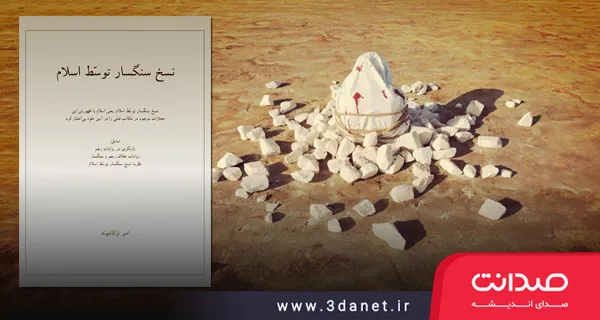
“Are Non-Muslims Really Kafir?” by Amirhossein Torkashvand
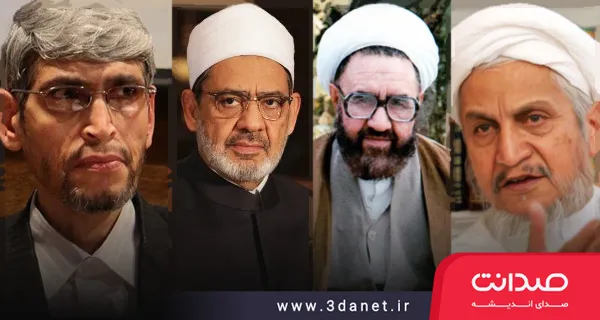
Distinguishing non-Muslims from infidels is a strategy for reducing religious violence and achieving social justice. According to the views of the late Grand Ayatollah Sanei, Ayatollah Motahhari, and the Sheikh of al-Azhar, the majority of non-Muslims are not infidels and deserve rights equal to those of Muslims.
Amirhossein Torkashvand
AuthorAre Non-Muslims Really Kafir?
Non-Muslim or Kafir?!; A Revision of the Jurisprudential Definition
Amirhossein Torkashvand | January 2025
In this article, Amir Torkashvand examines innovative perspectives on changing the jurisprudential classification of human beings from “Muslim and Kafir” to “Muslim and non-Muslim,” and analyzes the role of these views in reducing religious violence and strengthening social justice. The first part examines the view of the late Marja‘, Sanei, who, by emphasizing the separation of non-Muslim from Kafir, believed that the majority of the world’s non-Muslims are not considered Kafir and enjoy equal rights with Muslims. The second part addresses the views of Ayatollah Motahhari regarding respect for humanity and the lofty status of justice, and that, in his view as well, considering the people of the world today as Kafir is incompatible with the logic of the Quran. The third part examines the views of the Sheikh of Al-Azhar, Sheikh Ahmad al-Tayeb, in explaining peaceful coexistence and the incorrectness of addressing the people of Europe, America, Africa, etc., as Kufr. Finally, by citing statements from Imam Ali (AS) on a new classification of citizens, the article demonstrates how these intellectual developments can lead to the strengthening of peaceful coexistence and the promotion of social justice.
.
.
The Late Marja‘ Sanei and the Non-Kafir Status of Non-Muslims; A Change in the Classification of Humanity into Muslim and Kafir
Is a non-Muslim a Kafir? In jurisprudential classifications throughout all ages, the people of the world are divided into two major groups: “1- Believer (Muslim) 2- Kafir,” and of course, each is further divided into sub-groups (for example, Kuffar are divided into Kafir of the People of the Book and Kafir not of the People of the Book, or in other classifications, into Dhimmi and Harbi, or People of the Book and Mushrik). In traditional jurisprudence, rulings are imposed upon the Kafir that are very harsh and confrontational, the essence of which is that “their life, property, and honor” (except for a few who are Dhimmi) are not considered inviolable, and even their Dhimmi are deprived of many social rights.
The great work of the late Marja‘ (: A non-Muslim is not a Kafir / Muslim and non-Muslim are equal in social rights). The late Marja‘ Sanei had pleasant and important innovations in jurisprudential rulings, but in my opinion, the most brilliant of these relates to the change in the above classification. Unlike his predecessors, instead of dividing the people of the world into Muslim and Kafir, he divides them into “Muslim and non-Muslim (and, of course, a few Kafir),” meaning he explicitly considers the billions of people in the world today who are not Muslim (and whom traditional jurisprudence deems Kuffar) not as Kafir but merely as non-Muslims. Consequently, he does not consider any of the aforementioned rulings of Kufr applicable to them, regards their life, property, and honor as inviolable, and grants them all the social rights he accords to Muslims.
The words of that late Marja‘:
A- In a speech (January 3, 2019): “I will say one sentence that also opens a door in legal matters; [in] the noble verse ‘And never will Allah give the disbelievers a way over the believers’ it says ‘for the disbelievers (lil-kāfirīn)’!; Kufr is different from the absence of Islam. In my opinion, human beings are of three categories: One category are Muslims (they utter the two testimonies of faith with their tongue) One category are Kafir (meaning they know Islam is the truth… but nevertheless deny it, they reject it) One category are non-Muslims. Today, is the world’s population non-Muslim or Kafir? The one who lives in South Africa and so on… can it be made clear to him that the Quran is the Prophet’s miracle? .. He is incapable (qāṣir); you say regarding the rulings of divine law that the incapable person does not deserve punishment…; now we have come and applied this ‘And never will Allah give the disbelievers a way over the believers’ to every non-Muslim, depriving them of all rights; if he says ‘I bear witness that there is no god but Allah’ .. he has all rights, but as soon as he does not say [the two testimonies], and his not saying them is not out of culpable failure (taqṣīr), the world’s population are all incapable in the principles of beliefs… we have come and deprived all human beings [who have not uttered the two testimonies] of their rights, saying a non-Muslim can neither become a manager, nor a teacher, nor a head, nor a commander, nor anything else; whereas these are non-Muslims, not Kafir!” here and here
B- Response to a Shafaqna question (October 15, 2017): “In this humble one’s opinion, the world’s population enjoys all human rights, indeed all legal (sharʿī) rights, and are equal in all rights .. and I consider all Muslims and non-Muslims, except the Kuffār, equal in social rights and even in legal rights such as inheritance and retribution (qiṣāṣ) ... What has been forbidden regarding guardianship, authority, and way, according to the ruling of the verse ‘And never will Allah give the disbelievers a way over the believers,’ is the Kafir in its true sense, who knows the truth and consciously denies it; of the entire world’s population, only a small number of them are Kafir in this sense” here and here
C- At the end of an advanced jurisprudence class (April 22, 2017): “All positions that are designated for human beings in any system are also for non-Muslims in relation to Muslims; they can become the principal of a school whose students are Muslims, a teacher whose students are Muslims, the president of a university whose students are Muslims, the commander of an army whose soldiers are Muslims. All of this is because none of them are Kafir. Of the seven billion people in the world, only a small number of them are Kafir. ‘And never will Allah give’—assuming it refers to social way—is specific to the Kafir and does not include non-Muslims, and the religious minorities, may God protect them, have served, and are still serving now; they are among the non-Muslims, no blame has been directed at them. Regarding inheritance, we have said a non-Muslim inherits; regarding retribution, we have said retribution also applies in the case of killing a non-Muslim. The Kuffār’s case is separate from that of non-Muslims. Be aware, understand, rely on your own perception and understanding, even if someone does not value your understanding; one day they did not value the understanding and perception of Muqaddas Ardabili, but today you see, in a fragmented way, they are compelled to value it” here and here.
Words of the late Marjaʿ:
A – In a meeting with a reporter from the Italian newspaper La Repubblica (dated February 17, 2006): Today, if we can clarify the non-kafir status of non-Muslims in the Islamic world, even this small seed of violence will be removed. The late jurist, 19 years ago, in response to the reporter's question stating that Muslims claim Islam is not a religion of violence, and the same holds true for Christianity, but given that all religions claim to encompass absolute truth, isn't it the case that they inherently harbor the seeds of violence against one another? stated: "In Islam, there is fundamentally no violence against human beings, and the Quran, as the constitution of Islam, says to treat all people well (wa qūlū li-n-nāsi ḥusnā). And if a small number have erred in this regard, it is due to their mistaken interpretation of certain verses and narrations that consider a non-Muslim person a kafir. Given the condemnation of kuffar in these verses and narrations, they have come to believe in committing violence against this group of people, whereas I believe that a non-Muslim is not a kafir. Rather, a kafir is a non-Muslim who knows Islam is the truth but nonetheless acts with enmity. I have also presented this point to some Sunni scholars, and they too accepted it. And today, if we can clarify this point in the Islamic world, even this small seed of violence will be removed... Therefore, based on the logic of Islam, all human beings are respectable and have value, except for one who knowingly and understandingly acts with practical enmity against Islam." Source "here"
B – In a meeting with Vartan Davoudian, dated December 24, 2005: The masses of non-Muslims, whether religious minorities or non-religious, are all non-Muslims, not kafir. "One truth of Islam is that others should be in comfort and ease from a person, and a Muslim is one who considers the well-being and comfort of human beings in all their actions and programs, and from whose hand and tongue others are at ease ... A kafir is one who knows Islam is the truth, but nonetheless, in various political, security, cultural, economic, and other aspects, acts with enmity against Muslims ... But the masses of non-Muslims, whether religious minorities or non-religious, all of these are non-Muslims, not that they are kafir. And a non-Muslim, according to the laws of inheritance and the verses on inheritance, inherits from a Muslim. This is a point that legislators can use as a basis to enact laws ... Based on the jurisprudential and reasoned opinion that I hold, 'race, nationality, religion, and geography' are not relevant in rights ... The philosophy of qisas (retaliation), according to the Quran's statement addressed to those of intellect and understanding, is the life and survival of humankind (wa lakum fī al-qiṣāṣi ḥayātun yā ulī al-albāb). And I believe everyone is equal before this ruling, whether Muslim or non-Muslim, whether woman or man ... The diyah (blood money) of a Muslim is no different from that of a non-Muslim; blood money is blood money, it makes no difference whether the identity document of a person whose blood money is being paid is Islamic or non-Islamic. And to make the criterion an Islamic or non-Islamic identity document, this, in my opinion, is not in accordance with Islam." Source "here"
C – In a meeting with members of the Shafaqna website editorial board, dated February 24, 2013: "It must be noted that the criterion for heaven and hell is not one's identity document. It is not the case that God will send this 6 billion-strong population to hell, and only the one whose identity document says Shia goes to heaven! ... Hell is for the oppressor and for the kafir! All this 'kufr' mentioned in the Quran and the verses means concealing and covering up the truth, that is, denying the truth out of stubbornness. The number of such people is small; but kufr has been poorly defined, and unfortunately, every non-Muslim is called a kafir ... Issues must be explained considering the conditions of time and place. For example, in Shia or Sunni jurisprudence, it is stated that a kafir man cannot marry a Muslim woman. Yes, we also know that he cannot, but it must be noted that a kafir is different from a non-Muslim ... It is true that Islam has prohibited inheritance, but it has prohibited the kafir; it says that one who knows Islam is the truth and yet acts with enmity, such a person is deprived of rights. The rights that have been taken away in Islam are taken from the kafir, and have not been taken from the non-Muslim." Source "here".
The first time the late marjaʿ distinguished between non-Muslim and kafir (thereby excluding billions of the world’s non-Muslim population from the scope of kufr) apparently dates back to his teaching of the Book of Inheritance in Taḥrīr al-Wasīla (I have not come across a later source). The teaching of the said book took place from 21/09/1374 to 12/03/1376 (19 Rajab 1416 to 26 Muḥarram 1418 – p. 11 or 23), and since that discussion appears on pages 133 to 139 (137 to 143), the date of this important topic can be approximately placed around early Esfand 1374 (both the origin of its antiquity and this estimated date were confirmed by the office of the late marjaʿ). Thus, the ruling that the world’s non-Muslims (save a few among them) are not kafir, in the view of the late marjaʿ, goes back 29 years (before the 2nd of Khordad and the formation of the reform movement!).
Those interested may refer to Fiqh al-Thaqalayn (al-Taʿlīqa ʿalā Taḥrīr al-Wasīla), vol. 3, pp. 133–139 (or Fiqh al-Thaqalayn, Kitāb al-Irth, vol. 1, pp. 137–143).
Excerpts from it (which I prefer to present in his own words rather than a translation) are now offered:
《(What Is Meant by Kafir) In any case, what I see as a necessary preliminary to examining the issues of the text, and a discussion of which is important, is an inquiry into what is meant by kafir—the subject under investigation for the two rulings, namely that the kafir is barred and excluded—whether it refers to the broader sense of disbelief arising from both culpability (taqsir) and incapacity (qusur), in which case kafir would be equivalent to non-Muslim, as appears from more than one statement by the jurists, as we shall explain; or whether it refers to disbelief arising from culpability, which corresponds to its lexical meaning as used in the Book of God, in which case the kafir is one who conceals the truth out of denial and rejection, equivalent to the non-Muslim who is culpable in his failure to embrace Islam because his disbelief and concealment occur despite his knowledge of the truth of monotheism, prophethood, and the resurrection, or because of doubt about them and his deliberate abandonment of inquiry out of stubbornness and opposition to his reason, which commands him to investigate, as appears from some expressions, as we shall also explain. For such an inquiry is necessary, given what we observe in the indications of the relevant narrations: their lack of completeness in indicating universality and their failure to demonstrate that kafir means non-Muslim absolutely; and given what we have alluded to regarding the differences in their expressions, which reveal the existence of fatwas among them specifying that the kafir in the rulings concerning inheritance with a Muslim is the obstinate, denying, culpable disbeliever. The discussion is completed in two stations: [Exposition of the Narrations Adduced as Evidence for the Impediment of Kufr] The First Station: An inquiry into the subject in the narrations adduced as evidence for the two rulings—whether it is the non-Muslim absolutely, or restricted to kufr and culpability. (Explanation That What Is Meant by Kafir Is the Culpable, Not the Incapable). Let it be known that the argument of those who advocate universality in its impediment based on these narrations rests on their construing the meaning of kafir as non-Muslim, encompassing both the incapable and the culpable. However, it appears that what is meant by it in those narrations is the disbelief stemming from culpability and the culpable among the disbelievers, as is definitively established in the numerous instances occurring in the Book and the Sunna, by the contextual evidence of the punishment and the Fire mentioned in them, which, rationally and textually, cannot apply to the incapable among the disbelievers; for that would be contrary to justice, “And never would We punish until We sent a messenger.” This is due to several aspects: The aspects indicating that what is meant by kafir in the Book and the Sunna is the culpable disbeliever, not the incapable one. Thus, in his (the Imam’s) division of kufr into two types—following the desires of the self, and the denial of the denier despite his knowledge of the truth of monotheism and that God is the Truth—without mentioning or alluding to non-Islam, let alone considering it one of the forms of kufr in the Book of God, there is an indication and testimony that kufr in the revelation that is the source of the Sunna and the words of the Infallibles (peace be upon them) is specific to denial and following desire, which lead to culpability in not embracing Islam and in disbelief, and does not encompass non-Islam arising from incapacity. In sum, the narration, in both its question and answer, indicates that kufr in the Book, and indeed in the Sunna, is more specific than non-Islam, and this is what is sought. And concealment (satr) occurs only after knowledge of the truth. Thus, the kafir is the concealer of the truth he knows, covering it by manifesting falsehood. As for the incapable, heedless person, he knows nothing but the false beliefs he holds; there is nothing with him to be concealed, as is not hidden. The author of Hadiqat al-Usul has indeed excelled in his gloss on al-Qawanin, in the rule concerning the impermissibility of imitation (taqlid) in the principles of religion, at the end of his statement, may his secret be sanctified: “In sum, the principle of justice.” He mentioned in some of his expressions what reads as follows: “Rather, we say, what appears from the word kafir is the culpable one; thus, the incapable one is contrary to the apparent meaning and contrary to what is immediately understood from this word, and is therefore judged not to be intended by it. The reason for this appearance is that kafir is derived from kufr, meaning concealment, which is a voluntary act issuing from intention and awareness. Therefore, what is meant by kafir must be one whose kufr is of this nature, and this is only the kufr of the culpable, not the incapable; for the kufr of the incapable is inkifar (being concealed), not kufr (concealing), analogous to the difference between istitar (being covered) and satr (covering), inji‘al (being made) and ja‘l (making), inkisar (being broken) and kasr (breaking). So reflect.”》 "here"
.
.
The Error of Labeling Non-Muslims as Kafir in the View of Professor Motahhari
In the previous section, citing the opinion of a juristic authority (the late jurist Sane‘i), it was stated that the billions of non-Muslims in the world should not be called kafir. We continue with the distinct view of that authority alongside the words of our great religious thinker, Professor Morteza Motahhari, who even speaks of the truth-seeking, nominally non-Muslim individuals as being “Muslims by primordial nature” (Muslim-e fitri).
Excerpts from his statements:
A- In his four-volume book Philosophy of History (the product of his lectures from 1976 to 1979), he makes the following distinguished remark (these words were apparently taught just a few months before his assassination):
«[Considering non-Muslims as kafir does not accord with the Quran]. Our customary usage of calling every non-Muslim a “kafir” does not accord with the Quranic usage. Every kafir is a non-Muslim, but not every non-Muslim is a kafir. Wherever the Quran uses the term “kafir,” it is applied to a non-Muslim to whom Islam has been presented and the proof has been completed, and who nevertheless has risen to fight, oppose, and deny it... The meaning of the verse “Indeed, those who disbelieve – it is all the same for them whether you warn them or do not warn them – they will not believe” is not that anyone who is not a Muslim, it is useless whether you warn him or not; because the Prophet wants to make those who are not Muslims into Muslims! [Therefore] “Indeed, those who disbelieve” refers to people to whom the Prophet has presented [his call], and who have risen against the Prophet with obstinacy and disbelief; it says that for these people it is no longer of any use; you have completed the proof sufficiently for them, they have knowingly and deliberately set out to deny, it is no longer of any use, whether you warn them or do not warn them, they will no longer believe.» (Majmu‘eh-ye Asar, Sadra Publications, vol. 15, p. 972 “here” and Falsafeh-ye Tarikh, Sadra, vol. 4, p. 251 “here”)
B- In the book Divine Justice, which dates back to about 55 years ago (lectures at Hosseiniyeh Ershad, first edition 1970, second edition with additions 1973), he says things that every fanatical Muslim needs to read the beginning of these jarring words again and again from time to time, so that perhaps they will not consider their own Muslim self as a breed apart:
«Real Islam and geographical Islam. We usually, when we say so-and-so is a Muslim or is not a Muslim, do not consider the reality of the matter; from a geographical perspective, we call those who live in a certain region and, by virtue of imitation and inheritance from their fathers and mothers, are Muslims, Muslims, and we call others who have lived in other conditions and, by virtue of imitation from their fathers and mothers, are affiliated with another religion or are irreligious altogether, non-Muslims. It must be known that this aspect does not have much value, neither in the aspect of being a Muslim nor in the aspect of being a non-Muslim and a kafir. Many of us are imitative and geographical Muslims; we are Muslims because our fathers and mothers were Muslims and we were born and raised in a region whose people were Muslims. What is valuable from the perspective of reality is real Islam, and that is for a person to be sincerely submissive before the truth, to have opened the door of the heart to the truth so as to accept and act upon whatever is true, and for the Islam they have accepted to be based on research and inquiry on the one hand, and submission and non-fanaticism on the other. If someone possesses the attribute of submission and, for some reasons, the truth of Islam has remained hidden from them and they are blameless in this regard, God will never punish them; they are among those saved from hellfire....» (Divine Justice, Sadra Publications, pp. 318 to 320 or pp. 269 to 270 here)
C- Motahhari even goes a step further and calls non-Muslims who act according to the call of conscience and inner nature “fitri Muslims”:
C1- In the book Truth and Falsehood: «Human nature is the same everywhere, even in the Soviet Union. Leaving aside its ten million communists, of whom perhaps five million have been deceived, if you go to the other one hundred and ninety million, you see a number of fitri human beings, that is, fitri Muslims, Muslims by nature, that is, a healthy human being» (vol. 1, p. 36 “here” and Majmu‘eh-ye Asar, vol. 3, p. 427 “here”)
C2- «The essence of kufr is nothing but obstinacy and the desire to cover up the truth. These [people who are submissive before the truth] are “fitri Muslims”; although they cannot be called Muslims [in name], they cannot be called kafir either, because the opposition between Muslim and kafir is not of the type of the opposition between affirmation and negation, or privation and habitus – in the terminology of logicians and philosophers – but is of the type of the opposition between two contraries, that is, the opposition between two existential matters, not the opposition between an existential matter and a non-existential matter...» (Divine Justice, vol. 1, p. 270).
P3—I present the delightful and brilliant words of Professor Motahhari on “primordial Islam” to the readers of the Baznegari channel, so that perhaps in their light we may gradually reach the shore of a “religion comprehensible to all”:
《The moral sense is not a sense separate from the God-knowing sense; contrary to what some have imagined, the God-knowing sense is one sense and the moral sense is another. The moral sense is the very same God-knowing sense … that is, it is a sense by which man recognizes primordial Islam: he knows innately that “forgiveness” is pleasing to the Deity, he knows innately that service to God’s creatures and self-sacrifice for God’s creatures is pleasing to the Deity, he knows innately that fairness is pleasing to the Deity, he knows innately that refusing to submit to abasement and humiliation is pleasing to the Deity ….. Man’s inner self perceives duty just as it perceives the One who imposes duty. Conscience and conscientious inspirations all stem from man’s primordial God-knowing nature. This is the logic of the Quran. The Quran says: “By the soul and Him who fashioned it, and inspired it with its depravity and its piety” ….. Man’s conscience is connected to the root and the entire universe of being; it takes your duty from elsewhere and gives it to you. The heart has a sense of smell; the heart has a sense of smell, and with it, it knows God and innately knows God’s duty, which we call these inspirations “primordial Islam.” “And We inspired them to do good deeds.” As deduced in Al-Mizan commentary, it does not say: “And We inspired them that ‘do good deeds,’” which would be legislative duty in technical terms, but rather says: “And We inspired them to do good deeds”—We ourselves inspired and revealed the very act of good into people’s hearts. The Quran says We have sent revelation to every human being. Incidentally, another matter that is universal is revelation. Just as beauty and worship are universal, in the logic of the Quran, revelation is also universal. Is revelation confined to that specific form of revelation that comes to the great prophets? That is the most perfect degree of revelation. The Quran says: We have sent revelation to every human being, but within these limits: “and inspired it with its depravity and its piety,” “We inspired them to do good deeds” ….. The revelation that comes to an ordinary human being is no longer carried out by Gabriel; it has another form, like light ….. In the school of Islam, all moral feelings arise from finding the “self” and sensing the reality of the “self.” If man finds his true self, he sees that all moral values, as well as anti-moral ones, find meaning … Ethics in Islam revolves around self-knowledge and the sense of dignity in one’s true self … Man’s true self is the inspirer of primordial Islam: By the soul and Him who fashioned it, and inspired it with its depravity and its piety》
(Philosophy of Ethics, Morteza Motahhari, pp. 128 to 130 and 185 here and Collected Works, Sadra Edition, vol. 22, pp. 384 to 385 and 422 here).
.
.
Sheikh al-Azhar Sheikh Ahmad al-Tayyib: Present-day non-Muslims of Europe, America, and Africa are not kafir; they are people of the fatrah.
Sheikh Ahmad al-Tayyib is the Sheikh al-Azhar (the highest religious authority) in Egypt. He is a believer in the principle of the unity of the Islamic Ummah and cooperation between Shia and Sunni. In an interview with Egypt’s Nile TV, he stated that the Shia school is one of the five schools of Islam, and just as we do not object if someone changes from the Hanafi school to the Maliki school, changing from one of the Sunni schools to the Shia school is also without objection (see: here)
The Sheikh of al-Azhar says: Islam is a religion that does not hold a person accountable for ignorance and lack of knowledge; and the previous missions before Muhammad (PBUH) were all missions limited to specific peoples and specific times, and the people of the interval (ahl al-fatrah) between each mission and the next, and each messenger and the next, were among the saved, because the Holy Qur'an says:
* The second part of this article, which contains Torkashvand's religious and Quranic arguments proving the correctness of the view of the three aforementioned figures, will be published in the future.



Discussion1 comments
سلام آقا خیلی متشکر! نیت نیکوتان لایق تشویق است.