Religion
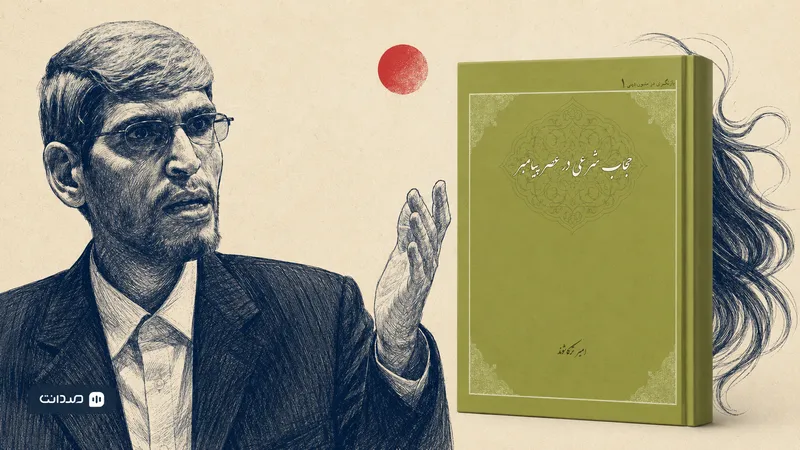
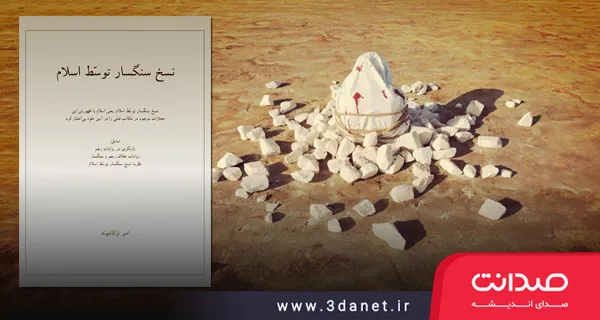
The Book “Legal Veiling in the Prophet’s Era” by Amirhossein Torkashvand
Amir Hossein Torkashvand's The Religious Veil in the Prophet's Era is a wide-ranging and controversial study of the historical, Quranic, and jurisprudential background of women's covering in Islam. Adopting a critical approach that draws on historical criticism, linguistics, and textual analysis of religious sources, the book challenges traditional views on the religious veil and is regarded as one of the most significant works of contemporary religious intellectualism.
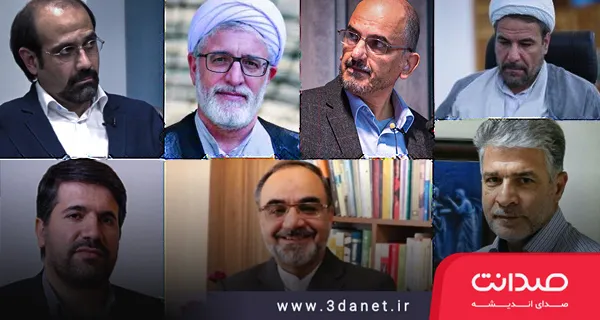
Hasan Yousefi Eshkevari
Book Introduction Writer
Amirhossein Torkashvand
Book AuthorIn the solar year 1390 (2011–2012), a book was published in virtual media entitled: “Legal Veiling in the Prophet’s Era” by Amirhossein Torkashvand. The book quickly attracted attention and was welcomed by Muslim researchers and, subsequently, by a number of non-religious researchers as well, soon finding a great many readers. I received the book by email right at the outset, but after a while I realized that it had been made available to and read by a large number of people through email and by being published in virtual media on a wide and unprecedented scale. A reception that continues to this day. At that time I did not know the author and had not even heard his name. Although I still do not know him personally and have not had the honor of making his direct acquaintance.
Due to the importance of this significant work, which in my opinion is epoch-making in contemporary Islamic studies, in this article I will try to introduce it in two parts: the first part introduces the book’s particulars and a summary of its content, and the second part is an account of the scholarly and research significance of the work and the researcher-author’s fresh look at Islamic texts and sources, and specifically his radically critical interpretive and jurisprudential approach regarding the Muslim woman’s veil. Of course, in a third part I will also point out a few necessary remarks.
A. Particulars and Content Introduction of the Book
According to the introduction that appears on the first page of the book, the book was submitted to the Ministry of Islamic Guidance in 1389 (2010–2011) for a publication license and even reached the pre-publication cataloging stage (FIPA), but it met with the opposition of the censorship officials of the said ministry, and therefore, at least until now, the book has not been officially published in paper form in Iran. However, the author was compelled to first make the book available to certain individuals via email and possibly by hand and in person, and then he published it on his weblog[1] and afterward it was also published on several other weblogs. The author has provided a report on the fate of his book on that same personal weblog (including posts 13 and 22). The reason for this initial limited distribution is also what is stated on the first page of the book: “This book has been provided solely for the use and examination of you, the religious researcher. Refrain from reflecting its contents and publishing news about it, except in research books and dissertations.” However, due to the public reception of this book, the book and news related to it soon far exceeded the limited level expected by the author and became renowned far and wide. The reason for this initial avoidance of public distribution and even the dissemination of news about it was probably twofold: one, the unofficial publication of the book within the country and its specific restrictions, and the other, the author’s avoidance of the book becoming politicized and consequently controversial. It is clear that the author did not produce this book out of material motivation or driven by personal taste and as a pastime; the main concern of the non-clerical, middle-aged author of the book (born 1343/1964), who also has a history of activity in military institutions in the Islamic Republic, is to have an impact in the realm of thought of the supporters and bearers of traditional Islamic teachings (mainly mujtahids and jurists), and it goes without saying that such a goal is incompatible with the book becoming controversial and possible political exploitation in the politicized and securitized atmosphere prevailing in the country; what is important is that this book be taken seriously and read in the seminaries, above and before anything else, and be critiqued and examined by scholars and jurists. As far as I know, this has been the case so far, and positive and constructive reactions have also been seen, and of course, significant oral and written critiques have also been presented (according to my information, one of the more or less modernist sources of emulation in Qom has privately declared that he is sympathetic and in agreement with the thesis of Torkashvand’s book on legal veiling).
This substantial work, in its first version (the version in my possession), is exactly 1017 pages. According to what appears at the beginning of the book, in a broad outline, the book is organized into three parts:
Part One: Veiling before Islam and the Reaction of Muslims
Part Two: In the Shadow of the Quran
Part Three: Jurisprudential Discussions (Examining the Conformity of Jurisprudential Opinions with the Extent of Legal Veiling in the Prophet’s Era).
اما از آنجا که محقق پر حوصله و صبور تقریبا تمام موضوعات ریز و درشت (حتی موضوعاتی که معمولا در اجتهادهای فقهی مورد توجه قرار نمی گیرند و یا اصولا به ذهن متبادر نمی شوند) مربوط به مسئله پوشش زن را مورد تحقیق و تأمل قرار داده است، کتاب دارای فهرست ریز و مبسوطی است و این فهرست به لحاظ تعداد صفحات دقیقا بیست صفحه کتاب را به خود اختصاص داده است. گرچه مرور این فهرست به درک موضوعات کتاب و نیز به فهم دیدگاه نویسنده و در نهایت اهمیت این اثر کمک می کند و از این نظر مرور آنها قطعا مفید خواهد بود، اما در این مجال چنین کاری ممکن نیست و احتمالا ملال آور خواهد هم بود. با این همه، گزیده ای از موضوعات و عناوین محوری کتاب را محض اطلاع خوانندگان این معرفینامه می آورم.
چنان که بخشهای سه گانه کتاب نشان می دهد، بحث از چگونگی و چرایی پوشش در روزگار پیش از اسلام (عمدتا در عربستان و حجاز) آغاز می شود و آنگاه همین موضوع در متن قرآن (به عنوان کتاب مقدس و سند معتبر دینی مسلمانان) مورد نقد و بررسی قرار می گیرد و آیات متعدد مرتبط با پوشش به طور عام و پوشش زنان به طور خاص و به طور خاصتر آیات چندگانه مرتبط با «حجاب» به معنای مصطلح آن به تفصیل و ریزبینی مفسرانه و زبان شناسانه بررسی می شود و در بخش سوم به طور ویژه و مجتهدانه موضوع پوشش زنان یعنی همان (حجاب شرعی) در فقه و اجتهاد اسلامی و عمدتا شیعی و آرای فقیهان از گذشته تا کنون محور تحقیق و نقد و واکاوی است. شاید بتوان عناوین زیر را اندکی ریزتر چنین فهرست کرد:
مفهوم پوشش و چگونگی و چرایی و انواع آن در روزگار پیش از اسلام در میان اعراب به اصطلاح جاهلی، وضعیت معماری و مفهوم خانه و خانههای عربان و به طور ویژه مردمان دو شهر مکه و مدینه در آستانه ظهور اسلام، لباسها و جامههای عربان پیش از اسلام و پس از آن در زمان پیامبر (که عمدتا نادوخته بودهاند و این صد البته نکته مهمی است)، وضعیت معابد و از جمله کعبه و انجام مراسم سنتی حج و حضور مذهبی زنان و مردان در روزگار پیش از اسلام (که در مواردی به عنوان یک امر مقدس مذهبی برهنه کامل طواف می کردند)، پوشش در حج (احرام) در سنت عربی و پوشش در هنگام نماز فرادا و یا جمعی در جمعه و جماعات در سنت اسلامی، بررسی انواع همنشینی زن و مرد و انواع روابط جنسی و ازدواجهای رسمی و غیر رسمی در عصر جاهلی و پس از آن درعصر نبی اسلام و تحولات آن در روزگاران بعد، بررسی مسئله نگاه زن و مردم به هم در عصر پیشااسلام و مشخصات شرعی آن در دوره پس از اسلام، وضعیت بهداشت و آب و شستشو (استحمام و قضای حاجت و به تعبیر نویسنده سرویس بهداشتی و . . .) در روزگار پیش از اسلام، پرده نشینی زن در سنت اسلامی از آغاز تا قرون بعد، پیوند زیست محیط عربان مانند آب و هوا و گرما و خاک و نوع معیشت و فقر و گرسنگی مردمان با انواع پوشش زنان و مردان در عربستان آن روزگار، چگونگی ورود به خانهها در عصر جاهلی و پس از آن در صدر اسلام، تأثیر نماز در تقویت پوشش و حجاب شرعی، بررسی تفسیری و فقهی آیات مرتبط با پوشش زنان و حجاب شرعی (از جمله آیات ۳۳-۳۴، ۵۳، ۵۹ سور احزاب و ۳۰-۳۱ سوره نور)، بررسی جایگاه و منزلت ویژه همسران پیامبر، بررسی مفهوم «عورت بودن زنان» که ظاهرا از یک حدیث نبوی اخذ شده است (که البته از نظر نویسنده جعلی است) و . . .در این سلسله گفتارهای پژوهشی تمام موضوعات و مسایل مربوط به جنس زن و از جمله موضوع پوشش و عدم پوشش اندام زن (از نوک پا تا فرق سر و موی گیسوان) یک به یک و با ذکر جزئیات لازم مورد تحقیق و تدقیق قرار گرفته و حتی از گزارش قرآنی پوشش آدم و حواّ، که ظاهرا هیچ ربطی به موضوع حجاب شرعی ندارد، نیز چشم پوشی نشده است. تفاسیر سنتی مفاهیمی چون چادر و مقنعه و خمار و جلباب و مانند آنها به چالش کشیده شده است. در نهایت نظر نویسنده این است که پوشاندن نیمهی پایین دست و پا و نیز موی سر و گردن قطعا واجب نبوده ولی پوشاندن مابقی بدن شامل تنه، ران و بازو قابل استخراج بوده هرچند، به جز ناحیه دامن، محل بحث و تردید می تواند باشد.
In this extensive study, the factors that from the beginning to later periods led to the emergence of various forms of strict veiling and ultimately the seclusion of women in Islamic societies have been examined (including the negative and strict thought and policy of the second caliph, Umar, regarding women). Among other things, he rightly considers the seclusion of women in early Islam, especially the wives of the Prophet and his daughter, a “myth” and says, “The myth of the seclusion [of Muslim women and the wives of the Prophet] goes back to a distorted interpretation of the verse of hijab and, to a lesser extent, the verse of jilbab. The seclusion of women in early Islam and even the Prophet’s wives, due to the houses, the lack of sanitary facilities in homes, opposition to God’s will regarding the creation of woman, and so on, is fundamentally a great lie” (p. 874).
Regarding the “hijab of Fatima” (the noble daughter of the Prophet of Islam, who, as a fully faithful woman, has been and is respected by all Islamic sects, and whose hijab has always been emphasized, especially in Shiite societies, as a strict model), Torkashvand writes: “The most famous statement about Zahra’s hijab that has been imprinted on the minds of the public and the elite [is] that she veiled herself from a blind man and, in justifying her action, said: If he does not see me, I see him. Another relatively famous statement about her is that she believed the best woman is one who does not see men and men cannot see her. This is the image of Fatima as a model for Muslim women that has been etched in our minds! But in response, it must be said that not only are the two aforementioned hadiths fabricated, but on the contrary, there are narrations about [that] Lady that indicate a covering far less than that of current believing women.” (p. 876). The author’s various arguments regarding the claim of Fatima’s non-seclusion and the limit of her hijab are detailed in their place in the book.
I hope that in this section I have been able to provide a faithful excerpt of the content of the book “Legal Veiling in the Prophet’s Era” and the main and important axes of Mr. Torkashvand’s research, and to acquaint readers with the book in a “concise and useful” manner. Although it must be emphasized that this excerpt is never sufficient, and ultimately, no interested person will be able to dispense with a complete reading of the book.
B. The Special Importance of the Book Legal Veiling in the Prophet’s Era
It goes without saying that one of the several important issues in the modern world’s challenge with Islam and the Muslim faith is the issue of gender and the type of relationship between the two sexes, male and female, which began in the not-too-distant past and continues intensely to this day. It is not even an exaggeration to say that important issues of the modern world, such as freedom, democracy, and human rights, are also somehow on the margins of gender. Because the prominent chapter of these concepts relates to gender equality in freedom, democracy, and human rights (our meaning throughout this article is the thirty articles of the Universal Declaration of Human Rights adopted by the United Nations in 1948).
In this context, the issue of women's veiling and covering is what, following the encounter of Muslims with the Western world and European modernity over the past one hundred and fifty years, has emerged as a serious "problem" and a major challenge more than any other subject. The major challenge has arisen because the modern world, founded on humanism, has made the inherent and natural equality of human beings the criterion for regulating civil relations, securing freedoms, and guaranteeing citizenship rights; indeed, the various forms of freedom, democracy, human rights, or citizenship rights are among the fruits of this towering tree, and this causal link is clearly reflected in the Universal Declaration of Human Rights. In contrast, however, in the pre-modern world, including within the tradition of jurisprudential Islam, which historically belongs to this period, the regulation of social and civil relations is based on legal inequality in various forms. Now, concerning the subject of gender, in this day and age, the fundamental question is: what response do Muslims, purely from a religious perspective, have to this great and profound challenge? Do they accept equality and its logical and practical requirements, including regarding gender, or do they still, within the framework of the traditional and pre-modern outlook and with intra-religious arguments, define and establish the system of civility on the basis of various forms of discrimination? For instance, does the concept of women's hijab fall under the category of Muslim women's choices, or is it entirely coercive, such that no woman (whether believer or non-believer) has the right to appear in the view of non-mahram men without the conventional religious hijab (full body covering), and especially that a political and governmental system claiming to implement Sharia has the right to compel women by force and even punish violators? (As is currently prevalent and dominant in the Islamic Republic).
Over this past century and more, Muslim thinkers (both religious scholars and academic Muslim intellectuals) have, each to the extent of their ability, striven greatly to respond to this major challenge. Although novel and tradition-breaking theories have been expressed on this matter so far, and some Muslim women (especially in the free and secular world) practically enjoy the right to exercise their egalitarian will, freedom, and choice, yet across the Islamic world and in traditional religious societies, the story remains the same, and the observance of religious hijab by religious custodians or religious governments persists as a binding religious matter, a divine decree, or a governmental command (it goes without saying, of course, that observing the principle of hijab as a personal choice versus as a governmental and compulsory matter are two separate categories).
The historical trajectory of the discussion on women, including the issue of hijab, from one hundred and fifty years ago to the present shows that the subject of gender, and specifically women's hijab, has always been and remains tense. Figures such as Sir Syed Ahmad Khan in India, Sayyid Jamal al-Din al-Afghani throughout the Islamic world, Muhammad Abduh and later Qasim Amin in Egypt, Tahar Haddad in Tunisia, and others have, on the whole, defended the legal freedom and equality of men and women, and specifically the freedom of women's covering. In 1913, an Egyptian Muslim student named Mansour Fahmy wrote his doctoral thesis on the condition of women at the Sorbonne in Paris, in which he scholarly, and befitting a university thesis, critically examined the condition of women in Islam and, citing historical data, enumerated the positive and negative aspects of Muslim women's status (this book was later translated from French into Arabic and recently, through the efforts of Torab Haqshenas and Habib Saei, into Persian under the title "The Condition of Women in Islamic Tradition and Evolution" and published in Cologne, Germany in 2007). In recent years, Fatema Mernissi in Morocco wrote a singular book on this very subject, and in her research, she explored fragments of Islamic history and jurisprudence, demonstrating that all this stringency regarding women's hijab is contrary to Quranic thought and the early tradition of the Prophet of Islam, and at least contrary to the Prophet's fundamental idea and thought; her elucidations found a positive and creative resonance among Muslims and even in Western societies[2] .
In Iran, too, the situation has been more or less the same, and more or less similar views have been expressed. In the 1960s, a scholar like Morteza Motahhari, although he did not believe in or advocate for complete, modern legal equality between men and women, nor for religious freedom of dress, nevertheless endeavored in his two books, *The Rights of Women in Islam* and *The Issue of Hijab*, firstly to somewhat reduce the restrictions imposed on Muslim women, and secondly to offer a reasonable, and in today's terms, modern defense of those very legal and jurisprudential discriminations between men and women; a defense which, I believe, was and is, on the whole, unsuccessful. In the 1960s, he took a small step, which was that in the book *The Issue of Hijab*, contrary to the belief of the majority of jurists (including Ayatollah Khomeini at that time), who held that covering the face and hands (wajh wa kaffayn) of a woman was a religious obligation, he defended the freedom of women to leave their face and hands uncovered. It is noteworthy that even this small step was met with a sharp reaction from the traditional and dogmatic scholars of the time.
After the revolution, however, the matter changed entirely. On the one hand, from the very first months of the Islamic Republic's establishment, hijab, meaning the full covering of women (both Muslim and non-Muslim), first in government offices and shortly thereafter outside the home, became absolutely mandatory and compulsory. On the other hand, such a closed and suffocating atmosphere prevailed that even the possibility of scholarly discussion and the raising of theoretical issues (even by Muslim scholars and intellectuals) was practically forbidden and made impossible. During these more or less long years, almost no clear, expert, religious, or even jurisprudential word has been, or can be, spoken on this matter in public circles. The situation has now reached a point where the term 'bad-hijab' in the political-religious literature of official state authorities, and especially in government media, is equivalent to being unveiled, and is therefore considered an insult and an accusation; an accusation that is even legally subject to reprimand and punishment. This punishment, assuming hijab is deemed a necessity according to traditional jurisprudence, begins with ta'zir and ultimately, on the third or at most the fourth offense, ends in execution (not to mention that these continuous punishments and penalties have so far not only been ineffective, but according to the latest research report by the 'Research Center of the Islamic Consultative Assembly' in August 2015, all governmental, disciplinary, and punitive regulations regarding hijab and chastity have not only failed but have practically yielded reverse results).
Nevertheless, in recent years (for various reasons, including the active and vibrant movement of religious and non-religious women), the problem of hijab in Iranian society has received increasing attention, and some religious scholars (including Ayatollahs Montazeri and Sanei) and some Muslim new-thinkers have addressed this issue to some extent from various aspects (jurisprudential, ethical, historical, social, etc.)[3]. For, in any case, without settling the matter of equal gender rights, including women's hijab (especially compulsory hijab, which is considered a symbol of patriarchal and governmental domination over women), speaking of freedom, democracy, and human rights is an incomplete, and one might even say, a futile discourse. The least that can be said is that opposition to compulsory hijab is today agreed upon by the overwhelming majority of Muslim new-thinkers in Iran and the Islamic world. Even a new-thinking scholar like Seyyed Mohammad Ali Ayazi has recently, in Qom, by publishing several articles and interviews in various media, opposed compulsory hijab, especially when enforced by the government, and has refuted the religious proofs of the defenders of compulsory hijab with reasoned arguments, defending freedom of dress from a religious and jurisprudential perspective. This itself is an important step forward (these talks and writings can be seen on the 'Seyyed Mohammad Ali Ayazi Information Base').
But the initiator of the radical critique of the issue of legal veiling in Iran was the late Ahmad Qabel. A graduate of the Qom Seminary and a student of the late Ayatollah Montazeri, he possessed the traditional qualification of ijtihad (though he was religiously opposed to the special clerical garb and did not wear it himself). In the early 2000s, through a series of talks and writings, he began an expert discussion on women's covering and advanced it through several stages. Through a scholarly critique and examination of the opinions of jurists and an analysis of the verses and narrations related to legal veiling, he concluded that not only is covering the hair, head, and neck not a legal obligation, but even covering the body, apart from the private parts during prayer, is not obligatory. In fact, he considered only "satr-e salati" (the covering required during prayer) to be obligatory, which in practice is the covering of the private parts (Qabel's views on this matter are accessible on his website, Shariat-e Aqlani). At the time, his astonishing ideas garnered widespread reflection both inside and even outside the country, creating a strange uproar in seminary and traditional circles and within the judicial system of the Islamic Republic, even prompting some of his seminary-university friends to react and oppose him. Nevertheless, his innovative thoughts on this subject were influential and opened a new path. In recent years (after the publication of Mr. Torkashvand's book), another seminary-university graduate, Mr. Mohsen Kadivar, who is one of the current figures of religious intellectualism in Iran, has also proceeded along this same path. However, his view on the non-obligation of covering the head, neck, elbows, and below the knees is closer to Torkashvand's theory than to Qabel's[4]. Among other notable works in this field is the book by Ms. Sedigheh Vasmaghi titled "Woman, Jurisprudence, Islam," which addresses the position of women in Islamic jurisprudence and tradition and challenges the traditional jurisprudential views of the jurists with a critical approach. She has primarily defended equal rights for women, including the freedom of covering for Muslim women, from a legal perspective. She also does not believe in the legal obligation of hijab as an eternal and supra-historical ruling of Islam[5].
But in this context, Mr. Torkashvand's research is a monumental work, novel in various respects, and in its subject matter, it adopts a critical and radical approach. It can be said that from a jurisprudential standpoint, Torkashvand's views are a continuation of the thoughts and opinions of Ahmad Qabel, but in other respects, it is a completely fresh and newly arrived work. This research and the author's jurisprudential and religious deductions are of such importance that they can be described as epoch-making, possessing the potential to become, in the near or distant future, the source of significant intellectual and jurisprudential transformations not only in subjects such as women and hijab, but the acceptability of the author's research method could be applied to the foundations and methods of traditional ijtihad in various jurisprudential domains, creating epoch-making changes and transformations in the legal rulings on important subjects such as politics, economics, the family system, penal regulations, ethical preferences, and many cultural-religious aspects among Muslims[6].
The most important method employed in the book Legal Veiling in the Prophet’s Era (and also in the book The Abrogation of Stoning) is the method of historical criticism—a method that is fundamentally absent from the principles and methods of deriving legal rulings in our seminaries, and few jurists even pay attention to it or are aware of its importance. The principles of jurisprudence (uṣūl al-fiqh), as the method and methodology of ijtihad, have long been used by uṣūlī jurists. Although this science (or, more accurately, this art) possessed the necessary capacity and capability in the early centuries of its establishment and during the periods of the flourishing and advancement of ijtihad (3rd to 8th centuries AH), aiding the development and deepening of ijtihad, it subsequently declined along with the spread of the degeneration of this art, like other branches of knowledge and sciences, and today it is by no means suited to serious and effective ijtihad. Among other things, historical perspective and the historical criticism of the proofs of ijtihad have no place within the domain of ijtihad.
What is meant by historical perspective is that the proofs of Shi‘i ijtihad—namely the Book (the Qur’an), the Prophetic and Twelver Imams’ tradition and conduct (sunna and sīra), reason and rationality, and ultimately the concept of consensus (ijmā‘)—are removed from the realm of sacred, uncriticizable, and metaphysical matters and, like other human and earthly texts and sources, are understood, interpreted, criticized, and examined within the context of ongoing events and transformations of the time and the backgrounds of specific periods. It is clear, of course, that the rules of historical criticism and its criteria are constantly changing and evolving, undergoing metamorphosis in accordance with the exigencies of the advancement of sciences, experiences, and the rationality of the age. If the rules of the principles of jurisprudence codified in the medieval Islamic centuries were suited to the knowledge, experiences, and rationality of that era, today this is certainly not the case. Hence, for centuries, not only has the methodology of ijtihad been in need of revision and recodification, but, in accordance with the times, ijtihad is in need of a “philosophy of ijtihad” (and, prior to that, a “philosophy of religion”). This is a necessary and essential task that has scarcely even crossed the minds of our traditionally-minded jurists.
In any case, Mr. Torkashvand has endeavored (continuing the work of figures such as Mansour Fahmy and Mernissi), contrary to the prevailing tradition among jurists who derive rulings and issue fatwas by overlooking the minute and major transformations of successive centuries and relying, at most, on a few Qur’anic verses and a multitude of hadiths on any given jurisprudential topic or issue, to delve into the history and time of events related to various issues concerning women, centered on the main axis of the research, namely covering. Through critical examinations of existing Islamic texts and sources in the domains of hadith, exegesis, and jurisprudence, he seeks to open a new path toward reconstructing the highly contentious subject of legal veiling and ultimately arrive at entirely novel ijtihadi conclusions in our time.
It can be said that in this process he has accomplished four important tasks:
First. In the initial stage, with a historical-critical perspective, the logical and historical sequence has been observed, and the subject of women’s covering has been examined and researched by investigating the state of clothing and the reasons for various types of covering among the Arabs in the pre-Islamic era as a cultural phenomenon and the early Muslims’ reaction to it. Then, within the context of such a historical background, the Qur’anic verses concerning clothing, including legal veiling, have been examined. It goes without saying that without scrutinizing the historical contexts and backgrounds of traditional and common coverings among the Arabs of the seventh century CE, a hermeneutic understanding and interpretation of the numerous Qur’anic verses—verses that either refer generally to types of coverings (even the covering of Adam and Eve in Torkashvand’s research) or specifically to the preferred and prescriptive (ethical or legal) coverings of women or men—is impossible. Such a perspective is absent in the common types of jurisprudential ijtihad. Of course, after traversing such a logical sequence, it is time to examine the opinions of jurists in different periods, and in this position, the esteemed researcher has also examined and criticized the opinions of these jurists to some extent with regard to the historical contexts of the emergence of such opinions.
I should add that in this part of the research, a kind of anthropology or historical sociology of the people of the Hejaz has also taken shape, which is independently noteworthy and worthy of reflection and can be useful and illuminating for historians of the early Islamic period.
Second. Another important point in Torkashvand’s work is the optimal use of linguistics. I do not know to what extent the author is familiar with linguistics, modern linguistics in general, and specifically with modern hermeneutics (including philosophical hermeneutics); but whatever the case, in his research—a thoroughly intra-religious and even traditional inquiry—he has utilized language and a probing of the subtleties of words and the expression of meanings, ultimately arriving at results contrary to conventional traditional fatwas. This is a highly significant and almost novel undertaking in mainstream jurisprudential and religious research. Torkashvand meticulously excavates Quranic and narrational words and terms, and by drawing on the vast capacity of words in the Arabic language, arrives at often fresh and problem-solving inferences. He does this, for instance, regarding concepts such as khimār, jilbāb, satr, and so on. Today, the use of modern linguistics is one of the important criteria for the critique of history and historical events; to the extent that a sound, or near-sound, understanding and analysis of historical events seems impossible solely by relying on common written narrations without utilizing the immense capacity of linguistics.
Third. Another important task of the researcher is a systemic and systematic view of the totality of Quranic and narrational words, terms, concepts, and terminologies concerning covering and specifically legal veiling; a view that is almost absent among the community of those practicing ijtihad. Of course, a systematic and holistic view of Islam as a religion or creed (or, in other terms, a worldview or ideology) is not a new idea. In the last half-century in Iran, some modernist Muslim thinkers have paid attention to it and have themselves endeavored, with such a view, to reinterpret Islam in general and its components (monotheism, prophethood, resurrection, prayer, fasting, Hajj, alms, jihad, ethics, politics, economics, the individual, society, this world, the hereafter, etc.). In this regard, Ali Shariati is undoubtedly the pioneering and renowned figure. Torkashvand also strives to connect all Quranic, narrational, and jurisprudential words and concepts related to women’s covering as a cultural phenomenon within a macro-perspective, and to present a coherent and balanced interpretation from their totality; in a way that is both rationally acceptable and, at the same time, does not depart from the framework of the core beliefs of the faith and the conventional, and certainly definitive, Islamic and even jurisprudential criteria.
Fourth. Another innovation in this book is the extraction of the profile of revelation (the context of issuance and the occasion of revelation) from within the Quranic verses themselves, whereby the cause of issuance and the historical background of the Quran’s directives, at least regarding veiling, can be obtained from the heart of the verses themselves (see, for instance, the heading “Framing the Revelation by Seeking Assistance from the Quran Itself” on pages 274-315 and also 396). Setting aside the four points mentioned, Torkashvand’s work appears highly significant from another perspective as well, and that is that he has advanced his research within a thoroughly intra-religious framework and with conventional Islamic criteria (lexicography, the Arabic language, hadith, exegesis, principles of jurisprudence, jurisprudence, etc.) and has ultimately arrived at new and fresh religious and jurisprudential data. This demonstrates that, disregarding extra-religious modernist and new hermeneutical perspectives—which begin religious modernization and reform by refining the basis of epistemological presuppositions and a fundamental transformation in the rules of understanding, and then endeavor to produce intra-religious interpretations according to conventional Islamic documentation—modernization and thoroughly intra-religious rethinking within the framework of conventional and traditional religious rules is also possible, at least within certain limits. Even without revising theological and philosophical foundations, and largely within the framework of common narrational documentation, one can offer radical and impactful interpretations and ijtihads on some fundamental jurisprudential subjects and the rigid seminary-oriented Sharia, thereby creating transformation in legal and jurisprudential thoughts and opinions, and ultimately affecting the lives of believers.
Until now, to prove the claim that effective rethinking within the tradition of Islamic-Shi‘i-jurisprudential thought is possible, I used to cite the monumental work of Na’ini and his book Tanbih al-Umma wa Tanzih al-Milla, and now I have a new piece of evidence: this very enduring and impactful work by Amirhossein Torkashvand on the subject of “Legal Veiling in the Prophet’s Era.” The difference is that Na’ini wrote Tanbih al-Umma during the Constitutional era, in the heat of the tense disputes between proponents of religious law such as Sheikh Fazlollah Nouri, the three scholars of Najaf (Khorasani, Tehrani, and Mazandarani), and others like Tabatabai and Behbahani in Iran over the religious legitimacy or illegitimacy of constitutionalist thought. Without stepping outside the framework of traditional theology and jurisprudence, he skillfully and delicately both reconciled constitutionalism with Shi‘i doctrinal and jurisprudential foundations, granting it religious legitimacy, and, within the core and text of his entirely novel and original theorizations, brought about a fundamental transformation in the tradition of Shi‘i political thought. Torkashvand, however, with this book, has acted in the same way regarding one of the most contentious contemporary Islamic-jurisprudential issues, namely the question of gender (an important subject that is now the focus of feminism and women’s studies in universities worldwide, including in Iran); a work that possesses the capacity for significant transformation in jurisprudential ijtihad and a fundamental change in the outlook of legal theorists and jurists (both Shi‘i and Sunni).
Although Na’ini’s work was not taken very seriously (otherwise, either the Islamic Revolution of ’57 would not have occurred, or at least at the time of the revolution, the revolutionaries would not have been captivated by the image of Ayatollah Khomeini and later his flawed theory of velayat-e faqih, and consequently, the fate of the system born from the revolution might have been different), I hope that Torkashvand’s example will be taken seriously, and that both seminary scholars will read and reflect upon it, and also, of course, Muslim academic new thinkers, who will learn a great deal from this type of research and scholarly work. Especially in the field of women’s studies, such an outlook and such Islamic and jurisprudential research will be very effective and impactful (particularly if one believes in so-called “Islamic feminism”). Religious intellectualism and new thinking are not merely titles, propaganda, and claims; serious and practical rethinking is also necessary. This is the important understanding that covering was a cultural and customary matter that, for historical reasons, became a religious matter, and this proposition completely undermines and renders moot a significant part of traditional jurisprudence concerning gender, women, and legal veiling. It is worth mentioning, of course, that such an understanding has precedents in contemporary Islamic rethinking, but the importance of Torkashvand’s work lies in the fact that, in a research-based and documented intra-religious project, he has made this understanding more substantiated and robust than ever. He has been able, on the one hand, to provide sufficient and adequate documentation for his purposes to support his interpretations, and on the other hand, to seriously challenge the common documentation and interpretations of traditionally-minded jurists.
With all this, let me add that in the real world, any serious rethinking within the tradition of Islamic thought, and especially in traditional ijtihad and jurisprudential understanding, is impossible without refining the basis of doctrinal principles and without a transformation in epistemological presuppositions and rules of understanding. Even figures like Na’ini, Qabel, and Torkashvand, who have opened new horizons and created transformation within traditional thought, have undoubtedly been and are influenced by modern ideas and new interpretive foundations; otherwise, they would not have been able, theoretically or practically, to take a step forward. These individuals first came to believe in the matter of freedom (especially freedom of faith), the novel phenomenon of the primacy of rights over duties and at least their equivalence (the right to choose, the right to elect, the right to self-determination, etc.), and the provision of human dignity and responsibility (albeit through religious justifications), and then, with a historical approach and reasonable distancing, undertook the critique of parts of the Islamic tradition. It is fundamentally a rule that one cannot critique tradition without distancing oneself from it, and undoubtedly, this distancing has been made possible in the light of the philosophical ideas and epistemological foundations of the modern world. It must especially be emphasized that a historical approach to religion and religious teachings is either impossible or truncated and will not reach its logical conclusion without belief in the historicity of revelation (the Qur’an), prophethood, and the opinions of the Companions, jurists, and Imams. This is what Iqbal Lahori said eighty years ago: “The time has now come to reconsider the entire apparatus of our Muslimness,” and this is the very claim that contemporary non-seminary new thinkers (from Iqbal to Shariati and contemporaries) refer to under the title “first ijtihad in principles, then ijtihad in branches.”
C. Final Word and a Few Points
First. The first point is that Torkashvand’s important book Legal Veiling in the Prophet’s Era, while a scholarly and meticulous work full of precise points and, in particular, containing significant conclusions (which, at least in my view, are correct and defensible), this does not mean that all of its claims are correct and defensible; hence, from various perspectives (narratological and hadith-science, or linguistic and lexical, etc.) it can be subjected to critique and examination. Fortunately, many critiques have already been written about it or raised in debates with the book’s author, an occurrence that signals the serious reception and impact of this work. Of course, the few critiques I have seen and read have not been very cogent or robust, and the critics have resorted to unjustified, often marginal and insignificant objections; in any case, such fault-finding, which resembles pretext-seeking more than anything else, does not create a fundamental breach in the pillars of the author’s viewpoint. It goes without saying that these so-called critiques are aimed more at overshadowing the radical and deconstructive thoughts and opinions of the author of Legal Veiling in the Prophet’s Era than at being serious, theory-repairing criticisms.
The only point I can make here is that, despite the correctness of the claim that women were not secluded during the Prophet’s time and even in the first half-century, there are nonetheless numerous reports and narrations in current sources that speak of a kind of seclusion of Muslim women and even the Prophet’s wives (such as what occurred regarding Aisha and her riding in a howdah during the Battle of the Camel). Although I suspect that such narrations cannot stand against the transmitted and rational evidence for the non-seclusion of Muslim women, it is nevertheless necessary to examine the conflicting narrations on this matter, and of course on other matters, with greater care. Mr. Torkashvand knows well that conflicting narrations are extremely important in hadith-science and in ijtihad. So much so that sometimes both sides of a conflict lose their authority and credibility. It seems that in this research, insufficient attention has been paid to conflicting narrations, or at least the status of the rule of “tasāqut” (mutual invalidation) is unclear. Merely citing conflicting narrations is not enough. Ultimately, based on the rule of “ta‘ādul wa tarājīḥ” (balancing and preponderance), it must be clarified what the researcher’s chosen option is.
Another noteworthy point in this same context is paying greater attention to the authenticity and credibility of narrations. In this extensive research, numerous narrations and hadiths have been used in favor of its chosen theory or to refute the views of others, which is, of course, a necessary and unavoidable task; however, it must be noted that in the process of ijtihad, the first step is a precise examination of the degree of credibility and reliability of the narrations transmitted in the available sources. We know that fabricated and false narrations and reports are so abundant in our narrative sources that it is no exaggeration to say that the principle and rule is their unreliability unless the contrary is proven. It is clear that in the process of hadith criticism and refinement, even with the criteria of traditional hadith-science such as rijāl (biographical evaluation) and dirāya (textual comprehension), the hadiths deemed trustworthy and acceptable for proving or refuting a theory will be so few that, in practice, citing them will not be very effective or problem-solving.
Second. In terms of writing and editing, significant flaws are observable in the book (at least in the first edition, which is the one I have) that require revision. The prose, while comprehensible everywhere, does not possess the necessary uniformity and fluency. In particular, some Arabic texts have either been left entirely without translation, or an incomplete and imprecise translation has been deemed sufficient. This was probably done to save on the book’s volume, but in any case, a complete translation is necessary and essential, especially for those who do not know Arabic.
Third. I also have an important suggestion. Given the exigencies of our time, people of books and study have neither much time for reading nor the requisite patience for studying lengthy texts. Although the voluminousness of such an important book is not a fundamental flaw (since, on the one hand, it is to some extent required by such discussions, and on the other, it has its specific enthusiasts who will read it anyway), the principle of "concise and useful" is nonetheless a fundamental one, and observing it as much as possible is necessary and essential. I suggest that a second edition of the book be prepared and presented by the author (or undertaken by another and approved by the author) that reduces the book's volume to one-third, or at most one-half. I think if the book's structure were arranged differently and special attention were paid to selective expression, the book could have been completed in a smaller volume. In any case, one can assume that the large-scale work is for specialists, and the reduced, abridged volume is for general, non-specialist audiences. In such a way that general audiences, by spending less time and even with a quick skim, can become aware of the author's main thoughts and views. In the new edition of the book, the Arabic texts (except in rare and necessary cases) can be entirely removed or limited to translation (with lengthy texts summarized). If a summary is also provided at the end of both editions of the book, it would be very appropriate and useful.
.
[1] Re-examination of Religious Texts baznegri.persanblog.ir
[2] This book was translated into Persian by Maliheh Maghazei under the title "Veiled Women and Armor-Clad Men" and published in Iran in 2001.
[3] Several articles on the absence of moral reprehensibility in women not covering their head and neck by Soroush Dabbagh, published in various media and also viewable on his personal website, are examples of this type of writing.
[4] His views on this matter were published on the Jaras website and are now accessible on his website.
[5] The aforementioned book was published in Iran in 2007 and also published in English in Germany in 2014.
[6] It is worth mentioning that the author has written another important book titled "The Abrogation of Stoning by Islam," which was published virtually in 2012. In this research, Torkashvand, contrary to the thinking of the majority of jurists, claims that the punishment of Rajm (stoning) was not only not endorsed by Islam but, quite the opposite, this extremely violent ruling, a remnant from ancient eras, was abrogated in Islam.
.

Discussion33 comments
سلام آقای ترکاشوند در ترجمه لغات عربی ضعیف است اگر وقت بگذرد و یاد بگیرد قطعا مشکلاو حل خواهد شد. البته اگر با نگاه مغرضانه به تفسیر ایات ننگرد.
سلام و احترام تا جایی که کتاب را خواندم، تحقیقی و روشنگر است. سپاس از آقای ترکاشوند. به نظر من پوشاک امری عرفی و اجتماعی است و متناسب با اقلیم، نه دینی. بر این باورم که آنچه با دقت در قرآن نیامده مر دینی نیست. اگر بود در قرآن می آمد، با دقت هم می آمد. هدف اصلی حضرت محمد یکتاپرستی و پرهیز قومش از شرک بود. بقیه را اگر تذکری دادند دلیل نیمشود امر دینی بوده باشد. اگر بود، دقیق در قرآن گفته میشد. نماز و زکات و ... هم بستگی به کردار پیامبر دارد. «شیوه» نمازخواندن هم اگر قطعی بود توضیخ روشن و دقیق در قرآن داده میشد. بسیاری از روایتها هم نادرستند. در قرآن چه بسیار آیه آمده که برای هر قوم و امت پیامبری هست از خودشان و بزبان خودشان، پیامبری نفرستادیم مگر بزبان قوم خودش تا بتواند با آنها سخن بگوید و پیام را برساند. و .... دستورهای دینی هم محدود به اقلیم و جامعه حجاز است. «للعامین» هم محدود به عالمینِ عرب حجاز است نه همه عالمین. نامه نگاری پیامبر به پادشاهان ایران و روم هم درست نیست،افسانه پردازی است.
با سلام.اگر کتاب کاغذی رو دارید.من میخوام لطفا. به ایمیل من پیام بدهید.
سلام دوستان.تمام ایمان من و دلیلم بر آن وجود و مطالعه قران است.خداوندی که اینقدر دقیق و واضح مسئله وضو گرفتن را با تعیین اعضا و جوارح حتی با ذکر دقیق در حد و حدود و شستن و مسح نمودن بیان کرده است چگونه اس که در باب پوشش زنان مقدار دقیق اعضا و یا پوشاتدن موی سر که دو کلمه است را بیان نکرده است؟!حتی کلمه "سر" و "مو " را در پوشش من در هیچ جای قران ندیدم.
کجا دقیق مساله ی وضو راگفته؟ گیریم که گفته که نگفته. اسم یکی از ائمه در قرآن نیامده. تعداد رکعات نمازهای پنجگانه در قرآن نیست. شرایط امر به معروف و نهی از منکر مستقیما در قرآن نیست. احکام کامل حج نیست. احکام کامل خمس نیست. احکام کامل زکات نیست.کسیکه بدون عترت سراغ قرآن بره دچار گمراهی میشه. پیامبر دو میراث گرانبها رو به جاگذاشت. شما یکیشو میخوای ندید بگیری
سلام، این کتاب را خواندم، بیشتر خنده ام گرفت از استدلالات که چیزی را مفروغ عنه می داند و ما بقی را به همان ترجمه می کند، مثلا معانی کلمات را تغییر می دهد، یا خمار را به معنای دامن پایین تنه می داند و همه چیز را به آن معنا تفسیر می کند، ایشان اولیات بحث فقهی و استدلالات را نمی داند، پیشنهاد می کنم اگر کسی با مطالعه این کتاب اندکی شبهه برایش ایجاد شده است، هم نقد آقای سوزنچی و هم مناظره آقای سوزنچی و ترکاشوند را گوش کند تا متوجه اشتباهات فاحش ایشان بشود.
من نقدشو گوش کردم آقای ترکاشوند باصبروحوصله ادله هارو جواب دادن درصورتیکه آقای سوزنی باتمسخر پیش میرفتن جالب نبود
دوستان عزيز اگر به هر دليل ترجيح دادند "تاييد" نشود و " قابل نمايش " نباشد .لطفا دليل ان را از طريق ايميل به اطلاع بنده برسانند ممنون ميشوم .
مقاله فوق را هم مطالعه كردم متاسفانه با پيشداوري و موضع گيري (بعضا شديد )نوشته شده است. شايد نويسنده مقاله به دليل اينكه كتاب اجازه نشر نيافته است ناراحت بوده كه البته اين دليلي بر اظهار نظر يك جانبه بر يك كار تحقيقي نيست . كاش كتاب اجازه نشر مي يافت تا اينگونه موضع گيري هانميشد .
در مورد يك كتاب 1000 صفحه اي انهم با ارجاعات زياد به منابع مختلف اظهار نظر كردن اسان نيست خصوصا كه موضع گيري هاي روز در مورد مسايل شرعي را كه برخي از انها مغرضانه هست و نيز پيشداوري ها در برخي نظرات بالا معلوم است . بهتر است علاوه بر مطالعه كامل ويا برخي از قسمت هاي كتاب نقد هايي هم كه نوشته شده مطالعه و بعد از ان اظهار نظر شود. بلاخره تحقيقي انجام شده
افتضاح تر از کشور ما نیست قطعا. منتها فساد کشور ما پنهان ولی فساد اروپا علنی. آمار تجاوزات اونها منتشر می شه ول تو کشور ما هیچ دختری جرات نمی کنه به خاطر تجاوز شکایت کنه یه نگاهی به فضای مجازی ایران بکنید سایه ای از فساد جامعه را می بینید
وقتی ذهنیت شما را دانشگاه و رسانه خود آن ها شکل می دهد و از کوچکی در فضای فیلم و کارتون و ... بزرگ شدید طبیعی است که فساد آن ها را این طور توصیف کنید. انی را قبول کردید شما را گیج کرده و علیه خود ُ، خانواده و هم وطن خود تحقیر روا می دارید. هالیوود makebeliebve است . اونی رو که باور کردید شما را فریب داده نه آن که از آن انتقاد دارید.
بهترین و جذاب ترین کتاب درباره حجاب، عنوانش هست: «آخه حجاب به چه دردی میخوره» این کتاب فوق العاده شیرین و خودمونی و جالب نوشته شده. از وقتی خوندمش تصمیم گرفتم همه جا برم معرفیش کنم. انقدر خوب نوشته که اصلاً احساس خستگی نمی کنید. یه سرچ کوچیک تو اینترنت کنید تو سایت نویسنده اش می تونید دانلودش کنید. دوباره می گم. فوق العاده س. هر کی نخونه اصلا تا حالا نفهمیده حجاب چی هست.
خانم عاطفه محمد پور ،کتاب بهتری نبود واقعا معرفی کنین ،انقد که با ذوق گفتین رفتم ۴۰ صفحه اش و خوندم ،اول از همه زبان نوشتاری اش اصلا خوب نیست خواسته خودمونی باشه ولی بیشتر گیج کننده شده ،به نظرم حرف نویسنده درسته که گفته تنها هدفش ریاکاری بوده.
این کتاب محشره ، بینظیره . خوندنش به خیلی از سوالات و تناقضات ذهنی من پاسخ دقیق داد. ان شاالله عاقبت به خیر بشه نویسنده
باسلام خواهش می کنم این کتاب رابدون تعصب بخونید واقعا علمی نیست واز روش های پژوهش تاریخی استفاده نکرده منابعش دسته اول نیست وبرای ترجمه واژها به لغت شناس مراجعه نکرده وجواب نقدهایی که به کتاب شده نداده
برادر عزیز بنده در مورد کتاب آقای ترکاشوند نظری ندارم، اما انتقادی که به جنابعالی دارم این است، که با معرفی خود بعنوان دکترای تاریخ اسلام می خواهید چه چیزی را به اثبات برسانید.مطمئن باشید که با تکیه زدن به مدرک نمی توانید درستی نظر خود را ثابت کنید. بجای این سعی کنید مدرکی برای اثبات نظر خود ارائه کنید،تنها در این صورت است که مردم میتوانند قضاوت درستی در مورد نظر شما داشته باشند.موفق باشید.
استادتركاشوند بايست حمايت شوند ، انگيزه و روش ايشان در تحقيقات بر پايه عقل عرفي و قران و با معيار قرار دادن زمان و مكان ستودني هست
كتاب مذكور با عقل سليم تطابق دارد و ميتوانيم حجاب را نسبت به شرايط زماني و مكاني و صد البته از بعد فرهنگي بررسي كنيم
با سلام اگر هم این کتاب از نظر تاریخی اثبات شود، باید به مسئله اختلاف زمانی پرداخت. در این زمان اگر این مسئله یعنی آزادی حجاب با این شرایط این نظام، اگر اتفاق بیفتد چه میشود؟! یعنی باید تقربیبا بیست سال دیگر دیده شود. چون شما باید قبول داشته باشید که شرایط الآن اروپا چقدر افتضاحه و حتما نمیخواهید که ما شرایظمان مثل الآن اروپا شود!!!
آیا شما اروپا را دیدهاید که می گویید افتضاح است در کشور آلمان امنیت زنان در جامعه بیار بالاست و فرهنگ و نگاه مردم بسیار مترقی است. البته نگفته نماند که همه چیزمان باید باهم رشد کند تا توانایی زیستی انسانی را داشته باشیم
کتاب رو هنوز نخوندم ولی خیلی علاقه مندم از زوایه ای متفاوت و جدید این مساله رو مورد بررسی قرار بدم و سایر اقوال رو مطالعه کنم. به عنوان کسی که ۸ سال در حوزه مشغول تحصیل هستم نظرم اینه که در خیلی از مسایل دیگه هم باید یک بازنگردی و بازخوانی محققانه و بدون پیش داروی و جبهه گیری صورت بگیره وقت ان رسیده که مفاهیم و معارف دینی ازموده بشه و عیار ان در جامعه امروز مشخص شود و متدینین نباید از این بابت ناراحت یا نگران شوند مگر اینکه دین را دکان کاسبی خود کرده باشند
دوسال پیش کتاب را خواندم. گویا محقق طوری تحقیق کرده که به دور از جناح بندی های سیاسی باشد و کاری در خور ارزش ارائه بدهد.که جای تقدیر دارد. قطعا این کتاب نیز مثل خیلی از کتب نوشته شده جای نقد دارد ولی دلیل بر رد کلی آن نیست.و باید تحقیقاتی از این قبیل ادامه پیدا کند. اما از بعد مالکیت معنوی دلم برای نویسنده چنین اثر ارزشمندی می سوزد که هزاران روز وقت گذاشته ولی کتابش موفق به چاپ نشده.ای کاش شرایطی فراهم شود که صاحب اثر به حق خودش برسد
این سایت مانند روزنه ای روشنگرانه است.سپاس از بودنتان
با سلام و احترام شماره تماس انتشارات کتاب حجاب شرعی در عصر پیامبر می خواستم جهت خرید . تشکر حاجیان . 09354088175
با سلام کتاب را خواندم از حیث منابع بسیار قوی و مستدل و از حیث بیان بسیار مفید و سازنده یافتم خواندن کتاب را حتی برای عموم مردم از نان شب واجب تر می دانم این صرفا یه جزوه یا کتاب نیست نوری است تابناک برای تفکر و اصلاح دین
کتاب راتا پایان خواندم یک اثر محققانه ومتهورانه است تعدد منابع معتبر دلیل ایقان واستحکام یافته های ان است شایسته است عالمان دین انرا موردداوری منصفانه قرار دهند.
جاهای زیادی برای به چالش کشیدن کتاب وجود دارد مثلا اگر قبول کنیم جیب به معنی شکاف فرج باشه باید ادعا کرد نعوذ بالله حضرت موسی دستش رو میکرد تو شرت و بعد در میاورد و بیضاء میشود! چرا که به فرموده قرآن ایشان دست در جیب میکردند!
این کتاب باگ های زیادی داره!نقدهای زیادی هم بهش شده.خود آقای ترکاشوند فرمودند 20 تا مقاله در نقدش نوشته شده!ایشون پنج سال پیش قول دادن به تمام نقد ها پاسخ بدن اما دریغ از یک جواب! ولی در مجموع به نظرم عذاب آورترین نکته ترجمه مفردات بود.فکر میکنم خیلی بدیهی باشه که برای ترجمه یک واژه باید به اهل لغت مراجعه کرد.ولی ایشون خیلی راحت "جیب" رو به مطلق شکاف یا عورت،"خمار" رو که همه ی لغویون و مفسرین به معنی روسری گرفتند به معنی لنگ!و "ساق" رو هم به معنی ران!! میگیرن که ایضا تمام لغویون اون رو به همون معنای ساق گرفتند!بعد تمام روایات تاریخی وآیات قرآن رو اینطور معنا کردند! خب معلومه وقتی ما درباره محدوده پوشش صحبت میکنیم و گریبان رو عورت،روسری رو لنگ و ساق رو ران درنظر بگیریم محدوده خلاف اون چیزی که مشهور هست خواهد شد! یاحق