Religion
Open-Thinking Forum: “Hijab in the Historical and Cultural Context of the Revelation Era”
In a session critiquing the book Hijab in the Age of the Prophet, the distinction between hijab and clothing was used to examine dress and nudity in the Age of Ignorance. The duties of men and women of that era were explained with reference to unstitched garments and the practice of circumambulating the Kaaba naked.
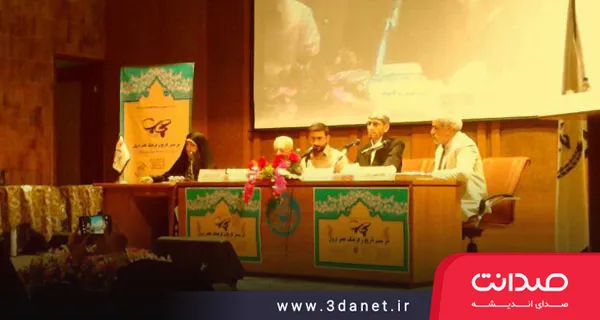
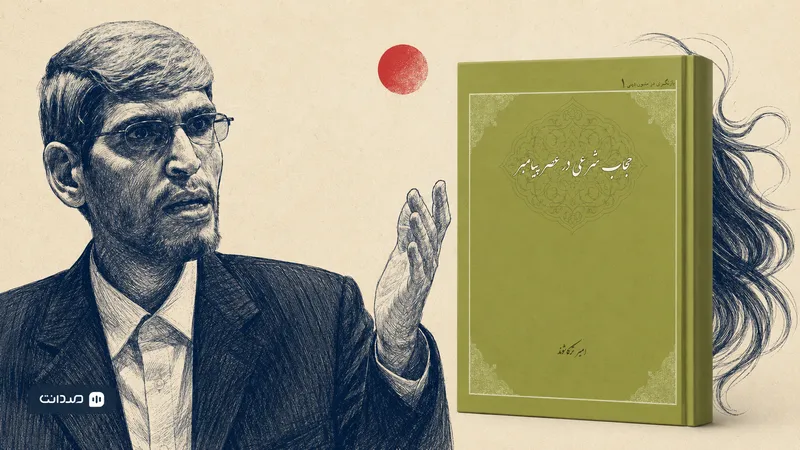
The Open-Thinking Forum session “Hijab in the Historical and Cultural Context of the Revelation Era” was held with Azartash Azarnoush as historical critic, Hossein Davarzani as critic of the jurisprudential aspect, Behzad Hamidieh as critic from the perspective of sects and denominations, and Amirhossein Torkashvand, author of the book Religious Veil in the Era of the Prophet (PBUH), for the critique and review of the book Religious Veil.
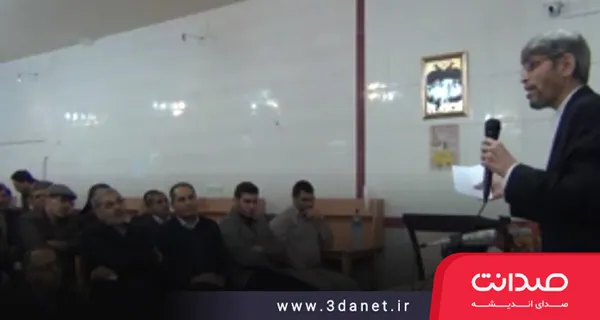
At the beginning of the session, Torkashvand defined two keywords: hijab and the era of the Quran’s revelation. He said: Hijab should not be confused with clothing. Hijab is not clothing or garments; clothing and garments vary based on climate, heat, and cold, whereas hijab is for covering the body parts whose exposure leads to sin. We must know which body parts are obligatory to cover and which body parts cause sin when exposed.
Apologizing for his frankness, he added: For men, hijab includes the body parts that are jurisprudentially obligatory to cover, meaning the area from below the navel to the knees. If any of these parts are exposed, a sin has occurred. Jurisprudentially, exposing other body parts is not a sin, but Muslims, even though it is not a sin, cover their other body parts as well—though not because it is sinful.
He continued: The other keyword is the era of the Quran’s revelation. Today, we are not talking about hijab in the contemporary era and we leave this matter to the specialists. We want to know what duties were placed upon men and women when the verses of hijab were revealed to the Prophet (PBUH). Hijab is an important issue, and significant cost and time must be devoted to this important issue.
Torkashvand then referred to the time before the Prophet’s (PBUH) mission and said: I will refer to the time before the Prophet’s (PBUH) mission and sketch the image of that pre-mission era to see what the Prophet’s (PBUH) words and the verses of hijab were pointing to. We must remember that the people of the Prophet’s (PBUH) time were the primary and direct addressees of the Quranic verses. To create a proper picture of the situation of that time, I will point to a few things: adherence to clothing, the quality and quantity of clothing, and the extent of hijab.
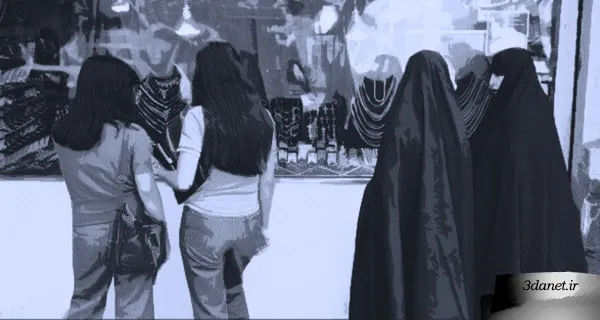
Regarding people’s adherence to clothing in the pre-mission era, he stated: Before the mission, in the region where the Prophet (PBUH) was present, the majority of people used clothing, meaning the use of clothing was the norm of society. However, among them, a significant number of individuals lacked clothing, and this nakedness did not attract anyone’s attention because it had become a normal matter. And this majority who had clothing would set aside their clothes during various ceremonies and occasions. It is said that during the restoration of the Kaaba, the individuals who were devout and devoted to the Kaaba at that time used stones and similar materials to rebuild the Kaaba, and to lessen the effect of these stones on their shoulders, they would remove their loincloths, gather them up, and place them on their shoulders. This nudity also did not attract anyone’s attention. There are reports that during the Hajj rituals, the phenomenon of naked circumambulation existed, where naked men and women performed tawaf alongside each other. It was done with various motivations; some have said that for this act, men performed tawaf during the day and women at night, while others say everyone performed tawaf during the day while placing one hand in front and one hand behind themselves. In a narration, the Prophet (PBUH) said: ‘We prophets have been forbidden from nakedness.’ See how prevalent nakedness was. The Prophet (PBUH) forbade his uncle from nakedness, or there was a person carrying goods on his shoulder whose garment fell from his waist; the Prophet (PBUH) told him: ‘Put down the goods and first put on your garment.’ Even if these reports are not real, they still convey information about the state of covering in those days. There are many instances in this regard that can be pointed out. Some sins for which atonements have been prescribed include, for example, clothing ten needy people. This clothing of ten needy people means giving them clothes to relieve them from nakedness. And interestingly, in the interpretation of this amount of clothing, it has been stated that it is a garment that can cover the private parts. I mention these things to grasp the severity of the covering situation regarding the degree of adherence to clothing. This was the first characteristic, so the principle was being bound to clothing.
He stated that perhaps the most serious part of the research concerns the characteristics of clothing, acknowledging: Examining these characteristics helps us arrive at a correct understanding of what the verses revealed in this regard refer to. The primary characteristic was that the garments were unstitched; they did not cover their bodies with sewn clothes but rather draped themselves with cloth. This amount of covering was scant, there were no undergarments or outer garments, and even this scant clothing did not adequately cover the body. At that time, there were two types of covering that were also prohibited by the Prophet (PBUH): a garment where one wrapped the cloth around oneself and threw one side over the shoulder. Naturally, on one side, these clothes would reveal the body when sitting and walking. When they sat and raised their knees, since they had no undergarments, their private parts would become visible. If we talk about the number of garments for men and women before the Prophetic mission, we can say that men wore one or two garments. Sometimes they would wear a single loincloth (izar), throwing it over the shoulder or tying it at the waist. If they had a little more, they used two coverings: a cloak (rida') thrown over the shoulders and a loincloth (izar) tied at the waist, a vestige of which remains in the clothing for Hajj. This men's clothing had several flaws, because men had no moral resolve to cover themselves; the edges of the cloak did not meet, and the chest was visible. If we see that, according to the description of elders, their chests are spoken of, it is for this reason. Also, the side slit of the loincloth was not sewn, so the body was exposed while moving, and it had a lower slit that caused exposure when sitting and standing. For women, two types of clothing were also used: one was this same two-piece garment with the same flaws, and the other was a garment they were made to wear upon reaching the age of religious obligation. They would be taken to Dar al-Nadwa, and a single piece of cloth with a slit in the middle, as a neck opening, was put on them. Regarding this garment, I have seen reports where it is not specified whether the side slits were sewn or not. It was secured at the waist, but whether they were sewn is unclear, and the lower part was also not sewn. Furthermore, the central slit of the garment was so large that the entire chest was visible. Well, consider the people of this period and the state of their hijab.
Regarding the hijab of the people in the era before the Prophetic mission, he said: In the Age of Ignorance (Jahiliyyah), men had no hijab at all. As Dr. Motahhari puts it, the men of that time were not even accustomed to covering their private parts. However, some elders and tribes refrained from being naked even during circumambulation (Tawaf). Now, whether this custom stemmed from beliefs, morality, and sexuality, or from a sense of dignity—and it was likely the latter—the hijab of women was not much different from that of men. If other parts of the body were exposed, it was not considered a morally bad act in society because everyone else was the same. Perhaps the only concealment was the area below the skirt and, possibly, the chest area, for which some tribes exercised care.
Torkashvand, regarding the preservation of chastity in the Age of Ignorance, said: Were the men and women of the Age of Ignorance chaste or not? Unfortunately, based on the reports obtained, especially from the Quran, they cannot be considered a chaste society, and sexual corruption was very apparent. So much so that when someone entered the religion, a pledge was taken from them not to commit adultery (zina). They did not consider adultery to be ugly; it was Islam that decreed adultery must not take place and that this act is vile. Of course, in the Age of Ignorance, adultery existed in two forms: one secret and the other open. Open adultery was considered bad, but secret adultery was seen as a kind of cleverness. When a child was born from adultery through this secret means, men would declare that they were the cause of that child. This issue was so serious that the Prophet (PBUH) took a pledge from women not to commit adultery and not to attribute the children resulting from it to their husbands. Today, if any religious leader were to make such a pledge, it would be considered a form of disrespect and shamelessness.
He then referred to the state of houses and dwellings at that time, saying: The state of housing before the Prophetic mission was a serious problem. Qusayy ibn Kilab is the fifth ancestor of the Prophet (PBUH), and before him, there were no houses because they thought that if a house were built, the owner would have property rights, which was a sin within the sanctuary of Mecca; or, to build a house, they would have to clear the thorns and debris from the ground, which was also considered a kind of sacrilege. Qusayy ibn Kilab said: We will build the house with the intention of hosting pilgrims; if divine punishment descends, we will stop. In this way, the house was built, and Dar al-Nadwa was the first house for Qusayy ibn Kilab. These houses had no doors, both to avoid establishing ownership and to show they were for hosting pilgrims. As a result, the interiors of the Meccans' homes were visible, and reports indicate they had no toilets or baths; they would go a little further away to relieve themselves, and when they sat together, since nudity had lost its indecency, it was not very important. The same problem existed regarding bathing.
According to this report, Azartash Azarnoush offered a critique of the book on Shar'i hijab and examined poverty as a factor introduced in the context of hijab, stating: The point is that people in the Arabian Peninsula were not uniform. For example, the city of Palmyra was under Roman influence and important people lived there; it was a significant place for trade. Jordan was also advanced and wealthy. Alongside these was the Ghassanid state, which was influenced by Rome and, to a lesser extent, Persia, and had a civilized government. Here, there were individuals like Mundhir and Harith, who were from the tribes and served in the official Roman council. Slightly lower down was the city of al-Hira, one of the most flourishing Arab civilizations, which was a vassal of the Sasanians; the majority of people in this city were Christian. In the city of Mecca, the people were not so afflicted by poverty; Mecca was the commercial center of the region and they had a very important profession called al-Khifara. They were strong men who received large sums of money from caravanners with camels and horses to guide the caravan safely through the deserts. Yemen was the last part of al-Hira and was one of the important centers of civilization, which was conquered by the Persians, and Iran administered it for 50 years. It is our pride that Yemen was the first place to incline towards Islam. In the middle of this desert, there were also poor tribes, who were, of course, powerful and attacked Iran many times; this very al-Hira had created a veil between Iran and the Arab tribes. Thus, the wealth situation of the Arabs was of this nature, though I do accept that in the middle of the desert, there were also poor tribes.
Azarnoush continued: In appreciation of Mr. Torkashvand, I can say that he has searched like an ant among old and new sources, mostly among the old sources, and brought out material. However, this book has problems in terms of writing; he has repeated narrations several times, or has cited a single line of poetry 20 times in this book. If I wanted to write this book, I would have finished it in 70 pages. I am not concerned with whether the narrations are fabricated; sometimes fabricated narrations are correct, but they do not refer to the complete events and lack historical context. He arranges narrations side by side, and this is his greatest flaw. For example, I say a king drew his sword and killed a man, but when I say that man spat towards the king and the king became angry and killed him, everyone understands. Mr. Torkashvand has not fully recounted the story of a woman named Zaba'. Mr. Torkashvand's writings severely suffer from a lack of historical context, but fortunately, you have translated the texts well.
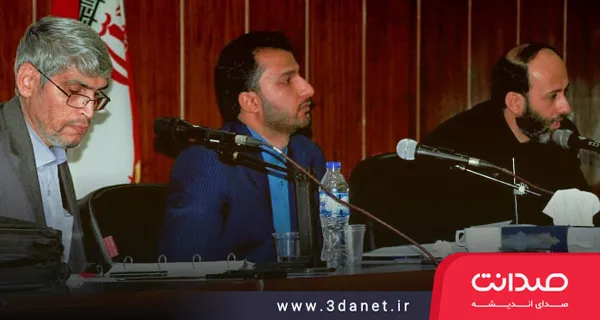
In this session, Behzad Hamidieh also expressed his views regarding the book Hijab-e Shar‘i (Religious Hijab) and stated: This is a detailed study that draws on many sources, but there are also problems which I will point out; it does not address whether the material is acceptable or not. If these accounts are not authentic, when placed side by side they suggest certain things, but at some points in history we see that matters have been completely transformed. Mr. Torkashvand has cited material from the Bible, the Torah, Will Durant, and various Islamic sources without addressing their acceptability, yet he has thoroughly addressed material that favors covering in early Islam. And the notion that the Prophet (PBUH) was naked, or that while he was urinating someone passed by and greeted him and the Prophet (PBUH) said, 'Do not greet me in this state'—given that the Prophet (PBUH) was from the nobility and notables, this may not be acceptable. There have been difficulties in reading some Arabic texts; for example, Zubayr was a companion of the Prophet (PBUH) and with such grandeur, was he an individual who would be naked and indifferent to this matter? On page 91 of the book, quoting from the book Fā’iq, it is stated that Zubayr was a naked, uncircumcised, and bow-legged person. I examined the book Fā’iq and found that the author has made Zubayr the narrator, and quoting him, describes someone as naked, in this manner: Zubayr: That person was naked, uncircumcised, and bow-legged. Another problem is the quantity; how prevalent was this issue among a few people? Regarding poverty; what problem existed when they were purchasing war equipment? Regarding the sword scabbard, where did they attach this sword? Was it to that very loincloth or to their bare waist? Would that not have been bothersome? And the phrase 'clothe the poor as expiation' has been interpreted as referring to nakedness.
In this meeting, Dr. Hossein Davarzani referred to a verse from Surah An-Nur and gave his time to Torkashvand, saying: The verse in Surah An-Nur that you have referred to pertains more to chastity.
Amir Hossein Torkashvand, in response to the criticisms directed at Dr. Azarnoush, said: I thank Dr. Azarnoush and was pleased to have my translation approved by him, and I ask him to re-read the circumambulation of that woman. I presented her as a prominent example who had advanced to the threshold of marriage with the Prophet (PBUH), and there is no doubt that I mentioned this ritual as a pagan ritual. If I were to provide complete explanations, the book would have reached 2,000 pages. I accept that the material has been repeated, and this is a scholarly flaw, but if repetition occurred, it was another narration of that same matter. I organized the material into two sections. As I was addressing the most important issue for Muslims, I paid attention to the fact that Iranians examine the beginning and end of a book and do not heed my request that they even read the book's table of contents. Therefore, through a certain management, I repeated the material at the end as well.
In response to Hamidieh’s critiques, he said: I have so far referred to the period before the Prophet’s mission, but do the instances Dr. Hamidieh mentioned cause the codes to collapse or not? I said they mostly used unstitched fabrics, and I never claimed that unstitched clothing did not exist at all. Note that the Quran also mentions garments, but it does not mention anything called sewn clothing; there is only one instance of sewn clothing in the Quran, called a qamis, which belonged to Joseph (AS) in Egypt and had no connection to the place of the Prophet (PBUH). As for the objections raised against my book one by one, even if these objections are correct, do they detract from the book’s main claims? I claimed that there were no toilets—imagine the difficulties this situation created—or that there was no designated place for bathing, and they made do with the barest minimum of clothing. Regarding the material I took from the Bible and the Torah, I must say that when a discussion arose, I used that material. In the entire book, I wrote about a non-Muslim, non-Arab individual only once; I cited a point from Will Durant and used his name as a source. As for Zubayr, I did not quite understand. Unfortunately, during the time of the Prophet (PBUH), there were no toilets, and the Prophet (PBUH) was also compelled to live with those realities. The Prophet (PBUH) would go to places where he would not be seen, but this does not prevent someone from passing by. Someone passed by and, in accordance with that same pre-Islamic indifference, saw the Prophet (PBUH) and greeted him. The Prophet (PBUH) magnanimously returned his greeting and said: I returned your greeting, but henceforth, if you see anyone in this state, do not greet him. Well, what objection can there be to this in a context where there is no lavatory and the passage of people is unavoidable? Regarding clothing and military gear, I explained in the book that unstitched clothing was more prevalent and they lived with it. The Quran also does not mention sewn clothing; there is one reference, but that too was not in that region. They were constantly at war, but they were not constantly dressing. As for examining cases and narrations that support the conclusion, yes, that is correct; I have done exactly that, and this is an obligation that requires verification. To understand whether women must cover their wrists and forearms, we need evidence. If I scrutinized certain issues, it is because matters that impose an obligation on a person must be verified. On this basis, I examined the narrations, and if the narrations could not establish an obligation, no obligation would arise.
He continued: In the second part, which concerns Islam’s reaction to the pre-existing environment, it was as follows: The Holy Prophet (PBUH) accepted that people’s homes lacked doors and toilets. In this situation, one must see what guidance Islam provided. Under these circumstances, these verses were revealed: verses 17 and 28 of Surah An-Nur and verse 53 of Surah Al-Ahzab, which placed this responsibility on the believers themselves and gave them dignity. It was said: O believers, when you arrive at people’s homes, knock and ask permission. The Prophet (PBUH) himself also gave practical guidance, saying: When you go to someone’s house, do not stand facing the door; stand to the side, greet them, and ask permission. With this initiative, he resolved these problems. Regarding homes, one verse that was misunderstood is this verse from Surah Al-Ahzab. It says: When you wish to go to a woman’s house, first call out and stand behind a hijab, which was either a curtain or a wall, and call out. If she gives permission, enter. This eloquent verse was imagined to mean the seclusion of women and was used throughout history to signify a woman being housebound.
He added: The Prophet (PBUH) indicated regarding the privy that you should not go to the privy together, and also do not bathe together, and bathe in a covered place. When people saw others going to the bathhouse together and with women, they would fabricate hadiths and say that the Prophet (PBUH) had forbidden going to the bathhouse. The Prophet's (PBUH) second step concerned clothing. The fact that the people of the Age of Ignorance did not even care about covering their private parts did not mean they were naked; rather, if clothing shifted out of place, they showed little sensitivity. It was in this context that the relevant verses were revealed, and a measure was devised for the shortness of garments: women were moved to the back rows, and the Prophet (PBUH) ordered that when men prostrated, women should not look at them, and women should raise their heads from prostration a little later than men. Another point was their covering.
In response to Davarzani, Torkashvand said: That verse of Surah An-Nur refers to chastity, but it also refers to hijab and covering, which is the perspective from which I addressed it.
At the end, attendees asked questions about coverings and whether clothes were sewn, which Torkashvand answered using the Quran and the qamis of Prophet Yusuf (AS), but due to lack of time and the abundance of questions, it was postponed to another occasion and the next session.
The above text has been taken from the Shafaqna website with slight modifications.
.
.
Download the audio of the Open-Thinking Forum: Hijab in the Historical and Cultural Context of the Revelation Era
Download from Server 1 | Download from Server 2
.
.
Open-Thinking Forum: Hijab in the Historical and Cultural Context of the Revelation Era
Held with the presence of professors: Azartash Azarnoush, Hossein Davarzani, Behzad Hamidieh, and Amir Hossein Torkashvand, author of the book "Shar'i Hijab in the Age of the Prophet (PBUH)". Location: Shahid Madani Hall, Faculty of Theology and Islamic Studies, University of Tehran, located on the 4th floor of Building No. 3 of this faculty, at the address: Shahid Motahhari Street, intersection of Shahid Mofatteh Street
Date: 2016/05/03
.
.

Discussion2 comments
با سلام مدتی بود دنبال نقد جدی درباره کتاب حجاب بودم از دست اند کاران سایت فرهنگی صدانت سپاسگزارم. ببخشید آیا دکتر آذرتاش آذرنوش کانال تلگرامی دارند یا اینکه ایشان در کانالی عضویت دارند که بتوان با ایشان در ارتباط بود؟ بسیار مزید امتنان خواخد بود اگر بتوانید راهنمایی فرمایید چون پبشنهاداتی برای این استاد فرهیخته دارم و مدتهاست به دنبال راهی برای ارتباط با ایشان می گردم ولی متاسفانه تا بحال توفیقی نداشته ام.
با سلام اتفاقا به دنبال نقدی بر کتاب حجاب بودم استفاده وافری از مطلب درج شدم بردم.سپاسگزارم مدتی است به دنبال شیوه ای می گردم تا بلکه ارتباطی با دکتر آذرنوش پیدا کنم متاسفانه توفیق نیافته ام .حتی فسمت ارتباط با ما در سایت ایشان غیرفعال است .چنانچه دست اندرکاران شریف سایت فرهنگی صدانت کانال تلگرامی ، یا شیوه دیگری که بتواند در برقرای ارتباطم با ایشان به صورت پیام ، متنی و ... یاریم نماید، برایم پیشنهاد دهند سپاسگزارشان خواهم بود .