Religion
Amirhossein Torkashvand and Mohammad-Ali Vatandoust Debate: “The Sharia Limits of Hijab: Revisiting the Minimal Hijab Theory”
Amirhossein Torkashvand and Mohammad-Ali Vatandoust debated the concept of 'minimal hijab'. Torkashvand challenged sensitivities by referencing the status of female slaves, while Vatandoust argued that jurisprudential rulings are not confined to their historical context.
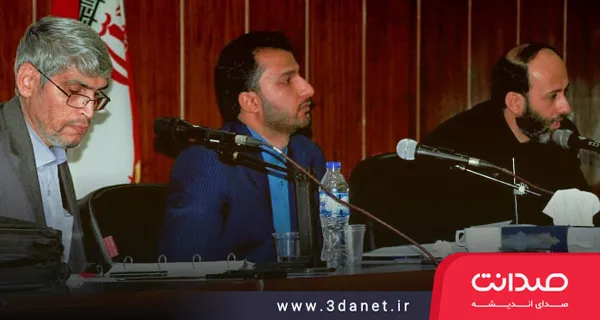
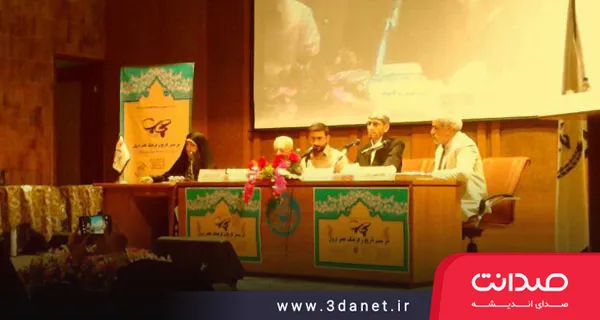
On December 2, 2019, Amirhossein Torkashvand, author of the book “The Religious Veil in the Era of the Prophet (PBUH),” and Mohammad-Ali Vatandoust, a faculty member at Ferdowsi University of Mashhad, examined the theory of minimal hijab during a scholarly debate and dialogue titled “The Sharia Limits of Hijab: Revisiting the Minimal Hijab Theory” at the Faculty of Theology of Ferdowsi University of Mashhad.
At the beginning of this debate, Torkashvand stated: There is a close relationship between maximal hijab and chastity, but I must say that this connection is entirely shaky, and we need to reduce these sensitivities. In the society of the Prophet’s (PBUH) era, in the homes of each and every one of our Imams, there were women in society who were non-free and non-Muslim, living under Islamic rule, and their numbers were increasing; we refer to them as enslaved women.
This researcher added: What was the hijab of these women like? It must be said that none of our jurists throughout history prescribed a hijab of a headscarf, socks, and long clothing for them; they were able, and indeed compelled, not to wear a headscarf, and could move about in society without socks and a headscarf, and they were also present in the homes of our Imams; some of them were wives of our Imams.
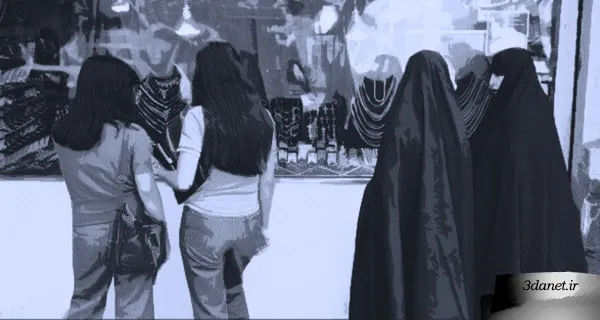
Torkashvand stated: Do we have the right to tell the non-free women of the Prophet’s (PBUH) time, who were in the homes of the Imams (AS) without a headscarf, socks, and long-sleeved clothing, that they lacked chastity? If we look at the pre-revolution era, religious people viewed those who did not wear the chador as sinners.
In his critique of this argument, Vatandoust said: It is incorrect for us to rely solely on the hijab of the female slave in that era when discussing the limits of Sharia hijab.
The Ruling on the Hijab of Enslaved Women
He added: From a jurisprudential perspective, can anyone apply a ruling specific to enslaved women, which is a different ruling, to free women, who are a different subject? Why shouldn’t we do the opposite? Free women had clothing and hijab; why shouldn’t we cite them for hijab, especially since our subject today is not the female slave, but free women, and we must refer to this matter.
This university professor said: You repeatedly mentioned that enslaved women did not observe hijab in the presence of the Imams. Is it not the case that the factor establishing mahramiyat (a state of being an unmarriageable kin) is either a marriage contract or being an enslaved woman, meaning that someone who is another’s enslaved woman becomes mahram by the mere fact of enslavement, and when mahramiyat is established, it is obvious that she removes the headscarf from her head?
Vatandoust stated: We have various narrations regarding enslaved women; one group believes that enslaved women should not observe hijab, while another group of narrations does not prohibit the enslaved woman from hijab but rather states that the enslaved woman is free to choose whether or not to observe hijab.
He remarked: In fact, there are narrations indicating that one should not believe this hijab was absent; rather, during war, because women ran in fear, and in times of terror and self-adornment, their hijab, khimar, head covering, and veil would fall from their heads, resulting in a form of unveiling.
The faculty member of Ferdowsi University of Mashhad added: There are also poems regarding all these cases. So, one should not say that women of that time had no hijab; rather, they had hijab, but it was under these conditions that the hijab was removed from their heads.
Referring to his method of argumentation regarding the lack of covering among enslaved women in society, his reasoning, and its relation to minimal covering, Torkashvand also stated: If this session were held at the beginning of the present century, because the common hijab in Islamic society over the past hundred years was the chador and the face veil, and women had no other hijab besides that, the discussion would have focused more on this topic, with one person advocating for it and another believing that we cannot claim the face veil is a definitive Islamic ruling.
On What Basis Is the Opinion of Traditional Jurists?
The researcher stated: The opinion of traditional jurists is so far removed from reality that throughout Islamic history, the opportunity for all of their rulings to be observed seems an extraordinary matter. Thus, it must be said that according to the existing traditional opinion, even the women present in this session are acting contrary to the opinion of traditional jurists, because according to the traditional opinion, women have no right to be present in any gathering, and seclusion is, in a sense, an inseparable part of this traditional opinion.
The Hijab of the Face and Hands
Stating that the hijab of the face and hands, which is for the purpose of the hands and face being seen, has not been correctly interpreted, he emphasized: In fact, today, the hijab of the face and hands is not well understood, and those scholars whose opinion indicated seclusion believed that if a woman had to leave her home out of necessity, she must do so wearing a face veil, while some others believe that she can do so with the same hijab of the face and hands.
The researcher stated: Considering that women were very keen to pray in the mosque, they were also prevented from doing so according to the traditional opinion, and it was believed that women should pray in the innermost part of the house. Also, women's participation in the i'tikaf ceremony was not problematic in itself, but because the prerequisite for this was leaving the house, they considered it problematic.
He added: In this regard, it is reported that scholars were asked whether women could leave the house to attend the funeral of their loved ones, and there is a difference of opinion on this matter, with some believing that women should not leave the house even for this purpose.
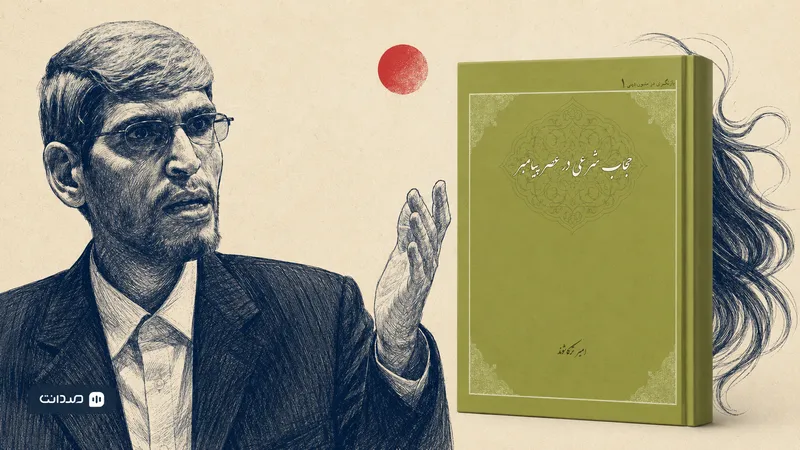
Torkashvand emphasized: In the book "Shar'i Hijab in the Time of the Prophet (PBUH)," I have referred to various issues, and by studying it, you can understand many of these matters.
In his critique of this issue, Vatandoust stated: The point raised in this discussion was that there was no sensitivity regarding the hijab of slave women, a claim we accept. However, if you conclude from this claim to prove that we cannot have these sensitivities regarding hijab today, this requires its own specific reasons, and we expect you to present arguments in this regard to convince your audience.
Jurisprudential Rulings Cannot Be Specific to Temporal Conditions
He stated: The fact that we were a certain way in the past few years and now must be a different way cannot be a reason for the existence of hijab, because jurisprudential rulings cannot be specific to temporal conditions; rather, jurisprudential rulings are based on purposes. Of course, there are discussions that are subject to the exigencies of the time, which we cannot discuss today, and the issue of hijab also cannot enter that domain and be considered a discussion dependent on temporal exigencies.
This Ferdowsi University professor stated: You must prove whether a theory called the minimal hijab theory is in accordance with expediency or not. In this context, verses and narrations can answer this question. But instead of relying on verses and narrations and presenting your views and arguments using them, you have relied more on historical discussions and interpreted the Quran based on historical presuppositions, while your historical presuppositions, apart from being in conflict with the subject, do not serve as a context for interpreting the verses and narrations.
The faculty member of Ferdowsi University said: Regarding the traditional opinion you raised, I must say that I did not understand where it is stated that, based on the traditional opinion, women cannot be present in society. This is always contrary to the conduct of Lady Zahra (AS), and there must be a reason for this. In fact, your claim that for the past several centuries all women were at home is without evidence. This contradicts historical common sense, so a claim without evidence is not befitting of the individuals in a scholarly gathering.
Vatandoust stated: Another issue you mentioned in your explanations was nudity during the Age of Ignorance and the prevalence of unstitched garments. By this you meant that stitched clothing did not exist in the Age of Ignorance. However, you referred to a phrase in your own book stating that the main characteristics mentioned are being unstitched, not multi-layered, uncommon, and not being lined or fully covering.
He emphasized: But the question is, why have you ignored other verses and narrations, such as those mentioning qamis (shirt), jubbah (robe), and other terms that explicitly appear in narrations and lexicons? What was the Prophet's qamis like, and did the tailoring craft not exist at that time? Where does the narration come from in which Aisha says the Prophet used to sew his own clothes and shoes?
The university professor remarked: In fact, you have set aside narrations that indicate these matters and, based solely on the historical research you have conducted, concluded that stitched clothing did not exist. Firstly, this contradicts your own historical examination. Secondly, in assessing the authenticity of a narration, do you rely on a weak historical report that is contradicted by other evidence?
Referring to the traditional view, discussed earlier, that women should remain at home, Torkashvand added: My book consists of three parts. The first part deals with historical issues before the Prophet, concerning the state of people's clothing; the second part addresses verses and narrations; and the third part discusses jurisprudential issues.
The researcher said: Therefore, one should not say these claims are only about historical matters; I have also addressed the narrations. Consequently, the historical discussions should not be ignored, as all historical circles should utilize and encourage such work. It is always surprising that some people view this kind of engagement with history as a negative point. Rather, the positive aspects should also be noted, as it is crucial for a true understanding of the revelation of Quranic verses and for knowing what realities the Prophet's guidance was addressing.
He said: In my book, I have extracted the historical issues prior to the Prophetic mission, and I consider this a distinctive approach. In this regard, I looked at the Quran as a complete package, extracting historical evidence from within the Quran itself. I suggest to you students that you read this book without any prejudice, as it serves as a lengthy educational workshop on the most serious issue for Muslims, which is hijab.
Torkashvand stated: In fact, I extracted the realities that led to the revelation of the verses concerning hijab from within the Quran. In my previous discussion, I said that people's clothing was unstitched—and indeed, most of it was—but I did not say that stitched clothing did not exist at all at that time. If that were the case, the word qamis would have been completely unfamiliar to them, and they could not have accepted it. My aim was to address the acute issue of society, which is hijab, in the best possible way and present it.
Vatandoust stated: I have studied that book. Regarding the phrase about stitched and unstitched clothing you mentioned, I must say that the original phrase you used in your book is that the main characteristics referred to are "being unstitched, the negligible number or uncommonness of lined garments, and not being covered."
The university professor stated: The next point here is the manner of conflicting narrations. You told me that you do not care about history; if that were the case, I would not have cited the poetry of the pre-Islamic poets. In fact, your negative point lies here: you have brought a weak historical report, and this weak report conflicts with other historical reports. Even if we assume there is no conflict, the question is: what is our jurisprudential method, and what is the jurisprudential and scholarly method of the religious authorities?
He stated: In your remarks, do you prioritize historical accounts, or do you, based on narrations, demolish that historical account? It is always necessary to know that in analytical history, one of the ways to analyze the history of Islam is precisely to refer to the narrations and verses and see whether there are authentic narrations incompatible with this historical account or not; hence, we say here that, based on authentic narrations, this historical account does not exist.
The faculty member of Ferdowsi University of Mashhad added: It is interesting that in a part of your book, you have also cited the Torah, and your aim was to say that nudity is a normal matter in the Torah, and in this regard, you have also mentioned the story of Adam and Eve, that they were naked. But why do you cite a book whose credibility is still questioned and ignore the Shia narrations?
This university professor emphasized: This is while there is a narration from one of the noble Imams stating that Adam and Eve initially had clothing, but after they ate from the forbidden tree, that clothing fell away. Why has this narration been overlooked? It is not right that wherever in history and narration, I cite whatever benefits me.
.
.
Audio of the Debate: “The Sharia Limits of Hijab: Revisiting the Minimal Hijab Theory”
.
.
Report source: IQNA from Khorasan Razavi
With the participation and efforts of:
Mahad
Faculty of Theology, Mashhad
Shahid Esfandiari Student Basij
.
.

Discussion4 comments
در قران احکامی امده مانند سنگسار و قطع ید سارق و ... که در حال حاضر اجرا انها باعث وهن حکومت می شود بنابرای شرایط زمانی و مکانی هم شرط است
شما بایست ابتدا یک نگاه را بشناسید بعد قضاوت کنید. قضاوت فرد غیر متخصص در مورد یک خط قرآن و قاطی کردن معیارها یعنی معیار قرآنی با معیار و نگاه پست مدرنی غیر عقلانی و غیر قابل دفاع و قطعا ناسازگار با قرآن است. در ایلات متحده lethal injectionاعدام بوسیله تزرق ماده کشنده و خفه کردن با گاز وجود دارد. هیچ کدام از شیدایان موبایل و تلویزیون و ماهواره نمی گویند خفه کردن غیر انسانی است چون شیفته غرب و ناتوتوان از تصور انتقاد از غربند. دوم این که کانتکست و پیش زمینه را در نظر می گیرند. یعنی یک serial murderer بریا بالز داری و احقاق حق اعدام می شود. اعدام جزء مجازات های ممکن است . تصور بفرمایید خفاش شب را در کنار منزل شما نگاه داری می کردند چون مهملات چند نفر متوهم آن اعدام را مجاز نمی شمرد! قبول می کردید؟
اولا در هیچ آیه قرآن حکم سنگسار نیامده دوما معنای قطع ید در فرهنگ قرآنی متفاوت با برداشت عام ما هستش یکی از معانیش انقطاع ازامکان دزدی هست نه قطع خود دست و بدون علم سخن گفتن درباره احکام الهی افترا به خداست
در قرآن اصلا حکم سنگسار نیامده است دوست عزیز