Religion
Amir-Hossein Torkashvand and Hossein Soozanchi Debate: The Necessity and Extent of Women's Covering in the History of Jurisprudence
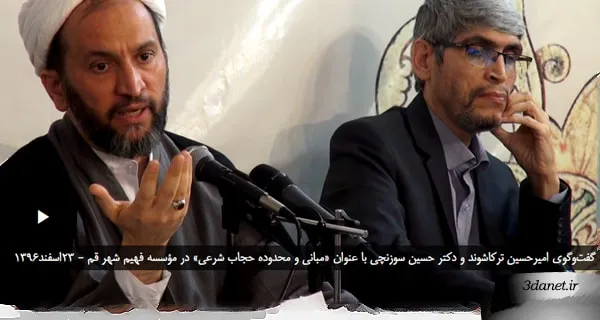
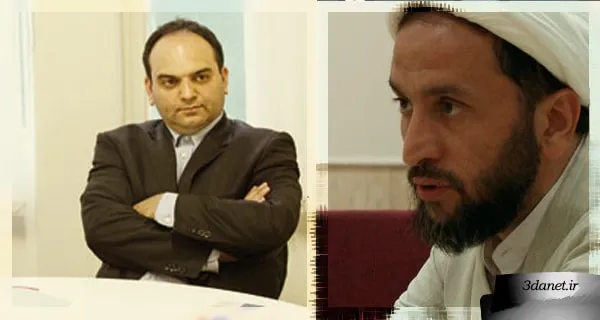
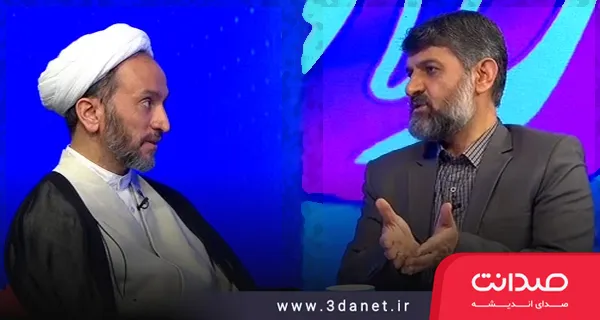
A disagreement over the extent of women's covering in the history of Islamic jurisprudence led to a dialogue between Torkashvand and Souzanchi. In The Shar‘i Hijab in the Age of the Prophet, Torkashvand argued that uncovering the face and hands was permissible, a view Souzanchi criticized; now, for the first time, the two have debated.
The jurisprudential debate on women's covering begins with the necessity of a woman being covered in the presence of a non-mahram man, and after that, it is the extent of women's covering that becomes the subject of inquiry and investigation and sits at the center of controversy. It can be clearly stated that among religious scholars and the faithful, there is no dispute over the principle of women's covering as an essential religious precept, and the covering of women in the pattern of religious life is undoubtedly an accepted matter. Regarding the extent of covering a woman's head and body, it has also been said that the hair of the head and the body of a woman must be covered in the presence of a non-mahram man, but a number of researchers of the history of jurisprudence have recently expressed another view that has been provocative.
The book "Hijab-e Shar‘i dar ‘Asr-e Payambar" (The Religious Veil in the Era of the Prophet), written by Amir-Hossein Torkashvand, is one of the notable examples in this field. A book that did not receive official publication permission but was widely released in cyberspace on May 2, 2011, and made available to Iranian users.
In the preface to his book, he writes: "In this research, I seek to align Muslims' conception of the extent of the religious hijab of believing women of that era with reality, and in this regard, to explicate the areas obligatory to cover and the areas permissible to uncover for them." And he ultimately arrives at the view that during the Prophet's era, the extent of covering required for women was covering the body from below the neck to below the knees and the upper arms: "The non-prohibition of uncovering the face, palms, hair, neck, forearms, feet, and shins is consistent with the rulings in force at the dawn of Islam."
His book has been evaluated and criticized many times to this day by professors in the fields of jurisprudence and history; for instance, on May 3, 2016, Dr. Azartash Azarnoush at the Faculty of Theology of the University of Tehran examined his perspective. Dr. Hossein Soozanchi also, on April 15, 2013, in an article titled A Critique of the Book Hijab-e Shar‘i dar ‘Asr-e Payambar, evaluated the aforementioned work and wrote: "The teachings that have reached us through verses and narrations leave no room for doubt that the religious hijab required for a Muslim woman is covering the entire body except for her face and hands (up to the wrists); and this matter is so clear that today, not only among Muslims but throughout the entire world, wearing this hijab is considered a marker for identifying a Muslim woman."
In this article of his, Dr. Soozanchi asks whether the author's evidence has the capacity to prove the author's interpretations of the verses and narrations, and whether the necessary precision has been exercised in examining and reporting the opinions of the jurists? And in response, he states: "Although he has referenced numerous books in his discussions, in addition to the mistakes he has made in translating Arabic phrases, to prove the reality of his hypothesis, he has set aside the simplest common principles in historical research methods."
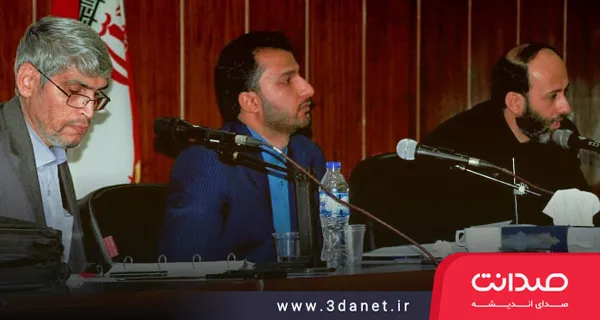
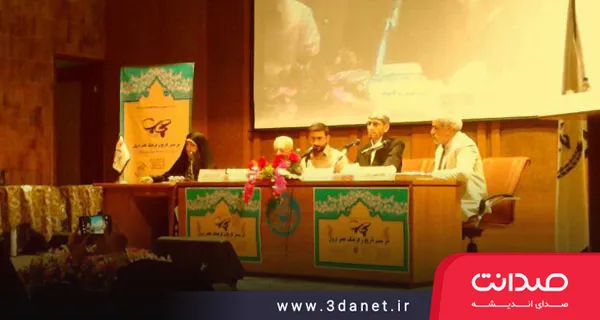
Now, for the first time, these two have sat face-to-face to converse and for each to evaluate the other's words. What you see is the debate between Amir-Hossein Torkashvand, author of the book Hijab-e Shar‘i dar ‘Asr-e Payambar, and Dr. Hossein Soozanchi, Associate Professor in the Department of Social Sciences at Baqir al-Olum University, which was held on March 14, 2018, at the Fahim Institute in the city of Qom.
.
.
Amir-Hossein Torkashvand and Hossein Soozanchi Debate: The Necessity and Extent of Women's Covering in the History of Jurisprudence
.
.
Download Part One of the Debate: Audio - Video
Download Part Two of the Debate: Audio - Video
Download Part Three of the Debate: Audio - Video
.
.
Source: Simafekr
.
.


Discussion4 comments
متن کتاب حجاب شرعی در زمان پیامبر و پاسخها به آن را چگونه میتوان بدست آورد
http://localhost:8080/KzA9f
سلام متن کتاب در کانال تلگرامی آقای ترکاشوند به اسم کانال بازنگری موجود است https://telegram.me/baznegari
عالی بود ، نکات بسیار ارزنده ای داشت ،