Life and Thought
Mahmoud Taleghani was a religious scholar, Quranic exegete, and religious intellectual of contemporary Iran. Through his major work, A Ray from the Qur'an, and his social and ethical discourses, he sought to interpret the Quran in the language of the time and in connection with the life of modern humanity.
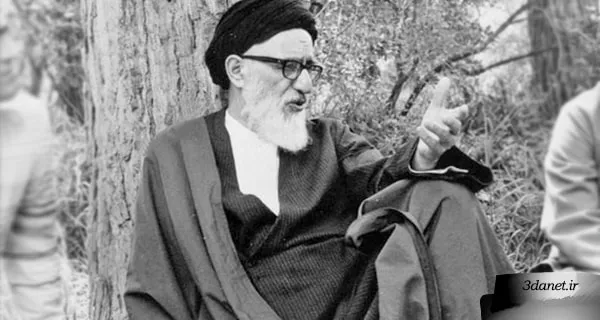
Mahmoud Taleghani was born in 1910 in Taleghan and pursued his religious studies at the seminaries of Qom and Najaf. From his youth, he was interested in Quranic exegesis, religious reform, public education, and the connection between religiosity, ethics, and social responsibility. In Tehran, Taleghani engaged in teaching, lecturing, and cultural activities, and his mosque and exegetical gatherings became a place for the younger generation to become acquainted with a social and living reading of the Quran.
His most important work is A Ray from the Qur'an; an unfinished yet influential exegesis in which an effort is made to understand the Quran's message from the perspective of guidance, ethics, justice, spiritual freedom, and human responsibility. The prose of this exegesis, unlike many traditional commentaries, is written for a more general audience and is also influenced by the social and human concerns of the time.
In works such as Islam and Ownership and his marginal notes and explanations on Tanbih al-Umma wa Tanzih al-Milla, Taleghani also paid attention to the relationship between religion, society, justice, and the ethical ordering of collective life. He was among the scholars who did not confine religious understanding to individual rituals and emphasized the Quran's role in human education, awakening the conscience, and reforming social relations.
In Taleghani's thought, the Quran is a living book for guiding humanity in the real world. He sought to establish a dialogue between the Islamic exegetical tradition and new questions about freedom, justice, responsibility, and human dignity, and for this reason, he holds an important place in the history of religious intellectualism in Iran.