Iranian thinker
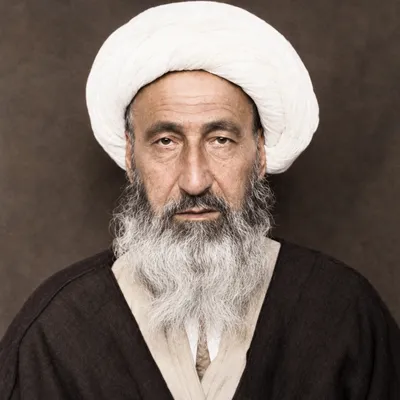
Muhammad Hussain Naini
Muhammad Hussain NainiShia Jurisprudence (Fiqh) and Principles of Jurisprudence (Usul al-Fiqh)Iranian1860–1936


Life and Thought
Mirza Muhammad Hussain Naini (1276–1355 AH) was a jurist, usuli scholar and one of the great Shia authorities of Najaf, known as the "renewer of the science of usul." In Tanbih al-Umma wa Tanzih al-Milla he wrote the first coherent treatise in Shia political thought defending the principles of constitutionalism, and he became one of the main theorists of constitutionalism among the ulama. Students such as Sayyid Abu al-Qasim al-Khoei and Allameh Tabatabai were trained in his lectures.
Mirza Muhammad Hussain Naini, known as Gharavi Naini and titled "Sheikh al-Islam," was born in Naein in 1276 AH (1860 CE); some sources give 1277 AH. His father, Mirza Abd al-Rahim, came from a family whose forebears had held the title of Sheikh al-Islam in Isfahan, a family known for scholarship and piety.
After his early studies in Naein, he went to Isfahan at the age of seventeen and studied there for about nine years under teachers such as Muhammad Baqir Aqa Najafi Isfahani and Jahangir Khan Qashqai. In 1303 AH he set out for the Shia holy cities of Iraq to continue his studies. After a brief stay in Najaf, he went to Samarra and attended the lessons of Mirza Shirazi, Sayyid Ismail Sadr and Sayyid Muhammad Fesharaki. He was a gifted and close student of Mirza Shirazi and served as his "muharrir" (scribe). He then studied under Akhund Khorasani in Najaf and settled there.
During the Constitutional Revolution, Naini was Akhund Khorasani's closest adviser and, after Akhund, the second most prominent supporter of constitutionalism in Najaf. In these years he wrote Tanbih al-Umma wa Tanzih al-Milla in Persian (1327 AH / 1909 CE), a treatise on the legitimacy of constitutional government, which Akhund Khorasani and Sheikh Abdullah Mazandarani endorsed with prefaces. In it he divides government into two kinds: "tamlikiyya" (despotic and proprietary) and "wilayatiyya" (accountable and bound by law). He regards despotism as tyranny and a usurpation of the people's rights, and he holds that constitutional government limits the ruler's power and gives the people oversight, so it reduces oppression and is legitimate during the Occultation. The treatise is the first coherent text in Shia political thought to defend the principles of constitutionalism.
Naini's scholarly reputation rests above all on his innovations in fiqh and usul, to the point that he was called the "renewer of the science of usul." His teaching circle in Najaf was among the most productive of its time. Records of his lectures, including Fawa'id al-Usul (by Sheikh Muhammad Ali Kazimi Khorasani) and Ajwad al-Taqrirat (by Sayyid Abu al-Qasim al-Khoei), are important texts of Shia usul al-fiqh. His students included Sayyid Abu al-Qasim al-Khoei, Sheikh Muhammad Reza Muzaffar, Sayyid Muhammad Hussain Tabatabai and Sayyid Javad Hosseini Khamenei. After the death of Sheikh al-Shari'a Isfahani, he assumed general marja'iyya (religious leadership) of the Shia. He opposed despotism and colonialism, and he supported the Iraqi uprising against the British in 1920.
He died in Najaf on 26 Jumada al-Awwal 1355 AH (15 August 1936). After the funeral prayer led by Sayyid Abu al-Hasan Isfahani, he was buried beside the shrine of Imam Ali.