Foreign thinker
Muhammad Iqbal
Muhammad IqbalPhilosophy and LiteratureIndian1877–1938
If you come to yourself, you reach God; and if you do not come to yourself, you reach God.





Life and Thought
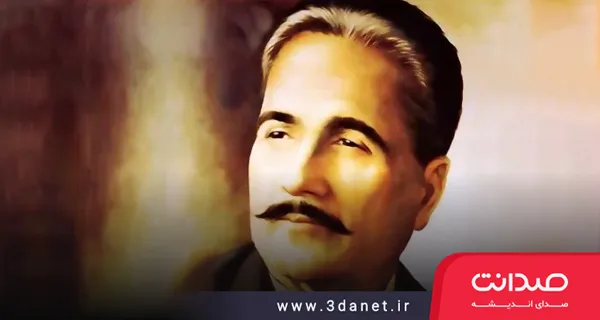
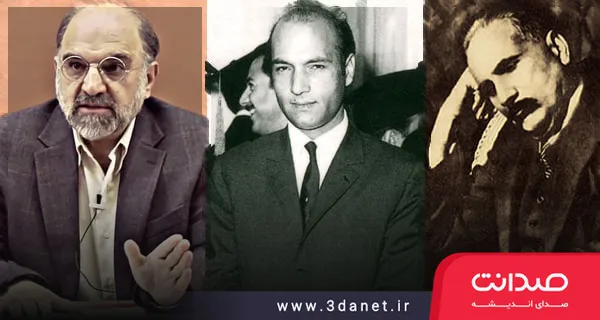
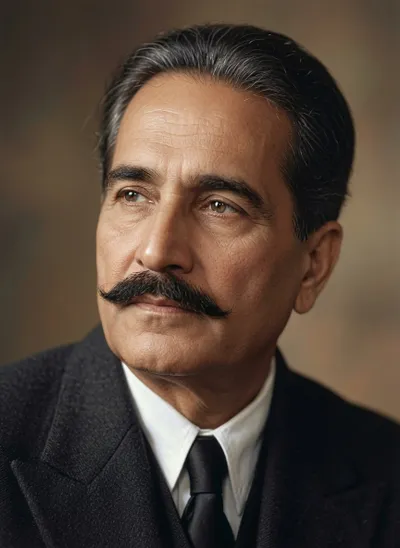
Mohammad Iqbal Lahori (1877–1938) was a Muslim poet, philosopher, and politician of the Indian subcontinent, known in Pakistan as the "National Poet." He composed a large part of his works in Persian and holds a special place in Iran due to his devotion to Rumi and his Islamic thought.
Mohammad Iqbal Lahori, born 9 November 1877 in Sialkot and died 21 April 1938 in Lahore, was a Muslim poet, philosopher, writer, lawyer, and politician of the Indian subcontinent. In Pakistan he is known as the "National Poet" and "Hakim-ul-Ummat" (Sage of the Ummah), and in Iran he holds a special place because of his Persian poetry, devotion to Rumi, and philosophical outlook.
Iqbal was born into a Muslim family of Kashmiri origin. He received his early education in Sialkot and then studied philosophy in Lahore. He earned a master's degree in philosophy with distinction from the University of Punjab and, under the influence of his teacher Sir Thomas Arnold, went to Europe to continue his studies. He studied philosophy and law at Cambridge, qualified as a barrister in London, and earned a doctorate in philosophy from the University of Munich with a dissertation on the development of metaphysics in Persia. This dissertation later became known as The Development of Metaphysics in Persia.
After returning to India, Iqbal practiced law for a time, but his main fame came through poetry, religious thought, and political activity. In his works he contemplated the spiritual and political revival of Muslims, and his central concern was how Muslims in the modern world could regain creativity, self-awareness, and historical agency without reducing religion to traditional imitation or surrendering to the West.
In Iqbal's thought, the concept of "Khudi" (Selfhood) holds a central place. For him, Khudi does not mean selfishness or crude individualism, but rather the force of personality, will, creativity, and human responsibility. A person must strengthen their Khudi in order to stand against the determinism of history, colonialism, imitation, and spiritual lethargy. This idea is clearly expressed in The Secrets of the Self (Asrar-e-Khudi) and The Mysteries of Selflessness (Rumuz-e-Bekhudi).
Iqbal was deeply influenced by Jalal al-Din Rumi and, in his poetry and thought, regarded Rumi as his spiritual guide. On the other hand, he was also familiar with Western philosophy and was influenced by thinkers such as Nietzsche, Bergson, Goethe, and Hegel; but his project was not to imitate the West, but to reconstruct Islamic thought in confrontation with the modern world.
His most important philosophical and religious work is The Reconstruction of Religious Thought in Islam. This book is a collection of lectures on religious knowledge, religious experience, God, humanity, freedom, ijtihad, and movement in the structure of Islam. In the version published by the Iqbal Academy, chapters such as "Knowledge and Religious Experience," "The Conception of God and the Meaning of Prayer," "The Spirit of Muslim Culture," and "The Principle of Movement in the Structure of Islam" appear.
In politics, Iqbal was an advocate for the political identity of Indian Muslims. His Allahabad Address in 1930 is considered one of the most important texts that later influenced the formation of the idea of Pakistan. Of course, Iqbal was less an executive politician and more a thinker who addressed the issues of the Ummah, justice, spiritual independence, and the social reconstruction of Muslims on a philosophical and historical level.
In the final years of his life, Iqbal faced various illnesses and eventually died on 21 April 1938 in Lahore. His tomb is located next to the Badshahi Mosque in Lahore.
Iqbal had a deep attachment to the Persian language and culture. A large part of his poetry is composed in Persian, and many of his most important intellectual and mystical works, such as The Secrets of the Self, The Mysteries of Selflessness, Message from the East (Payam-e-Mashriq), Persian Psalms (Zabur-e-Ajam), Javid Nama, and What Should Then Be Done, O Nations of the East (Pas Cheh Bayad Kard, Aye Aqwam-e-Sharq), are in Persian. He found Persian a more suitable language for expressing his philosophical and mystical ideas, and for this reason he is widely read and admired in Iran.