Religion
A Piece by Seyyed Hassan Eslami Ardakani: “Iqbal Sometimes Arrives Early”
Faced with the stagnation, Westernisation, and Wahhabism of India's Muslims, Iqbal Lahori chose a fourth path: the reconstruction of religious thought rooted in the Quran and the Alavid model—a trajectory traced from his theory of the self to his critique of nationalism and vision of Islamic unity.
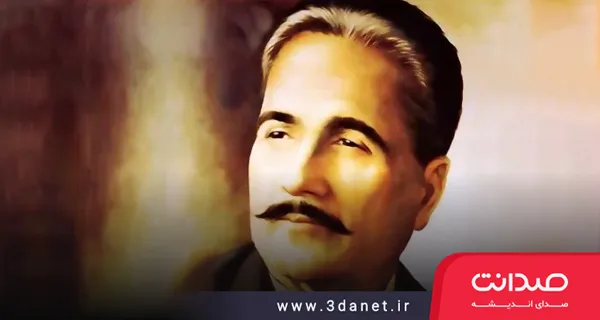
Iqbal Sometimes Arrives Early[1]
Dr. Seyyed Hassan Eslami Ardakani
Abstract
The present writing is a pretext for once again keeping company and conversing with Iqbal Lahori, the original and bold Muslim thinker who made poetry a medium for conveying his intellectual and social ideals. From this perspective, this piece comprises six sections. The first section briefly introduces Iqbal’s era, the condition of Muslims, and the perspectives offered for deliverance from the undesirable situation of that time. The second section introduces Iqbal’s theory of Khudi (Selfhood). The third section analyzes Iqbal’s critiques of nationalist and secular ideas within Islamic society. The fourth section reports on Iqbal’s theory regarding the Quran and the necessity of returning to it. The fifth section is dedicated to Iqbal and the Household of Ali (a.s.). The sixth and final section concerns the convergence of the Islamic community and the role of religious teachings therein.
The Era and the Context
Allama Muhammad Iqbal Lahori (1877-1938 CE / 1256-1317 SH), the Indian-Pakistani philosopher, Muslim thinker, and religious reformer, lived at the height of Western dominance over the Islamic world and witnessed the political, cultural, economic, social, and religious humiliation of Muslims. Great Britain had conquered India and considered itself the absolute master of the people of that land; it was as if the dust of death had been scattered over India, to the point where, according to Iqbal:
Upon the soil of India, the melody of life is without effect,
For the dead are not revived by the song of David.[2]
The people of India, both Muslim and Hindu, saw and understood their own backwardness more clearly in comparison with the West and its advancements. In this atmosphere, Muslims typically adopted three stances. The first group, unaware of what was happening in the world around them, saw the situation as being to their liking, preferred to remain ignorant of the truth of the matter, and saw no reason to change the status quo. The second group offered various proposals for emerging from that situation and improving conditions, which were largely summed up in following the West and adopting Western models, such as secularism and nationalism. In contrast to this West-oriented attitude, a third group of Muslims, influenced by the Wahhabi movement in Arabia, sought to pursue the path of reviving Islam and purging it of superstitions in the Wahhabi style. Under the leadership of Sayyid Ahmad Khan of India (1782-1831), they staged an unsuccessful rebellion against the British forces, declared India Dar al-Kufr (the Abode of Unbelief), and ultimately fell victim to this movement. Of course, this Sayyid Ahmad is different from Sir Sayyid Ahmad Khan of India, the famous scholar, commentator, and advocate of cultural reform in India who founded Aligarh University. Also, a group called Jama’at al-Lajami’a was formed, which, after extensive investigations, concluded that India was not Dar al-Islam (the Abode of Islam), and therefore, Friday prayers were not valid there.[3]
While Iqbal considered Islam the only solution to the problems of Indian society and desired that Muslims embody Islamic values within themselves, he did not deem any of the three common paths suitable; he neither acquiesced to the status quo, nor sought the promotion of Western values and models, nor considered the puritanical Wahhabi thought correct. He was even worried that he might be declared an infidel by the representatives of this thought, and in a letter, he expressed this concern with subtlety as follows: “I have composed a poem entitled ‘The Jewel-Bearing Cloud’ and sent it for your perusal, and I explained a few points of it so that a heavy-handed Wahhabi would not find fault with some of the verses and issue a fatwa of disbelief and heresy against me.”[4]
He himself pursued another path and sought to reconstruct the religious thought of Islam and revive the spirit of Islamic thinking. He accomplished this through his famous lectures at Aligarh University, his letters, and most importantly, his poetry.
The essence of Iqbal’s thought was that the spirit of the Quran and Islamic models had died in Indian Muslim society and needed to be revived—not in the Wahhabi style of fleeing from civilization and technology, but by drawing on the wellspring of Islam and reconstructing it with attention to the conditions and needs of the time and the use of modern knowledge. He felt that in the Islamic society of his day, the form and appearance of Islam existed, but its spirit and essence were absent, and we were in dire need of having this spirit breathed into it. The path to this religious renewal, in his view, lay in Muslims returning to themselves, drawing inspiration from the Quran, and emulating Islamic models, especially the person of Imam Ali (AS). Thus, although he was jurisprudentially considered a Sunni, he regarded following Ali and resembling him as the sole path to the salvation of Muslims. By combining philosophy, religion, and the new findings of his era, he came to be recognized as the greatest thinker of the Indian subcontinent and, by offering a reconstructive interpretation of Islam, laid the groundwork for the pride of Muslims.[5]
At that time, religious bigotry and sectarian conflicts had wounded and afflicted Indian society. As he wrote: “We cannot be of one heart and one tongue. The scent of affection and the disposition of brotherhood and chivalry have vanished among us. At present, we imagine that a staunch Muslim is one who thirsts for the blood of his Indian brother, and a pure-hearted Hindu is one who revolves around harming the lives of Muslims. We are bookworms, and Western thoughts are the food of our souls. Would that the waves of the Bay of Bengal would swallow us.”[6] Instead of conflicts that ultimately harmed everyone and sapped energies, he strove to breathe the spirit of brotherhood and fraternity into society, especially among Muslims, and to speak respectfully of both Sunni and Shia Imams, teaching them not to be inheritors of past grudges.
Despite his great fame in our country and his popularity among the intellectuals of this land, Iqbal’s ideas are not well understood. He has sometimes been referred to as the bright star of the East, with the Islamic Republic being the realization of his thought,[7] yet it is a pity that Iqbal, like many original thinkers, has not been properly understood in our society. Instead of paying attention to his fundamental concerns, his peripheral issues have been addressed, and he has been reduced to a poet fond of the Persian language. Meanwhile, his importance is such that the late Motahhari likened him to a sacred book in danger of distortion. As he wrote: “Unfortunately, I must confess that Iqbal is a sacred book, but a sacred book that has been more or less distorted, or attempts are made to distort it. No attention is paid to his goals, ideals, and the core kernels of his thoughts; he is taken out of the form of a stimulating and awakening individual and turned into a lullaby-singing figure.”[8]
Iqbal’s primary concern was neither poetry, nor philosophical work, nor regional activity in the subcontinent. He: “thought for humanity, but within the framework of Islam, and the only remedy he knew for the salvation of humanity was Islam, not any other philosophy or school.”[9] Iqbal’s main issue was the revival of religious thought, the reconstruction of Islamic society, and the restoration of Muslims’ dignity, and he pursued this through four avenues: first, presenting the philosophy of the self (Khudi); second, critiquing existing ideas such as nationalism and secularism; third, calling to the spirit of the Quran and drawing inspiration from it; and fourth, providing a concrete, Alawite model for Muslims. In this brief piece, Iqbal is considered from these four aspects.
1- The Philosophy of the Self (Khudi)
In his poems and writings, Iqbal developed and promoted a theory known as the theory or philosophy of the self (Khudi). In his view, contrary to the teachings of the Sufis prevalent in his time, which invited people to abandon the self and disregard it, the secret to the survival and progress of Muslims lay in strengthening the self, and:
The body of existence is from the effects of the self / Whatever you see is from the secrets of the self[10]
For this reason, he would say:
When you fortify yourself through the self / You can, if you wish, overturn the world
If you seek annihilation, free yourself from self / If you seek eternity, cultivate your self[11]
He invited Muslims to cultivate their selves and sang:
Cultivate the self within your body / Become, like Abraham, the architect of the sanctuary[12]
In fact, what made Iqbal famous in the world's academic circles is precisely this philosophy of the self, which is the axis of all his Persian and Urdu poetry, books, and articles. This theory, which he devised for the salvation of Muslims in bondage in India, is summarized by the late Mashayekh Faridani as follows: "The essence of the universe and the basis of creation is 'Khudi,' that is, the rational human soul, which is a breath and manifestation of the perfect, creative power of the universe – 'He who knows himself, knows his Lord.' The power of 'Khudi,' when coupled with love, grants a person such strength that they can dominate all the forces of nature. This is a gift that God has bestowed upon all human beings, and anyone, by fully following the Sharia of Muhammad and abstaining from prohibitions, can reach such a lofty station as to become God's vicegerent and attain the sublime rank of sainthood, the Perfect Man, and the Superman."[13]
Iqbal himself, in one of his lectures on the self, says: "Khudi is that which determines the life of individuals and nations and elevates a person to the highest spiritual and material degrees."[14]
Consequently, in the face of a current that invited Muslims to submit to the status quo and to negate and deny the self, citing "fate" and "destiny," he asked them to change the status quo if they did not like it and not to acquiesce to it:
They said, "Does our world suit you?"
I said, "It does not suit me." They said, "Then overturn it."[15]
He invited Muslims to attain honor and pride from the heart of hardship and difficulty, and taught them:
Seek the water of life from the blade of the dagger / Seek Kawthar from the dragon's mouth
Seek the Black Stone from the idol-house door / Seek the musk-pod from the mad dog[16]
He considered fatalistic thinking to be born of a slavish and servile disposition, and said:
For the slave, the days are but a chain / On his lips is only the word of destiny
The free man's resolve consults with Divine decree / Events take shape at his hand[17]
In Iqbal's view, fatalism and speaking of fate were the product of certain political expediencies and practically opened the way for every kind of crime and the denial of personal responsibility by Muslim rulers. This attitude "gave the opportunistic Umayyad rulers of Damascus, who were looking for a pretext to cover up their heinous acts in Karbala,"[18] the best means to present whatever had happened as predestined and the will of God. Of course, in his view, this misuse is not specific to the essence of religion or Islam, and we witness it even among modern philosophies, where the status quo is justified in a philosophical manner. For example, the philosophies of Hegel and Auguste Comte ultimately seek to justify the current state of society and the institutions based on capitalism.[19]
In contrast to the distorted interpretation that most Muslims gave of the concept of destiny, he considered destiny to mean the set of laws based on the system of causality. From this perspective, undertaking any action yields a specific and inevitable result. Consequently, if we cease activity, our destiny is to suffer poverty and distress. If we strive and endeavor wholeheartedly, our destiny is to become prosperous and exalted. But the meaning of this fixed system is not that we are compelled to perform that specific action. On the contrary, we are free to do one thing instead of another. He articulates the common view of destiny as follows:
The beggar and the deprived are God’s decree / The ruler and the ruled are God’s decree
None but God is the creator of destiny / There is no remedy for destiny through prudence
Then he himself provides this precise interpretation of destiny:
If from one destiny, the liver turns to blood / Ask God for the decree of another destiny
If you wish for a new destiny, it is permissible / For the destinies of God are endless
The earthbound ones lost the coin of their self / They did not grasp the subtle point of destiny
Its delicate secret is implicit in a word / If you become other, He becomes other
Become dust, He will make you prey to desire / Become a stone, He will cast you against glass
Are you a dewdrop? Falling is your destiny / Are you an ocean? Endurance is your destiny[20]
In Iqbal’s view, religion must secure our happiness in both worlds, not become a cause of our abasement:
Woe to that religion which brings you sleep / And holds you again in heavy slumber
Is this sorcery and spell, or is it religion? / Is this the love of opium, or is it religion?[21]
This theory and the expression of its dimensions in Iqbal’s works, and his drawing Muslims’ attention to the self, provides the ground for him to critique modern thoughts and their shortcomings.
- Critique of Imported Culture
He considered the way out of the disordered state of Muslims to be turning to the Quran, not promoting ideas like nationalism and secularism. In this way, he stood against a second current that saw the path of growth and progress for Muslims in following the West. In the view of some of Iqbal’s contemporary thinkers, Muslims have no choice for their advancement but to imitate Western culture. They considered the cause of the West’s progress to be nationalism and secularism, and prescribed this same formula for Muslims. Whereas, in Iqbal’s view, progress through this path is like seeking the water of Kawthar in a mirage:
The Europeanized Muslims / Seek the fountain of Kawthar from a mirage[22]
He believed that Muslims today are afflicted with two maladies: first, nationalism, and second, imitation of the West.[23] Even those who promoted following the West, instead of paying attention to the real factors of Western growth and applying its theoretical and fundamental models, remained preoccupied with appearances and carried out the imitation of the West in its most vulgar form; acts such as unveiling, changing clothes, changing script and culture. Whereas none of these measures would untie the blind knot of backward Muslim societies; on the contrary, they would lead them astray:
Imitation of the West robs the East of itself / These nations need a critique of the West
The strength of the West is not from harp and rebab / Nor from the dance of unveiled maidens
Nor from the magic of tulip-cheeked enchantresses / Nor from bare legs, nor from the cutting of hair
Its firmness is not from irreligion / Nor does its radiance come from the Latin script
Unlike a third current that, following Wahhabi thought, saw the path of Muslim progress in opposing the outward manifestations of civilization and scientific achievements such as the telegraph, and recommended a return to the past, Iqbal saw no reason to turn away from Western culture and civilization. He regarded attention and openness to the new sciences as a praiseworthy movement and held that: “Muslims have been commanded to seek knowledge even if it is in China. Therefore, if we see something useful in Western literature and do not make use of it, it is sheer narrow-mindedness.”[24] Moreover, Iqbal considered the intellectual movement of European civilization to be a continuation of the thought of Islamic civilization and believed: “There is no error in this movement, for European culture, in its intellectual dimension, is an extension of some of the most important manifestations of Islamic culture. Our only fear is that the dazzling exterior of European culture and civilization will halt our intellectual movement and that we may possibly fail to grasp the core truth of that culture.”[25]
This concern was justified. When confronting Western culture, we often lack the power to penetrate its surface layers and reach its depths. For this reason, we usually seize upon those very appearances and imagine that we have acquired Western sciences, whereas we have only changed our own exterior:
The strength of the Franks comes from science and technique / From this very fire, their lamp is lit
Wisdom lies not in the cut and tailoring of a garment / The turban is no obstacle to science and art
Science and technique, O lively and cheerful youth / Require a brain, not Frankish attire
In this path, nothing is sought but insight / This hat or that hat is not what is sought
If you possess an agile mind, that is enough / If you possess a perceptive nature, that is enough
If one burns the midnight oil, / He will seek out science, technique, and wisdom[26]
Those who saw the root of liberation in nationalism were subject to Iqbal’s serious criticism. In his view, soil and earth-worshipping ideals cannot bind Muslims together. A nationalist is one who:
His days are empty of inner imports / He seeks life from ancient graves
He bonded with the homeland and passed away from himself / Gave his heart to Rustam and passed over Haidar
He accepts his inner character from the Franks / He takes his own story from the Franks[27]
In Iqbal’s view, the idea of nationalism is rooted in blind imitation of the West, and it can, in fact, be considered a Western doctrine for deceiving Muslims:
The Western lord, all cunning and art from head to toe / Taught the people of religion the doctrine of the homeland
He thinks of the center while you are in discord / Pass beyond Syria, Palestine, and Iraq
If you possess discernment of good and bad / You will not bind your heart to clods, stones, and bricks
What is religion? Rising from the dust / So that the pure soul may become aware of itself
That handful of dust you call homeland / Which you name Egypt, Iran, and Yemen
The people of a homeland have a connection to it / Because from its soil a nation rises[28]
For this reason, he criticized the secular thought of Mustafa Kemal Atatürk, the founder of the Republic of Turkey, and did not see it as effective, because it was an outdated and imported phenomenon:
Mustafa, who sang of modernization / Said the old pattern must be erased
The Kaaba’s garment of life is not renewed / If the Frankish idols of Lat and Manat come to it
The Turk has no new melody in his grasp / His novelty is nothing but the old wares of the Franks
His breast held no other breath / In his consciousness, there was no other world
Inevitably, he made peace with the existing world / Like wax, he melted from the burning of this world[29]
Iqbal deeply lamented this self-forgetfulness and enchantment of Muslims with imported Western culture:
Alas for you, newly carved idols you have made|Alas for you, your own depths you have not explored
So melted are you by the heat of the West|Alas for you, from your own eyes you have oozed away...
You circumambulated the Kaaba, then circled the monastery / You have not turned your gaze upon yourself, alas for you[30]
In the face of such prescriptions, which ultimately led to the imitation of the West, Iqbal believed that the only way out of the existing situation and to recover lost glory was the reconstruction of Islam and viewing it as a religion that promotes thought and builds civilization, not the imitation of this or that. Consequently, he said:
If imitation were a good practice / The Prophet too would have followed the path of his ancestors[31]
Although he himself had strong mystical and Sufi inclinations and was deeply attached to mystical literature, at that time he felt he had to distance himself from it. For he saw the lethargic and stagnant atmosphere of Indian society as influenced by Sufi teachings and instructions. He reflects this spiritual transformation well in a letter:
You know my character. You are aware that by nature and origin my inclination is towards Sufism, and after studying Western philosophy, this inclination grew even stronger; for European philosophy generally leads towards the philosophy of pantheism. But after delving into and examining the contents of the Quran and studying the history of Islam, I realized my mistake, and out of respect for the Word of God, I abandoned my old thoughts, and to achieve this goal, that is, abandoning my natural and inherited inclination, I experienced a strange excitement in my heart and mind.[32]
Iqbal went so far in this direction that he criticized the Sufism of his time and some of Hafez's poetry, and despite all his affection for great Muslim mystics like Ibn Arabi, he considered their thoughts unrelated to Islam and wrote: "I have read the book Fusus al-Hikam of Shaykh al-Akbar Muhyiddin Ibn Arabi and the book Hikmat al-Ishraq of Shaykh Shahab al-Din Suhrawardi with the utmost care more than ten times. The knowledge and taste of these great figures are beyond reproach. However, most of the contents of these books have no relation to Islam. I cannot even call them in accordance with Islamic beliefs and teachings."[33] Without falling into the common trap of excommunication and declaring others sinful, in a society where Sufism was very popular, he criticized its teachings. For this reason, part of his life was spent in written polemics and self-defense. While emphasizing that mystics like Ibn Arabi were orthodox Muslims, he believed they had inadvertently conflated two concepts: the concept of "Tawhid" (monotheism) and the concept of "Wahdat" (unity), whereas the Quran promotes Tawhid, not Wahdat. Consequently, to resolve the "misunderstanding, it was necessary" he felt it necessary to re-emphasize the greatness and virtue of Ibn Arabi and added: "Whether his beliefs are called interpretation or expression, they do not seem correct to me, and for this reason, I believe he was a sincere Muslim, but I refrain from following the beliefs to which he adhered. The real fact is that the mystics have made a great mistake in understanding the meaning of 'Tawhid' and 'Wahdat'. These two terms are not synonymous; for the concept of Tawhid is fundamentally religious, and the concept of Wahdat is entirely philosophical."[34]Of course, he was not opposed to Sufism; his opposition was to the Sufism of the Unity of Being, yet he agreed with Islamic Sufism in its form of the Unity of Witnessing and defended it until the end of his life.[35]
He made good use of the tool of poetry and expressed some of his most important thoughts in this form, with the belief that being a poet should be a kind of character-building. Consequently, he considered this profession prophetic and called poets of this kind "disciples of the Most Merciful":
If the purpose of poetry is the making of man
Then poetry is also the heir of prophethood[36]
However, such poetry must be mobilizing, not narcotic, whereas in his view the zenith of literature and poetry in Indian Muslim society was in fact accompanied by a kind of decline: “Look at the Muslims of India; their literature reached its peak when elegy recitation became widespread in the city of Lucknow.”[37]A significant portion of his letters and poems seeks to direct poetry and literature toward Islamic community-building. In his view, the art of poetry is considered the legacy of the Prophet when its aim is to strengthen the spirit of selfhood (khudi) and break ranks, and the poet, instead of constantly retelling the worn-out theme of the candle and the moth and lamenting the moth’s burning, should depict a moth that devours and nurtures the flame:
Forget the fable of that foot-lamp; / The tale of its burning torments the ear.
I consider that moth a true moth / Whose soul is hard-striving and a flame-drinker.[38]
With this outlook, Iqbal concluded that the path to the salvation of Muslims lay in two things: one, drawing inspiration from the spirit of the Holy Quran, and the other, taking as models the great Companions of the Holy Prophet, especially Imam Ali (AS) and his household.
3- Return to the Quran
The movement of returning to the Quran is tied to Iqbal’s name. In the Indian society of that time, the Quran had an apparent life, but no one had any business with it, and it played no role in the lives of Muslims. Rather, it was merely a tool for easing death, not a means for bestowing life and rousing people:
You are captive to the bonds of the Sufi and the Mullah;
You derive no life from the wisdom of the Quran.
You have no business with its verses except this:
That through its Ya-Sin you may die easily.[39]
Whereas Iqbal believed:
A hundred worlds still remain in the Quran; / Immerse yourself in just one of its verses.[40]
In his view, “Only the Quran can be the foundation of a nation’s system,” and the only way to be a Muslim is for the Quran to become the guide for all dimensions of the individual:
If you wish to live as a Muslim, / It is not possible except by living through the Quran.[41]
The difficulty of Muslims, according to Iqbal, was that they either read the Quran only for the time of death, or if they did reflect upon it, they did not grasp the spirit of this book, because: “They read the Quran under the lamp of Greek thought.” Whereas: “The spirit of the Quran is fundamentally anti that mode of thought.”[42]
In Iqbal’s view, the Quran is not a scholastic or academic book, and it should not be read like conventional philosophical books. In fact: “The spirit of the Quran is, on the whole, anti-Greek thought.”[43] The Quran is a book of action and emphasizes deed over thought.[44]For this reason, the revelation of this book was accompanied by vast social transformations, and:
As soon as the Quran’s imprint settled in this world, / It shattered the designs of priest and pope.
I will say openly what is hidden in the heart: / This is not a book; it is something else.
When it enters the soul, the soul becomes other; / When the soul becomes other, the world becomes other.[45]
In Iqbal’s view, the Quran had fallen into the hands of some mullahs and Sufis, and they produced interpretations of it that are not only incompatible with its elevating spirit but cannot even be understood. For this reason, he wittily versified:
From me, greetings to the Sufi and the Mullah, / Who conveyed God’s message to us.
But their interpretations cast into bewilderment / God, Gabriel, and Mustafa.[46]
For the Qur’an to be present in society and to be able to play its guiding role, it must be read as if it has just now been revealed to the reader, not fourteen hundred years ago and to someone else. Iqbal himself quoted a Muslim Sufi: “A believer cannot understand the Qur’an until he places himself in the very state in which the Prophet received revelation.”[47] In most of Iqbal’s writings and poems, the Qur’an plays a central role, and Iqbal’s audience is invited to learn the secret of right living from the Qur’an and to view it not as a book for recitation and blessings, but as a book of life and vitality. The influence of Qur’anic teachings nurtures Muslims in such a way that they fear nothing but God and bow only before Him. The most important teaching of the Qur’an is that all human beings are servants of God and are equal before Him:
Before the Qur’an, servant and master are one,
The reed mat and the silken throne are one.[48]
This teaching, alongside teachings such as congregational prayer, ensures the brotherhood of all humankind: “From the Islamic perspective, this spiritual illumination of gathering in congregational prayer is a noteworthy point. From the daily congregational prayer to the annual rites of Hajj performed in Mecca, you can understand how the Islamic mode of worship gradually expands the circle of human unity.”[49] He illustrates this unifying role well with an example: “For instance, if the noble and proud Brahmins of South India were to stand shoulder to shoulder every day with someone they are not even willing to touch, see what a wondrous spiritual revolution would occur, a revolution that has practically never happened at any time.”[50] He also adds: “Congregational prayer, besides having an enlightening value and bringing knowledge, more so expresses a longing that seeks to realize the fundamental unity of humankind as a reality in life.”[51]
4- The Family of Ali
The Qur’an alone is not sufficient, and alongside this book of practical guidance, Muslims need practical role models; individuals who are themselves considered the embodiment of the Qur’an and have incarnated it within themselves. Iqbal believes that such individuals exist and include some of the great Companions of the Holy Prophet (PBUH), but at their forefront, he always names Ali, Fatima, and Hussein (AS) as models for a way of life. In his writings and poems, he speaks of these figures as symbols of Islam and freedom. He does not hesitate to place “the poverty of Haidar” alongside “the justice of Farooq”[52] and thereby demonstrate the importance of Ali (AS) from his own perspective. This attention and devotion to the family of Ali, for Iqbal, is not merely an act of seeking blessings. Rather, he seeks to learn a way of life from them and to teach it to others. At times, we also witness a reference to Imam Sadiq and Iqbal’s lament that in our society, the taste of an Imam Sadiq or the theoretical precision of an Imam Fakhr al-Din al-Razi is no longer seen:
The taste of Ja’far, the inquiry of Razi, remain no more,
The honor of the Arab nation remains no more.[53]
He goes so far in this direction that he approaches the idea of Shiite Imamate, presenting it as a model for the unity and cohesion of the Islamic Ummah, although for certain reasons he does not reach a definitive conclusion on the matter. In a letter to Akbar Allahabadi, Iqbal reflects on his contemplations as follows: “What you have written about the Shiite sect is very useful. I have long believed that the issue of Imamate can save the community from dispersion and fragmentation; especially in an age when religious truths are measured by the touchstone of reason, I have stated several times that being a Shiite is better than following the Sufi path. If emulation is necessary, then who better than the family of Ali can attain the rank of Imamate? Yet this matter is not without its flaws, for in this case the common people would only be connected to the mujtahids and would become distant from the Quran, and a day would come when they would have no connection at all with that Holy Book.”[54]
In fact, his main concern is that Muslims not be cut off from the Quran, and he believes that Shiite Imamate may not fulfill this goal. Nevertheless, this manner of approaching the subject is, in its own way, rare. Despite this, on every occasion he mentions Ali, Fatima, and Hussein (peace be upon them) as exemplars for Muslims to live purely, and asks them to emulate these concrete manifestations of the Quran.
4-1- Iqbal and Ali (a.s.)
In Iqbal’s poetry, Imam Ali has a powerful presence. Ali is the symbol of a Muslim who makes do with barley bread and does not submit to humiliation, but rather conquers the earthly world. Iqbal takes pride in his friendship and devotion to the family of Ali thus:
The first Muslim, the king of men, Ali / Love’s capital of faith is Ali
Through devotion to his lineage I live / In the world, like a radiant gem I shine[55]
In Iqbal’s view, the Islamic community is in dire need of Ali to teach us the art of living well. For this reason, he instructs his contemporary Muslim thus:
Like Ali, be content with barley bread,
Break the neck of Marhab, seize Khaybar[56]
And he is anxious that society lacks Ali and the Haidari spirit:
The knowledge of the Franks is plunder,
Monasteries became Khaybars for lack of Haidar[57]
From Iqbal’s perspective, being Ali and living like Ali requires possessing genuine, not theatrical, qualities, and:
A thousand Khaybars and a hundred kinds of dragons are here,
Not everyone who eats barley bread knows how to be Haidari[58]
Even when he wants to demonstrate the function and status of love, he likens it to the Commander of the Faithful’s conquest of Khaybar:
Love with barley bread conquered Khaybar,
Love rent the moon’s body asunder[59]
4-2- Iqbal and Fatima (a.s.)
We witness the same devotion from Iqbal towards Fatima Zahra. In a letter, he expresses concern over the lack of complete information about her, writing: “It is regrettable that a detailed biography of Fatima Zahra (a.s.) has not been compiled anywhere.”[60] He also compares Fatima to Mary and, in nineteen couplets, deems her superior in three respects:
Mary is honored by one relation to Jesus,
Fatima Zahra is honored by three relations[61]
For Lady Zahra is, on the one hand, the daughter and “light of the eye” of the Seal of the Prophets and “a mercy to the worlds.” On the other hand, she is the wife and lady of that crowned one of Hal Ata and “Murtaza, the problem-solver, the Lion of God.” She is also the mother of “that caravan-leader of love” and the Master of Martyrs. Iqbal holds that: “This lady is the perfect exemplar for the Muslim women of the present age”[62] and recites verses “on the meaning that the Mistress of Women, Fatima al-Zahra, is a perfect exemplar for the women of Islam”[63]. In his poems, Iqbal asks Muslim girls to take Lady Zahra as their model instead of deceptive adornments, so that they might, like her, hold a Husayn or “Shabbir” in their arms:
Cease, little girl, these coquetries; / Unbecoming to a Muslim are infidelities
Set not your heart on rouge-nurtured beauty; / Learn from the gaze its plundering duty...
If you accept counsel from a dervish / A thousand nations may die, you shall not perish
Be a Batul and hide yourself from this age / That in your arms you may take a Shabbir[64]
4-3- Iqbal and Husayn (AS)
Iqbal links freedom, or in his own words “Islamic liberty,” with the event of Karbala and presents the uprising of the Master of Martyrs as a lesson in dignity and pride:
That Imam of lovers, son of Batul / Cypress of freedom from the garden of the Messenger
God, God, the ‘B’ of the father’s Bismillah / The son became the meaning of the Great Sacrifice
For that prince of the best of nations / The shoulder of the Seal of Messengers, the best of mounts[65]
According to Iqbal’s interpretation, when Imam Husayn sees that the caliphate has severed its ties with the Quran and deviated from its proper path, he rises up and, with his blood, teaches everyone the lesson of freedom and the struggle against tyranny:
When the caliphate severed its thread from the Quran / It poured poison into the palate of freedom
That foremost manifestation of the best of nations arose / Like a rain-laden cloud of the Qibla, with a downpour in his step
Upon the land of Karbala he rained and departed / Tulips in the ruins he planted and departed
Until the Resurrection he cut off tyranny / The wave of his blood created a garden[66]
Iqbal strongly opposed the interpretation of Husayn’s uprising as an effort to gain power and the caliphate, which had been put forward by some Sunni historians; in his view, one who aspires to rule travels only with his loyal warriors, not with his household and family, young and old:
Had his claim been for sovereignty / He would not have journeyed with such a retinue
His foes, like desert sands, beyond count / His friends, to God alone, equal in amount
Husayn’s uprising has but one aim: to bestow dignity upon religion and teach Muslims the lesson of freedom:
The sword is solely for the honor of the faith / His purpose is solely to preserve the creed
A Muslim is slave to none but God / Before no Pharaoh is his head bowed
His blood interpreted these mysteries / Awakened the slumbering nation...
The secret of the Quran we learned from Husayn / From his fire we gathered flames
In his view, if faith still has any vitality, it is due to Husayn’s uprising:
The secret of the Quran we learned from Husayn / From his fire we gathered flames
O morning breeze, messenger to those far away / Convey our tears to his pure dust[67]
The theme of Husayn’s uprising appears in various forms in Iqbal’s poetry. At times he says:
The sands of Iraq await, the fields of Hijaz are thirsty / Restore, O blood of Husayn, your Kufa and Sham[68]
At other times, considering the blood of Husayn as essential for the cultivation of every person’s faith, he recites thus:
No harvest comes from that ruined field / Whose water lacks the blood of Shabbir[69]
At times, he also considers Husseini death a distinct phenomenon and cautions against comparing it with other deaths:
Though every death is sweet to the believer! / The death of Murtaza's son is something else[70]
At times, he also places him alongside the most trusted Islamic figures from the Sunni perspective and says:
The fervor of the battles of Badr and Hunayn / Haidar, Siddiq, Farooq, and Husain[71]
5- Islamic Convergence
By striving to promote a culture of Quranic understanding and taking the Prophet's household as a model, Iqbal prepares the ground for the unity of the Islamic Ummah and sets out so that all Muslims, together, can regain their dignity and authority. Although he greatly values the form and outward appearance of acts of worship, he nevertheless insists that the form of worship should not prevent us from understanding its truth and real function. For this reason, he believes that forms and appearances should not become a cause for sectarian war and conflict, and: "The form of worship should not become a subject of dispute. Which direction you should turn your face towards is certainly not a fundamental issue compared to the spirit and essence of worship."[72] Of course, this view should not be interpreted as disregard for the principle and form of worship, nor as promoting chaos in devotional acts. Rather, the form itself also has a function, and: "We cannot overlook this important point either, that the posture and state of the body is a real factor in manifesting a way of thinking. The reason Islam has designated a specific direction for performing prayer is to create a sense of unity in the congregation, and the form of prayer as a whole is such that it creates and cultivates the concept of social equality."[73] Therefore, if one of the goals of the form of worship is to promote and strengthen a sense of solidarity, one must be vigilant that this unifying factor does not itself become an issue for religious and sectarian disputes and conflicts, and the spirit, essence, and content of worship must not be harmed under the pretext of differences in form. For this reason, Iqbal forbids us from insulting others and advises:
It is wrong to utter a bad word / Believer and infidel are all God's creation[74]
Iqbal thinks beyond sectarian conflicts and seeks to derive from Islam a universal creed and a liberating message, freeing it from the shackles of sectarian disputes that have hindered the understanding of the truth of this global religion. In his view: "Humanity today needs three things: a spiritual interpretation of the universe, the spiritual emancipation of the individual, and fundamental principles of universal import that guide the evolution of human society on a spiritual basis."[75]
These three elements also exist in Islam, but one must strive to extract them through ijtihad and present them correctly. Consequently: "The task facing Muslims today is immensely grave. The modern Muslim must review the entire system of Islam without completely detaching himself from the past."[76] After referring to the pioneers of this path, namely Shah Waliullah Dehlavi and Sayyid Jamal, he says: "The only open path before us is to approach modern knowledge and awareness while preserving our intellectual independence, to respect it, and to understand and investigate the teachings of Islam in its light – even if it leads to differences of opinion with those who have walked this path before us."[77]
In his famous 1933 speech at the All-India Muslim League session in Allahabad, Iqbal, while emphasizing the necessity of solidarity among Muslims and their unity and cohesion, lamented that despite various efforts this goal had not been achieved, and then asked what the source of this failure was, answering it himself thus: “The only answer to this question is that no group trusts another group, and each group strives from the bottom of its heart to dominate the other.”[78]
A complete review of Iqbal’s works reveals his central concern. He seeks a spiritual interpretation of the contemporary world, the establishment of a just social order, transcendence beyond the material level, and reaching the essence of existence to help modern human beings find a complete anchor. He finds all these elements in Islam, the Quran, and role models such as Ali, Fatima, and Hussein. But to harness this potential, he insists that one must move beyond the surface and appearances, always keeping the essence of religion and Islamic principles in view, and pursue the convergence of Muslims and the unity of all human beings as a lofty goal.
The truth is that our society today is sorely in need of someone like Iqbal; someone with vast knowledge, a disciplined mind, a burning passion in the heart, a love for Muslims, and a heart open to the thoughts of others, free from sectarian prejudices. Iqbal is a Muslim who is first and foremost a Muslim, whose sole aim is the honor of Islam, which he sees only in the solidarity of Muslims, the strengthening of the self, a return to the culture and spirit of the Quran, and drawing inspiration from the great figures of early Islam, and he never becomes captive to the petty bonds of inferiority. A sage who holds the world in his heart and cries out:
Lightning bolts lie dormant in my soul / Mountain and desert are the arena of my gallop[79]
He is among those thinkers and poets who says of himself:
Many a poet who was born after his death / Closed his own eyes and opened ours[80]
Nevertheless, few in his time truly recognized him and his message. In his own words:
When I packed up my belongings from this dust / All said he was familiar to us
But no one knew this traveler / What he said, with whom he was, and whence he came[81]
It is said that during his school days, Iqbal often arrived late to class, and when the teacher objected and said, “Iqbal, why do you always come to school so late?” he calmly replied, “Iqbal always comes late.”[82]
But considering our era’s great need for someone like him and the problems facing Muslims, it must be said:
“Iqbal sometimes arrives early.”
For this reason, his worth remains unrecognized.
.
.
Bibliography
Islam, Iqbal, and the Persian Language in the Indian Subcontinent, a conversation with Professor Mohammad Hossein Mashayekh Faridani, Kayhan Farhangi, Year 6, March 1990.
The Thoughts of Iqbal Lahori, Gholamreza Saeedi, Tehran, Islamic Culture Publishing Office, 1991.
The Reconstruction of Religious Thought in Islam, Mohammad Iqbal Lahori, translated by Mohammad Baghai (Makan), Tehran, Ferdows, 2000.
Leaders of Reform in the Modern Era, Ahmad Amin, Beirut, Dar al-Kitab al-Arabi, n.d.
The Life and Thoughts of Allama Iqbal Lahori, Javid Iqbal, translated by Shahindokht Kamran Moghaddam, Mashhad, Behnashr Company (Astan Quds Razavi), 1993.
Sunesh Dinar: The Views of Allama Iqbal, Mohammad Baghai (Makan), Tehran, Ferdows, 2001.
The Complete Persian Poems of Mawlana Iqbal Lahori: Including the Volumes Asrar wa Rumuz, Zabur-e Ajam, Javidnama, Payam-e Mashriq, the Masnavi Pas Cheh Bayad Kard, Armaghan-e Hijaz, with an Introduction, Biography, and Complete Commentary by Ahmad Soroush. Tehran, Sana'i Library Publications, [1964?].
Mahtab-e Sham-e Sharq: Propositions and Selections of Iqbal's Thought, compiled by Mohammad Hossein Saket, Tehran, Miras-e Maktoob Research Center, 2006.
The Letters of Allama Iqbal Lahori, selected and translated by Mohammad Younes Jafari and Farhad Palizdar, Tehran, Hamrah Publications, 2000.
The Song of the Poet of Tomorrow or The Secrets of the Self and the Mysteries of Selflessness, Mohammad Iqbal Lahori, with an introduction and notes by Mohammad Hossein Mashayekh Faridani, Tehran, Institute for Humanities and Cultural Studies, 1994.
The Notes of Master Motahhari, Tehran, Sadra, 1999.
.
.
[1] Ketab-e Mah-e Din, No. 195, January 2014.
[2] The Complete Persian Poems of Mawlana Iqbal Lahori, p. 243.
[3] Zu'ama al-Islah fi al-Asr al-Hadith, p. 126.
[4] The Letters of Allama Iqbal Lahori, Vol. 1, p. 13.
[5] The Song of the Poet of Tomorrow or The Secrets of the Self and the Mysteries of Selflessness, Introduction, p. 63.
[6] The Letters of Allama Iqbal Lahori, pp. 18-19.
[7] Iqbal, the Bright Star of the East, Ayatollah Seyyed Ali Khamenei, in Mahtab-e Sham-e Sharq: Propositions and Selections of Iqbal's Thought, p. 142.
[8] The Notes of Master Motahhari, Vol. 1, p. 231.
[9] Ibid.
[10] The Complete Works of Iqbal, p. 11.
[11] Ibid., p. 50.
[12] Ibid., p. 196.
[13] Islam, Iqbal, and the Persian Language in the Indian Subcontinent, Interview with Professor Mohammad Hossein Mashayekh Faridani, No. 12, p. 9.
[14] Sunesh Dinar: The Views of Allama Iqbal, p. 160.
[15] The Complete Works of Iqbal, p. 363.
[16] Ibid., p. 47.
[17] Ibid., p. 50.
[18] The Reconstruction of Religious Thought in Islam, Mohammad Iqbal Lahori, p. 197.
[19] Ibid., p. 198.
[20] The Complete Works of Iqbal, p. 330.
[21] Ibid.
[22] Ibid., p. 386.
[23] The Notes of Master Motahhari, Vol. 1, p. 231.
[24] Sunesh Dinar: The Views of Allama Iqbal, Mohammad Baqaei (Makan), p. 156.
[25] The Reconstruction of Religious Thought in Islam, p. 41.
[26] The Complete Works of Iqbal, p. 369.
[27] Ibid., p. 367.
[28] Ibid., pp. 304-305.
[29] Ibid., p. 307.
[30] Ibid., p. 257.
[31] Ibid., p. 272.
[32] Letters of Allama Iqbal, p. 112.
[33] The Life and Thought of Allama Iqbal Lahori, Javid Iqbal, vol. 1, p. 316.
[34] Letters of Allama Iqbal, p. 135.
[35] The Life and Thought of Allama Iqbal Lahori, vol. 1, p. 360.
[36] The Collected Works of Iqbal, p. 294.
[37] Letters of Allama Iqbal, p. 135.
[38] The Collected Works of Iqbal, p. 196.
[39] The Collected Works of Iqbal, p. 457.
[40] Ibid., p. 430.
[41] Ibid., p. 84.
[42] The Reconstruction of Religious Thought in Islam, p. 36; see also p. 223.
[43] Ibid., p. 135.
[44] Ibid., pp. 29 and 115.
[45] The Collected Works of Iqbal, p. 317.
[46] Ibid., p. 458.
[47] The Reconstruction of Religious Thought in Islam, p. 284.
[48] The Collected Works of Iqbal, p. 73.
[49] The Reconstruction of Religious Thought in Islam, p. 168.
[50] Ibid., p. 169.
[51] Ibid., p. 170.
[52] Leadership in our faith is servitude / It is the justice of Faruq and the poverty of Haydar (The Collected Works of Iqbal, p. 191)
[53] The Collected Works of Iqbal, p. 85.
[54] Letters of Allama Iqbal Lahori, p. 109.
[55] The Collected Works of Iqbal, p. 33.
[56] Ibid., p. 106.
[57] Ibid., p. 377.
[58] Ibid., p. 354.
[59] Ibid., p. 282.
[60] Letters of Allama Iqbal Lahori, p. 152.
[61] The Collected Works of Iqbal, p. 103.
[62] Letters of Allama Iqbal Lahori, p. 152.
[63] The Collected Works of Iqbal, p. 103.
[64] Ibid., pp. 465-466.
[65] Ibid., p. 74. This refers to the Holy Prophet placing Imam Hussein on his back and saying: “What an excellent rider, and what an excellent camel.”
[66] Ibid., p. 75.
[67] Ibid.
[68] Ibid., p. 118.
[69] Ibid., p. 486.
[70] Ibid., p. 374.
[71] Ibid., p. 407.
[72] The Reconstruction of Religious Thought in Islam, pp. 168-169.
[73] Ibid., p. 169.
[74] The Collected Works of Iqbal, p. 385.
[75] The Reconstruction of Religious Thought in Islam, p. 280.
[76] Ibid., p. 175.
[77] Ibid.
[78] The Thoughts of Iqbal Lahori, p. 341.
[79] The Collected Works of Iqbal, p. 7.
[80] Ibid., p. 6.
[81] Ibid., p. 483.
[82] Ibid., Introduction, p. thirty.
.
.



Discussion2 comments
یکی از اقران کم سوادم که درگیر پرونده ای کیفری شده بود در جواب خانم دادیار از مذهبش ، به علّت عدم آشنایی به خواص زبان مادریش می گوید من پیرو آیین چهارشهریارم. البـته منظورش تسنّن بوده و شخص قاضی که شیعه بود خیال کرده بود متّهم نوعی شاه پرست است. چیزی نمانده بود بمثابه یک ضدّ انقلاب به صلّابه کشیده شود. قزّاقهای مهاجر به ایران مثل هر سنّی خلفای راشدین را چهار "چهاریار" می نامند. تکرار چهار در این عبارت بنا بر ساختار زبان آنان است. الغرض ، اقبال لاهوری فقط به حضرت علی به مثابه اسوه سیادت نمی گریست بلکه می گوید خود و ابنایش به عدل عمر و صدق ابوبکر باور داشتند و خود حیدر کرّار باجناق صمیمی عثمان ذوالنّورین بود. اگر شیعه هشیار علی هستیم نباید خلافت هیچیک از چهاریار را تخطئه کنیم. ولایت اهل بیت را مبادا مستلزم برائت از سایر یاران تصوّر کنیم.
وقتی فلسفه و زندگی کواین رو می خوانیم می بینیم که اندیشه وی متاثر از سوگیری و در جریانی متصل از کودکی و فضای فرهنگی و فکری حاکم بر خانواده وی و تصمیمی است که او بتدریج در این فضا و متاثر از این فضا گرفته. مارکس هم بعنوان پیش زمینه شکل گیری ماتریالیسم را در طی دوران تحصیلات و نیل به دوران جوانی و بزرگسالی را دارد. راسل که بعنوان یک ملحد راه و مسیر خود را در طول زندگی انتخاب نمود. اما به سبب status دانشگاه و منسوب بودنش به علم و سمبلیسم موجود در نگاه جوان و پیر ما که در آن دانشگاه نماد صدق و درستی و تجربه آزموده است و کتب دانشگاهی مرجع نه آن چه که هستند- بیان نگاه یک آکادمیک- بلکه oracleاورکل خدایان یونان باستان ای هستند که از آپولو و زئوس میگویند .این است که کسی از هرمنوتیک اورکل تخطی نمی کند. آکادیمک شرقی بندرت در افرادی مانند اقبال ، شریعتی، و جلال جرات سخن گفتن به خود داده است . ترجمه و conservatism نهایت فعالیت فکری انجام شده . تعجبی ندارد که که تکفیر افرادی مانند جلال پیشه مترجمین masqueradeزده است.چون اگر کار اندیشیدن بجای ترجمه و انتحال به رسمیت شناخته شود credentials اعتبار نامه اکثریت زیر سئوال می رود. شاید اکنون بتوان فهمید چرا با این شدت به جلال می توپند. جرمش آن بود که ...