Literature
A Reading and Commentary by Saeedeh Mirsadri on Iqbal Lahori's Poems “Shikwa” and “Jawab-e Shikwa”
Iqbal Lahori's poems 'The Complaint' and 'The Answer to the Complaint' give legitimacy to the lament of the suffering against God and are significant from both a literary and theodicean perspective. Despite the lack of a precise translation, the verses have been read and explicated in the original language.
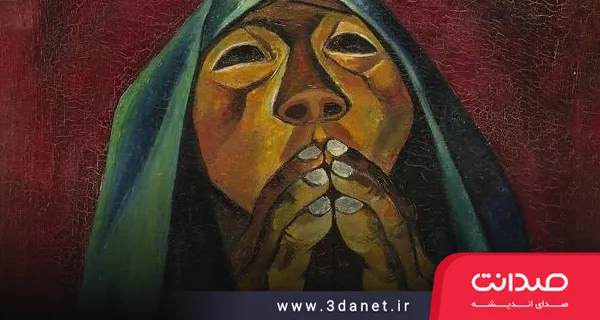
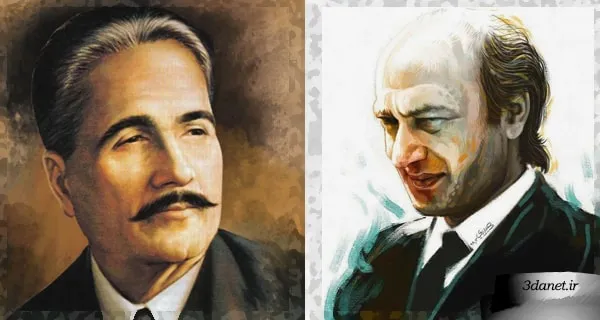
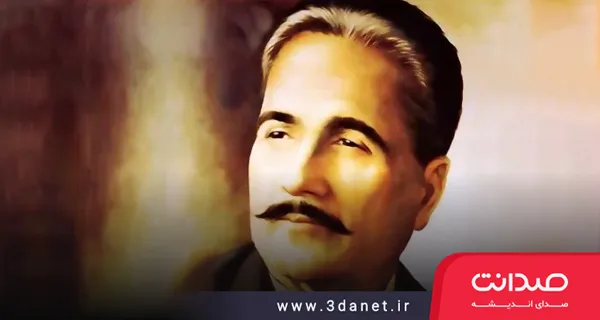
The poem “Shikwa,” which Iqbal Lahori composed in 1911, is significant in several respects. On the one hand, from a literary and aesthetic perspective, this work is considered among the masterpieces and prides of Urdu literature. On the other hand, it is important from the standpoint of theodicy discourse. For the first time within the Islamic tradition, a thinker in the guise of an Islamic philosopher—albeit in the form of “poetry”—gives voice to the complaint of the afflicted and grants legitimacy to “grievance,” “complaint,” and “protest” before God as a legitimate reaction to “human suffering.”
Although the position presented in “Shikwa” is not the poet/philosopher’s chosen stance against evil, and in fact in his subsequent poem, which is a supplement to this one (namely “Jawab-e Shikwa”), he puts forward his main view on this matter, this does not mean he ignores the lament of the afflicted, calls their evil “inauthentic,” states his own position from the very beginning, and, with the customary reproachful tone of theodicists, deems the afflicted masses (in this specific case, “Muslims”) guilty for a situation that “from their perspective is evil” (while in reality it is not evil(!) and is a self-inflicted state for which there is no remedy!)—in other words, not granting authenticity to their evil as real and genuine evil. Rather, first and in “Shikwa,” he places his power of expression and rhetorical skill at the service of making the voice of the afflicted heard, grants authenticity and legitimacy to their cry, and employs his poetry, in its utmost artistic beauty and effectiveness, to describe the voice of their grievance and protest. And only in the next step, in “Jawab-e Shikwa,” does he strive in a solution-oriented manner to find a way out of this predicament and to reduce suffering—although in parts his expression also takes on a reproachful tone.
Considering these points, Iqbal’s poems “Shikwa” and “Jawab-e Shikwa” are highly valuable works, both in terms of content and form. And it is regrettable that a complete and proper translation of these works from the original language has not yet been done in Iran. Only an abridged translation of the poem “Shikwa” has been done by Mohammad Baghai, which, due to being translated from a secondary source (i.e., from English), results in an inaccurate and sometimes incorrect work. And no enjoyment of the formal and literary beauty of the poem—which is always completely lost in any translation—is conveyed to the reader.
Therefore, here I have tried, to the best of my ability, to convey the content and formal value of these poems to those interested, and by reading the poems in the original language—albeit with my own faltering tongue—and explaining the verses, to make a small contribution to the recognition of this important work, and to make it a prelude to further translation and research in this field.
.
.
Download Audio of Shikwa
Download Audio of Jawab-e Shikwa
Download PDF of Shikwa
Download PDF of Jawab-e Shikwa
.
.

Discussion2 comments
خوانش و شرح را پیدا نکردم جایی، منظور همبن دو پاراگراف بود؟ یا بیش از است و من نمیتوانم پیدادکنم
برای دانلود روی لینکهای انتهایی کلیک کنید