Philosophy
Poetry
In the Routledge Encyclopedia of Philosophy entry on poetry, Richard Shusterman examines the ancient quarrel between poetry and philosophy from classical Greece to Romanticism. The essay centres on Plato’s critique, which dismissed poetry as an imitation of an imitation and a threat to rationality and morality.
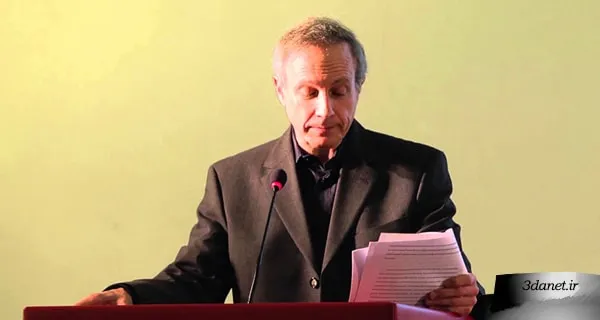
Richard Shusterman, a major contemporary American pragmatist philosopher, is the author of original theories in aesthetics and the founder of the emerging field of somaesthetics. The following article is a translation of the entry on poetry from the Routledge Encyclopedia of Philosophy, Volume 7, written by Shusterman.
Poetry
Richard M. Shusterman [1]
Translated by Kaveh Behbahani
[Introduction]
Although poetry today seems a relatively marginal subject in philosophy, it was of great importance to the definition philosophy initially gave of itself. In ancient Greece, poetry was honored for its authoritative expression of sacred myth and ancient wisdom. With Socrates and Plato, philosophy, as a new and superior form of knowledge that could provide a better guide to life and even offer higher pleasure, gradually diverged from poetry. Just as the Sophists were attacked for relativism and trickery, poets too were harshly criticized for their lack of rationality and for lying. In Plato's view, poetry arises from the emotional and irrational realms of human nature and is therefore appealing to those human realms; moreover, poetry is far removed from truth and is merely an imitation of the world of appearances in which we live, and this world of appearances itself is merely an imitation of the real world of Ideas [or Forms]. This is why Plato insisted that poets must be banished from his ideal republic, as they pose a threat to its proper governance under the rule of reason and philosophy.
Thereafter, the philosophy of poetry, while seeking to affirm the superiority of philosophy, devoted itself to overcoming Plato's censorious theory. This mission began with Aristotle and was pursued for a long time primarily under Plato's general model for poetry (and indeed for all the arts), a model that considered poetry as imitation or mimesis. The main strategy here was to argue that what poetry imitates or represents is more than mere superficial appearance; instead, poetry represents the universal essence or the Ideas themselves. Based on such theories, the relationship between poetry and truth is crucial. Later, other theories emerged that preferred to define and justify poetry in terms of formal features, or expressiveness, or the manifest beneficial effects it has on its audience. These strategies have become increasingly influential since the [rise of the] Romantic movement, but their traces can be found in older sources.
The vast majority of theories, following Plato, consider poetry a separate realm, distinct from philosophy and less significant than it, but since Romanticism, some have spoken of the intrinsic unity of poetry and philosophy. Here, great philosophy is seen as the poetic creation of new ways of thinking and new forms of language, while the role of poetry is considered to be unifying and gathering things together, so that the truth and presence of Being may be revealed.
1- The Attack on Poetry
As Plato noted, "there is an old quarrel between philosophy and poetry." Philosophy took root in Athens largely because of the struggle for intellectual supremacy between the Sophists and the artists. Poetry was philosophy's most important artistic enemy because it best expressed the sacred wisdom of tradition and lacked the worldly and lowly character[2] of the visual arts. Socrates and Plato polemically defined philosophy in stark opposition to poetry, claiming that philosophy offered a higher wisdom and more transcendental pleasures born of deep contemplation. A kind of critique of poetry that attacked its irrationality and ignorance reaches its hostile peak in Book Ten of Plato's Republic, though such criticism could already be found earlier in the Socratic dialogues, such as the Ion and the Apology. Poets (and their rhapsodes or performers, of whom Ion was one) do not truly know how or of what they speak. They possess no knowledge or skill truly worth learning and must rely on the divine madness of inspiration, with which they then corrupt and mislead their audiences. Poets not only lack the knowledge to explain their own creations, but also possess no genuine specialized knowledge about the subjects or crafts they describe, and by claiming to be wise and learned people (sophoi) possessing such knowledge, they mislead the general public. In contrast, philosophy is said to offer not merely a superior kind of knowledge, but, as we see in the Symposium, a more sublime beauty and higher pleasures born of desire. If poetry offers a view of beautiful things, philosophy offers the enchanting contemplation of the more perfect Forms [or Ideas] upon which such beauties are based, culminating in the vision of the Form [or Idea] of Beauty itself.
Plato's Republic paradoxically both affirmed the importance of poetry and its perilous worthlessness. Books Two and Three of the Republic assign a central role to poetry, though when it comes to the education of the guardians of the state, poetry must be strictly censored and supervised. (Censorship was essentially limited to impiety, lying about the gods, and the imitation of weak behavior and base character.) But Book Ten banishes every kind of poetry from the state, except "hymns to the gods and praises of famous men."
Here Plato offers many arguments. Since poetry is merely a representation of the appearance of things in this world—that is, a representation of the appearance of a world that is itself a world of appearances and imitates the real world of ideal Forms—poetry is metaphysically without standing and is merely an appearance of an appearance. For similar reasons, poetry is also epistemologically without standing. Poetry is an imitation of an imitation, three removes from truth, and for this reason, its teachings cannot be trusted and it misleads people. In this respect, the opinions of craftsmen are in a better position, let alone the knowledge of philosophers who have access to the Forms [or Ideas] themselves. Poetry is also psychologically suspect, for in appealing to the senses and emotions instead of the "calculating and rational principle of the human soul," it rests upon and stirs up the "inferior part of the human soul."
همین پیوند تنگاتنگ شعر با سرشت پستتر حواس و هیجانات، افلاطون را به کوبندهترین استدلالش علیه آن رساند: فساد اخلاقی موذیانۀ شعر. شعر با پروار کردن ساحت پستتر نفس آدمی و سست کردن فرمانروایی عقل بر آن، "هیجانات آدمی را به جایِ خشکاندن" تغذیه میکند و "اجازۀ فرمانروایی به آنها میدهد." تقلید از حکمتِ آرام و بیشور، نه ساده است و نه مفرح، لذا تأکید شعر بر نشان دادن عواطف پرقدرتی است که والاتباران اکراه دارند چنان عواطفی را در واقعیت نشان دهند، ولی گمان میکنند وقتی این عواطف به شکلِ داستانِ دیگران بازنمایانده شوند، میتوان به خوبی و خوشی از آنها لذت بُرد. (مانند تن دادن آدمی به ترحم، بخاطر تخیل کردن رنج و ترس یک نفرِ دیگر). اما افلاطون میگوید از آنجاکه وقتی احساسات به پا میخیزند حفاظ عقلِ آدمی سست میشود "سرایت این امر باید از دیگران به خود آنها باشد." اینجاست که به نظریۀ سرایت غیرعقلانی شعر برمیخوریم که به لحاظ روانشناختی نکتهسنجانهتر از نظریۀ طرحشده در محاورۀ ایون است. همچنین به محرک دفاع ارسطو از شعر از رهگذر مفهوم کاتارسیس[3] برمیخوریم.
2- دفاع از شعر به منزلۀ تقلید
در عین حال که شعرشناسی [یا بوطیقای] ارسطو شعر را تقلید تعریف میکند و در پیِ آن، شعر را از نوشتار صرف در قالب نظم جدا میکند، توضیح او از تقلید موسّعتر و مثبتتر از توضیح افلاطون از تقلید است. ارسطو بر ارزش شناختیِ تقلید تأکید میکرد و منکر متافیزیک افلاطون بود که جای صورتها [یا مثالهای] عام را جهان ماورایی ایدهها میدانست. آدمیان، از روی طبع، بیش از همۀ حیوانات دیگر تقلید میکنند و در وهلۀ نخست از رهگذر تقلید کردن است که یاد میگیرند. لذت تقلید یا بازنمایی اساساً لذتی شناختی است. از آنجا که بازنماییِ آنچه خودش امر ناخوشایندی است کاری است خوشایند (مانند بازنماییِ اجساد یا حیوانات نفرتآور) چنین لذتی از بازشناختن یا دریافتِ[4] آنچه بازنمایی شده ناشی میشود. زیرا "عمل یادگیری صرفاً برای فلاسفه خوشایندترین کار نیست" بلکه برای دیگران نیز چنین است، هرچند نصیبِشان از آن کمتر باشد. در اینجا پیشاپیش شاهد الگوی تکرارشوندهای در ارسطو هستیم که طبق این الگو دفاع از شعر بخواهینخواهی حکایت از برتری فلسفه کرده، از این برتری پشتیبانی میکند.
ارسطو معتقد بود که تقلیدهای شاعرانه، به فراخورِ تمایلات طبیعی شاعر شاخهشاخه شدهاند. "اعمال والاتبارانۀ قهرمانان نژاده" در تراژدی و حماسه بازنمایی شدهاند، درحالیکه کمدی، تقلید از آدمهای کمشأنتر است." تفاوت حماسه با تراژدی در داشتن فرم روایی (به عوض فرم دراماتیک)، وزن واحد و نبود محدودیت در طول کنش است. ارسطو بیشترین توجه خود را وقف تراژدی میکند و میگوید تراژدی والاترین فرم [یا شکل هنری] است چراکه متمرکزتر و موثرتر و یکپارچهتر [از سایر فرمها] است. تحلیل ارسطو در قالب شش جزء (که مهمترینِشان پلات [یا پیرنگ] و شخصیت است) رویکرد فرمالیستی به شعر را پیریخت که بعداً آن را از نظر خواهیم گذراند.
در نگاه ارسطو، تقلید شاعرانه علیرغم حال و هواهای متفاوت، وحدتیافته بود برای بازنمایی حقایق عام و اساسی (برپایۀ "قوانین احتمال یا ضرورت") نه [بازنماییِ] نمودهای ظاهری یا امور جزئی انضمامی. "در نتیجه، شعر فلسفیتر و مهمتر از تاریخ است، چراکه شعر دغدغۀ امر کلّی را دارد ولی تاریخ بیشتر دغدغۀ افراد را دارد." چنین ستایشی احتمالاً پاسخی است به نقد افلاطون از تقلید، ولی صرفاً در پرتو تأیید تلویحیِ برتری فلسفه. به هر روی، ایدۀ شعر به منزلۀ تقلید از حقایق عام در قرن هجدهم به دست ساموئل جانسون به نحو موثری احیا شد و جاشوا رِنالدز آن را در نقاشی بکار بست. ارسطو راه دیگری نیز برای دفاع از تقلید داشت: در تراژدی، مثل نقاشیِ پرتره، بازنماییها باید بهبودیبخش (ameliorative) باشند، یعنی کاری کنند که سوژههای والاتبارِشان "بهتر از آنچه هستند" به نظر آیند. افزون بر این، از تراژدی مشخصاً در برابر این اتهام دفاع میشود که با القاء هیجانات ترس و ترحم، نفس آدمی را فاسد میکند. برای محافظتِ نفس آدمی از تأثیر مخرب پنهانی ترس و ترحم، باید چنین هیجاناتی بواسطۀ تحریک شاعرانه و تخلیۀ بیخطر شاعرانه که با کاتارسیس همراه است، بیرون رانده شوند.
The Neoplatonist Plotinus offered a strategy that accepted Plato’s transcendental metaphysics while affirming the value of poetry as imitation. He argued that the poet can set aside the sensible objects of nature and “imitate” the ideas from which nature itself originates. Later thinkers, employing this strategy, could argue that poetry has been one of the highest achievements and forms of truth for us. The view that poetry can represent transcendent conceptions was the claim of the sixteenth-century Italian Neoplatonists and played an important role in the German Romanticism of Novalis and F. W. J. Schelling, in whose view “poetry is the representation of the absolute” (1859). The English poet Shelley similarly theorized that “poetry participates in the eternal, the infinite, and the one” (1824).
Hegel, like his colleague Schelling, saw the function of art as the representation of ideas and consequently claimed that poetry is superior to all other arts because it better represents ideas and ideality, since it relies less on material media. “Poetry . . . is the universal art of the mind” which is “not bound . . . to external sensuous material things” (1835-8). But such praise, like Aristotle’s, still ranks [the value of] poetry below the higher value of philosophy, which is altogether free from sensuous form.
3. Artifact Theories[5]
Perhaps Aristotle’s most successful defense of poetry was not the rescue of the value of mimesis, but the proposal of a very different way of perceiving poetry, as a formal artifact that can be appreciated in terms of its own composition, and not merely in terms of what it represents. Aristotle’s Poetics is largely an analysis of the form of tragedy in terms of its six components (plot, character, diction[6], thought, spectacle[7], and music) and shows how these parts must function to construct the work as an integrated and effective whole. In this work, Aristotle introduced his influential concept of organic unity, a concept that requires poetry to possess “appropriate magnitude” and “proper arrangement of its constituent elements.” The plot (the most important component) must be so tightly unified that “if any of the parts is displaced or removed, the wholeness of the work will be disorganized and destroyed.”
Aristotle’s conception of poetry as the rational activity of making things (making or poiesis, which involves knowledge and “true reasoning”) takes a path contrary to Plato’s attack on poetry, which regards it as irrational inspiration that corrupts the soul and ruins action. Moreover, Aristotle’s conception of poetry diminishes the ethical implications of poetry and makes it less significant than praxis or action. While the end of making poetry lies outside the poem itself and its agent (the end of poetry and its value is in the object made), the end of action lies both in the action itself and in its agent, an agent who is affected by how they perform, not, as they claim, by what they have made. (Nicomachean Ethics VI).
Aristotle’s view of poetry as “making” was later developed into the idea that poetry, rather than imitating nature, creates a new imaginary world. This view, heralded by [Philip] Sidney’s Defence of Poesy (1583) and certain works of the Italian Renaissance, had great influence and prevalence in the Romantic and “art for art’s sake” movements, which considered poetry the creation of [another] world and thereby tended to regard poetry as an end in itself and to elevate its creator to a godlike status. Karl Philipp Moritz (1788) insisted that poetry (or any genuine work of art) creates a self-consistent world of its own and that its entire value and purpose lies within itself. Kant’s description of the purposiveness without purpose of beauty and Edgar Allan Poe’s defense of poetry written solely for the poet’s own sake (a concept from which the theorists of “art for art’s sake” drew inspiration) reinforced the idea of the intrinsic order and value of poetry (and its lack of external purpose) (1850). Their view is expressed in A. C. Bradley’s claim that the nature of “poetry is not to be a part, or a copy, of the real world . . . but [poetry] is a world by itself, independent, complete, and autonomous[8]” (1909).
Although twentieth-century theories of poetry may distance themselves from Romanticism, they largely draw on the view that the poem is a formal object, possessing its own proper order, to be examined and valued in its own terms. In Continental theory, this attitude is reflected in both the Formalist and Structuralist schools, while in Anglo-American criticism it can be found in the early objectivism of T. S. Eliot and in the New Critical views inspired by him. The best representative of this view in aesthetics is Monroe Beardsley’s principles of independence and autonomy, which hold that artworks are individual, self-sufficient[10] entities[9] whose meaning and value are independent of their genesis and reception (Beardsley, 1973). The benefit poetry gains from autonomy as an “object” must, it seems, here too be paid for by its separation from the real world of action.
4. Expression-Based Theories[11]
Another influential theory of poetry sees it as the expression of the poet’s mind and emotions. The traces of such expression-based theories can be found as far back as Longinus, who, in defending sublimity, emphasized the greatness of the poet’s soul and his “vehement and inspired passion” (On the Sublime). In the modern era, however, such theories took root with Giambattista Vico—theories that link poetry to myth, religion, and even language itself, as the primary creative mode through which the image-making thought of humanity gives form, meaning, and expression to reality and the experiences it encounters (Vico, 1744). Coleridge developed the idea of poetry as the natural expression of the shaping, organic, and synthesizing imagination, and Shelley affirmed it, defining poetry as “the expression of the imagination, consonant with the origins of man” (1842). Croce’s theory of art, which saw art as intuition wedded to formative expression, also emerged from this line of thought, while other expressionist theories[12] instead emphasized the expression of emotions. Thus, Wordsworth (1800) and [John Stuart] Mill (1833) respectively defined poetry as “the spontaneous overflow of powerful feelings” and as “feeling confessing itself to itself in moments of solitude.” Against [John Stuart] Mill’s notion of the privacy of poetic expression, Tolstoy (1896) argued that art must not merely express but must transmit emotions to an audience. I. A. Richards (1924) stressed the importance of poetry’s effect on the emotions and attitudes of readers, though without engaging their rational beliefs. By conceiving of poetry as “emotive language,” he sought to free it from the demands of referential language, which is evaluated in terms of pure or scientific truth, and to rescue it from being condemned as a tissue of lies.
5. Use-Based Theory
Another group of theories defines poetry in terms of its specific uses. If Aristotle's contribution was to define tragedy in light of its effect accompanied by catharsis, Horace, more broadly and influentially, defined the aim of poetry as pleasure and useful instruction, and of course these two can be blended for optimization. Many modern humanists have in some way affirmed the idea that Sidney and Samuel Johnson (who believed the writer's duty was to reform the world) developed. But the differences generally concerned both the nature of this pleasure (for instance, how sensory, formal, or cognitive it is) and the kind of instruction poetry provides (for example, the didactic presentation of alleged truths or merely the instructive sensitization of emotions). Matthew Arnold (1881) believed that after science rendered the consolations of religion ineffective, the essential function of poetry became to console and to provide a meaningful interpretation of life. Many other uses have been attributed to poetry, although Sartre defined poetry by its uselessness in contrast to prose (1948). T. S. Eliot, who increasingly emphasized the functions of pleasure, instruction, and the expansion and refinement of language and (through it) feeling and thought, eventually found that poetry is a social product whose function and forms change as a result of shifting social factors and needs throughout history. This gave rise to a doubt that analytic aestheticians like Morris Weitz voiced more loudly: that an open genre like poetry cannot be defined in terms of a single essence or a single permanent function (1955). So perhaps the best way to explain poetry is not to offer an ahistorical definition, but to provide a deep historical narrative.
6- The Unity of Poetry and Philosophy
While most follow Plato in keeping poetry and philosophy separate, several important Romantic and post-Romantic thinkers have defended the combination of poetry and philosophy or their fundamental unity. The basic strategy is to broaden the concept of poetry considerably, regarding it as the fundamental expression of the human being's synthetic and formative imagination, and then to argue that all creative philosophical works possess such an imaginative construction in presenting a unifying view of the world. For example, Hegel (when he was a young Romantic and before he developed his mature philosophy) asserted that the philosopher needs aesthetic power just as much as the poet, and Coleridge emphasized that no one can be "a great poet, without being at the same time a profound philosopher" (1817). As Schlegel defines the Romantic program, in a ceaseless effort to shape the world of creativity through a unifying, imaginative interpretation, "poetry and philosophy must become one" (Schlegel 1797-1800).
Friedrich Nietzsche, with his striking view of the world as an artistic text, the product of imaginative interpretation, also considered the philosopher and the poet one, for both seek to reinterpret and reshape the world according to their own will and values. The later Heidegger (1971) linked poetry and philosophy in a different way. True philosophy or thinking is poetic, not because it deliberately reinterprets the world in a new representational form, but because poetry respectfully and concretely draws aside the veil of the hidden truth of Being or reveals it. Poetry is "the unconcealed speaking of beings." Moreover, since the revelation of truth requires the creation of "a clearing in the forest"[13] or a world in which [truth] can emerge and be understood, poetry finds truth by gathering things together in the form of a world and bringing about an understanding of the unity of such a world. Here, as with the early Romantic theorists, poetry is understood not merely as poetry in the conventional sense, but in a broad sense, as the formative force common to all the arts. Heidegger called this narrower genre poesy and considered it privileged, because it exists in language, [that is, in] the medium of truth that gives identity to beings and connects them. The strategy of understanding poetry as philosophy, through understanding philosophy in the form of language and emphasizing the inherently poetic nature of language, can be traced back to the Romantics and before them to Vico.
Contemporary American philosophers Richard Rorty (1989) and Stanley Cavell (1988) are among those who defend the unity of poetry and philosophy. Rorty's celebration of the philosopher and his view of philosophers as

Discussion1 comments
فلسفه ای که بتواند تاج ادیبانه بپوشد، شاهانه و جاودانه میشود. در ساحلی که باله نهنگ فلسفه در شنزار گلی گیر میکند، بال مرغان شعر شناور میشود در هوا. چه مزه ای دارد درختی فلسفی که اگر شکوفه های شعرش میوه ندهند؟! فیلسوفان بجای حسادت و لجبازی، اندکی معرفت بخرج داده و زبان شاعران را نیز بیاموزند که بلبل از فیض گل آموخت سخن ورنه نبود، اینهمه قول و غزل تعبیه در منقارش.