اندیشهفلسفهخردگفتگوحکمتمعناپرسشفرهنگ
Philosophy
Reflections on the Concept of Love in the Modern Age Through a Reading of Carol Ann Duffy's Poem 'Valentine'
Love is a historically contingent concept, dominated by the Romantic language-game. A reading of Carol Ann Duffy's poem 'Valentine' deconstructs the assumptions of the Romantic hero and, by examining the Greek distinction between eros, philia, and agape, outlines an alternative model for loving.
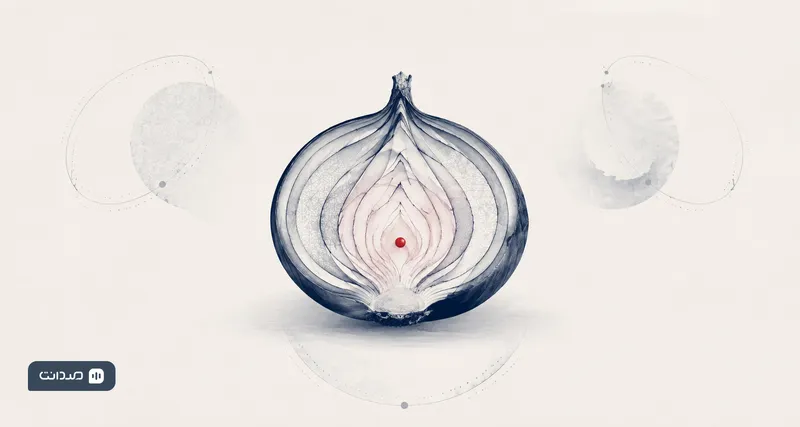
Some contemporary philosophers defend the view that one can philosophize by watching films. In my opinion, poetry is also a very suitable vehicle for philosophizing, and in this essay I intend to reflect for a while on love in the modern world through a reading of Carol Ann Duffy's poem 'Valentine.' Love is a historical concept, and people's understanding of love has differed across various eras. From the perspective of the history of love, we are heirs to the Romantic conception of love, that is, the era of the sovereignty of Eros or, in more modern terms, romantic love. The love stories we have read, the romantic films and plays we have seen, have imposed many presuppositions upon us regarding the concept of love. But the matter is more complex than this. Even if you have never read any Romantic poetry or novels and have no understanding of Romanticism whatsoever, you will most likely still play the game of love with Romantic presuppositions. Borrowing an expression from Ludwig Wittgenstein, one could say that the dominant 'language-game' in our time concerning lovemaking is the language-game of the Romantics, whose reified and extreme form can be seen in the figure of Romantic heroes. In this essay, after describing the figure of the Romantic hero, I will briefly glance at some of the assumptions latent in the Romantic hero's view of love, and through a reading of the poem 'Valentine,' I will question some of the presuppositions of this common and dominant understanding of love, and thereafter, I will briefly speak of the general outlines of another model for lovemaking.
Valentine: The Day of Eros
Reflections on the Concept of Love in the Modern Age Through a Reading of Carol Ann Duffy's Poem 'Valentine'
Kaveh Behbahani[1]
Some contemporary philosophers defend the view that one can philosophize by watching films.[2] . In my opinion, poetry is also a very suitable vehicle for philosophizing, and in this essay I intend to reflect for a while on love in the modern world through a reading of Carol Ann Duffy's[3] poem 'Valentine.' Love is a historical concept, and people's understanding of love has differed across various eras. From the perspective of the history of love, we are heirs to the Romantic conception of love, that is, the era of the sovereignty of Eros or, in more modern terms, romantic love. The love stories we have read, the romantic films and plays we have seen, have imposed many presuppositions upon us regarding the concept of love. But the matter is more complex than this. Even if you have never read any Romantic poetry or novels and have no understanding of Romanticism whatsoever, you will most likely still play the game of love with Romantic presuppositions. [4] Borrowing an expression from Ludwig Wittgenstein, one could say that the dominant 'language-game' in our time concerning lovemaking is the language-game of the Romantics, whose reified and extreme form can be seen in the figure of Romantic heroes. In this essay, after describing the figure of the Romantic hero, I will briefly glance at some of the assumptions latent in the Romantic hero's view of love, and through a reading of the poem 'Valentine,' I will question some of the presuppositions of this common and dominant understanding of love, and thereafter, I will briefly speak of the general outlines of another model for lovemaking.
Before entering the discussion, it is worth clarifying and refining the concept of love somewhat by describing an ancient distinction. We Persian speakers have only one word at our disposal to express a broad family of experiences: eshgh (love), and the English language fares no better than ours in this respect. But in some languages (for example, ancient Greek and modern Japanese[5]), various names have been given to the experience of love. For this reason, contemporary philosophers mainly draw on a distinction in the ancient Greek language to clarify the concept of love. The ancient Greeks had at least three words at their disposal for speaking of amorous experiences: 1- eros, or sexual love (or, in more modern terms, romantic love). A love in which sexual drives are involved. The lover considers the beloved (and/or vice versa) as their possession and seeks sexual enjoyment from their material body. 2- philia, or friendship. An emotional bond between two parties in a relationship, which requires a degree of goodwill and recognition of the other party. Such as the friendship between two colleagues or the friendship between parents and children (provided, of course, that we do not, like Freud, consider the parent-child relationship to possess sexual drives). 3- agape, which in Latin was called caritas. A love in which the lover sacrifices their own self for the beloved and becomes one with them, and for this reason it can be called selfless love. A pure love in which there is no trace of sexual impulses or desires. A sexless love. This very concept became the central core of love in Christianity. The quintessential example of the agapetic experience is Christ's love for humanity, who offered his life to cleanse the sin from the nature of rebellious humankind. This love became so idealized over the course of history that it reached a point where God alone was considered its sole proper object.
The distinction between eros and philia is not even a very decisive one in the Greek language itself, and at times these two concepts have merged into one another. Agape, however, is undoubtedly separate from those two types and has undergone an interesting history. Over time, first Plato and later Christianity (especially Saint Paul) deemed eros a vulgar and base form of selfish possession because it involves sexual desires and drives, and they bestowed upon agape a status higher than other amorous experiences. The project of the desexualization of love was initiated by Plato (and largely through the mouth of Socrates). In the dialogue Symposium, Plato was determined to desexualize eros. As mentioned, eros is sexual desire, and thinking about a desexualized sexuality seemed to contain an internal contradiction, which is why a kind of linguistic turn occurred regarding the concept of eros. Even philia, though not sexual love, had a corporeal dimension for the ancient Greeks. But agape (Platonic-Christian love) is the lovemaking of pure spirits, not the coupling of worldly bodies. In the Symposium, Plato presents several views on love, two of which it is fitting to briefly examine. One view comes from the mouth of the playwright Aristophanes. Someone who had ridiculed Socrates in his famous comedy Clouds, and in the Symposium, Plato intended to take revenge on him for his master and mentor, and to this end, he put foolish words in his mouth and gave him a bout of hiccups from excessive drinking. There, Aristophanes recounts a story to the effect that human beings in past ages were more complete than they are today. They were larger and spherical in shape (and the sphere, in the eyes of the ancient Greeks, is the perfect shape). The spherical humans had four hands, four feet, and two heads, and consequently were twice as intelligent, and because of this greater intelligence, they possessed greater arrogance and pride (hubris, as the Greeks called it) before the gods, which offended the gods. Zeus, the god of gods, however, took revenge and split the spherical humans in two with a thunderbolt, so that they became like today's humans: beings with two hands, two feet, and one head, who were now incomplete creatures and were compelled to spend the rest of their lives searching for their lost half. Just like an octopus that has lost four of its legs and constantly searches for its missing limbs. The root of being in love, in Aristophanes' view, is this very defect imposed upon them. Behind Aristophanes' story lies the idea that love completes us humans. A person alone is an incomplete being who, by joining with another person, is made whole through the grace of love's mending. Love reunites the souls and bodies of the lover and the beloved. This, of course, is the very view that does not sit well with the taste of today's feminists.
Socrates, however, in this same dialogue, has another view of love. Socrates' task was to etherealize love[6]. In those days, Eros was not particularly praiseworthy; for example, even Sappho (the renowned poet of ancient Greece) considered Eros a kind of illness and misfortune. Socrates offered a different understanding of Eros. In his view, in the prime of youth, the work of Eros is bodily lusts. The youth becomes enchanted and infatuated with the captivating and beautiful bodies of a beloved, but it is not long before another rose-cheeked beloved, on account of a beautiful body, steals his heart away, and each time he imagines that his beloved is the only one in the world who can captivate him. Of course, he will soon realize that beauty is not merely a bodily matter and that 'beautiful' is an attribute for the mixture of body and soul. But as a person grows older, if he has a little wisdom and reason, he will discover that it is not this beloved or that sweetheart who steals his heart. Rather, what is important in acts of captivation is something common to all sweethearts, and it is this common element that makes him a lover and enamored. That common element, in Socrates' view, is that all those beloveds are beautiful. Therefore, what truly makes us bewildered and infatuated is beauty in itself, not the beauty of this or that person. With this view, love is no longer a relationship between two flesh-and-blood, bone-and-sinew humans. Rather, it is far more abstract than these matters. Beauty is behind or beyond the beautiful objects and humans of this world and (in the Platonic sense of the word) the existence of the ideal form or the Form of Beauty is independent of each and every beautiful thing. True love, in Socrates' view, is the passage from the beautiful persons and objects of this world and the contemplation of the Form of Beauty. It was this view that influenced Christians and became accepted in the Middle Ages, and Christianity honored this very conception of love, ushering in the era of the dominance of the agapetic understanding of love. With this conception of love, humans are intermediaries or mediums, and true love means loving God through the contemplation of a worldly beloved. In Socrates' view, love for another human is a bridge to reach beauty in itself, and in Christianity, a bridge to reach God.[7] This type of love came to be called Platonic love in the Middle Ages. Platonic love was not merely a sexuality-avoidant love. In Platonic love, a person loves another with the assumption that this love is a path toward the love of the Lord.
اما روزگار سروری آگاپی مستعجل بود و رفتهرفته به ویژه در عصر روشنگری عشق اروتیک تنانه جان تازهای گرفت. جدای از این که پرنوگرافی محصولِ عصر روشنگری است، این گذار از آگاپی به اورس را در قاب هنرهای بصری مغرب زمین میتوان در گذار از مکتب بارُک به نقاشیهای سبکِ روکوکو دید. گذار از ایمان آوردنها و خلسههای معنوی در قاب تصویر به عشقبازیها و مغازلههای زنان و مردان اشراف. اما با فرارسیدن جنبش فکری رمانتیسم در جایجای اروپا و حتی در امریکای شمالی و جنوبی نوبت رسید به سروری عشقِ رمانتیک (یا اِروس) و تا همین امروز ما آدمها (فارغ از محل زندگی و نیز فارغ از اینکه با هنرمندان رمانتیک مانند کالریج و بایرون و دیگران آشنا باشیم یا نه) عمدتاً برداشت رمانتیک از عشق داریم و با پیشفرضهای رمانتیک عشق میورزیم. [8] رمانتیسم جنبشی بود که هم نوعی رویکرد زیباییشناختی ارائه میکرد و هم نوعی فلسفه برای زیستن داشت که این فلسفۀ زندگی در قالب فیگور "قهرمان رمانتیک" کالبدینه میشود. قهرمانی که گاه مصداق آن خود هنرمندان رمانتیک بود و گاه مصداقش شخصیتهای آشنای رمانها و شعرها و نمایشنامهها و اتوبیوگرافیها و سایر انواع ادبی رمانتیکِ اروپای انتهای قرن هجده و اوائل قرن نوزده بود. گسترۀ مصادیق قهرمان رمانتیک از زندگی مادام ژرمن دِ استال (معشوقۀ بنجامین کنستانتِ نامبردار که از آباء لیبرالیسم فرانسوی بود) گسترده است تا زندگی لرد بایرون و زندگیهایِ خیالیِ ورتر در اندوهان ورتر جوان گوته تا رنیِ شاتو بریان و هرنانیِ هوگو. نیز امایِ رمان مادام بواری فلوبر و آنایِ رمان آنا کارنینایِ تولستوی از مصادیقِ شناخته شدۀ قهرمانان زنِ رمانتیکاند. شخصیتِ قهرمان رمانتیک واکنشی ادبی بود به جهان اجتماعیِ درحال دگرگونی اروپا که در آن آریستوکراسی سنتی اهمیت فرهنگی و اجتماعی خود را رفتهرفته از دست میداد. در حقیقت رمانتیسم واکنشی بود به خردگرایی نهفته در پروژۀ روشنگری، هرچند هرگز درپیِ گسست تمام و کمالی از جنبش روشنگری نبود. رمانتیکها نیز مانند "فیلوزوفهای" عصر روشنگری دغدغۀ آزادی داشتند و سنتها را به چالش میکشیدند. شاید بتوان گفت جنبش رمانتیسم آرمانهای عصر روشنگری را بسط میداد و در آن واحد در آنها بازنگری میکرد. قهرمانهای رمانتیک با آدمهای معمولی فرق دارند. قهرمان رمانتیک فردگرای دوآتشهای است که به همۀ متر و معیارهای پروردۀ سنت و جماعت پشتِ پا میزند و به مسیر اصلی یا جریان غالب (main stream) زندگی بیاعتناست و خود را در حاشیه تعریف میکند و خلاف جریان آب شنا میکند تا زخمهایِ روحی ناشی از غیرِ خودی (outsider) بودن را دستمایۀ هنر کند و از اینروست که هنر برای او نوعی رنجآورد است. قهرمان رمانتیک با یاغیگری میخواهد همیشه جزء حاشیه باشد و غیرِ خودی بماند و به همین سبب است که از حمایت و دلگرمیای که خودیها (insiders) از جماعت و امت میگیرند محروم است. همین غیرخودی بودن است که قهرمان رمانتیک را آسیبپذیر میکند و همین آسیبها و روانزخمهاست که واقعیاتی را برای قهرمان رمانتیک مکشوف میکنند که عقل به آنها دسترسی ندارد. قهرمان رمانتیک دچار نوعی خودبرتر بینی است. نوعی اعتماد بی حد و حصر به خویشتن[9]. قهرمان رمانتیک فیگوری است که مضامین فردگرایانۀ نوظهور رایج در فرهنگ لیبرال اروپایی را (این باور که فرد مهمترین سویۀ زندگی فرهنگی و سیاسی است)[10] پیوند میزند با نوعی حس خودبرتربینی که دیرزمانی عنصر مهم فرهنگ و هویتهای آریستوکراسی بوده است. او به نهادهای رسمی مولد دانش (دانشگاه، کتاب، نهادهای اجتماعی و سنتی) و نیز به نهادهای رسمی مولد مذهب (کلیسا، دانشکدههای الاهیات، شروح رسمی و . . . ) بیاعتناست. قهرمان رمانتیک جستجوگر است و از طریق همین جستجو هویت خویش را باز میجوید. پرسهزنها (یا فلانورهای) نوظهور بلوارهای پاریس پس از نوسازیهایِ مهندس فرانسوی بارون هوسمان، مردهریگ همین قهرمانهای رمانتیکاند. ژیگولهای پرسهزنی که عاشق امور ناآشنا و عجیب و غریب (exotic) در محیط شهری هستند.[11] بودلر در دلمردگی پاریس در قطعهای به نام مادماوزل بیستوری در ستایش همین "دوردور کردنها" اینطور میسرود که "وقتی کسی بداند کجا پرسه بزند و کجا را دید بزند چه غرائبی که در شهر نخواهد دید.
دنیا پر است از موجودات هولناک معصوم.The Romantic hero is always seeking a way to express the realm of their inner self (self-expression), and attaining the virtue of inner coherence and love is an important medium for expressing their inner world. The Romantic hero usually does not have a proper job; their business is love. Lovemaking with the beloved in the heart of nature. Romantic love has specific characteristics and assumptions. Characteristics and assumptions that are part of the central core of most of our contemporary understanding of love. In the view derived from Romantic narratives, everyone undoubtedly has a soul mate whom they may not have met yet but will eventually find, and they will become their bosom companion. One will find their mate with the help of instinct, not through the use of reason and rationality. Upon seeing your mate at first sight, a kind of excitement overcomes you. It is as if a mirror has shone into another mirror. The lover and the beloved are each other's
Red roses and satin hearts are the conventional gifts of Valentine's Day. In the very first one-line stanza, the poet declares that she is not going to give the beloved the customary Valentine's Day gifts. She is not going to follow the crowd and convention in lovemaking and celebrate Valentine's Day with the common understanding of lovemaking (which, as mentioned, is a Romantic understanding); on the contrary, she wants to give the beloved an onion and thereby mock the familiar symbols of love. It is as if the poet is waging war on the convention-breaking Romanticism that has now itself become an established yet obsolete tradition. The onion, unlike the red rose, will not delight the beloved's eye, but will cause tears to flow from it. In doing so, the poet replaces Romanticism with a form of Realism.[13] An onion that, in the poet's view, is wrapped in brown wrapping paper. An onion that resembles the moon. As if something very precious and unique, like the moon, has been wrapped in an ordinary thing. Just like love. A precious thing that has been commercialized and gift-wrapped. The onion of love, with its many layers, is meant to be undressed not instantly and all at once (read: love at first sight) but with deliberation and care, in order to bring light:
It is a moon wrapped in brown paper
It promises light
like the careful undressing of love.
In the next stanza, the poet warns that love can be a difficult and bloody affair, and the beloved will blind the lover's eyes with tears. Just like someone who looks in the mirror and weeps, seeing their own image trembling:
Take it.
It will blind you with tears like a lover.
It will make your reflection a wobbling photo of grief.
The poet then further insists on her Realism:
I am trying to be truthful.
Not a cute card or a kissogram.
I give you an onion.
Its fierce kiss will stay on your lips,
possessive and faithful
as we are, for as long as we are.
In fact, by saying she is trying to be truthful (or honest), the poet wants to expose the lie inherent in commercialized Romantic loves. Loves that are supposed to bring a person to the virtue of coherence, yet a lie is woven into them from within. She is not going to give the beloved Valentine's cards or fantasy kissograms,[14] and sees no honesty in these gifts. Rather, as she said in the previous stanzas, she repeats that her Valentine's gift is an onion, whose ruthless and fierce kisses will settle on the beloved's lips. Possessive and faithful kisses. And it is this same onion whose rings replace another symbol of marriage: the wedding ring. A love that may inflict a permanent and lasting wound on a person's soul, and its scent may never be washed from one's fingertips; just like the smell of an onion that lingers on your hands when you touch it, the feeling of love and the wounds it inflicts on the soul may also remain even after the relationship between lover and beloved ends. In the poem, the lover asks the beloved to accept this traumatic quality of love:
Take it.
If you like,
its platinum loops shrink to a wedding ring.
Lethal.
Its scent will cling to your fingers,
cling to your knife.
The use of the knife metaphor is somewhat aggressive and violent, and stands in opposition to the Romantics' conception of human nature. In the Romantic view, human nature is fundamentally good, and in their eyes the child, in particular, is the purest type of human being—a view whose traces can be followed back to the works of Jean-Jacques Rousseau. This view stands in contrast to Christian theology (for instance, the view of Saint Augustine), according to which we are essentially born with original sin, or in opposition to the view of philosophers such as Thomas Hobbes, who consider human nature to be fundamentally evil and in whose view
The question always remains whether two parties in a romantic relationship fall for each other because of their similarities or because of their differences, and modern researchers point to both factors. The lover who seeks their beloved is searching for a kind of "familiar stranger." The lover always sees a kind of familiarity in the beloved (these familiar elements perhaps trace back to an image of the ideal beloved cultivated since childhood—a notion derived from those around them, parents, culture, society, and even legends and myths) and a kind of strangeness that is the product of the particular and unique world of that other (the other). It is right here that we must question the romantic presupposition about love: that the lover and beloved are preordained to be "made for each other," are each other's "missing half," and that their synthesis will necessarily be a more complete and better concoction. In reality, for the lover and beloved to become worthy of each other's body and soul, they must strive and endeavor, and modify and adjust their own selves. The new synthesis of lover and beloved is impossible without the dissolution of their former selves. [15] Romantics place great emphasis on the idea that the beloved and the lover must accept each other's entirety as it is. But this presupposition is not an efficient one. Human beings in a romantic relationship need to edit themselves. The beloved is the one about whom you say, "my life before them" and "my life after them." If the companion is a true companion, they cleave a person's life in two—like a tailor who takes scissors to a piece of shapeless calico to cut a new pattern from it. The beloved deconstructs the lover's self. A romantic relationship is meant to build a shared identity out of singular, individual identities. One of the important values of friendship is precisely this: it turns us into the person we want to be, and the friend is our helper and guide along this path. Even if the romantic relationship breaks apart and separation occurs, the lover and beloved will still leave pieces of themselves within one another. In contrast, the romantic conception of love places boundless value on authenticity. According to this view, the individual must be exactly who they are and must not, under the steady gaze of another, modify and adjust themselves in any way, but must accept their true self; otherwise, they have betrayed love. Romantics issue an important warning to humanity. We humans have the capacity to define ourselves under the shadow of the crowd (in Heidegger's terms, Das Man), to constantly go the way others pull us, and to dissolve into the masses. It is true that abandoning one's self under the steady gaze of others is an improper act that will leave us as self-lost, self-less beings with no trace of individuality, but there is a degree of excess in the Romantics' warning. In fact, they propose a kind of false dilemma[16] according to which a person either accepts themselves entirely as they are or turns into a self-lost creature. Yet, between these two options, there are clearly other paths. A person should neither define themselves according to the gaze of others nor surrender to the fixation of a rigid and inflexible self. The requirement of loving is the constant editing, modification, and adjustment of the self. The requirement of romantic intermingling, and for the two parties to fit and fasten together, is that they shave down and make flexible some of the puzzle pieces of their own soul. Despite the maximalist individualism latent in Romantic thought, we humans are not merely ideally independent beings from one another; on the contrary, humans are necessarily dependent on each other, and the identity and who-ness of each person is formed in relation to the other.
This very romantic presupposition—that the beloved and the lover must love the entirety of one another just as they are—entails another perspective within romantic love: namely, that in the romantic conception, there is a serious opposition between being enamored, loving the beloved, and being critical of them. In the view of romantics, the lover and the beloved are not supposed to criticize one another or point out each other's flaws; instead, the heart and the heart's desire are "acceptable and accepted," have no complaints against one another, and do not speak "harsh words" to each other. And it is from here that, in the romantic conception of love, there is no need for the two parties in a romantic relationship to talk much about one another; rather, they are meant to speak without the mediation of the tainted medium of language. In the eyes of romantic lovers, words sully pure feelings, and if the beloved is truly a beloved, there is no need for the heart's desire to reveal the heart's secret, for the nature of love is beyond vague and inadequate words. It is as if, in the romantic conception of love, the lover and the beloved are considered mind readers, each knowing what passes through the other's mind and consciousness—otherwise, their love is not true love.
In all these assumptions, one important point has been overlooked: that love, as a passion, is not merely a passive affair but is rather a time-consuming task that requires education and diligent effort. It is true that a glance may, in a single look, create an amorous rapture, yet even in this event that occurs for a person's soul in a glance, there is ample room for agency and choices. Suppose a married man falls in love with another woman at a single glance. This man still has the choice to devote his heart further to that woman, to tell her "I love you," or to distance himself from her and not take seriously this soul-tremor arising from a glance. Love is shaped by a series of choices. And it is quite possible that someone might feel a great deal of infatuation at first sight, but after one or two meetings and conversations, realize they were mistaken in choosing the object of their love and that the person they had chosen was not who they thought they were. Love is truly love when the relationship has gained solidity and some time has passed over it. It is not strange if someone says they have been afraid for the past five minutes or have become quite angry, but saying one fell in love five minutes ago is somewhat peculiar.[17] It seems a romantic relationship requires a story and a process, and this story and process are effective in the solidity of love's nature. Part of a deep romantic relationship owes itself to the shared stories that have passed between the two parties, and this requires the passage of time.
Again, contrary to the romantic conception of love, falling in love is not merely the observation of certain facts (or realities) in another person. We do not discover or identify the qualities we become enamored with; rather, we bestow those qualities and virtues upon the beloved, and this very fact shows that in a romantic relationship, there is room for agency and choice on both sides, and love is not merely the rapture of instincts. When a lover sees their beloved as the ultimate in beauty, their meaning is not that the beloved is objectively more beautiful than others. Rather, their view is such. Sometimes this subjective element in love must be bestowed upon the beloved. By falling in love and giving their heart, lovers make changes in the world and transform it.
Finally, romantic love overlooks the practical or pragmatic aspects of tedious everyday life. Love in the romantic conception is depicted as if the lover and the beloved are always on a honeymoon and the two-sided romantic relationship has no bitter moon. As mentioned, romantic lovers have no decent job for a living, and it is as if the romantic beloveds are not supposed to engage in lowly tasks like washing the house's dirty dishes and utensils, cleaning the toilet, changing the baby, and suchlike. It seems undertaking such tasks would ruin their everyday life. And this idealism, of course, does not align with the true exigencies of love in real life. A romantic relationship is not a permanent stay on a honeymoon, and it will not be long before bitter moments come knocking at the threshold of the relationship.
These presuppositions can be compared with a kind of loving in ancient Greece, and specifically the kind of love that Aristotle (especially in his book Nicomachean Ethics) discusses in detail. For Aristotle, the kind of love that possesses great value was friendship, or philia. In the Nicomachean Ethics, he spoke of at least three kinds of friendship. One kind of friendship is friendship as mutual utility. People often become friends with one another in order to derive some benefit from each other. I become friends with you and receive services from you, and you fulfill a need of mine, and in return you may receive services and fulfill a need of your own. Both parties benefit from each other in some respect. Of course, this mutual benefit may not be a material matter but a psychological one. This kind of friendship, however, is not true friendship.
But Aristotle speaks of another kind of friendship which, by his own standards, is nobler than the first: friendship as mutual enjoyment. It may be that the two parties in a friendship, who might also derive benefit from each other, enjoy each other's company and delight in spending time together. This kind of friendship is not blameworthy, and more or less all people have companions of this sort. Yet Aristotle describes another kind of friendship that is nobler than both of the aforementioned types, and that is friendship as mutual inspiration and mutual education, and the presuppositions of this very third kind of friendship can serve as a suitable alternative to the presuppositions of romantic love and open a path for us toward a kind of post-romantic theory of love. In this kind of friendship, instead of accepting each other unconditionally, the two parties inspire one another, make each other more cultivated, chisel each other's souls, and find a more well-chiseled and shapely self than their former self. In this kind of friendship, each party finds praiseworthy virtues in the other, and also each of the two parties wants to become a better person for their friend and wishes for their companion to find better thoughts about them. In this sort of friendship that Aristotle speaks of, it is not that the two parties are worthy of each other beforehand; rather, the two parties, through effort, make themselves worthy of each other. Aristotle said one cannot become friends with someone overnight. Friendship in this sense is a classroom for learning and teaching. Despite romantic love, which abhors the criticism and critique of the two parties in a romantic relationship and considers it a sign of a lack of love, friendship in this sense is brimming with learning and teaching. Friendship is a classroom where teacher and student constantly swap roles and places with one another. Each learns in one place and teaches in another. And it is here that the experience of loving sometimes resembles giving an onion as a gift and brings tears to the beloved's eyes. Since this model is in a way a return to the concept of philia, especially in its Aristotelian conception, it can be considered a kind of classical understanding of love (as opposed to the romantic model and the agapetic model).
.
.
[1] This article appeared in the monthly scientific-specialist journal Ettela'at-e Hekmat va Ma'refat, Year 12, No. 4, Tir 1396 (July 2017), a dossier on the ethics of loving 2.
[2] For example, Christopher Falzon, Thomas Wartenberg, and Stephen Mulhall. For instance, see the following two books:
Philosophy Goes to the Movies, Christopher Falzon, translated by Naser al-Din Ali Taqvian, Qasideh-Sara Publishing, 1382 (2003).
Thinking on Screen: Film as Philosophy, Thomas E. Wartenberg, translated by Iman Amirtimur, Elmi va Farhangi Publications, 1394 (2015).
Of course, a renowned writer, poet, and filmmaker like the French Jean Cocteau spoke of the "poetry of film" and believed the structure of film is inherently a poetic matter. It is interesting to know that one of the most important philosophers of love in our time is Irving Singer, the American philosopher and former MIT professor, and author of the book Three Philosophical Filmmakers: Hitchcock, Welles, Renoir, who taught the philosophy of love in a class based on Cocteau's film Beauty and the Beast.
[3] Carol Ann Duffy is a contemporary Irish poet and playwright, winner of the T. S. Eliot Prize in 2005. You will read her poem 'Valentine' in this text. This poem has been translated into Persian by the dear scholar, linguist, translator, and philologist Dr. Reza Parhizgar, who kindly provided me with his translation.
[4] I owe this point to the English philosopher and writer Alain de Botton, but a brief explanation will clarify the matter somewhat. Schools of thought create a kind of gravitational field that engulfs people without their knowing it. In fact, one could say that schools of thought are precisely the description of these gravitational fields. For instance, it does not matter whether you are familiar with the principle of verifiability or know Ayer, Carnap, Schlick, and the Vienna Circle. The spirit of positivism and scientism dominates the modern world, regardless of whether a scientistic individual knows anything about positivist thinkers. If you have seen the series House of Cards starring Kevin Spacey, you will realize that the spirit of pragmatism governs the world of American politics. Yet these politicians may not even be familiar with the names of William James and Charles Peirce.
[5] Of course, I have no familiarity whatsoever with the Japanese language (whether ancient or modern), and I have taken this point from the philosopher Martha Nussbaum.
[6] etherealized
[7] And as the commentators have noted in their exegesis of Rumi's couplet in the first book of the Masnavi—'Whether love be from this side or from that, / In the end it guides us to that King'—there is a saying in Islamic hadith that 'The metaphorical is the bridge to the Real' (al-majāz qanṭarat al-ḥaqīqa), and again in Rumi's words, 'Once you have reached the rooftops of the sky, / The search for the ladder would be cold.' One who has attained true love no longer needs the loves of this metaphorical abode.
[8] A psychological explanation can also be offered for this point. For example, one can draw upon Aaron Beck's cognitive theory, one of the fathers of cognitive behavioral therapy. In Beck's model, a triggering event causes automatic thoughts to come to a person, and these automatic thoughts drive us toward a specific emotion or behavior. Of course, this path is not always linear and unidirectional, but what matters for us is that the romantic conception of love, with all its appurtenances, is part of our core beliefs that generate automatic thoughts, and these very automatic thoughts determine the quality of our amorous emotion. To put it more simply, if we love in such a way today, it is because we hold such assumptions about love, and with a change in those assumptions, the quality of our loving emotion and our amorous behaviors will also change.
[9] An instance of this trust can be seen in the famous essay by the renowned American Romantic poet Ralph Waldo Emerson, titled 'Self-Reliance.' Emerson speaks there of how every person is their own Christ and their own Galilee, and that one must have boundless trust in oneself. He believes we have surrendered ourselves too much to the thinking of others. Genius is the ability to follow the inner voice of the individual. Conformity means losing oneself. It is in light of this boundless trust in the self that he abhors imitation (whether imitation of the masters and canonical texts of tradition, or imitation of one's own past). Of course, the lineage of advocating for this kind of authentic life can perhaps be traced back to Rousseau and his distinction between two types of self-love: the distinction between amour de soi (a primal, healthy love of self) and amour-propre (love of self under the staring gaze of others).
[10] This is one of the contradictions of the Romantic hero, who on the one hand rails against bourgeois life, deeming it decadent, and on the other hand sees the individual as the autonomous and creative force of social and cultural life. Of course, the Romantic hero is interested in individuality in the sphere of culture, whereas liberals are more interested in individuality in the sphere of economics or in the political participation of citizens.
[11] One of the Romantic tendencies is precisely this desire for the exotic. For example, their inclination toward Asian and Middle Eastern cultures. An instance of this is Paul Gauguin's migration to Tahiti to escape the industrialized city, as well as Delacroix's paintings of Moroccans and Algerian women when he was present in those countries as a diplomat, and many other cases.
[12] See: Paris Spleen and Selected Poems from Les Fleurs du Mal, Charles Baudelaire, translated by Mohammad Ali Eslami Nodushan, 2016, p. 186. Quoted with slight modification in translation.
[13] Despite Classicism, which employs a raw and idealized form of realism as its material, the conflict between Romanticism and Realism is a historical one. Realism is adherence to norms, conventions, and even rather inflexible forms, and the Romantics are by no means on good terms with Realism. Essentially, the Romantic hero is an idealist character who is always in search of an imaginary alternative better than the existing state of affairs.
[14] A kissogram is a kiss that the beloved has imprinted with their lips on a letter or postcard.
[15] This synthesis must be in the Hegelian sense of the word, which entails the concept of sublation (Aufhebung). The two parties in the romantic relationship merge, and their former selves, from within a new combination, ascend to a higher stage; in a sense, the previous selves vanish while simultaneously existing within a new totality.
[16] false dilemma
[17] I owe this point to the philosopher Robert Solomon.
.
.
The Poem 'Valentine' by Carol Ann Duffy
Translation of the Poem by Dr. Reza Parhizgar
Not a red rose or a satin heart.
I give you an onion. It is a moon wrapped in brown paper. It promises light like the careful undressing of love.
Here. It will blind you with tears like a lover. It will make your reflection a wobbling photo of grief.
I am trying to be truthful.
Not a cute card or a kissogram.
I give you an onion. Its fierce kiss will stay on your lips, possessive and faithful as we are, for as long as we are.
Take it. Its platinum loops shrink to a wedding ring, if you like. Lethal. Its scent will cling to your fingers, cling to your knife.
Not a red rose, nor a satin heart
I will give you an onion
It is a moon wrapped in brown paper
It promises light
Like the careful undressing of love
Take it
Like a lover
It will blind your eyes with tears
It will turn your image into a hesitant, cheap photo of grief
I am trying to be truthful with you
Not a cute card with a kissogram
I will give you an onion
Its fierce kisses will stay on your lips
Jealous and faithful
Like us, as long as we live
Accept it
If you like
The platinum loops of it will shrink to the size of a wedding ring
devastating and lethal
its scent will cling to your fingers.
Will cling to your knife.
.
.




Discussion0 comments
No comments yet; let yours be the first voice.