Sociology
Saideh Mirsadri's essay “They have made a cage of my body...”
Europe's ostensibly neutral laws on women's dress turn their bodies into a battlefield of ideology. Saeedeh Mirsadri shows how these regulations, by ignoring their specific consequences for women, reproduce a patriarchal structure.
They have made a cage of my body...
Saideh Mirsadri
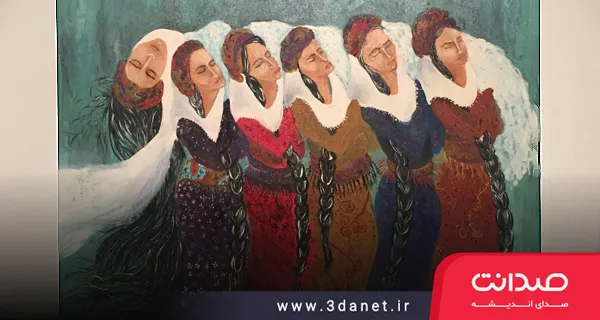
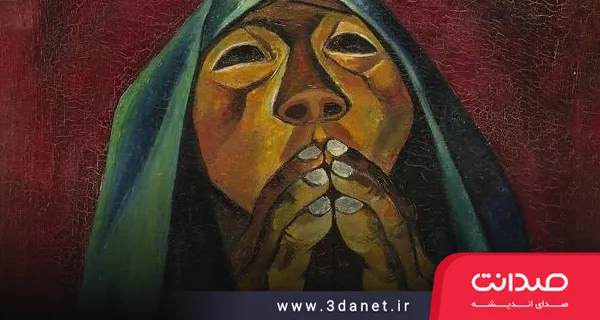
Featured image: A painting by Zahra Doğan (Turkish Kurdish painter)
These days, strange news is heard in Europe regarding the limits of women's freedom, which has not only aroused the sensitivity of women's rights activists but has also become a headline in the daily news. But the pretext for writing this note was not the news itself, but a conversation I witnessed from afar in the virtual space between two thoughtful compatriot friends.
A philosophy-reading friend (A) had shared one of the aforementioned news items on his personal page and considered it a "violation of freedom and a wrong act." The news was that "France: Women activists fined for wearing 'burkini'[1] in the swimming pool." And in the explanation, it was added: "Activists and supporters of the burkini believe that the ban on the use of such clothing by women is more rooted in Islamophobia."[2] In response to this thoughtful friend, another thoughtful friend (B) had written: "Of course, I doubt that their action is wrong. Because the exercise of freedom is also bound by constraints, some of which can be provided by law. For example, if the use of religious symbols in public places somehow causes hatred or evokes violence, in principle, the possibility of exercising such actions is not morally and legally ruled out." The first friend had empathetically shared this response from the second friend.
Reading this conversation agitated me more than the news I had been hearing these days. Because, firstly, this conversation was expressed between two "men," and without considering the consequences of such laws for "women." That is, apparently, what was important in this masculine conversation with a male-oriented view was the social function of these laws and the explanation and determination of the limits of "civil liberty," without considering its consequences for a specific group of people in society (i.e., women).
Secondly, the second speaker was one of the young, thoughtful, and active figures in the field of philosophy, especially moral philosophy. I thought to myself, if our young, thoughtful generation familiar with moral philosophy thinks so carefreely and superficially, woe to us, for we still have a very long way ahead.
To clarify the issue, I will refer below to the judicial background of the opinion of the second thoughtful friend (B) – a judicial ruling that, in my opinion, is itself the product of a patriarchal view. That is, I will state what approved law his opinion is based on and what the social and legal consequences of this ruling for "women" will be, so that it becomes clear how dangerous our defense of a judicial ruling can be, without considering its consequences for a specific group in society.
And after that, I will refer to another news headline that supports my main claim; that patriarchal thinking does not distinguish between Eastern and Western, traditional and modern, progressive and backward, educated and uneducated, religious and secular, and so on, and is a global and universal phenomenon. Albeit with varying intensities, weaknesses, and types.
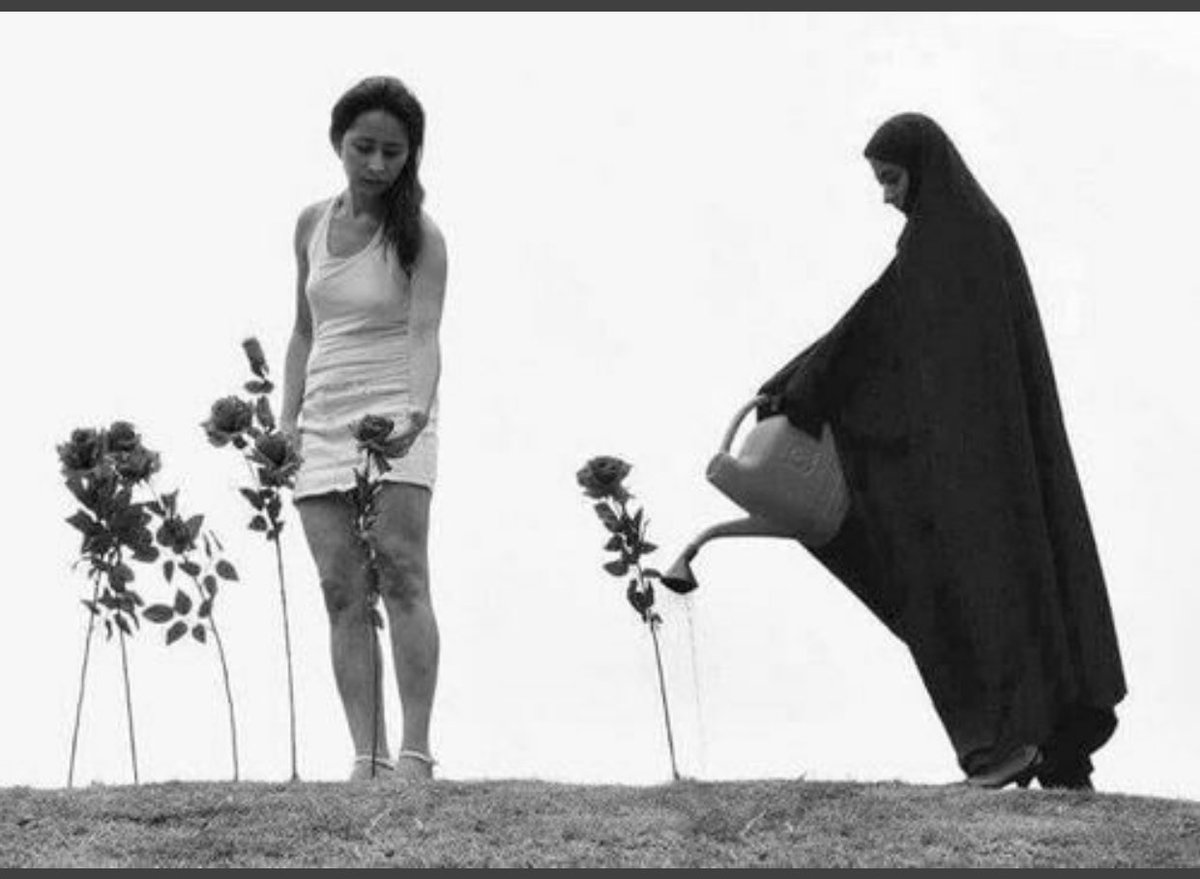
My entire effort in this writing is to express a woman-oriented narrative of social laws (of the society where I reside) – and their intended or unintended consequences for me as a "woman" – in order to place hidden dimensions and unread or unheard narratives before the moral imagination[3] of male-oriented moral philosophy.
# First Headline: "European Court of Justice: Employer can ban the use of hijab for its employees"[4]
A similar ruling was issued two months ago in the German Federal Court, according to which the use of religious symbols – such as headscarves, kippahs, and crosses – and tattoos and piercings were banned in civil service jobs.[5]
Although on the surface these rulings and laws appear logical, and as Mr. B had pointed out, they were issued to prevent any ideological, religious, philosophical, or similar propaganda—that is, ostensibly an attempt to make the workplace, and especially sensitive government posts, as neutral and impartial as possible—in practice, the fallout disproportionately affects “women.” How so?
Let us look at the matter from another angle. Let us examine this issue through a woman-centered lens and from the perspective of its consequences.[6]
Following the enactment of such a law, the one who suffers the most is once again the “woman”; the Muslim woman. Because a tattoo can be hidden. Wearing a kippah or a cross is optional and can be confined to the private sphere, or the place of worship, and so on. But wearing a headscarf is neither optional nor concealable for a Muslim woman. She must choose between the option of religiosity and voluntary covering, and the option of having a job and an income—and consequently being independent. And if a woman is devout, she must give up her job position, becoming financially and thus socially dependent on the breadwinners of the household—who are, in principle, men.
Societies that present themselves as “progressive, modern, and democratic,” by implementing this law, wittingly or unwittingly, do to women exactly what societies they label “traditional, backward, and antiquated” do: confine women to the home. The similarity becomes clearer when we see that this law ultimately has no consequences for “men.”
Because even if this law were enacted with Islamophobic motives, in practice it still only harms the Muslim “woman,” since a Muslim “man,” no matter how fundamentalist his Islamic thoughts and beliefs, no matter how religiously closed-minded and fanatical he is, because his outward appearance bears no sign of his thoughts and beliefs, can occupy these sensitive posts.
Because a far-right extremist and racist—whether with tattoos and piercings or without them—can easily and without being identified seize these government posts and secretly disseminate his ideological and dangerous thoughts.[7]
What laws of this kind overlook, and for this reason ultimately fall into the trap of superficiality, is this: what is dangerous is what is “inside the head,” not what is “on the head”!
Therefore, a law so seemingly neutral and impartial, considering its consequences, becomes a law that in practice once again makes the “woman’s body” the arena for its supposedly anti-ideological struggle. And as a result, ultimately, in my opinion, it itself turns back into an ideological system.
European society, based on my lived experience, although it has granted women many civil liberties in many respects, still has a patriarchal attitude hidden in its fabric. To further substantiate my claim, I will present the headline of another news story and leave the judgment to the readers.
# Second Headline: “Women’s Beach Handball Team Fined Over $1,700 for Wearing Shorts Instead of Bikinis”[8]
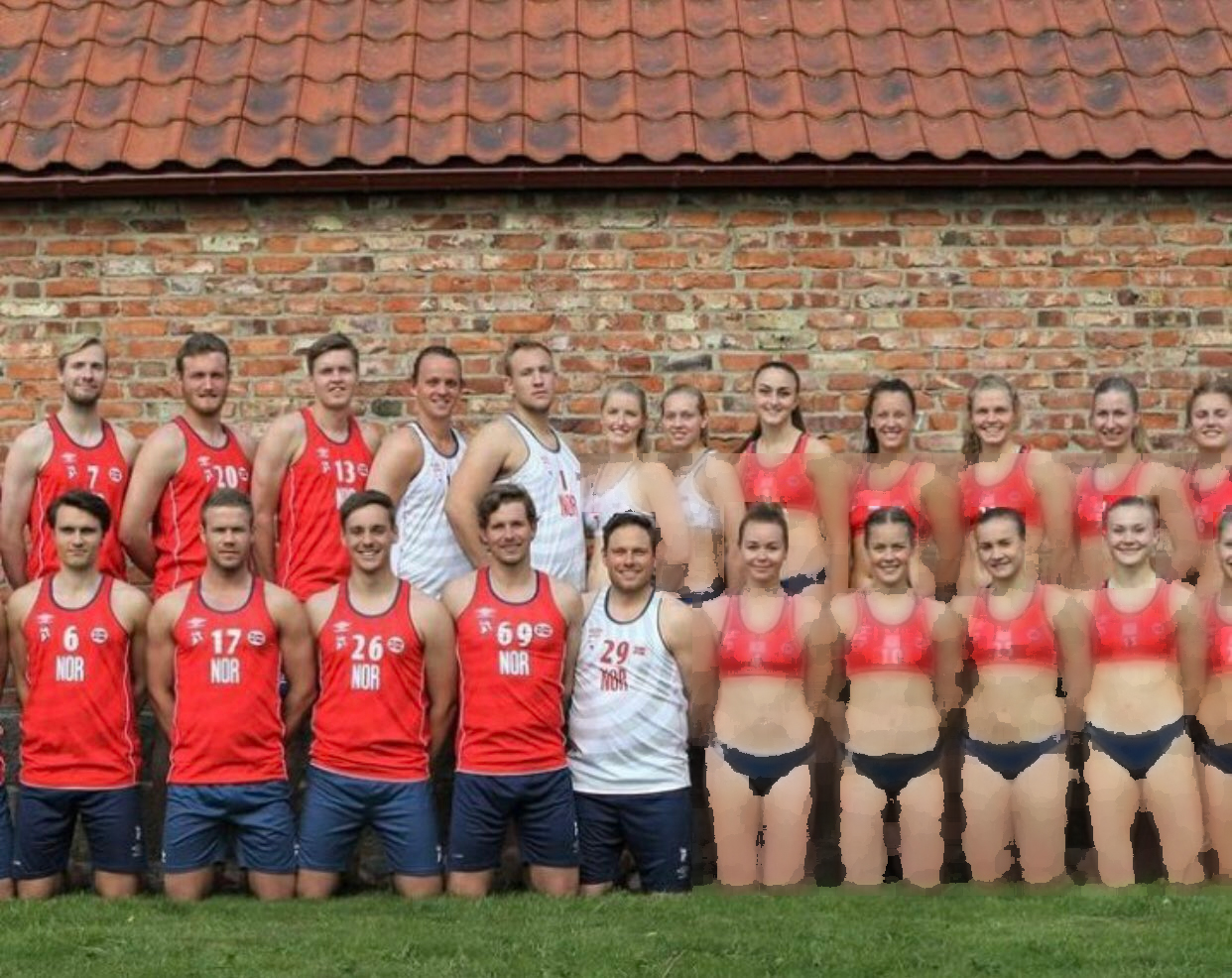
While the Norwegian women’s beach handball team is fined for not conforming to the bikini dress code and wearing shorts instead, the official uniform for the men’s beach handball team is a tank top and shorts. A double standard that, once again, ultimately seeks to define the boundaries and limits of women’s clothing. This time, however, the dispute is not over extra fabric (= the headscarf), but over the excess of fabric (= bikini instead of shorts and a tank top). In both cases, the “woman” must reduce her clothing to be accepted in patriarchal society. Or in other words, her clothing must be such that it is appropriate (!) from the “male” gaze.
In criticism of this, a Norwegian newspaper wrote in its editorial: “The era of such a patriarchal gaze upon women is over.”[9]
Final Word
In my view, any value system or ideology that restricts the “female body” or turns it into the arena of its struggle for an ideal (however lofty and valuable) is an ideological system. Whether this value system arises from a traditional society or a modern one. The criterion of valuation for me is the “female body.” And any value system that, by force of “law,” whether directly or indirectly, sets boundaries and limits only for the “female body” (that is, with a double standard)[10], or restricts her civil liberties because of the “covering of her body,” is an ideological system; a patriarchal[11] and paternalistic ideology.[12]
Here, my sole effort was to show that the struggle against women’s civil liberties continues throughout the world—both in the East and the West—in the face of covert or overt patriarchal thought. And it is not the case that suitable and ideal conditions have been fully provided for women in the West. Although women in these societies have achieved many of their civil rights and social freedoms, laws arising from a patriarchal and paternalistic gaze continue to be enacted and enforced in a “wrapping” of rationality.
I also tried, within the context of this discussion, to remind that patriarchal thought is not limited to a specific segment of society—traditional, religious, old-fashioned, fanatical, uneducated, and so on. Rather, it is present in the warp and weft of society. Even if unwittingly and unknowingly.
To solve this predicament, “feminine” and “woman-centered” narratives must increase and be taken more seriously, so that perhaps the dominant masculine, male-centered, or even patriarchal discourse may become somewhat more balanced, fairer, and more democratic.
Democracy is not that “a man”
speaks of politics
without anyone silencing his voice
Democracy is that “a woman”
speaks of love
without anyone stifling her voice in its infancy[13]
(Suʿād Muḥammad Ṣabbāḥ, from the poetry collection In the Beginning Was Woman)
.
.
[1] A burkini is a type of women’s swimwear that covers the entire body except the face, palms, and feet, allowing Muslim women to swim while maintaining their bodily covering.
[2] France: Female activists fined for wearing ‘burkinis’ in a swimming pool.
[3] Moral imagination.
[4] European Court of Justice: Employers can ban the wearing of headscarves for their employees.
[5] Regelungen zum Erscheinungsbild von Beamten und Soldaten
[6] I have previously written a note on this in German:
Emanzipation des weiblichen Körpersh
[7] . And this is by no means far from reality. According to reports, the German police force is contaminated with far-right elements who, in some cases, provide personal information about individuals to their comrades. See:
احتمال وجود یک شبکه افراطی راستگرا در پلیس آلمان
or
پلیس آلمان: چشممان را به روی خطر راست افراطی نبستهایم
[8] A women’s handball team wore shorts instead of skimpy bikini-bottom uniforms. The league fined them over $1,700.
[9] انتقادها از جریمه تیم هندبال ساحلی زنان نروژ به دلیل تن ندادن به پوشش بیکینی
[10] Double standards.
[11] Patriarchal.
[12] Paternalistic.
[13] Free translation of a poem by Suad al-Sabah:
«ليست الديمقراطية أن يقول الرجل رأيه في السياسة دون أن يعترضه أحد ..
الديمقراطية أن تقول المرأة رأيها في الحّب... دون أن يقتلها أحد»
― Suad Muhammad al-Sabah, «في البدء كانت الأنثى»
.
.
Discussion3 comments
به نظر من خود اسلام هم استفاده ابزاری از زن جهت تبلیغ خودش کرده است، و حجاب را بر زنان واجب کرده تا نمادی و اثری از اسلام در همه جا پخش شود. کافیست به قسمت آخر پیام نویسنده دقت کنید که گفته «در نظرِ من هر نظام ارزشی و فکریای که «تنِ زن» را محدود کرده یا تبدیل به میدانِ مبارزهاش برای آرمانی (هرقدر بلند و ارزشمند) کند، نظامی ایدئولوژیک است. چه این نظام ارزشی برخاسته از یک جامعه سنّتی باشد » بنابرین طبق همین متن اسلام خود یک ایدئولوژی بیش نیست که از زن استفاده ابزاری کرده است.
کاش روزی برسد که مشکل ما مردم در رابطه با دیدن بدن انسان مانند اثری باشد که بادیدن یک درخت گل یا یک نقاش یا یک ساختمان برذهن وفکر انسان دارد بیش از پنجاه سال قبل در دبیرستان دخترانه تدرس میکردم وبا شاگردانم رابطه بسیار نزدیک پدرانه داشتم .
اول مردسالاری را تعریف کنید و سپس نشان دهید چیزی به اسم مردسالاری وجود دارد