Sociology
Nezam Bahrami Komeil: Iranian Intellectuals Have Preferred Popularity Over Truth-Seeking
Nezam Bahrami Komeil argues that Iranian intellectuals have prioritised popularity over truth-seeking, leaving a third way unrealised; he classifies them not by their stance toward the West, but by their belief in the essence of modernity.
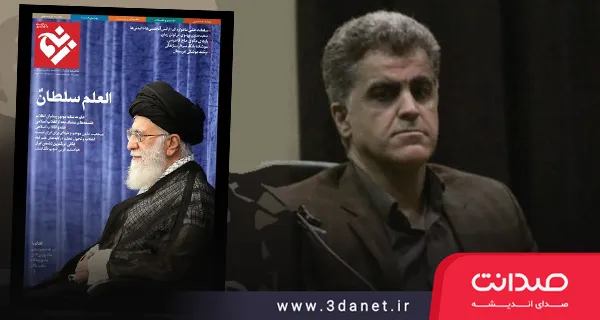
In Iran's contemporary history, intellectuals in the true sense of the word emerged in the final years of Naser al-Din Shah's reign and played a significant role in shaping the events of modern history. Intellectualism in Iran was not born in a healthy manner grounded in indigenous conditions, and engaging in dialogue with them requires particular circumstances.
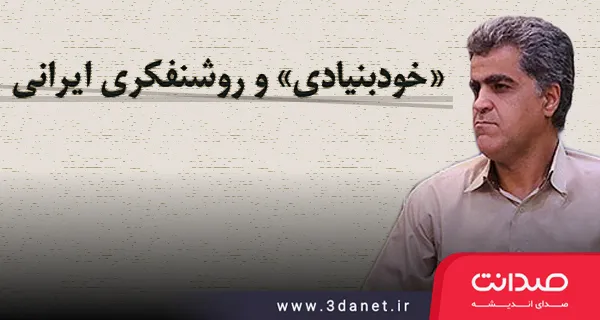
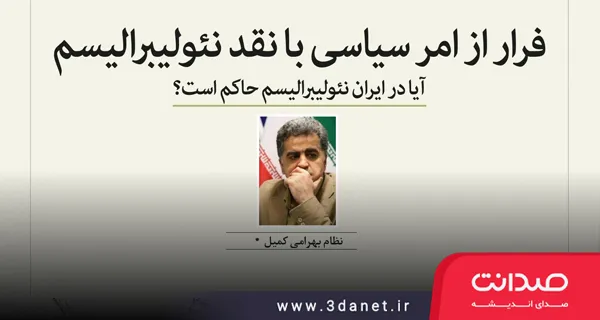
Nezam Bahrami Komeil, a contemporary sociologist, is known to followers of intellectual debates through his book A Typology of Iranian Intellectuals. His most important claim in the typology book is that religious intellectuals, indigenous intellectuals, and all those who have sought to create a combination of the virtues of tradition and modernity and to bring a third way to society have ultimately turned no copper into gold and have merely imposed the cost of their intellectual trial and error on society's shoulders. In his view, Iranian intellectuals have preferred popularity among the people over truth-seeking. His critiques of the post-revolution intellectual current range from Reza Davari to Yousef Abazari and Seyyed Javad Tabatabai.
In your book A Typology of Iranian Intellectuals, you classified Iranian intellectuals based on the relationship of their intellectual systems with the issue of modernity from the Constitutional era onward—a classification that strongly aligns with historical data as well as scientific theories. On this basis, and considering the intellectual systems of individuals, have you also categorized post-revolution Iranian intellectuals?
In my opinion, it is possible, and if we seek to consolidate knowledge and experience, we must indeed classify intellectuals, just as such classification exists in every science. Any categorization will naturally cause some distortions, and in the case of classification based on a thinker's intellectual system, some intellectuals will likely be displeased at being placed within a particular group and school of thought.
One reason for this dissatisfaction is that intellectuals do not wish to be subsumed under a group, because each claims to be, and sees themselves as, the leader of a new intellectual faction under which others should be defined. As the saying goes, we Iranians are each a little king; intellectuals are no exception to this rule. Furthermore, being placed within a school of thought means the intellectual must answer the critiques directed at that school, and since intellectuals are more inclined to critique rather than to be accountable for others' criticisms, they will oppose such categorizations.
Of course, there are other difficulties as well, such as the fact that most thinkers have gone through various intellectual phases, forcing us to say, for example, that Jalal Al-e Ahmad was leftist in one period, then became a nativist leftist or a third-way advocate, and ultimately moved close to Islamic leftism. Or that Reza Davari, in one period, is an essentialist thinker who accepts the totality of modernity but opposes this totality, and in another period, not only accepts this totality but considers it our inevitable destiny.
Regarding the classification of intellectuals, I have elaborated my view in the book A Typology of Iranian Intellectuals, which covers intellectuals from before the Constitutional Revolution to after the Islamic Revolution. My main argument is that most of these typologies place intellectuals into three groups: "pro-modernity," "anti-modernity," and "pro-combination of tradition and modernity." The flaw in this classification is that most intellectuals, seeking to escape the stigma of Westoxification (which was attached to figures like Taqizadeh) or the stigma of reactionism (which was attached to figures like Sheikh Fazlollah Nouri), place themselves in the third subgroup, namely the proponents of combining the virtues of tradition with the virtues of modernity and the West.
Moreover, if we look closely, the criterion of this classification is a value judgment and moral evaluation of the West. One group wants the West, another is hostile to it, and the third group (the alchemists) wants to selectively choose and synthesize between the West and society's tradition. This situation has led the intellectual current in Iran to a dead end, and in my opinion, one of the most important tasks is to find a new criterion for classifying intellectuals.
In the aforementioned book, I proposed a new criterion and argued that before inquiring into an intellectual’s evaluative stance toward the totality of modernity (or the West), we must first ask whether they accept the totality and essence of modernity—that is, components such as self-grounding, humanism, and secularism—or not. In other words, the appropriate criterion for classifying intellectuals is “modernity”; the first question is whether modernity has an essence or not, not whether the intellectual likes modernity or not.
How is the possession or lack of an essence for modernity determined within an intellectual’s system of thought?
The possession of an essence for modernity is determined primarily by the intellectual project that the intellectual presents, not by the critiques they direct at others. I will elaborate on this point, time permitting, when examining the ideas of Dr. Seyyed Javad Tabatabai. With this criterion, we will have two answers:
1_ If the answer is affirmative, we then ask whether, in terms of value, they are a supporter and proponent of this totality or an opponent and enemy of it. If the answer is affirmative, they fall into the group of proponents of the totality of modernity, which includes figures from Akhundzadeh before the Constitutional Revolution and Taqizadeh after it, to Reza Davari in his second period and Ramin Jahanbegloo today. If the individual answers that modernity has an essence and totality but is opposed to it in terms of value and does not want Iran to follow the path of the West, they become like Sheikh Fazlollah Nouri, Mesbah Yazdi, Fardid, Nasr, and Reza Davari in his first period, when he was theorizing in the early years of the revolution. Of course, these two main groups also have their own sub-branches, to which the reader can refer in the book.
2_ If the answer is negative—that is, the individual does not believe in the essence and totality of modernity and believes that one can select among its components or alter them—we examine and see on what source they base this selection. I have identified the existing sources, which include “Islam,” “Iran,” and “leftist thought,” and of course, this list is open and a new source can be added.
On this basis, the first category, non-essentialist Islamists, are themselves formulated into three groups: Right Islam, Left Islam, and Jurisprudential Islam. Right Islam includes figures from Seyyed Jamal al-Din Asadabadi and Naini of the Constitutional era to Abdolkarim Soroush (in a certain period), Seyyed Mohammad Khatami, and the great group of reformist governmental intellectuals. The well-known representative of Left Islam is Dr. Shariati, and of Jurisprudential Islam are Ayatollah Beheshti and Ayatollah Motahhari.
The second category is non-essentialist nationalists, whom I have called nativists, and includes figures from Fakhreddin Shadman to Seyyed Javad Tabatabai.
Isn’t the classification of Seyyed Javad Tabatabai among the nativists strange, given his critiques of nativists?
Let us not forget that Seyyed Javad Tabatabai, in his book “Volume Two of a Prolegomenon to the Theory of Iran’s Decline,” says: the path is that by questioning the foundation of tradition and critiquing it with modern tools, we may perhaps find the way that should lead to the renaissance of Iranian civilization, although I see little more than a dark and narrow winding path. That is, although Tabatabai, in his critique and in his negative aspect, correctly identifies Shariati and Jalal as ideologues who have not grasped the totality of modernity or are under the illusion of manipulating it, in his positive aspect and when he wants to propose his own solution, he follows the same path and imagines a third way, a native path for Iran.
In other words, Seyyed Javad Tabatabai accepts the totality of modernity when criticizing others, but when presenting his own intellectual project, he supposes that we are different from the rest of the world and must find our own special path. The Iranshahri project means that he has detached the totality of modernity from its universality, and this is contradictory.
The third category is non-essentialist leftists, which includes figures from Khalil Maleki, Anvar Khamei, Jalal (in a period of his intellectual life), to Mostafa Sho’aiyan.
It should be noted that previous typologies could not show the continuity and connectedness of Iranian intellectuals from the Constitutional era to the present; however, the typology proposed in this book has the capacity to show the relationship between Mirza Agha Khan Kermani, Mohammad Amin Rasulzadeh, and Mostafa Rahimi, who each belong to a different generation of intellectuals but are all democratic leftists. Furthermore, in this book you can see the output of each intellectual current in the political sphere. For example, the output of non-essentialist Islamic right is the Khatami government, and the output of non-essentialist Islamic left, meaning Shariati, is the Mojahedin-e Khalq Organization.
Within this classification of yours, can a definition of the conservative intellectual be offered? What is your definition of this model of intellectualism, and also, in your view, what should the relationship of intellectuals with the institution of power be?
A "conservative" is someone who accepts the status quo and does not offer a fundamental, essential critique of it. Regarding the "intellectual," I also believe the primary duty of the intellectual is to critique power using modern tools, that is, autonomous reason. Now, this critique can be a critique of political power or a critique of the power of society's values, beliefs, and norms. This critique is very important because, in addition to raising awareness among members of society, it prevents the formation and spread of corruption, especially in the political sphere.
Also, to make the discussion more limited and precise, I tend to distinguish at least conservatism and revolutionism (or better to say non-conservatism) in the three domains of "culture," "politics," and "economics" from one another. In the domain of culture, a revolutionary is someone who challenges some of the common and fundamental values, beliefs, and norms of society and demands their change; conversely, a conservative is someone who has no opposition to any of society's values and beliefs. In the domain of politics, a revolutionary is an individual who critiques the status quo and shakes its foundations. From an economic perspective, a revolutionary is someone who considers the ruling economic structure, meaning the position and share of agents in ownership, production, and receipt of wealth, to be unjust and the main cause of miseries and deficiencies, and for this reason proposes an alternative economic structure and system.
It is obvious that in the material and real world, these three dimensions are intertwined, and especially the political and economic dimensions (particularly in despotic societies) are not separable from one another.
In other words, are intellectuals drawn into the political arena whether they want to be or not?
Yes. In the Third World, intellectuals are drawn into the political sphere whether they want to be or not. Because the state intervenes in all domains and wants to be everything. So naturally, critique and enlightenment in any domain drags the state into the middle and leads to political critique. Now, look at the likes of Allameh Jafari, Dr. Elahi Ghomshei, and Dr. Gholamhossein Ebrahimi Dinani, what art and talent they have that they can deliver a thousand lectures on poetry, philosophy, art, family, mysticism, religion, and history without offending anyone!
Regarding the relationship of intellectuals with power, it must be said that the rule is that the intellectual should maintain their distance from politicians; if this distance is reduced, it is very difficult for the intellectual to carry out the duty of discovering and defending the truth fairly, and sooner or later they must abandon one to preserve the other. Of course, a religious scholar who enters the political sphere finds this same contradiction, and in fact, the gist of Machiavelli's words in the book "The Prince" was precisely that the sphere of politics differs from the sphere of ethics, and the rule is that politics is the arena of acquiring and preserving power by any means. An intellectual who is integrated into a specific government or party cannot have justice and fairness in the political critique they conduct. Most intellectuals close to the governmental reformist camp, from Abdolkarim Soroush to Hashem Aghajari and Mohammad Reza Jalaeipour, are in such a situation. Although I consider Ahmadinejad a populist, the critique of most intellectuals affiliated with the reformist political current against him stemmed from a political standpoint, meaning weakening his power, not from a standpoint of enlightenment that seeks truth and awareness-raising.
In your opinion, what are the most important methods and tricks that Iran's conservative intellectuals hide behind, and what is your critique of them?
In my view, Iranian intellectuals have, consciously or unconsciously, employed various methods to conceal their conservatism, and I would like to introduce two of the most important ones:
First, the displacement of priorities: The most important tactic that conservative professors and intellectuals resort to in order to present themselves as critics is to displace priorities, meaning they place less important issues at the center of their critiques. Therefore, if we wish to distinguish a conservative, expediency-driven intellectual from a non-conservative intellectual, we must first determine what the main issues and priorities of society are.
Previously, in the book A Typology of Iranian Intellectuals and in my critique of the religious intellectualism current that turns the "religious–non-religious" divide into society's primary priority, I wrote: "The principal contradiction and divide in the political sphere is the divide between 'democracy and liberalism' and 'despotism and totalitarianism,' and dragging other social and cultural divides into the political sphere weakens the front of democracy and liberalism. This, of course, does not mean covering up or ignoring gender, ethnic, and ideological injustices; but one must note that the root of discrimination between man and woman, Kurd and Turk and Fars and Baluch, Muslim and non-Muslim, bourgeoisie and proletariat, religious and secular, turbaned and non-turbaned, and so on, lies in the very existence of despotism."
Of course, besides the divide between "freedom and despotism," the divide between "justice and injustice" is also a vital issue and a very important priority, to the extent that some intellectuals consider it society's foremost priority. While respecting and believing in raising the issue of justice, it must be said: if there is no freedom, especially freedom of expression, one cannot reach a consensus on the definition of justice and the determination of its dimensions, obstacles, and mechanisms for realization. It is for this reason that, as Dahrendorf says, societies that prioritized freedom achieved, to some extent and gradually, a measure of relative justice; but countries that started with justice—by which he meant the Soviet Union and communist countries—never attained freedom and democracy.
In my view, once minimum levels of freedom, democracy, and human rights are recognized, the work of justice must begin immediately, which demands a longer and deeper struggle. To avoid misinterpretation, let me state here that, in my opinion, economic freedoms lie at the far end of the spectrum of freedoms, and priority belongs to political and social freedoms; precisely the opposite of what Iranian statesmen like Hashemi Rafsanjani, Hassan Rouhani, Mohammad Khatami (after 1999), and some economists close to this tendency, such as the esteemed professors Mousa Ghaninejad, Mohammad Tabibian, and Masoud Nili, did. Experience has shown that third-world societies that prioritize open-door policies, economic adjustment, and privatization before achieving a minimum of political freedom and freedom of expression ultimately bequeath a predatory state or, as Douglass North calls it, a "kleptocracy." Because there is not enough freedom of expression, media, and transparency to prevent theft, rent-seeking, embezzlement, and state corruption, and such a government both plunders society's resources and, over time, institutionalizes a culture of plunder in society, turning everyone into thieves.
In summary, I believe the most important issue in the country from the Constitutional era to the present has been the matter of "freedom and despotism," and the mistake of a segment of the intellectuals has been to neglect this divide and activate other divides such as "religious–non-religious," "uptown–downtown," "capitalist–worker," "Shia–non-Shia," "man–woman," "Aryan–non-Aryan," "veiled–unveiled," "cleric–non-cleric," and so on. What does it really matter what the religion, place of residence, gender, or race of despots and freedom-seekers is? If a cleric is a good person, should he be considered an enemy due to prejudice and because he wears a turban, and conversely, if a man in a tie or an unveiled woman has a work ethic and helps others, should they be assumed enemies because of a little more or less fabric?
In other words, have intellectuals tried to conceal their conservative disposition?
Yes. With this preamble, one can understand which issues and matters certain intellectual currents have turned into their primary priority in order to conceal their conservatism.
A. A group of intellectuals working in the field of ethics and social criticism have placed topics such as the hijab, social networks, moral corruption and sexual relations, holding mixed-gender concerts, cultural ceremonies and celebrations, and the like on their agenda, and they tend to want such topics to become the priority and main issue of society.
In contrast, another group of intellectuals, in the same field of ethics, prioritizes topics such as lying, pretense and hypocrisy, embezzlement, nepotism, administrative corruption and bribery, and the like, believing that other topics are of secondary importance. Well, you have seen representatives of both groups and can judge for yourselves which is the fundamental and essential problem of society, and which of these two groups is more committed and which is more conservative. I remember during Mr. Ahmadinejad's time, when the fraudulent nature of the late Kordan's academic degree was proven, only one or two Friday prayer leaders in the entire country addressed the issue and condemned the lying and deceit; but a few months later, when an actor shook hands with a member of the opposite sex, the majority of those gentlemen came to the fore and condemned his action.
B. Modernism and Postmodernism: The topic of "postmodernism," which some individuals like Messrs. Reza Davari, Babak Ahmadi, and Ali Babachahi, along with a few translators, highlighted in Iran during the 1990s, was nothing but an unintended diversion of public opinion from more fundamental issues. It must be stated that modernity prevails in the West, and postmodernity, as a marginal intellectual and artistic current, serves functions for critiquing modernity. However, in a country where the most basic components of modernity—such as rationality, freedom, human rights, democracy, self-foundation, and individual and social rights—are not recognized and it still remains under the sway of tradition, promoting and spreading postmodernity is nothing but a blow to the frail body of modernity. According to thinkers like Dariush Ashouri and Dariush Shayegan, raising postmodern questions in societies that have not yet reached the stage of grappling with these issues is a false problem. In other words, critiquing rationality, democracy, and human rights in a developed society is realistic and useful, but in an underdeveloped society, it is entirely harmful and requires neither courage nor commitment. Of course, there were other individuals, like Dr. Mohammad Reza Tajik, who, using this same postmodernist literature, rose to offer a critical reading of the status quo and tried to critique power, presenting, for example, a new approach to security or minority rights.
In this same context, and in contrast to Tajik, you cannot find a single critical Foucauldian work or analysis from Dr. Hossein Kachouian, who spent half his academic life studying Foucault. Even in a book titled "The Evolutions of Identity Discourses in Iran," he makes no reference to the role and mechanism of power in constructing the post-revolution identity discourse, and as far as I remember, he explicitly states in the book's introduction that he has set aside the factor of power from his analysis. It is exactly as if someone were to say they conducted a study titled "A Marxist Reading of the Islamic Revolution" but had nothing to do with the issue of class struggle. Well, this is also one of the contradictions of our society; as travelogue writers have noted, Iran is a land of contrasts and contradictions. We want to be an independent, classy Foucauldian thinker, and at the same time, a member of the Supreme Council of the Cultural Revolution. It is for this reason that they say an intellectual, in order to fulfill their duty, must maintain a distance from power.
C. Conservatism under the Banner of Anti-Liberalism: A group of thinkers with leftist or Islamic leanings, by highlighting the divide between "liberalism and neoliberalism" and "socialism or Islam," direct all their mental energy toward defending one and attacking the other. As mentioned, this group of intellectuals either has leftist leanings and attacks liberalism from a socialist and justice-oriented standpoint, consequently placing topics such as the logic of capitalism, globalization, class divide, consumerism, and marketization at the center of their attacks. Or they have Islamic leanings and attack liberalism from a religious standpoint, using topics such as humanism, secularism, identity, moral deviations, usury, and aristocracy as material for their critique.
The question now is whether the critics of neoliberalism are aware of the conditions of the society in which they live and have taken that into account in their choice of topics and the issues they raise. The battle over the pros and cons of neoliberalism may be a real, important, and useful battle in social-democratic Sweden and Denmark, or in liberal-democratic Britain and America, and among the left and right parties of Western countries; but fundamentally, to what extent is raising this issue in our country real and useful? Prioritizing this topic is correct in countries whose systems are capitalist and neoliberal; but is such a system dominant in our society? When one speaks of the Iranian government, is the first and most important image that comes to mind its capitalist and neoliberal nature? In analyzing Iran's political-economic situation, can one observe the same priorities that Western analysts observe for analyzing their own society?
Critics of the capitalist and neoliberal system in Iran believe that such systems distract society's attention from real and important issues, highlight unreal issues in their minds, and keep them occupied with matters of little importance. In response, it must be said that those who have targeted capitalism, liberalism, and neoliberalism in Iran are themselves among the agents who swap primary issues for secondary ones and engage public opinion with imaginary problems. Some Iranian leftist professors and intellectuals who condemn Trump's racist actions and every oppressive event that occurs in the West, and who are concerned about the rights of minorities in the post-9/11 era, do not have a single simple note in their intellectual record in support of the discontented workers of their own country.
Similarly, and as mentioned, the other face of conservatism under the banner of the struggle against liberalism is carried out by individuals with a religious background. This group of expedient and conservative intellectuals, who like to be called principlist and value-oriented, are pained at heart by what happened in Guantanamo and Abu Ghraib prisons, but pay no attention to what goes on in the prisons of their own country. The value-oriented critics who criticize the policies of the capitalist system remain silent about the usury practiced by banks, credit and financial institutions, and domestic fraudsters.
T: Focusing on the issues and priorities of other societies: One of the well-known and old ways of conservatism is to address the problems of other societies and remain silent about the fundamental issues and problems of our own country. Those professors and intellectuals who constantly speak of the weaknesses of other societies and showcase unemployment, poverty, bribery, theft, embezzlement, discrimination, suicide, and divorce in China, America, and Britain have forgotten that their time, life, and society's budget and resources were not spent so that they could serve other countries, especially Western countries, and trumpet their shortcomings. The eyes of the Iranian people are upon them to find solutions for their problems. The international relations expert who exposes the strategic errors of the US government's foreign policy in Brazil, Mexico, and the Korean Peninsula does not have two sentences to say about the flaws in their own country's foreign relations in Iraq or Afghanistan. In other words, if we are to wield a shovel, we must first be able to wield it in our own garden.
In summarizing this section, it can be said: if intellectuals, like the intellectuals of the Constitutional era, still raise issues such as freedom, justice, human rights, and ethics in the sense of truth and humanity, they are committed; but if they activate other divides, it seems they have fallen into conservatism. Of course, there is no necessity for these intellectuals and activists to be active solely in the political sphere. They can work in the field of ethics and religion, like Dr. Mostafa Malekian, or Professor Mojtahed Shabestari, or Dr. Hassan Mohaddesi and Dr. Mohammad Fazeli. They can also critique and enlighten in the field of economics, like Dr. Mohsen Renani and Dr. Hossein Raghfar. The same work is done by figures ranging from Dr. Reza Davari to Dr. Morteza Mardiha in the fields of philosophy and political science. Let us not forget that we are discussing the conservative thought and non-conservatism of intellectuals, and confirming or rejecting their intellectual performance does not mean a moral judgment or a rejection or confirmation of their character.
You were talking about the tactics of concealing conservatism among intellectuals. What are the next tactics?
The second method is “the dissection and fragmentation of society’s fundamental issues.” An old criticism of positivists was that by removing phenomena from their context and setting, and by fragmenting social knowledge, they ultimately view only one part of social phenomena through a particular lens, and even then under artificial conditions. In other words, they tear apart the totality of social phenomena and unrealistically examine only a portion of the various parts of phenomena under a microscope, presenting findings only on that specific aspect. Obviously, such findings have little practical application, because in the real world these dimensions are not separate from one another. Positivists carried out this fragmentation with a gesture of being scientific, accusing others of speaking in generalities and being idealistic. This issue led to lengthy debates, one outcome of which was the formation of interdisciplinary sciences such as family or women’s studies—a topic there is no room to examine here.
In any case, this fragmentation of issues is one of the most important methods behind which university professors, in particular, conceal their conservatism. Consider, for instance, how much research findings with titles like “The Relationship between Parents’ Addiction to Industrial Substances and the Academic Motivation of Female Students in Private Schools,” or “An Examination of the Relationship between Participatory Management and the Job Satisfaction of Night-Shift Employees in Social Security-Affiliated Hospitals,” or “The Effect of the Angry Birds Computer Game on Reducing the Social Happiness of Its Users,” and so on, actually increase our understanding of phenomena such as “academic motivation,” “job satisfaction,” and “social happiness.” You might think these are topics for undergraduate and master’s theses, but I assure you that the doctoral dissertations of many universities and the research projects of many university faculty members have not risen above this level.
On the flip side of the coin, there are also intellectuals who, citing the thoughts of Michel Foucault and putting forward the claim that we no longer have a universal intellectual with a social mission and that intellectuals, too, must confine themselves to their own specialized domain, have adopted conservatism and, for example, work only on traffic, the environment, child labor, productivity, consumption, and in any case, only on one specific issue. Of course, if this group of intellectuals does not distort Foucault’s ideas and, as he said, reveals and critiques the power structure and discrimination behind each of these specialized domains, their work will be very valuable and will indeed distance us from speaking in generalities. But if they latch onto only the first part of Foucault’s statement and content themselves with description, information dissemination, and providing statistics in a specific domain, this certainly demonstrates their conservatism.
What is your critique of the actions of intellectual currents in post-revolutionary Iran? Have these currents played a role in the transformations of Iranian society?
In short, I have several critiques of the intellectual current. First, they do not engage in dialogue with one another and quickly resort to verbal violence. Instead of analyzing their own society, intellectuals enter into conflict with each other and wage campaigns against one another. It may be a pessimistic analysis, but in my opinion, after the importance of intellectual journals in theorizing the Second of Khordad movement became clear, a group thought of working in this sphere to prevent the formation of a similar experience again. These individuals have launched a journal every so often, keeping intellectuals occupied, and they will more or less drag this conflict onto television as well. Allow me to share my own experience: in the past few years, especially during the events that occurred after the surge in gold coin and currency prices from late 2018, a massive amount of society’s money and resources was plundered. For this reason, I decided to write an article on structural and public corruption; I very quickly realized that despite the frequent repetition of the term “structural corruption,” not much has been published on this subject by my compatriot thinkers. After preparing a short note and sending it to several websites and journals, I was unable to get it published. During this same period, intellectual journals had paved the way for some intellectuals to settle scores with one another. In my view, this is also a form of unconscious conservatism within the country’s intellectual sphere.
Second, unfortunately, most intellectuals prioritize “being popular with the people” over “truth,” and for this reason, in some cases, they are forced to set aside the truth and chase after the people. This is while it seems an intellectual should speak the truth; even if the truth is like a bastard child that brings disgrace upon the mother. I have repeatedly heard Dr. Shariati praised because he had a large audience and, for example, tapes of his lectures were reproduced by the thousands. If this reasoning is correct, then in that same period, the late Kafi’s audience was much larger. Let me give another example; look, Dr. Yousef Abazari lamented the large crowd at the memorial service for the late pop singer Morteza Pashaei and the handful of attendees at the services of music greats like Parviz Yahaghi or Homayoun Khorram, and of course, he never said that this music should be banned and everyone should listen to traditional music. Because if a thinker says such a thing, he has left the realm of intellectualism and donned the garb of a reformist dictator. Anyway, in this case, Abazari entered at the level of critique and raising awareness, which was courageous. In parentheses, let me say, with all this talk, I like Javad Yasari’s songs far more than classical music.
Third, many intellectuals are engaged in tightrope walking and charlatanism. If you look at the atmosphere of university faculties, you will see that apart from neutral and passive professors, the majority have religious, reformist, or leftist leanings. But all three groups are drinking buddies in this point: setting aside the main issues and activating secondary fault lines. Value-oriented professors rally against bad hijab and mixed-gender classrooms; left-leaning professors criticize no one less than Trump and Macron; but ultimately, all of this is for tightrope walking and escaping from the main subjects. It is not without reason that during the faculty selection process of the Ministry of Science, if you have a modernist and Parsonian orientation, you are eliminated; but if you are postmodern and neo-Marxist, you remain, provided that you speak for thirty years about the corruption of the capitalist system and the oppression of world-devouring America.
Fourth, Iranian intellectuals have a strange complex and thirst to register a theory, or at least a term, in their own name. They consider it beneath their dignity to say, “I am a follower of the thoughts of John Stuart Mill, Kant, Foucault,” or a supporter of a certain existing political system in the world. From Shariati’s committed democracy to Soroush’s religious democracy, all are within this same paradigm. In my opinion, an intellectual must consider himself committed to the costs that his opinions, even after his death, have imposed on society.
Fifth, and most importantly: we have many claimants to intellectualism, but in the field of action, almost no one is seen. To prove this claim, it is enough to look at the photos of the gathering held to condemn the acid attacks in Isfahan. There was no news of the Iran-shahri legion; no trace of the supporters or critics of liberalism and neoliberalism; no news of reformist intellectuals, no trace of value-oriented forces and followers of the justice of Ali (AS); the intellectuals of the postmodernism and post-colonialism currents, the neo-Shariatis, and others probably had more important things to do.
.
.
PDF file of the conversation with Nezam Bahrami Komeil
.
.
Conversation with: Nezam Bahrami Komeil
Interview by: Mohammad Asiabani
First issue of the new period of Zamaneh Monthly, with Masoud Fayyazi as Managing Director and Seyed Amir-Hassan Dehghani as Editor-in-Chief – Bahman 1397 issue, pages 49-53
.
.
Discussion6 comments
بر زمینه دو قطبی « اهورایی / اهریمنی » ـ که زیرساخت هنوز نافذ اندیشه ایرانی است ـ ، هر نقدی بر یک پدیده ، انکار آن تلقی می شود و به ندیدن ، به حساب نیاوردن ، حکم به هدم و نابودی دادن و ... می انجامد . پادزهر این منش ، مرکب و در جریان دیدن امور است ، روشی که معدل گیری پویا و رفتار عادلانه مبتنی بر آن را در پی دارد . روشنگری با همه کاستی هایش ، گام زدن در این مسیر است اما دشمنان خرد این را خوش نمی دارند .
یکی زیباترین مصاحبت هایی بودکه تا به حال خوانده بودم .استاد به درستی اشارت کردند نقد سرمایه داری ، عقل گرابی و دموکراسی موضوع اصلی کشور ما نیست.
مسئله اساسی در کشور شما آقای نویسنده لیبرال رسوا شدن دانشگاه، فیلسوف، استاد دانشگاه تابع مد روز است که در اتاق دربسته و آزمون ها سعی در بدست آوردن جایگاه شغلی و پس از secureکردن آن در روزنامه، مجله، و گفتگوها با زیر پا گذاشتن وجدان و اخلاق خود با تظاهر به ارائه نقد اجتماعی با حمله به ارزشهای فرهنگی و بومی خود تلاش برای جلوه گری ، مشهور شدن و بدست آوردن جایگاه اجتماعی و شهرت به هر قیمت میکند. در زمانی که مردم علیه لیبرالیسم در آمریکا و فرانسه کشته می شوند یا زیر زانوی پلیس جان می دهند دانشگاهی ایرانی بجای روشنگری در باب آشوب های جامعه غرب به خود و خانواده خود و ملت خود می تازد!
خیلی خوب بود؛ متاسفانه اغلب روشنفکران(یا شاید بهتر باشد بگوییم روشنگران! ) به عقاید خود تعهد ندارند و اصطلاحا یکی به نعل می کوبند و یکی به میخ! زمانی که بچه بودم قصه ای خواندم که ماری بچه های قورباغه ای را می خورد و قورباغه برای راسویی ماهی گذاشت تا جلو لانه مار و راسو مار را خورد اما چند روز بعد راسو از همان راهی که یاد گرفته بود آمد و اول بچه ها را خورد و بعد هم خود قورباغه را ! داستان روشنفکران ما هم همین است! نمی دانم کسی که خود را روشنفکر و مدرن می داند با چه منطقی برای توجیه مولفه ها و لوازم مدرنیته از متون بسیار سنتی و مذهبی استفاده می کند؟! به خیال خودشان میخواهند از ابزارهایی که وجود دارد و برای عموم و البته قدرتمداران قابل فهم است و حساسیت هم ایجاد نمی کند استفاده کنند تا بتوانند مدت طولانی فعالیت کنند؛ واقعا نمی دانند عاقبتش ماجرایی قورباغه و راسو می شود؟! اگر نمی دانند که چندان هم فکر روشنی ندارند و اگر می دانند که در حال خیانت به مردمی هستند که چشم امید به ایشان دارند .(حالا بگذریم از خیانتی که به عقاید و باورهایی خود می کنند، چون در مقابل آنچه با جوانان تشنه این مملکت می کنند هیچ اهمیتی ندارد! )
ممنون ازاستادعزیز، آیا تبدیل روشنفکری به خاموشفکری هم امکان پذیر است؟ هیچگاه روشنفکر محبوب نخواهد شد،نگاهی به روشنفکرانی که باعث پیروزی انقلاب شدند بیاندازید، همگی محبوبیت خود را از دست دادند وهر کدام به گوشه ای خزیده اند
نقد بسیارخوبی بود به روشنفکران.جامع و کامل