Religion
A Note by Saeedeh Mirsadri, “Do Not Take the Name of the Lord in Vain,” in Response to Mohsen Kadivar’s Lecture Series “God and Evil”
In response to Mohsen Kadivar's lectures on 'God and Evil', Saeedeh Mirsadri argues that the traditional approach to the problem of evil neglects human suffering, and calls on religious intellectuals to empathize with humanity rather than defend a philosophical God.
“Do Not Take the Name of the Lord in Vain” [1] A Note in Response to the Lecture Series “God and Evil”
Saeedeh Mirsadri
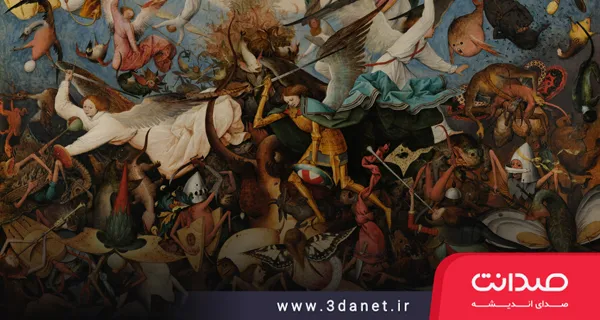
Featured image (image at the beginning of the article): “The Fall of the Rebel Angels” by Pieter Bruegel, Dutch Renaissance painter
I gathered a handful of kindling to burn myself
The flower imagines I am building a nest in the rose garden[2]
Some time ago, Dr. Mohsen Kadivar delivered a lecture on “God and Evil” in three parts over several weeks. Although I consider his precise and detailed lecture on the discourse of evil in the West to be very valuable—as it acquaints interested Persian-speaking audiences with the issues raised in this field in a language that is both simple and yet scholarly and specialized—for me, who has been grappling with the problem of evil on both a personal and academic level for years, and who has always admired religious intellectualism for offering a humanistic interpretation of religion—one in which my human perspective, my needs, my concerns, my questions, my rights, and so on are taken seriously—Dr. Kadivar’s tone, inattentive to the human being, regarding the problem of evil and his presentation of entirely traditional answers to this issue came as a great shock and, to some extent, a disappointment. The reason for this shock and disappointment was that I saw religious intellectualism, which has always stood alongside human beings in interpreting religion and jurisprudence, viewing issues not from the perspective of a secluded, human-indifferent Lawgiver entangled with dry, soulless, and abstract concepts, but from the viewpoint of me, a flesh-and-blood, bone-and-sinew human being who needs religion not only for otherworldly, hereafter salvation but also to make worldly, here-and-now life bearable—when the question of the most existential theological and philosophical concern, namely the problem of evil, arises, it does not stand beside me, the human being, but in the position of a prosperous and self-sufficient censor, sets about justifying evil. It sees the world as entirely good and condemns the human being—for their sins, arrogance, ignorance, and so on. Hence, I felt compelled to put this writing to paper as a grievance and a request to him and to other religious intellectuals to take the problem of evil as seriously as other issues raised in religious new-thinking, and before and beyond defending their philosophical God—with a zeal and intensity that comes at the cost of ignoring “human suffering”—to treat the human being with a little more empathy and kindness—as they have previously done in their reading of traditional jurisprudence.
These criticisms and these calls for attention do not signify a denial of the “God of monotheistic religions,” but rather a rejection of the “God of the philosophers,” which has become so entrenched in Islamic theology and philosophy that our theodicists have substituted it for the God of the Abrahamic faiths, and in their fervent and zealous defense of this “God of the philosophers,” they silence not only the voice of the “sufferers” but also the voice of the “God of the Holy Scriptures.” Therefore, in this very introduction and before addressing the main point, I deem it necessary to note that my intention is neither a critique of the Islamic tradition nor a critique of the God of the Abrahamic faiths. My critique is directed at the dry, logical, and soulless “discourse” of the “theodicists,” who claim to be the public prosecutors of tradition and the God of the Abrahamic faiths, but are in reality the inheritors and defenders of Greek philosophy and tradition. And because they themselves have always belonged to the privileged and benefited stratum of society—due to being male, enjoying the advantages of a patriarchal structure, and due to being religious scholars, enjoying social status, honor, and esteem, and so on—they have interpreted the “gathering of kindling” by a sufferer, which was intended as self-immolation, as an “assault on the foundations of religion or theism”—for what does the “privileged” know of the distressed state of the “deprived”? Let alone empathy and identification—and they have considered the existential suffering that burns the sufferer to the marrow of their bones and drives them to a struggle for meaning-making as “nest-building in their own rose garden.”
My critique is directed at “theodicy-making,” which has always claimed to be privy to the divine plan and program, and has positioned itself as the defense attorney for religion and the guardian of the heavenly kingdom. Theodicy-making that has always, in a vacuum and heedless of current realities, engaged in abstract theorizing detached from the issues, questions, and concerns at hand. And this is while the problem of evil has increasingly—and especially in the present condition of the world—become a serious issue for theism and for religious believers who are grappling with existential questions. It is therefore time for Islamic thinkers to cease reiterating their repetitive and (in the sphere of religious life) ineffective philosophical-logical answers—which are directly indebted to the Greek tradition—and to seek a new existential or theological answer by offering a novel reading and interpretation of the Quranic text and the religious heritage.
My house is on fire, a heart-rending fire This fire burns on every side The curtains and the carpets, their warp with their weft I run weeping in every direction In the flames of the smoky fire And amidst my bitter laughter And the unhappy roar of my weeping From my weary, burning heart I cry out, O cry! O cry...
“You shall not make for yourself an idol to worship” (the Second Commandment)
Over the course of these three sessions—which, including the Q&A, amounted to roughly 6 hours—Dr. Kadivar examines, in three parts, the discourse of evil in the Western world across three domains: the logical, the philosophical, and the existential. Although his aim is solely to present the discourse of evil in the West, to raise the accusations leveled by atheists against the theistic camp, and to offer the logical and philosophical responses of Western theist philosophers, during the lecture and especially during the Q&A sessions, as the need arises, he is compelled to take a position on his own behalf and to articulate the common responses within the Islamic tradition to the problem of evil. Since I believe that Kadivar’s response and those of other common theodicies in the Islamic tradition are the product of scholars confined within a specific intellectual and philosophical tradition, who attribute this “understanding” of theirs not to “personal comprehension” but to “Islam,” I will, recalling the second of the Ten Commandments (= “You shall not make for yourself an idol to worship”), state the principal formulation of his claims. And in the next section, I will raise my questions and criticisms, as well as the critiques that apply to the discourse of theodicy. The general form of Dr. Kadivar’s arguments is as follows:
1) God’s power does not extend to logical impossibilities.
2) God had a necessary and sufficient moral reason for the existence of existing evils; in God’s comprehensive plan, these evils were foreseen and necessary for the realization of a greater good. And this greater good is human free will.
3) Moral evils are the product of the wrong choice of a free being called the human being, who chose the option of evil.
4) God does not intervene in the few instances of evil in the world, because it would be a contradiction, as it would constitute a violation of human free will—and would involve God’s power extending to impossibilities, which is not possible.
Conclusion: That human beings have absolute free will is an “abundant good” in comparison to which the existing evils are few.
To strengthen (!) his arguments, he also notes that:
1_ Evil is the product of our impatience and intolerance or our misinterpretation of matters. Evils are very few and goods are very abundant. But when an evil befalls us, our wailing and lamentation rise up. Otherwise, the world is full of beauty; “I saw nothing but beauty”!
2_ Evil is distributed in accordance with God's wisdom: tribulation for the saints and gradual entrapment (istidrāj) for the wretched. That is, God caresses His special servants more, because He wants to give them existential elevation: whoever is more favored in this gathering, the cup of affliction is given to them more... whoever is more like the saints of God, more affliction befalls them. In the case of the oppressors who have attained blessings and power, it is istidrāj. Gradually, as they sin, they receive more blessings so that they traverse greater degrees of crime, transgression, and sin. "Therefore, the foundation of this world is not that evils belong only to the wicked and goods to the good. On the contrary...". In sum: Evils are distributed in accordance with God's wisdom. And every evil has its own specific wisdom. And some of it is concealed from us.
3_ Human cognitive faculties are incapable of comprehending the wisdom of evils: In response to the claim of atheists who believe that since they see no reason for evil, therefore no reason exists, Kadivar formulates their claim as follows: "Comparing human knowledge/science to God's knowledge" or "the self-sufficiency of human knowledge, or I-do-not-see-therefore-it-is-not." And in response to their claim, he says: God always has the necessary and sufficient reason for the known evils in the world. However, God's knowledge – especially regarding good and evil – is far more extensive than human knowledge. If someone believes in the self-sufficiency of human knowledge or I-do-not-see-therefore-it-is-not, they claim that God has no reason for permitting evil. Because I do not see and do not understand, therefore it is not. He then appeals to skeptical theology to remind, in response to the atheists' accusation, of the limitation and incapacity of human cognitive ability in understanding the mysteries of the world: "If we admit the possibility – not certainty – that we lack sufficient knowledge to recognize our own good and evil in this material world, it suffices to say: Therefore, it is possible that God possesses this knowledge, and the goods claimed by theists possibly exist. This very possibility is sufficient."
For a better evaluation of Kadivar's statements, in addition to formulating his arguments and reasons, attention to the following several points is also necessary:
A, His explanation of the existential approach to evil. In the third part of his lecture series, after examining the logical and philosophical responses to evil, in which theists, in his opinion, "were able to successfully (!) answer both the logical and philosophical forms," he examines the third approach to the problem of evil, namely the existential approach. In explaining the existential approach, he posits the existence of two important questions: 1) Is a God who allows me to suffer trustworthy? The answer of this approach: No, such a God is not trustworthy – in his opinion. 2) Why did God permit this evil to happen to me and my loved ones and make my life full of suffering? The answer of this approach – in his opinion – is that God cannot do anything, He is weak. He does not have absolute power to prevent my suffering. Or if He has power, He does not have absolute knowledge – and this refers to his interpretation of some new theological approaches in response to the problem of evil. Or if He has these two, He is not absolutely benevolent – a reference to protest theology. In his opinion, in this "approach," to answer the problem of evil, one of these traditional attributes of God is called into question.
B, On the importance gained by the problem of evil in recent decades in the Jewish and Christian tradition, and its absence in the Islamic world. Instead of attributing this absence to the negligence of Islamic thinkers, and considering this attention to the problem of evil, and especially existential evil, in the two other Abrahamic traditions as a blessed event, on the contrary, he sees himself on the side of truth – since he has most likely found his "arguments and responses" sufficiently adequate and convincing in the highest degree – and attributes this attention of the Western religious and intellectual tradition to the problem of evil to the arrogance and pride of modern man, and thereby questions humanism and the primacy of autonomous human reason.
C. His treatment of the criticisms leveled against theodicy-making – under the title of the existential approach. Kadivar expresses the criticisms that, "in his opinion," are leveled by the existential approach against theodicy-makers in a list-like manner and without providing any response, as follows:
is universal, global, and ahistorical. It is abstract, observer-centric, and second-order—that is, it is not in the language of the sufferers themselves. Its language is non-tragic and non-mysterious. Its language is the dry, soulless language of logic. It is teleological—in its explanation, it says: you theodicists are accomplices of a God who is the agent of evil, and you must answer. It is a fatalistic approach. It is ignorant of modern science and theology. Its view of humanity is instrumental—and in its explanation, it says: because God was central for them, they did not make the human being, their personality, and their individuality the main issue, and thus they have disrespected human dignity. It is we who have valued human dignity. When I am born sick, disabled, etc., I have lost my dignity, and so on. It is observer-centric. Meaning: instead of being concerned with my sufferings, you are an observer. Whereas my problem is my own suffering. Ultimately, it concludes that, in the view of the proponents of the existential approach—according to them—someone who engages in theodicy is morally corrupt: "If someone is not morally corrupt, they do not engage in theodicy. Morality means you must accept what we say"!
My house is on fire, a merciless fire Still it burns, this fire The patterns I traced with my heart's blood On the face and eyes of door and wall In the disgraced, shoreless night Woe is me, it burns and burns The buds I nurtured with difficulty In the hollow mouths of the vases On the hard days of illness From their rooftops, gleeful My enemies, with sly smiles of victory on their lips Watch me, fire in my soul, In the shelter of this latticed night I run in every direction, Weeping from this injustice I cry out, O cry! O cry...
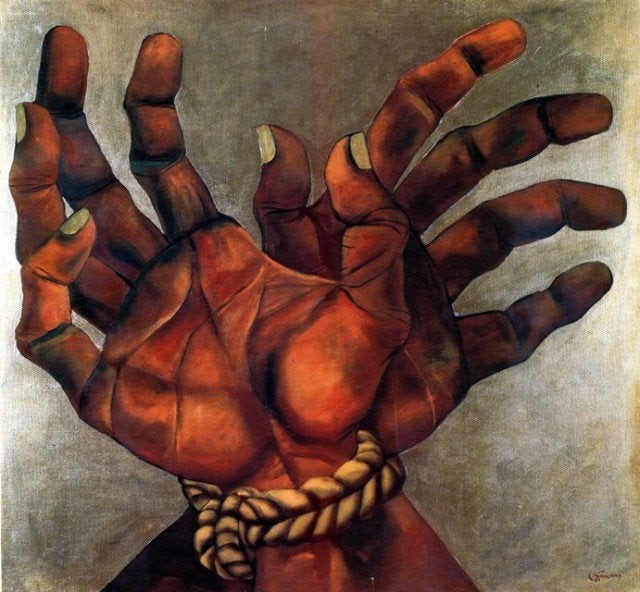
"You shall have no other gods before me" (The First Commandment)
In this section, after posing several questions, I will point out the objections to his statements, and in the final section, I will point out the justified criticisms of the discourse of theodicy—including his own theodical stance.
Questions
1_ The first question is this: if he, who by his own account favors "skeptical theology"[3] and considers it "the most justified defense of theism in the problem of evil," and believes—following this approach—that due to the limitations of our cognitive faculties, we are incapable of comprehending God's purposes, how is it that when giving a positive answer to evil, he can claim that "we have rational explanations for each and every one of these issues [i.e., evils]"?! Has the claim of the discourse of theodicy throughout history been based on anything other than this assumption of the self-sufficiency of human understanding? Has the discourse of theodicy ever lowered itself to the level of "probabilities," or has it always spoken from a position of truth and righteousness?! In refuting critics and explaining skeptical theism, Kadivar says: "Human knowledge is limited to a very small part of the material world—and not even all of it. Humans do not comprehend the necessary connection between evils and greater goods, nor those greater goods themselves." The question is: wouldn't it be better for a theodicist who also speaks from this position to adhere to the requirements of this claim and engage in theodicy a bit more humbly and less dogmatically—rather than as if holding the keys to the heavens, or having reached the wellsprings of truth, or as if the veils of the unseen have fallen upon him, informing him of God's plans and the secrets of the universe?!
2_ In his critique of the arrogance and hubris of modern man, who thinks he can comprehend all matters with his reason and has placed himself at the center of the universe, he maintains: “In the past, the burden of responsibility for evil lay with God, and yesterday’s man strove to exonerate God from blame. In the past, we spoke of ‘theodicy’ or ‘the theory of divine justice.’ That is, we placed the burden of justice on God’s shoulders. But today, since we have seen that He cannot bear it—because He is weak or is not omniscient and omnipotent—the burden of justice falls upon our shoulders—yours and mine. We are responsible for the engineering and management of our own sufferings. Theodicy was steeped in metaphysics. Today it has become secularized, and a humanistic version of it has been presented” (paraphrased).
The question is, has he himself not used this very humanism and the self-founding reason of humankind as a criterion and measure in presenting his new reading of Islamic jurisprudence and tradition?! The idea of a secular democratic government as the ideal form of political rule, the support for human rights in its modern form and not its traditional Islamic one, and so on—have these not been undertaken precisely on the basis of these humanistic values and by the measure of humankind’s self-founding reason?!
Objections
Among many instances, it suffices here to mention only two inexcusable errors:
1_ He accuses his opponents—that is, opponents of the “theodicy discourse”—of something known in the science of logic and disputation as the “ad hominem fallacy” or “the fallacy of conflating motive and motivated”[4], saying: “In the view of proponents of the existential approach, one who engages in theodicy is morally corrupt.” However, this is by no means the case regarding the anti-theodicy discourse, and therefore the accusation leveled by Kadivar is unacceptable. Those who have criticized theodicies have, in most cases, criticized the “discourse” of theodicy and leveled the charge of “being immoral” against this “discourse,” not against the “person” of the theodicist. For example, Nick Trakakis[5], who is one of the resolute critics of theodicy-making, writes in his article “Anti-Theodicy”: “This issue [i.e., the moral critique of theodicy discourse] is not meant to be a means of personal slander against the theodicist themselves. The theodicist may behave morally correctly in their daily life, yet support a theory that causes them (even without their full awareness) to hold morally dubious beliefs.” [6]
2_ Kadivar’s second error lies in conflating the existential approach[7], the critics of the “theodicy discourse”—and in its most extreme forms, the anti-theodicists—and the new theological approaches—for which providing an adequate response to evil has been one reason among others in their rereading of their religious tradition. For instance, where he says: “This approach [= in his opinion, the existential one] condemns God and theodicists as immoral. They say you have claimed that evil is minimal, or relative, or for the sake of a greater good, or that this is the best of all possible worlds, or that it is due to human free will. These approaches are of no use. They do not convince me. That is, they are no balm for my suffering. Your logic and philosophy do not soothe my suffering and that of my loved one. The sufferer wants a balm, not a logical and philosophical defense; without us, whatever is said about us is not about us.” Process theology, open theism, and the like, which fall under the new theological approaches, are by no means existential approaches to evil. On the other hand, there is no necessary connection between existential approaches to evil and anti-theodicists. Each of these approaches is subject to one or two criticisms individually. And when they are grouped together under a single heading, a set of serious criticisms applies to them that ultimately entails their inefficacy. It is as if Kadivar, to make responding easier to all these diverse criticisms with their various tendencies, origins, and aims, has lumped them all together, and thereby committed the straw man fallacy. [8]
It is more correct and precise to say that the responses given to the problem of evil fall into two general categories: "theoretical" and "practical." Existential and action-oriented approaches—such as liberation theology—fall into the practical category, while the theorizing of other theologies, from traditional to modern theology—including process theology, open theism, and so forth—falls into the theoretical category. The anti-theodicy discourse is also merely a discourse against the "discourse" of theodicy—and I repeat, against the "discourse" of theodicy and not against the "person" of the theodicist.
Thus, three topics have been conflated here: 1. the anti-theodicy discourse, 2. the existential approach to evil, and 3. modern theological approaches. And this very conflation and lack of differentiation prevents their words from being heard accurately, whereas if someone still intends to defend theodicy, they are compelled to examine each of these cases separately and precisely.
Criticisms of the Theodicy Discourse
Apart from the criticisms that apply to Kadivar's own words and position, very serious criticisms have also been leveled against the discourse of theodicy—of which he is considered one of the pioneers—which, as mentioned, he merely listed in a cursory manner in the third part of his lecture, with a sarcastic tone—indicating he considers these objections unimportant. Before addressing each of these objections, it is necessary to mention once again—and for repeated emphasis—that those who have raised these criticisms were not necessarily atheists. Neither the critics of the theodicy discourse nor those who have adopted an existential approach are by any means necessarily atheists. Many of these are theists who have criticized the reason-centered, abstract, soulless, dry, and spectator-oriented discourse of theodicy. Not the God of religions or religious traditions. Kadivar's cognitive error stems from equating "theodicy" with "theism" and "anti-theodicist" with "anti-God"! [9]
Therefore, due to the considerable importance of these objections, and due to Mr. Kadivar's unkindness toward them, I feel obliged here to provide a brief explanation and exposition of each:
1_ Tolerance and indifference to the evil and suffering of others: The central point of many modern critiques of various classical answers to the problem of evil is the moral problem of these answers, because all types of theodicies are accused of not taking evil seriously and reducing human beings to mere instruments for the realization of divine goals or plans. Such a view can lead to tolerance of evil and bring about a kind of indifference and cruelty for the community of believers: "With this description, it must be said that theodicists are 'tacit accomplices' to the existing state of evil and cannot escape the accusation that, while they were supposed to condemn evil, they act as 'apologists for evil.' The theodicist was not supposed to trivialize and normalize evil under the pretext of finding God's reason for permitting evils, and even to perceive it as good, grace, blessing, and bounty" (Pourmohammadi, p. 60).
2_ Passivity in the face of evil and suffering / Fatalism: Another consequence of such a view is pure determinism and fatalism, followed by stagnation and passivity in the realm of individual and social life. For example, Trakakis, one of the anti-theodicists, says on this matter: "For instance, if I believe that the plague is a punishment for sin from a just God, why should I fight the devastating plague? Or if I believe that God can only preserve higher goods by giving humans the free will to commit horrific evils, why should I fight a regime that commits genocide? If we believe that there is no utterly gratuitous evil, our morality and specifically our motivation to do the right thing is weakened" (ibid., p. 61). Therefore, the product of such a view, without the theodicist himself intending it, is collaboration with the forces of evil in the world: "The theodicist who, knowingly or unknowingly, cultivates theories that deny the extreme and savage nature of human evils, implicitly gives rise to social and political action that turns a blind eye to the cruelties existing in the world" (Pourmohammadi, 1398 p. 469).
3_ Instrumental view of human beings / negation of human dignity: The discourse of theodicy is teleological; that is, within it, suffering is always considered as a means toward the realization of a good end—ends such as the cultivation of the soul/character, the creation of responsibility or empathy, and so forth. One of the ethical criticisms leveled against the discourse of theodicy lies precisely in this: that human individuals are viewed not as “ends” in themselves—possessing intrinsic value—but as “instruments” toward some other “goal.” It is on the basis of this view that the discourse of theodicy is accused of disregarding or disrespecting the humanity of human beings. “The problem with theodicies is that they treat suffering individuals as entirely expendable elements; that is, they sacrifice their value, dignity, well-being, and interests for the sake of a higher good that has nothing to do with them. To regard the person as a person as an end means that we must respect and preserve the interests and well-being of the person at all times and at any cost, and this means that the dignity and value of the person cannot simply be sacrificed for a higher good or God’s plan, nor can it be traded for something else” (ibid., pp. 61-62).
4_ Simplistic approach: Theodicies essentially offer a general, universal prescription for a complex and diverse problem—with its vast extent, variety, and dispersion. This stems from the rational nature of these answers, which, due to their abstractness, are incapable of addressing a problem that concretely and existentially involves beings of flesh and blood and perception, each possessing a different psychological makeup, lived experiences, and worldview—and hence, great complexity. “On the other hand, the nature of suffering varies greatly from one instance of suffering to another. Some sufferings are extremely unbearable, progressive, and complex, and other sufferings are constantly born from within them, accumulating and advancing” (ibid., p. 64). Therefore, oversimplifying the problem is another ethical issue with the discourse of theodicy, because “the evidence we have regarding the types, extent, and dispersion of the suffering of innocent individuals strongly suggests that not all of them can be contained within a single rational model” (ibid.). For example, horrendous evils clearly illustrate the inefficacy of the soul-making theodicy. These evils are so profound and devastating that they shatter the existence of the suffering individual and paralyze their psyche, to the point where the person entirely loses even the capacity for meaning-making. And for such a shattered existence, no possibility for personal and spiritual growth remains.
5_ Disregard for the suffering of animals, children, and the disabled: The major ethical problem with the answers given to the problem of evil becomes more apparent when we shift our focus from mature, rational human subjects—that is, mere theorizing in a vacuum about the “concept” of evil and “the human species”—to the reality of life in the world. It is here that we encounter the suffering of animals, children, and “human beings” with mental and psychological abnormalities, whose existence poses a great dilemma for the abstract, “reason”-centered and “human”-centered discourse of theodicy. The answers provided to the problem of evil have no function for these individuals. No defense—even one based on free will—and no theodicy—whether soul-making, trial, retribution, or otherwise—has the power to explain these evils and sufferings, because there is no rationality, personality, or free will upon which the common discourse of theodicy can be based.
6_ Observer-centric: Theodicies have always been presented from the perspective of an external observer—an observer who, as if a public prosecutor, has assigned themselves the duty of safeguarding the domain of religion. This has always resulted in their voice being heard as the dominant voice in the discourse of evil. This dominance of the observer-centric discourse has always come at the cost of marginalizing the voice of the victims of evil, which should, in fact, be the primary voice of the text. For this reason, one of the main criticisms of theodicy is its observer-centric discourse instead of a victim-centric discourse.
7_ Presentation of “universal meta-narratives”: Theodicies, aiming to provide a general and universal answer to evil, present a totalizing narrative of the diverse sufferings and pains of each and every human individual. This universal meta-narrative comes at the cost of marginalizing, ignoring, and ultimately silencing the “micro-narratives of individuals.”
8_ Glorification of Suffering: Another objection to traditional theology and some of the (mostly Christian) responses raised in theodicy discourse—such as the “theology of the cross”—is the glorification of suffering. Dr. Kadivar also speaks of the suffering-filled lives of those close to God and claims that the closer one is, the more one suffers. Such a view leads to the glorification of suffering and considering it a value, for suffering is not only a non-moral or troublesome factor that one should strive to eliminate, but, in a laudatory tone, it is transformed into a religious-moral value.
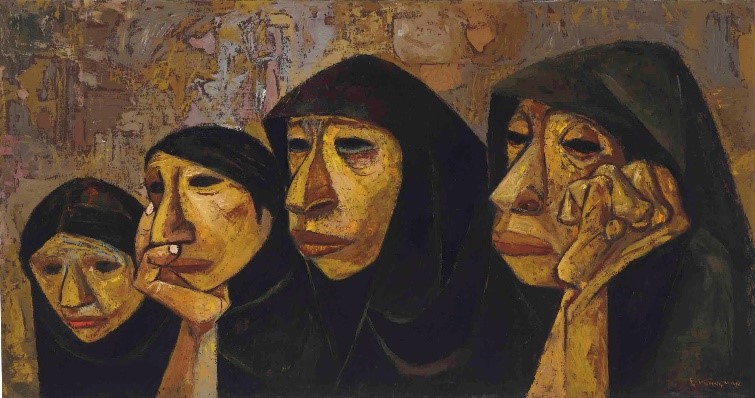
Woe is me, this fire still burns All I have are mementos, notebooks, and a divan And all that has a view and an iwan With my blister-covered hands I extinguish this side And from its blaze, I lose consciousness From the other side, a flame rises, smoke swirling around it Until dawn, who knows if my being will be annihilated These kind neighbors of mine sleep happily in their beds Come morning, all that remains of me is a handful of ashes Alas, will they ever lift their heads from sleep, My kind neighbors, to come to my aid? This tyrannical fire burns me to the core I cry out, O cry! O cry...
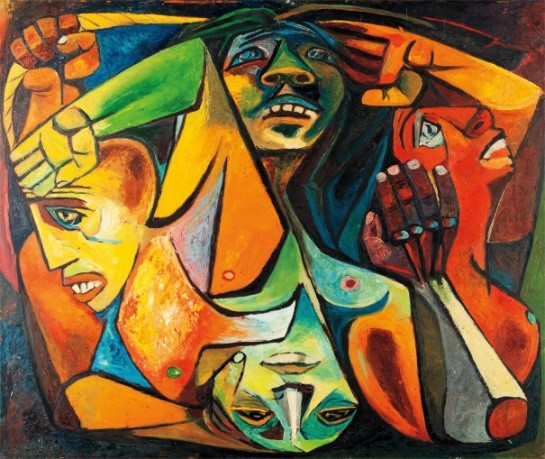
“Come no closer! Take your sandals off your feet, for you are standing on holy ground” [10]
Yes, Mr. Kadivar! As you yourself said, quoting critics of theodicy discourse, the language of the theodicist is non-mysterious. Let us confess that the problem of evil is far more mysterious than the theodicist is capable of justifying and explaining. Although this does not mean denying the effort to answer the problem of evil, let us, in this realm sanctified by the suffering of countless human beings, take off our sandals and approach this question a bit more humbly and humanely.
Mr. Kadivar, the objections to theodicy discourse—not the “person” of the theodicist—are serious objections, for a purely logical and philosophical approach to a matter this existential will have widespread consequences on a vast scale—cultural, social, political, and so on. The result of such a view and discourse is the reinforcement of a spirit of indifference and permissiveness in external observers of evils, or the glorification and valuation of evil or suffering. The product of such a spirit and attitude will be escapism from responsibility and reality[11] and passivity in the face of evils, especially systemic evils—such as racism, slavery, injustice, and so on. During your talks, you acknowledged that considering things as evil is relative. In some cases, what was not considered evil in the past is considered evil today. Your example was “slavery,” which past rationality and religions did not consider evil. But today it is considered evil. Because whether something is evil and its degree, especially in the realm of moral evil, is determined by the collective rationality of humanity. But the issue is that if the theorists and thinkers of the past who inspired emancipatory movements in the struggle against social or systemic evil had thought like you, and considered evil and suffering as divine destiny—a trial or test for the sufferers and a gradual entrapment (istidraj) for the oppressors and blood-shedders—we would not be witnessing the decline of slavery today. If women had glorified social evil, or with the “illusion of sanctification” considered themselves closer to God—due to suffering more—and had not risen up to claim their human rights—because they considered it “evil”—today, as in the past, they would not only be considered second-class citizens deprived of their inalienable human rights, but even lower than human.

Dr. Kadivar, in defending the realm of “traditional theology and philosophy” and safeguarding the discourse of theodicy, you defend not the God of Abraham, Moses, Jesus, and Muhammad, but the God of the Greek philosophers. And you are so immersed in this fervent and passionate defense that you even deny the existence of gratuitous evil, because you fear that acknowledging gratuitous evil means accepting the denial of God. Yet there is no necessary correlation between the two. Acknowledging gratuitous evil may mean denying a Greek or Newtonian God who created a mechanistic world with an inviolable order or a world centered on substance and stability, but it does not necessarily mean denying the God of the Abrahamic religions. And to defend this God, it is not necessary to render Him weak or devoid of knowledge and power. We only need to abandon our Greek conception of the world and of God—which is based on the Ptolemaic system and the static, substance-centered Aristotelian world—so that we are not compelled, in order to preserve it, to ignore and deny a reality such as gratuitous evil. In your zealous defense of what you have defined as the realm of theism, you ignore very important matters. If it is imagined that gratuitous evil does not exist, our agency in the face of evils will be meaningless. And this claim is not merely an accusation by anti-theodicists against the discourse of theodicy. Even a renowned theodicist like Hick is aware of this point and addresses it in his book God of Love and the Problem of Evil:
... Try to imagine a world that, although not entirely free from pain and suffering, contains no unjust, undeserved, or seemingly pointless and excessive hardship. Hardships, dangers, and difficulties exist to the extent that they add spice to life, but there is no utterly destructive or manifestly malevolent evil. On the contrary, people's suffering is always either a just punishment they deserve or serves the constructive purpose of moral education.
In such a world, human affliction would not evoke deep compassion or give rise to organized consolation and self-sacrificing aid and service. For these compassionate reactions presuppose that the suffering is undeserved and grievous for the afflicted individual. We do not morally call upon others to sacrifice themselves to save a criminal from enduring their just punishment, or to save a patient from a painful treatment that will heal them. But in the face of undeserved suffering, especially when it takes a tragic form like an earthquake or a mining disaster, men and women truly come to feel compassion and set to work with great generosity and self-sacrifice. Thus, it seems that for the world to be a stage for compassionate love and self-sacrifice for others, human suffering must be random and unequal, just as we experience it in the world today. Human suffering must be manifestly undeserved, meaningless, and morally unjustified (Pourmohammadi, pp. 519-520).
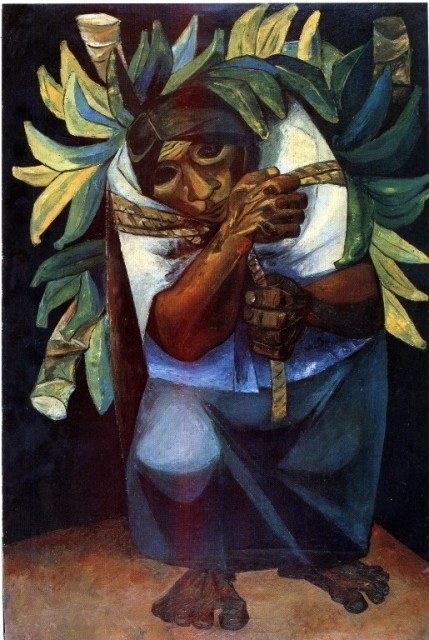
The entire effort of the critics of theodicy discourse is to ask you teleological theodicists, “Why do you not take evil seriously?” Their effort, contrary to what you suppose, is not necessarily an attack on theism. For theodicizing is not limited to religious traditions. Anything that justifies the existence of evils by presupposing a good end is theodicizing. It is for this reason that Hegel’s teleological theory of history also falls under (secular) theodicizing. Your theodical literature – and not your God[12] – is, in their view, immoral, when, with the literature of the relativity of evil, of evil being for the sake of an abundant good, or evil being part of the harmony of the universe, of the world being a place of retribution (and hence evil being justified), and so forth, you try to show that evil is in fact – because it pursues a very good end – not evil, and that it is the interpretation of us “short-tempered” humans that “as soon as an evil befalls us, our lamentation and agitation rise” from something that is only “apparently suffering,” but because it is directed toward a good end – such as trial, perfection, spiritual growth, retribution for deeds, etc. – it is not as bad as it seems. But Mr. Kadivar, firstly, an evil that “is not so bad” is not really evil – and from here, all the moral criticisms of theodicy discourse apply to your literature as well. And secondly, the intensity and variety of evils are so numerous that they do not fit into your general prescription. A sprained ankle and a headache are evil, disability and deprivation are evil, child abuse and genocide – which empty both the victims and the perpetrators of evil of their humanity – are also evil. Are all these of the same degree and intensity? Can all these cases be answered with that general, simplistic, and handy prescription of yours? Let us admit that the third category at least falls into the rank of horrendous and excessive evils, so that by recognizing them as evils, and admitting their horror and excessiveness, we may trouble our moral conscience a little, and take a step toward reducing such evils, because “this type of evil would be nothing if we considered its intensity and extent, its ruin and harm, negligible and insignificant” (Pourmohammadi, p. 525).
In your critique of what you (yourself) called the existential approach, you point to a paradigm shift: in the modern era, we are witnessing a shift from the obligated human of the past to the rights-bearing human of today. A shift from the human who was obligated and subordinate before God, to a human who seeks their own rights. Hence, in theodicy discourse, we also witness a shift from theocentrism to anthropocentrism. In the new approach, the paradigm of “God-evil-divine justice” (theodicy)[13] has been transformed into the “paradigm of human-suffering (of a specific human)-human justice” (anthropodicy)[14], and the humanistic human is trying to justify human justice, not God’s justice.
Yes, Mr. Kadivar! The shift you claim is correct. In the modern world, we have witnessed a paradigm shift; from theocentrism to anthropocentrism. And in this new paradigm, humanity is no longer obligated but is rights-bearing. It is not concerned with salvation and the afterlife, but seeks its life here and now. It is autonomous/self-founded[15] rather than heteronomous/other-founded[16]. Meaning that modern humanity seeks a worldview whose axis is the individual human being themselves, that is, a worldview in which they themselves – with all their abilities – hold all the reins of affairs. Consequently, the modern religious human also seeks a theology whose main framework is based on this very autonomy of the human being. A human who is no longer subjugated and surrendered to external coercive forces – from natural to social, historical, and otherwise. Rather, they bear the burden of responsibility for their own life and are themselves the captain and helmsman of their life.
Modern Christian theology—whether process, open theism, and so forth—has taken shape in the shadow of taking such a paradigm seriously. Mr. Kadivar, you who took this paradigm shift seriously in your rereading of jurisprudence, why, in responding to the problem of evil, do you so vehemently and sharply criticize this paradigm shift, and harshly critique autonomous human reason and humanism—which are the fundamental principles of this paradigm shift and also the principle you yourself employ in your new reading of traditional Islamic jurisprudence? Why do you lump together all approaches that do not fit within the familiar “philosophical-logical” framework of evil, regardless of which school or tendency they belong to and under which categorization they fall—reminiscent of the simplistic and closed-minded tendency of “whoever is not with us is against us”?
My hope is that compassionate intellectuals such as yourself, who, with the touchstone of humanism and relying on autonomous human reason, undertake a more humane reading of their own jurisprudence and religious tradition, will one day also look at the problem of evil through this lens, and will not attribute modern humanity’s effort to reread traditional answers to evil and to take existential evil seriously to the arrogance and hubris of modern humanity—which imagines it can understand everything with its autonomous reason and by placing itself at the center (= humanism). Rather, see it simply as a human endeavor to reach a more humane understanding of the world—centered on the autonomous human being—and consequently of religion; an understanding in whose shadow modern humanity strives to find the capacity to give meaning to “the unbearable lightness of being”[17] and the strength to endure their sufferings—and not necessarily an attempt to attack the God whom you defend with such fervor and concerned zeal.
Yes, Dr. Kadivar, “the world is an abode of suffering and affliction,” and yes, it is true, amidst the storm of these evils, “God never intervenes.” But this is one thing, and your passive, eulogistic literature on suffering and evil is quite another: “That you want to turn the world into paradise—with no deformed children in it, no war, no rape, no earthquake—that is not called the world. It is called the Hereafter, it is called paradise. And it is not a good place to live at all. The beauty of the world lies precisely in these sufferings. These afflictions. These evils.”
Dr. Kadivar, the improvement of human societies and the movement toward turning this hell into a paradise is indebted to perspectives and worldviews that, contrary to yours, have believed in the possibility of realizing paradise on earth. That have not believed this world to be “the best of all possible worlds” and have therefore engaged in activism. Dr. Kadivar, let us adhere to your own words in response to atheists and “let us not play God in God’s stead.” For the religious discourse you advocate in the face of evil, though ethics-oriented, is nonetheless unethical due to its reinforcement of a spirit of irresponsibility, escapism from reality, and passivity in the face of evil, its silencing of the voice of the lament and cry of the afflicted—and consequently, its unintended strengthening of the oppressors’ front—and its glorification of suffering—which unconsciously reinforces the acceptance of oppression. Let us not allow the fervor of our faith and religious zeal, in the struggle against the front of atheism, to blind our eyes to the suffering and desperation of human beings. Lest it lead to indifference toward the tears of a suffering mother who seeks solace in religion for her spiritual and psychological pain. Lest it stifle the voice of the afflicted’s lament, the sigh of the oppressed, and the cry of protest of the wronged. Let us not allow religion to become an opiate that numbs us instead of providing solace. For in that case, irreligion is better than such religiosity! Because the moral development of human society depends, in the first step, on recognizing the existence of real and terrible evil—which is concomitant with compassion and taking the side of the afflicted—and then on taking action and engaging in activism to combat it.
Yes, Dr. Kadivar, new approaches to evil—and not only, in your view, the existential approach—seek to manage and remedy evil, not to explain and justify it. And I think you would agree that this is a more effective step toward improving the world than mere philosophical and logical theorizing in a vacuum. That is, even if we accept the straw man you have set up—the classification of all new approaches and discourses critical of theodicy discourse under the general heading of the “existential approach”—and place it in comparison with your traditional theodicean approach, still—if we are to look realistically and pragmatically—the advantage lies with the opposing side. Let us be fair, Dr. Kadivar! Is a view that takes seriously the evil inflicted upon the “human individual,” who is made of flesh, skin, and bone—the so-called “emotional or sentimental” approach to evil, or the existential approach—not more humane and ethical than a view that regards evil as an abstract concept and a subject for philosophy and logic, speaking of “humankind”—concept within concept? Is the philosophical and logical God of which you speak—who, with a despotic and coercive approach, blocks the path to any lament, complaint, or protest—the same freedom-loving, freedom-nurturing, freedom-centered God of the Qur’an, who permits Abraham to argue with Him and is the addressee of Jacob’s laments and Mary’s cry of desperation? My God is a God who acknowledges my suffering and permits me to raise the cry: “I only complain of my suffering and my grief to Allah, and I know from Allah that which you do not know” (Yusuf, 86). He is the God of Mary, who, with kindness and magnanimity, allows the echo of the complaint-laden and curse-laden cry of a sufferer to rise in His Holy Book: “Oh, I wish I had died before this and was in oblivion, forgotten” (Maryam, 23). A God who, even in the face of my protest and rebellion, exercises compassion and patience: “O He who is forbearing with those who disobey Him” (Jawshan Kabir).
I and those like me are in sympathy with existential approaches, with modern theology, and with the criticisms leveled against the cold, logical, dry, and soulless discourse of theodicy. We believe in the God of Abraham, Jacob, and Mary, not in your Aristotelian-Neoplatonic God—what you yourself proudly consider the logical and philosophical God. Religions came with the aim of establishing a personal relationship between earth and heaven, and none of them claim to be philosophical or logical schools. It is true that to defend their rationality they need philosophy and logic, but this does not mean replacing the “God of the philosophers” with the “God of religions.” The “reading” (logical-philosophical) of religion that you pursue in response to the problem of evil, at the individual level, leaves no room for a personal relationship between me and God—and with other human beings and with the world—and reduces religion to mere logical and philosophical propositions, turning a problem that is inherently existential (= the problem of evil)—because it engages us with flesh, skin, and bone—into the subject of your philosophical and logical games. And at the social level, it brings nothing but passivity, irresponsibility, and escapism from reality. And therefore, Mr. Kadivar, let us acknowledge that the “answer” you offer to evil and the God you propose will no longer be our staff and support in a world that is like “the valley of the shadow of death.” [18]
Therefore, in confronting this world full of suffering, horror, and death, if there were a choice between “your God” and its alternatives, Dr. Kadivar, would you not agree that, “now that the order of the world has been consigned to death, perhaps it is to God’s benefit that people do not believe in Him and, without turning their eyes to the heaven where He sits in silence, fight death with all their might?”[19]

.
.
[1] The third commandment of the Ten Commandments of Moses in the Bible. The Hebrew phrase of this verse is "לֹא תִשָּׂא אֶת-שֵׁם-ה' אֱלֹהֶיךָ, לַשָּׁוְא". The word "לַשָּׁ֑וְא" (lashav) has many meanings, such as: vanity, futility, pride, emptiness, conceit, and so on. Therefore, it can also be translated as: "Do not take the name of the Lord with pride or conceit"! The New International Version translates it as: "You shall not misuse the name of the Lord your God!"
[2] Ghani Kashmiri.
[3] skeptical theism: It is actually skeptical "theism" and not "theology."
[4] Argumentum ad hominem.
[5] Nick Trakakis.
[6] Pourmohammadi, Naeimeh. 1398. On Evil; Translation of Selected Articles in the Philosophy and Theology of Evil. Qom: Taha, 1398. Volume One, p. 516.
[7] She divides the emotional or existential approach into the sub-branches of existentialist theology, process theology, open theism, theology based on reformed epistemology, theology of protest, theology of God's weakness, and theology of the death of God. While some of these are sub-branches of modern theology – not necessarily responses to evil, let alone an existential approach to evil – and some are sub-branches of anti-theodicies or post-Auschwitz theology – or in response to it. And there is no necessary and direct concomitance between them and the existential approach.
[8] For example, a criticism leveled against new theological approaches such as process theology and open theism is that the God they portray is not omnipotent and omniscient. A criticism leveled against the theology of protest – which is considered a type of anti-theodicy – is that its conceived God is not purely good. A criticism leveled against existentialist approaches is that they are indifferent to social and systemic evil. By lumping all these approaches together under one approach, Kadivar constructs a straw man whose defeat is not very difficult. Because each of these individual criticisms can be gathered under a set of criticisms and form a cumulative argument that is far more effective than any of these criticisms individually. And thus, discrediting the opponent's position and defeating this straw man will not be difficult at all.
[9] Of course, among these, atheists and possibly opponents of religion and tradition may also be found. But there is no necessary concomitance between anti-theodicy discourse and atheism.
[10] An allusion to a story in the Bible (Book of Exodus, Chapter 3, Verse 5). A similar story and verse also exists in the Quran (Surah Taha, Verse 12).
[11] Escapism.
[12] It is undeniable that some Jewish anti-theodicy thinkers – such as Braiterman or Blumenthal – have condemned the God of the Bible as immoral, or in some readings of the theology of protest – even in the Christian tradition – God's benevolence is a matter of dispute, but by generalizing this tendency to an entire approach or discourse, we commit the fallacy of faulty/hasty generalization.
[13] Theodicy.
[14] Anthropodicy.
[15] Autonomous.
[16] Heteronomous.
[17] The Unbearable Lightness of Being: The title of a novel by Milan Kundera, the Czech writer.
[18] “The Lord is my shepherd; I shall not want... Yea, though I walk through the valley of the shadow of death, I will fear no evil: for thou art with me; thy rod and thy staff they comfort me” (Psalms of David, Chapter 23).
[19] The Plague, Albert Camus, translated by Reza Seyed Hosseini, Niloufar Publications, p. 160.
.
.
PDF file of this writing
.
.




Discussion11 comments
متن بسیار عالی ، آموزنده ، عمیق ، و در عین حال پراحساس و تاثیرگذاری بود . ممنون از نویسنده . ولی سه اشکال به ذهن من میرسد که انها را بیان میکنم . 1- به زعم من تفاوت معنی داری بین خدای ادیان و خدای فلاسفه وجود ندارد . به بیان دیگر تفاوت معنی داری بین پاسخ متکلمین و فلاسفه - در پاسخ به چرایی شرور - وجود ندارد . 2- حتا اگر خدای ادیان چیزی غیر از خدای فلاسفه باشد ، مسئله عدم امکان اثبات الهی بودن کتب مدعی ( ادیان ابراهیمی ) کماکان مطرح است . 3- و مهمتر از همه آنکه اساسا وجود خدا ، یک فرض اثبات ناشده است . لب کلام : نخست باید خدا اثبات شود . در پله بعد ضرورت نبوت عامه اثبات شود . در پله بعد الهی بودن کتب مدعی ( تورات ، انجیل ، قرآن ، و غیره ) اثبات شود . ( و البته قصه مذاهب مختلف درون یک دین و تضادهای هرمنتیکی و روشی درون مذهبی ، و .... هم قصه دیگری است ) .
باسلام به شما منوچهر به عنوان یک مسلمان نواندیش اولا :ممکن است بین پاسخ های متکلمین و فیلسوفان به مسئله شر یکی باشد اما خدای ادیان که دچار محدودیت های تاریخی و زمانی است با خدای موجود در فلسفه تفاوت دارد و در کل برای شناخت خداوند حتی اگر پیرو ادیان باشیم باید رویکرد فرادینی و فرامتنی برای شناخت خدا داشته باشیم تا دچار اشتباه و کاستی کمتری در این زمینه باشیم . یکی از تلقی های غلط بشر از خداوند که به ادیان و کتب آنها راه پیدا کرده است تلقی خدای انسانوار از خداست . در این زمینه به مقاله ً خداجویی ً در سایت فرامتنی مراجعه کنید که این تلقی غلط از خدا و چرا این که باید برای شناخت خدا از پارادیم متن فراتر رفته و رویکرد فرامتنی داشت را توضیح داده است . ثانیا : اثبات اصل وجود خدا علی رغم ایرادات و نقایصی که به برخی برهان های فلسفی وجود خدا از سوی منتقدان و خداناباوران مطرح شده است حداقل به لحاظ فلسفی ممکن است اما اثبات نبوت و مقوله وحی تقریبا غیرممکن است . این که خدای یگانه چگونه با بشر ارتباط برقرار کرده و پیامش را القا می کند که همان وحی است و یا این که چرا مقوله و داستان نبوت و وحی مقوله ای منطقه ای بوده است و مثلا برای مردم چین وهند با میلیونها جمعیت پیامبری نیامده است را نمی دانیم . عقل مدرن هم نمی تواند این پدیده را تحلیل کند و اگر بخواهد به قول معروف مته به خشخاش بگذارد نتیجه آن انکار اصل وحی و نبوت و یا در خوش بینانه ترین حالت تئوری هایی مثل رویاهای رسولانه دکتر سروش و یا گفتمان نبوی مجتهد شبستری خواهد شد . بنابراین به اصل مقوله وحی و الهی بودن آن باید رویکردی ایمانی و نه عقلی داشت . خود من هم یک چنین رویکردی دارم چرا که به لحاظ عقلی وحی را نمی توان اثبات و توجیه عقلانی کرد .
کارمند صدانت عزیزی که با اسم "مخاطب"" کامنت گذاشتی فمینیستیه مطلب، فمینیسم یعنی مبارزه با تبعیض نژادی و تبعیض نژادی هم یک شر است. کدیور هم در بازتولید این شر با ترویج باورهای غلط خود با رنگ و لعاب ""روشنفگری"" نقش بسزایی داشته است.
فمنیسم یعنی مبارزه با تبعیض جنسیتی ونه تبعیض نژادی! شر وقتی رخ می دهد که بین جنسیت زن و مرد تفاوت قائل شوی.
این مقالۀ خواندنی را باید اتمام حجتی با روشنفکران دینی پرمدعا دانست. این قلم تأثیرگذار گواه دغدغههایی وجودی و واقعی است، نه قلمفرساییِهای فضلفروشانه و تهیمایۀ آقایان موسوم به «روشنفکران دینی». امیدوارم به پاسخی حداقل درخورِ خواندن از جانب ایشان منتهی شود؛ هرچند امیدی محکوم به نومیدی است؛ مگر آنکه مانند سروش دباغ شجاعتی به خرج دهند و راهحلی عملگرایانه مانند «تسخر زدن بر» فعل خدا (در قالب نظریۀ «طنز الاهیاتی») پیش پای مؤمنان بگذارند؛ هرچند به صد دلیل مشابه دیگر مورد انتقاد نویسندۀ مقالۀ بالا قرار خواهد گرفت.
ضمن تشکر از خانم میر صدری باید عرض کنم که متن حاضر بیشتر خصوصیات یک مانیفست را داشت تا نقد علمی. به هر حال بر اساس برهان شر ، وجود خداوند عالم و قادر و خیر خواه در تضاد با وجود شرور در جهان است.نهایتا معلوم نشد که خدای ابراهیمی چه ویژگی خاصی دارد که از پس این تضاد آشکار بر می آید؟
بسیار عالی و موشکافانه بود، لذت بردم همانطور که به درستی گفتی هیچ دفاعیه ای هیچ تئودیسه ای نمی تواند تبیین گر درد و رنج باشد که در واقعیت حیات عالم رخ می دهد.
خانم سعیده میرصدری با عرض سلام ابتدا میبایست از تلاش شما برای بیان الام بشری ونقدهای بجای شما به گفته های اقای کدیور تشکر کنم سرکار خانم میر صدری انچه شما از جناب کدیور طلب میکنید به هیچعنوان شدنی نیست شرور پاسخی منطقی وعقلانی ندارد شما از فلسفه ی یونان گفتید در فلسفه ی اسلامی بدون یونان هم پاسخی نیست عرفان اسلامی در بعد نظری فلسفه است عرفان نظری هم قادر به پاسخ دادن نیست فلسفه مگر چیست ؟ فلسفه اندیشیدن عمیق است تفکر است استدلال عقلانیست هیچ استدلال عقلانی نمیتوان برای شرور اقامه کرد درخواست شما از روشنفکران وجهی ندارد وشدنی نیست شما نوشتید خدای فلاسفه زیر سوال است وخدای ابراهیمی زیر سوال نیست اصلا اینطور نیست به هیچ عنوان نمیتوان در مقابل شرور از خدای ابراهیمی دفاع کرد اینکه بگوییم که ما انسانها از خیر کثیر واقع در عالم بیخبریم ورنجهای عالم در مقابل خیر کثیر ان اندک هستند هرگز پاسخ مناسبی نیست حتما خدا مفروض میبایست به انسانها چنین علمی را میداد تا بتوانند ان خیر کثیر را درک کنند واز وجود ان اگاه باشند تا بتوانند تحمل رنجهای عالم کنند چون این انسان است که مستقیما با ان رنجها سروکار دارد وانرا با همه ی گوشت وپوست واستخوان خویش درک میکند بنا براین حق انسان است که دلیل انرا بداند وان خیر کثیر ادعایی را بشناسد خانم میرصدری شر هیچ پاسخی ندارد و نمیتواند داشته باشد و از دست روشنفکران دینی هم کاری برنمیاید روشنفکران دینی فقط پله ای هستند برای رسیدن به حکومت دموکراتیک سکولار و مطمئنا در چنین حکومتی هرگز در صدر نخواهند نشست و فرمان نخواهند راند چون هنوز هم در لابلای فکری و وجودی انها اثار تعبد وتسلیم محض بودن و معتقدات ضد تفکر وجود دارد انها به تمامی وبا همه ی وجود خویش عقل خود بنیاد بشر را برسمیت نمیشناسند و با ان برخوردی سلیقه ای میکنند
کاملا موافقم. در واقع دم خروس روشنفکران دینی در چنین بزنگاههایی است که بیرون میزند و نشان میدهد دعاوی آنها دربارۀ به رسمیت شناختن انسان بما هو انسان چقدر واقعی و جدی است. با این حال، امیدوارم این مقالۀ بسیار پرمطلب و نغز تلنگری باشد بر امثال کدیور تا تکلیف خودشان را با اساسیترین مسائل الهیاتی (و نه مسائل پیش پا افتاده و کودکانۀ فقهی) یک بار برای همیشه روشن کنند. تازه در این صورت است که میتوان پذیرفت که اصولا پدیدهای به نام «روشنفکری دینی» میتواند وجود خارجی داشته باشد یا خیر. البته همان قدر که پاراگراف آخر مقالۀ خانم میرصدری دلنشین است، پاراگراف آخر حجت جانان عجیب و نپذیرفتنی است که «روشنفکران دینی فقط پله ای هستند...». نه حجت جان! اینان تنها نقش پوشش محافظ سنت را ایفا میکنند؛ هرچند بر روی این پوشش عکس پله نقش زده باشند!
چقدر یادداشت خانم میرصدری به ادبیات فمنیسم نزدیک است. محاکمه آقای کدیور به جرم مرد بودن و نگاه مردسالاری داشتن به مسئله شر؟
و ادبیات شما را چه بنامیم که یک مقالۀ چندهزار کلمهای را تنها بر اساس یک کلمۀ آن قضاوت کردهاید؟!