Religion
Hamid Vahid Dastjerdi's Article, “Methodological Considerations on the Currents of Religious Thought in Iran: Iqbal, Shariati, and Soroush”
The current of religious thought in Iran must be measured by universal standards, not selective local criteria. Critiquing the break with tradition and meta-thematic discussions, Hamid Vahid Dastjerdi examines the methodological approaches of Iqbal, Shariati, and Soroush.
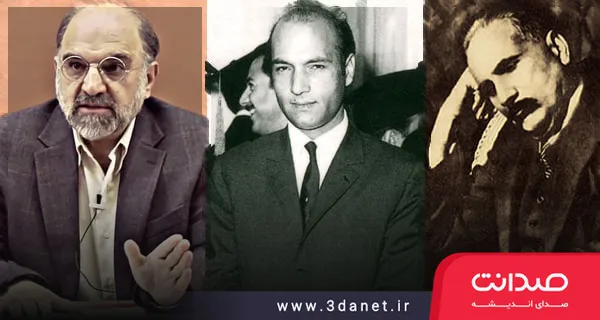
Hamid Vahid Dastjerdi: My aim in this essay is to offer a brief analysis of the current of religious thought in Iran. I must confess that I have not seriously followed this current for many years. However, I do not think this is a serious shortcoming, because my intention here is not to evaluate the truth or falsity of specific claims made by this current, but rather I will confine myself to raising some considerations regarding its methodology. Naturally, elaborating on these points requires a broader scope.
Contrary to established tradition, I will begin with the conclusion of the essay and speak of individuals who, in my opinion, should serve as models and exemplars for religious thought in Iran. These are people who, in addition to being at the frontiers of scientific and philosophical knowledge, have made significant contributions to the growth of religious thought in the West; thinkers such as William Alston, Alvin Plantinga, Adams, Wolterstorff, Van Inwagen, and Charles Taylor. Anyone with even the slightest familiarity with the views of these thinkers will certainly acknowledge the precision and depth of their thought. Through these individuals, religious thought in the West has achieved remarkable accomplishments in the last century. The common feature of all these individuals is that, while being acquainted with the sciences of their time, they have endeavored to offer a religious interpretation of the world. I call such individuals religious thinkers, because they stand in contrast to those who defend non-religious and, so to speak, secular (philosophically speaking) thought.
Thus, with this criterion, I will analyze and evaluate the currents of religious thought in Iran. If the current of religious thought in Iran is to flourish and avoid repeating itself, it will have no choice but to fall under this general global current. The current of religious thought in Iran must allow globally accepted standards to assess its capabilities, not limited and selective local criteria that are usually tainted with political motives. In my view, what has been presented in this land over these years under the title of religious intellectualism, by distancing itself from the international standards of the scholarly community, has trapped itself in the grip of "localization" and has constantly repeated itself. A glance at the literature of religious intellectualism proves the validity of this claim. In these years, religious intellectualism has been more in pursuit of proving itself than in presenting precise propositions concerning the issues of religious thought and striving to solve the problems that may arise from offering a religious interpretation of the world. For this reason, most discussions in the sphere of religious intellectualism are so-called "meta-subject" discussions. Discussions such as whether religious intellectualism is possible, or whether authenticity lies with religious intellectualism or religious new-thinking, and discussions of this kind, such as whether religious intellectualism is something akin to a metallic sour grape juice or not. When we look at these kinds of discussions, which appear almost mass-produced in newspapers and magazines, what draws attention is that the issues raised revolve more around the term religious intellectualism than its content. Another point is that, unlike religious thought in the West, which still seriously draws nourishment from its past and historical background, religious intellectualism has resorted to a complete break from its past. In discussions related to religious intellectualism, one can hardly find a positive sign or reference to the Islamic cultural tradition. Discussions concerning cultural and intellectual traditions are mostly negative in nature and pertain to the negation and disregard of the relevant traditions.
In explaining the above remarks, I will endeavor to provide a methodological analysis of three prominent figures of religious intellectualism—Iqbal, Shariati, and Soroush—and recount their differences from a methodological perspective.[1]
Iqbal
"...seeking an answer in the terrifying silence of the world."[2]
As I have emphasized, my aim in this article is to set out some considerations regarding the methodology employed in the currents of religious thought in Iran, and for this reason I will refrain from analyzing the specific claims advanced within these currents. I will follow the same approach with Iqbal. Iqbal definitely belongs to the group of individuals I have referred to as religious thinkers—that is, those who, standing at the frontiers of knowledge, strive to offer a spiritual and divine interpretation of the universe.[3] Iqbal also endeavors to provide the opportunity for Islamic culture and teachings to "come closer to their original spirit and to the spirit of the modern age."[4] In the introduction to The Reconstruction of Religious Thought in Islam (which is a collection of his lectures), Iqbal states that his aim is "to reconstruct the religious philosophy of Islam with due regard to its philosophical traditions and the recent advances in the various domains of human knowledge."[5] In the first chapter of the book, Iqbal examines religious experience and identifies its characteristics against the background of Islamic culture and learning. Iqbal's primary concern, like that of other religious thinkers, is the discovery of truth: the first chapter begins with questions such as: What is the character and structure of the universe in which we live? Is there a permanent element in the constitution of this universe? What is our place in it? He then proceeds to examine religious experience and identify its characteristics with regard to the Islamic cultural tradition and teachings. Here, too, the main concern is truth. He ends the chapter with the question of what guarantees the validity and authenticity of religious experience. In the next chapter, he examines the intellectual and practical tests for assessing the validity of religious experience. The subsequent chapters of the book discuss our conception of God, prayer, freedom, immortality, and so on. Finally, the book concludes by examining the question: Is religion possible?
Throughout these chapters, Iqbal displays a remarkable mastery in discussing the philosophical approaches of his time. In some instances, the discussions are highly complex and impenetrable (such as his discussion of Bergson and time and space). In other cases, his arguments and conclusions are overly hasty and debatable, such as his discussion of the proofs for the existence of God (it should not be forgotten that the chapters of his book are derived from his lectures).
Of course, while reading the book, one can raise many questions and challenge his claims. But what draws attention in Iqbal's work is the form of his approach to problems and his manner of evaluating them. Iqbal's approach is highly professional. His work differs greatly from that of our religious intellectuals. Years ago, when I was reading The Reconstruction of Religious Thought, I could not help but be astonished by the existence of such a difference. Reading this book still evokes for me a strong methodological resemblance to the books of Western thinkers. Later, when I obtained the English version of the book, I realized that this impression was entirely justified. According to the editor of the English edition, its final chapter, "Is Religion Possible?", is taken from Iqbal's lecture at the fifty-fourth session of the Aristotelian Society in London (December 1932), which was later published in the Proceedings of the Aristotelian Society. The Aristotelian Society in London is one of the oldest philosophical clubs in England and a venue for lectures by first-rate philosophers. Thus, I consider Iqbal a religious thinker, of the same type as the group I mentioned at the beginning of the discussion as models of religious thought. Unfortunately, in Iran, Iqbal is known more as a poet than a thinker. Even Dr. Shariati, who wrote a lengthy book about him (Iqbal and Us), says nothing in his book about The Reconstruction of Religious Thought, and the book's title is not even mentioned. All that is presented of Iqbal is the recollection of two or three of his poems. As I will point out, this matter, more than being accidental, stems from deep methodological differences.
Shariati
"And I, who have wished to be the muezzin of my religion" (21- Hussein, the Heir of Adam)
My discussion of Shariati will be more detailed. The reason is that Shariati is a turning point in the history of religious thought in Iran; he also provoked two completely different reactions toward himself during his lifetime and after his death (after the revolution). During his lifetime, Shariati lived at the peak, and even his death only helped to strengthen his myth. I believe this is the greatest achievement a thinker can wish for during his life: that his words become the criteria for truth and falsehood while he is alive. But the reactions to Shariati after the revolution and his death were different. After the revolution (with a gap of a few years), society's excitement about Shariati subsided sharply, and people found less motivation to refer to Shariati. How can this difference be explained? How can one explain why Shariati is no longer convincing? Where did his work go wrong? On the other hand, despite this reaction, it is still difficult to completely reject Shariati, and despite distancing oneself from him, one still cannot help but find him inspiring and heroic, and be captivated by his words.
How can these inconsistencies be explained? I call these inconsistencies "the Shariati problem." Of course, various efforts have been made to explain this problem. Before stating my own view, I will examine the explanation that Dr. Abdolkarim Soroush has offered for "the Shariati problem."
From Soroush's perspective, one of Shariati's most important goals was "turning religion into an ideology." Whereas, in Soroush's view, "religion is more comprehensive than ideology." Soroush considers ideology to be something reprehensible and possessing characteristics, some of which are as follows: for ideology, movement is the principle; ideologies demand clarity and precision and inevitably act selectively; ideologies belong to the era of foundation. But in Soroush's view, religion cannot be turned into an ideology because religion is mysterious and awe-inspiring. For example, God could have spoken clearly in the Quran about predestination and free will but did not, and for this reason, some have believed in predestination, some in free will, and some in a position between the two. In Soroush's view, "this awe-inspiring quality was intended in itself. Turning religion into an ideology ... strips religion of its depth."[6]
But it seems that the work of philosophy and reasoning is also to dispel wonder (for instance, from the discussion of predestination and free will) and to increase precision and clarity in intellectual problems. So why should the pursuit of clarity be considered reprehensible, especially since, in Soroush's view, "all those who have stepped into the realm of ideology ... have devoted themselves to the disparagement of reason and have argued against human reason?"[7] How is it possible for ideology to devote itself to the disparagement of reason while, like him, it seeks clarity? Therefore, it seems to me that reason and ideology share at least this important aspect.
Soroush continues that turning religion into an ideology amounts to providing a human substitute for it: "Yes, religious knowledge is always a human knowledge ... religious knowledge relies on religion but is not a substitute for religion ... just as humans turn to nature and always believe in the science of nature ... but in ideology, the problem and issue is that ... religion is entirely explained, and all its depths and secrets are dissected and codified."[8] Now the question is, with the ideologization of religion, does religion receive a definitive explanation? But if religion is like nature, and nature, hypothetically, has only one correct explanation and interpretation, what is wrong with someone offering this definitive correct explanation of religion (like the definitive correct explanation of nature)? Therefore, offering a definitive explanation of religion (as long as it is correct) cannot be a reason for the reprehensibility of ideology. What is reprehensible is an incorrect explanation. But this also cannot be reprehensible in itself, because individuals may offer multiple interpretations of religion. In Soroush's view, flexibility is one of the merits of religion because it opens the way for multiple interpretations. But if, by assumption, there is only one correct interpretation of religion (like nature), then most of these interpretations must be incorrect. However, as mentioned, since religion allows multiple interpretations (only one of which can be correct), offering an incorrect explanation cannot, in itself, be a sufficient reason for the epistemic condemnation of the interpreter or explainer.
It might be said that what is reprehensible is for someone to impose a false explanation on everyone and compel them to accept it. Is ideology reprehensible for this reason? It seems that imposition is not a necessary condition for something to be ideological either. For, a few pages later, Dr. Soroush describes Morteza Motahhari's endeavor in the book Tamashagah-e Raz as an ideological endeavor. In this book, the late Motahhari attempts to interpret and explain everything Hafez said about wine, the beloved, the minstrel, the cupbearer, and the like, based on the mysticism of Muhyiddin. There is certainly no force or imposition at work here. A scholar has merely expressed his personal claim. Since Soroush points to the "weakness of the arguments" of the late Motahhari, perhaps it should be said that what constitutes the ideological nature of an interpretation is that a person accepts a view without sufficient evidence and with a specific motive (for example, a religious one). But it seems that the religious nature of the motive is also not a necessary condition, because Soroush also calls entirely secular and materialist interpretations of Hafez ideological. Therefore, ultimately, the ideological nature of an interpretation and explanation is this: accepting a claim without sufficient evidence. But many of our everyday claims lack sufficient evidence. Do we thereby enter the realm of ideology with our ordinary statements? Have we uttered ideological speech with such statements? On the other hand, these statements are not necessarily reprehensible in themselves. If we express something based on the evidence available to us (which may in fact be epistemically insufficient), it is not the case that we have necessarily violated our epistemic duties. Our belief will be unjustified, but no fault or blame will attach to us.
Therefore, perhaps what is reprehensible is when an individual, after being shown the inadequacy of their reasons, still insists on their claim. Such a person is usually referred to as dogmatic. Thus, it seems that what Dr. Soroush presents as a definition of ideology is nothing other than dogmatism. But this is still not the end of the matter, because dogmatism is not reprehensible everywhere. Consider two prominent philosophers (for example, David Lewis and van Inwagen) who hold different views on the problem of free will. Both philosophers have criticized the other's reasons and evidence and have tried to show the other their inadequacy. Yet both, after extensive discussion, still insist on their own views. This dogmatism is not necessarily reprehensible (the discussion concerning the explanation of reasonable disagreement is one of the hot topics in contemporary epistemology). Yes, in cases where the inadequacy of an individual's evidence is sufficiently clear and obvious, yet the individual still avoids accepting the truth, then both the dogmatic individual and dogmatism itself will be reprehensible. But it is unlikely that Soroush, with this conception of ideology, intended to consider 'Shariati's problem' to be the ideologization of religion. This interpretation of ideology (i.e., this kind of crude dogmatism) is far too weak to have explanatory power. I believe 'Shariati's problem' is rooted elsewhere. Unlike Iqbal, who was bound by the Islam of truth, Shariati was more in pursuit of explaining the Islam of 'application' or the Islam of 'instrument'. To explain this point, as many have noted, one must consider that Shariati's main goal was to present Islam as a revolutionary theory, and indeed the most authentic theory of revolution, in opposition to Marxism and the like. He sought to show that Islam is more deeply and fundamentally committed to ideals such as justice, the negation of exploitation, and a classless society. In addition to having this goal, it seems here that Shariati is also committed to a methodological principle. This principle is explicitly proposed and defended in his lecture 'Awaiting the Religion of Protest'. Shariati's goal in this lecture is to establish the principle of 'awaiting' and belief in the 'Imam of the Age'. He first addresses the issue of this belief being unscientific and the explanation of the Imam's multi-thousand-year lifespan, pointing out that according to some educated religious people, since modern science has not determined a fixed number for the natural human lifespan, the Imam's long life does not contradict science. In contrast, he discusses the view of ordinary religious people, who see no need to justify the Imam of the Age's long life with the principles and laws of biology. According to this group, the Imam will appear after the period of the Major Occultation and begin his revolution beside the Kaaba. Two rebellious forces will arise against his movement: the Dajjal, whose only eye is in the middle of his forehead, and the other, the Sufyani, who begins his work with the occupation of Palestine and Jordan. The Imam begins his movement with 313 individuals and avenges the defeat of Karbala, while the banner he holds is the banner of the Muslims of the Battle of Badr and his armor is the armor of the Messenger of God. After establishing the rule of global justice, the Imam is killed.
Shariati says that he personally believes in this way of thinking of ordinary religious people more than the scheme in the minds of educated religious people who try to prove the principle of the Imam of the Age with scientific principles. It is clear that the reasonableness of belief in the Imam and its branches requires considerable evidence, including scientific evidence. But in response to the question of whether one can argue for the Imam's long life according to scientific principles, Shariati says:
I have nothing to do with whether it is possible or not. Let us, instead of solving these issues ... pay attention to a bigger issue, and that is, 'What is the benefit of believing in this principle?' The important thing is to understand what positive or negative role belief and disbelief in this principle can play in our individual and social mission, responsibility, destiny, and duty?[9]
Here he points to one of his major methodological principles:
In my Islamic research, I adhere to a principle, and I consider this principle to hold true in all discussions concerning religion and Islam. It is this: instead of—like the old or new scholars—proving belief in a principle through scientific and logical methods or the theories of physics, chemistry, theology, and philosophy, and analyzing its truth and falsehood in these ways and with these means, let us find and employ a criterion that is more reliable from the standpoint of truth-seeking and more beneficial from the standpoint of social life. ... [And that is] if we see that my understanding, for example, of the principle of "Imamate" and belief in it, with the way I analyze it and the way I understand it, has a positive, constructive, and progressive effect on the life of the individual who believes in this principle, and on the society that believes in this principle, then this understanding is correct, it possesses truth. And if the understanding we have of this principle—even if we have fifty scientific theories for it from the words of scholars, sociologists, chemists, and philosophers, old and new—we see that it has no constructive effect on our lives, brings about no change in our social vision, thinking, and intellectual method, then we must doubt the correctness of our theory.[10]
Therefore, regarding the Imam of the Age, instead of trying to "prove where the Imam disappeared, how he disappeared, and where he is now with 'mental arguments and theological, philosophical, and mystical expositions, and even modern physics and physiology'"[11], we must see what "value belief in the Imam of the Age has from the perspective of our social life today."[12] Shariati then proceeds to explain why belief in the Imam of the Age can have such an effect and how it can help advance the goal of the revolution and the establishment of justice, and in the end concludes that this belief must be correct. He even justifies the issue of wearing the Prophet's armor, raising the banner of Badr, the companions of the Imam being 313 in number, and so on, by considering that belief in them leads to the advancement of the goal of struggle and the establishment of justice. Thus, it appears that for Dr. Shariati, the reasonableness of a belief does not depend on having evidence and reasons. A reasonable belief is one whose acceptance leads to the advancement of the goal of struggle, revolution, and the establishment of justice. Shariati even declares that his methodological principle "is not a suggestion, it is not my theory; it is the vision and spirit of early Islam."[13] I do not think that Shariati was even able to show why belief in the Imam of the Age leads to the advancement of the goal of struggle. But this is not important for our purpose. What is important is Shariati's transition from the Islam of truth to the Islam of utility and instrument, which he considers to be in accordance with the "spirit of early Islam."
In my opinion, this transition from truth to utility can explain the "Shariati problem" to a large extent. The occurrence of the revolution in Iran provided the opportunity for some religious and political social theories to be subjected to judgment and evaluation, such that the confirmation or lack of confirmation of these theories (or at least specific interpretations of them) in experience, more than anything else, indicated their correctness or incorrectness for the educated class. The victory of the revolution brought widespread social results and consequences, but at the same time, it was an opportunity for the correctness and validity of the claims and predictions of individuals and groups before the revolution to be subjected to testing and measurement. Everyone was waiting to see what shape and form the promised utopia would take. No one could defer to an ideal future anymore. The future was the very present moment. Thus, post-revolution society had no choice but to pay attention to the truth and reality of matters, and what mattered to it was why it should submit to specific political and religious theories and to what extent the available evidence indicated their truth. Preoccupation with concepts such as truth, reality, and evidence caused the "pragmatic theory of truth" and the Islam of utility to have few buyers. What became important for post-revolution society in the first instance was to what extent the theories it considered were correct and what evidence existed for them, not whether they could be put to service for a specific goal like struggle or anything else. I consider the lack of reception of Shariati to be the result of a return to the Islam of truth.[14]
Paying attention to this point and Shariati's methodological principle can also explain why his historical figures bear little resemblance to reality (or at least there is no reason to believe they do). The beautiful image he paints of Hazrat-e Fatemeh in Fatemeh, Fatemeh Ast has little affinity with the historical Hazrat-e Fatemeh (or at least he provides no reason for such an affinity). What he depicts in this book is the image of an ideal woman who could be anyone. Even if we replace the feminine pronouns with masculine ones, the book could even be about an ideal man. I remember in the first history of science class I attended, the professor showed the students a painted image of Galileo in which Galileo was shown dropping two balls, one light and one heavy, from the top of the Leaning Tower of Pisa. This image related to Galileo's theory of the simultaneous fall of light and heavy bodies to the ground (despite their difference in mass). The professor asked the students to express their views on this image, and everyone offered an opinion. But he deemed them all irrelevant. In his view, the first thing that should draw our attention when examining a historical event is whether that event actually happened or not. The story of Galileo and the Tower of Pisa, despite appearing in textbooks, is nothing more than a legend.
But Shariati was not very concerned with the correspondence of his historical descriptions to historical facts, and this is entirely consistent with his methodological principle. It does not matter how much the Fatemeh of Fatemeh, Fatemeh Ast corresponds to the historical Hazrat-e Fatemeh. What matters is the extent to which the description provided can help advance the goal of the struggle. Shariati did the same thing in his book Iqbal and We. The Iqbal described in this book is a political activist, an anti-colonial fighter, and a guerrilla, and of course, any other fighter could have been the subject of this book. In this way, Shariati allows himself to reconstruct all historical references. It does not matter to what extent they correspond to reality. It is sufficient that accepting them leads to the advancement of the revolution's goal. On the other hand, Shariati's methodological principle can explain his usual impatience with philosophers and theologians (such as Abu Ali). In his view, truth is not attained through scholarly discussions and meticulous philosophical analyses. One must see to what extent the claim in question can play a role in advancing the goal of the revolution. This point can also explain why, despite distancing oneself from Shariati, one cannot help but love him and be influenced by him. Since Shariati was not overly concerned with correspondence to reality, he allowed himself to constantly speak of models and ideals in order to advance his sacred goal. One of Shariati's catchphrases was "That which should be, but is not." He placed all his artistry and his enchanting speech and pen at the service of describing "that which should be, but is not," and who could possibly oppose such transcendent ideals? The utopia Shariati had in mind is highly desirable, beautiful, and attractive. A great pity that one cannot dwell within it.[15]
Soroush's "Three"
"We are commentators, not legislators ..."[16]
The third prominent figure in the current of religious thought in Iran is Dr. Abdolkarim Soroush. With Soroush, we return once again to the Islam of truth. This is, on the one hand, because Soroush is a product of a revolution that highlights the concern for truth, and on the other hand, it is the result of Soroush's own specific background from which he emerges. While Shariati's heart is tied to sociology, Soroush's education is entirely in the fields of empirical sciences and philosophy. Soroush's preoccupations all carry the scent of truth, whether when he addresses the confrontation between science and religion (as two sources of truth) or when he, like Iqbal, tries to present a contemporary image of religion in a way that is compatible with prevalent scientific and philosophical beliefs.
But in this section I want to speak of “three” Soroushes. “The young Soroush,” “Soroush the religious thinker,” and “Soroush the religious intellectual.” Why? In my view, such a characterization of Soroush’s intellectual development is entirely apt. On the one hand, we are dealing with a “young Soroush” who has just returned from Europe, someone who, in addition to studying in the fields of empirical science, is also a graduate of the philosophy of science. On the other hand, he has a remarkable command of mystical literature and the arts of oratory and writing. Those who, like the author of these lines, were in contact with the young Soroush will certainly attest to his influence in the academic philosophical sphere. Before Soroush, the field of Western philosophy in Iran was largely limited to translations of a few works by the likes of Paul Foulquié and others, and there was no trace of analytic philosophy (apart from one or two translations). With Soroush’s arrival, the philosophy of science gained a foothold in Iran. For the first time, discussions concerning induction, the structure of scientific theories, the demarcation problem between science and non-science, the problem of confirmation, and various interpretations of the concept of probability, among others, reached students. All of this was not unlike a breath of fresh air blowing through the body of the then-moribund philosophical community. Soroush presented the philosophy of science from Popper’s perspective. For reasons that are not clear to me, many had a problem with this “Popperian” bent.[17] But I like to think of the introduction of Popper in Iran and the impact it had on the philosophical community, following Dr. Shafi’i Kadkani,[18] as being of the same kind as the impact the translation of Mayakovsky’s poem or poems had on the emergence of modern poetry in Iran. In explaining the factors influencing the emergence of modern Iranian poetry, Dr. Kadkani points, among other things, to the translation of certain European and Western poems and considers the delicacy and beauty of modern poetry to be the result of the grafting of the tree of Iranian culture with the tree of European culture. It does not matter how accurate the introduction of Popper was, just as it does not matter how faithful the translation of Mayakovsky was to the original text. What mattered was that the philosophical or literary community was confronted with a different mode of philosophical thinking and poetic composition.
The young Soroush, of course, also had his religious preoccupations during this period. In fact, as he himself said, he wanted philosophy in the service of religion, not pure philosophical thought. In my opinion, during this period, the young Soroush possessed the capacities of a religious thinker (like Iqbal) and could, through more extensive and precise philosophizing, have reached the levels and layers of Iqbal’s philosophical depth. Some of his views from this period, especially where he speaks of our expectations of religion, possess a particular solidity and richness. Thus, in my view, the young Soroush had two paths before him. Either to take the path of a religious thinker, in the sense I mentioned, like Iqbal, or to become the identity we nowadays call a religious intellectual. This is why I said we are in fact dealing with “three” Soroushes (one of whom, namely “Soroush the religious thinker,” exists only potentially). It is not easy for me to give a precise description of religious intellectualism. This is due, more than anything, to the ambiguity in the term “intellectual.” An intellectual may have numerous characteristics, but in my view, one of the most defining is being political and, more precisely, “being in opposition” and dissenting from power. Thus, it is very natural for an intellectual, in delineating their lines of thought, to be influenced to a considerable extent by the political circumstances of their time. A close connection with politics means that, on the one hand, an intellectual’s answers to problems, and on the other hand, the very selection of those problems, are largely influenced by their surrounding environment and their era. An intellectual is a very diluted version of a thinker.[19] As I said, this characterization has many ambiguities, but it is not entirely off the mark. To confirm it, one need only look at the intellectual works of a religious thinker and a religious intellectual. One can hardly discern the political views of figures like Plantinga, Alston, or van Inwagen from reading their works. Even from Iqbal’s The Reconstruction of Religious Thought in Islam, except where he speaks of the Islamic world, it is not easy to discern Iqbal’s political views. But in the case of religious intellectuals (for example, Shariati), the matter is different.
Perhaps it is this very issue that prevents the works of religious thinkers from being confined to a particular time and allows them to retain their freshness across all eras, unlike religious intellectuals such as Shariati, who may not receive attention in other times. Of course, religious intellectuals may still be the subject of historical and meta-subject studies (exactly like what is happening in Iran at present), but in that case, it is not the content of their words but their historical role that is considered. For various reasons, Dr. Soroush appears to have chosen the path of religious intellectualism from the two paths open before him. Perhaps if he had remained more engaged in philosophizing, he could have offered more robust and universal theories in the arena of religious thought.
***
At the beginning of the discussion, I spoke of the unhealthy and sickly state of the literature concerning religious intellectualism. In my view, the only way out of the tedious repetition of meta-subject analyses of religious intellectualism is to address the core issues of religious thought and, consequently, return to the approach of religious thinking, which in our society has found its exemplification in the intellectual tendency of figures like Iqbal, and in the global community emerges in the form of the views of figures like Alston and Adams. We must cast aside this garb of indigenous intellectualism and join the general current of the international scientific community. We have done this, or are trying to do it, in the fields of basic sciences and the humanities. Why should we make an exception for religious thought? Many of the problems of religious thought are common to all, and if they have an answer, this answer can naturally be acceptable to all those whose hearts are bound to this thinking.[20] This is not a matter of accepting Western thought. Thought, insofar as it deals with reasoning and rationality, is neither Western nor Eastern. Iqbal's words about the possibility of religion find an audience both in the Aristotelian society of London and in Iran. If we do not do this and trap religious thought in the cage of "indigenization," we will then suffer the same fate we are currently afflicted with. We will be forced to make do with products that are, in reality and originally, a patchwork of others' thoughts, offered as indigenous religious thought merely by adding a few hadiths and Quranic verses for decoration. By joining the global intellectual current, we will allow international scientific standards to judge the rightness and wrongness of our claims, and this will give us the opportunity to free ourselves from the snare of repetition and stagnation. At the same time, we will also have the possibility to enrich religious thought by drawing upon the rich culture and tradition of Islamic thinking, just as religious thought in the West still considers itself heavily indebted to the intellectual heritage of figures like Thomas Aquinas, Augustine, and John Calvin. Compare this with our literature of religious intellectualism, which sees itself as completely independent of figures like Avicenna and other luminaries of Islamic culture. There is an interesting irony in this event, because indigenization, instead of bringing us closer to our past, has distanced us from it.[21] And this is entirely contrary to the direction in which contemporary religious thought in the West is moving. It is only by looking to the past that the future can be transformed.
.
.
Notes:
[1] In this brief essay, there is no opportunity to address topics such as reducing religion to ethics and spirituality by eliminating God from it. These topics, more than being a new project, are reminiscent of the unsuccessful and unprincipled efforts of figures like Don Cupitt. This is also one of the consequences of turning away from the approach of religious thinking in Iran, where, while figures like Cupitt are absolutely not taken seriously in the West (and especially by the academic community), they have many proponents here.
[2] Iqbal, M., /the Reconstruction /of Religious Thought in Islam, P.74.
[3] Note that the individuals I have referred to as religious thinkers generally produced their major works around the year 2000. Iqbal's book dates back to 1930. Therefore, the difference in level between Iqbal and the others is quite palpable. Over seventy years of scientific development, conceptual-theoretical structures and methods can undergo several revolutions.
[4] Iqbal, M., Reconstruction /of Religious Thought, p. Xi.
[5] Iqbal, M., Reconstruction /of Religious Thought, p. XXii.
[6] Abdolkarim Soroush, Farbatar az Ideology [More Plump than Ideology], p. 127.
[7] Ibid., p. 141.
[8] Ibid., p. 148.
[9] Ali Shariati, Hussein, Heir to Adam, p. 256.
[10] Ibid., pp. 256-257.
[11] Ibid., p. 260.
[12] Ibid.
[13] Ibid., p. 260.
[14] I am here referring only to the methodological principle that Shariati accepted. The discussion is in no way about his deep faith and firm beliefs in Islam, for which he gave his life with love.
[15] As Dr. Shariati himself says, he did not have the opportunity to think in the manner of an academic philosopher or sociologist. What has been said about Shariati in these lines should in no way be considered as overlooking or denying his abundant genius. Regarding the person of Shariati, one must say what the English mathematician Hardy said about the Indian mathematical genius, Ramanujan: if Ramanujan were to engage in mathematical activities like a Western academic mathematician, then he would no longer be Ramanujan, but just another Western mathematician.
[16] The Theoretical Contraction and Expansion of the Sharia, p. 60.
[17] Especially those who had not the slightest knowledge of Popper's views.
[18] Mohammad Reza Shafiei Kadkani, With Lamp and Mirror, 2011.
[19] Note that my intention is not the negation of intellectualism or the intellectual. The intellectual is very necessary in their own place. The point is only that the intellectual should not replace the thinker.
[20] Regarding certain religious issues, the specific characteristics of each Sharia, discussions will inevitably be different and indigenous. But the essence of religion is faith in the unseen and is common to all religions.
[21] Traditional thought, of course, also steps in the opposite direction and, by freezing itself in history, has completely deprived itself of any possibility of innovation, and consequently, acceptability. The elaboration of this point requires another occasion.
.
.
Religion: From Truth to Utility, and Back to Truth
Methodological Considerations on the Currents of Religious Thought in Iran (Iqbal, Shariati, and Soroush)
Author: Hamid Vahid Dastjerdi
Source: Mehrnameh Monthly
.
.
Related:
A Critique of “Methodological Considerations on the Currents of Religious Thought in Iran”
.
.
Discussion2 comments
سلام دقت و اشراف خوبی به مساله داشت ممنون هستم از آقای دکتر وحید
بسیار ممنونم. استفاده کردم