Religion
Arash Jamshidpour’s Critique of “Methodological Remarks on Currents of Religious Thought in Iran”
Arash Jamshidpour reconstructs Vahid’s central claim and critiques his methodology for evaluating religious intellectualism—an assessment that, by comparing Shariati and Soroush with Western religious thinkers, misreads the movement’s record.
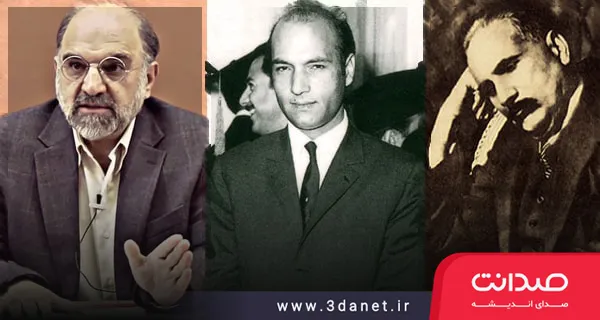
Arash Jamshidpour: My aim in this piece is to critique the views of Dr. Vahid in his article “Religion: From Truth to Utility and Back to Truth, Methodological Remarks on Currents of Religious Thought in Iran.” His writing, on the whole, has one main claim and several subsidiary claims. In this piece, I will address the main claim and two subsidiary claims of his writing. It is necessary to state at the very outset that the main claim of his writing is shrouded in ambiguity and some of its aspects are not very clear.
My aim in this piece is to critique the views of Dr. Vahid in his article “Religion: From Truth to Utility and Back to Truth, Methodological Remarks on Currents of Religious Thought in Iran.”[1] His writing, on the whole, has one main claim and several subsidiary claims. In this piece, I will address the main claim and two subsidiary claims of his writing. It is necessary to state at the very outset that the main claim of his writing is shrouded in ambiguity and some of its aspects are not very clear. Nevertheless, I have tried to reconstruct and restate the main claim, and thus, in my own view, I have made this claim more or less clear, although I have ultimately concluded that this claim is an incorrect one. I will first discuss the main claim, and at the end of the piece, I will address two subsidiary claims.
Dr. Vahid describes his aim in this writing as follows: “My aim in this writing is to present a brief analysis of the current of religious thought in Iran. ... My intention here is not to evaluate the truth or falsity of the specific claims of this current, but rather I will confine myself to raising some remarks concerning its methodology.” Before anything else, let us clarify two points. The first point is that by studying the entire article, we realize that what is meant by “the current of religious thought in Iran,” which appears in the article’s title with the phrasing “currents of religious thought in Iran,” is the current of “religious intellectualism.” It is clear that in our Iran today, there are multiple currents of religious thought, and therefore, contrary to what the title of Dr. Vahid’s article and the sentence quoted from him suggest, his aim in this writing is not to analyze all these currents. So, what is meant by “the current of religious thought in Iran” or “currents of religious thought in Iran” is the very current known as “religious intellectualism” in Iran. The second point is that Dr. Vahid does not discuss all the representatives of religious intellectualism, and in his writing, we only see the names of Dr. Shariati and Dr. Soroush. Therefore, other representatives of this intellectual current, such as Mehdi Bazargan, Mohammad Mojtahed Shabestari, Abolqasem Fanaei, Arash Naraghi, Mohsen Kadivar, Mostafa Malekian (before 1997 and during the period when he was a religious intellectual), Hasan Yousefi Eshkevari, and others, are not the subject of Dr. Vahid’s discussion.[2] Thus, the scope of his analysis and evaluation is far more limited than what the title of his writing suggests.
In this way, Dr. Vahid wishes to analyze the “current of religious thought” (according to the two points above, Shariati and Soroush) and to set forth remarks concerning its methodology. What are these methodological remarks? Dr. Vahid continues the article as follows: “I will begin with the article’s conclusion and will speak of individuals who, in my opinion, should serve as the exemplar and model of religious thought and reflection in Iran. These are individuals who, in addition to being present at the frontiers of scientific and philosophical knowledge, have made a significant contribution to the growth of religious thought in the West; thinkers such as William Alston, Alvin Plantinga, Adams, Wolterstorff, van Inwagen, and Charles Taylor. ... The common feature of all these individuals is that, while being acquainted with the sciences of their time, they have endeavored to offer a religious interpretation of the world. I call such individuals religious thinkers ... In this way, with this criterion, I will analyze and evaluate the currents of religious thought in Iran.” Apparently, the article’s claim must be sought in these very phrases and those that follow. Dr. Vahid intends to analyze the “currents of religious thought in Iran”—in reality, Shariati and Soroush—with “this criterion.” It seems that what is meant by “this criterion” is that the religious thinkers of the Western world stand at the “frontiers of scientific and philosophical knowledge” and “while being acquainted with the sciences of their time, have endeavored to offer a religious interpretation of the world.” Therefore, it can be said that the thinkers named possess two characteristics: 1_ they are acquainted with the sciences of their time; 2_ they seek to establish a religious interpretation or construal of the world. Vahid intends to evaluate the record of religious intellectualism from the perspective of these two criteria. And since religious intellectualism is nothing other than the views of religious intellectuals, his aim is in fact to analyze the views of religious intellectuals from the perspective of the two aforementioned criteria. The Iranian religious intellectuals whose views he briefly analyzes and evaluates are Iqbal Lahori, Ali Shariati, and Abdolkarim Soroush. Of course, Iqbal Lahori is Pakistani, and for this reason, Dr. Vahid, later in the article and before entering the discussion of Iqbal, speaks of a “methodological analysis of three prominent figures of religious intellectualism” rather than an analysis and evaluation of the “currents of religious thought in Iran.” This slip in Dr. Vahid’s expression can perhaps be explained by the fact that his real aim is the analysis and evaluation of the current stream of religious intellectualism, and apparently the purpose of discussing Iqbal (and even Dr. Shariati) is more to provide the groundwork for discussing the position of Dr. Soroush and the present state of religious intellectualism. Our suspicion is strengthened by the fact that Dr. Vahid says he sees “abundant methodological similarity” between Iqbal’s book The Reconstruction of Religious Thought in Islam and the books of Western thinkers, and this is a component that, in his view, is absent from the works of Dr. Soroush and other representatives of religious intellectualism.
Let us return to our main discussion. Dr. Vahid wishes to analyze and evaluate the current state of religious intellectuals from the perspective of the two aforementioned criteria (familiarity with the sciences of the age and the resolve to offer a religious interpretation of the world). His assessment is as follows: “If the current of religious thought in Iran is to flourish and avoid repeating itself, it will have no choice but to place itself under this general global current. The current of religious thought in Iran must allow globally accepted criteria to assess its capabilities, not limited and selective local standards that are usually tainted by political motives. ... What has been offered in this land over these years under the title of religious intellectualism, by distancing itself from the international standards of the scientific community, has ensnared itself in the grip of ‘localization’ ... Religious intellectualism in these years has been more concerned with proving itself than with presenting precise propositions regarding the problems of religious thought and striving to solve the difficulties that may arise in the wake of offering a religious interpretation of the world. For this reason, most discussions in the sphere of religious intellectualism are so-called ‘meta-subject’ discussions. ... such as whether religious intellectualism is possible or whether authenticity lies with religious intellectualism or with religious new-thinking ... When we look at these kinds of discussions, which appear almost mass-produced in newspapers and magazines, what draws attention is that the issues raised revolve more around the term religious intellectualism than its content.” This long quotation, alongside the previous one, more or less clarifies Dr. Vahid’s claim: in the West, there are individuals whom Vahid refers to as “religious thinkers.” These “religious thinkers” possess two characteristics: familiarity with the sciences of the age and the resolve to offer a religious interpretation of the world. Now, the gist of his argument is that Dr. Soroush and other Iranian religious intellectuals lack these two characteristics and are therefore “religious intellectuals” rather than “religious thinkers.” The important component of the religious intellectual, in Vahid’s view, is “being political and, more precisely, ‘being in the opposition’ and opposing power.” As emerges from the continuation of Vahid’s writing, in his view Iqbal is a “religious thinker”: “His [Iqbal’s] work differs greatly from the work of our religious intellectuals. Years ago, when I read The Reconstruction of Religious Thought in Islam, I could not help but be astonished by the existence of such a difference. Reading this book still evokes for me a strong methodological resemblance to the books of Western thinkers.” But Iranian religious intellectuals, unlike Iqbal, are not “religious thinkers.” Thus, Alston, Plantinga, Adams, Wolterstorff, Van Inwagen, Taylor, and Iqbal are “religious thinkers” due to their familiarity with the sciences of the age and their effort to offer a religious interpretation of the world, while Shariati and Soroush (and other religious intellectuals) are “religious intellectuals” due to “being political,” “being in the opposition,” and “opposing power.”
As we quoted from Dr. Vahid himself (and the title of his article also indicates this), his aim is “to set forth remarks concerning the methodology” of the religious intellectual current. Now, the question is: what is the connection between Vahid’s claim, which we explained in the previous paragraph, and these methodological remarks? Apparently, these methodological remarks are Dr. Vahid’s reasons in defense of that claim, or at least are meant to shed light on it. Before examining these methodological remarks, let us analyze that long passage a little. That long passage is in a way an explanation of Vahid’s claim, but it has other aspects as well that are worth addressing here:
1) The meaning of the expressions “general global current,” “globally accepted criteria,” and “international standards of the scientific community” is unclear. What are these criteria and standards? And whatever they may be, why should they govern the activity of religious intellectuals? “Being political” is also a criticism that has been leveled at religious intellectuals for years, and it is not clear what is wrong with “being political” in the sense that religious intellectuals are. Unfortunately, this is yet another of the countless instances where an attempt is made to eliminate a theory, approach, current, or school from the field by pinning a label on it.
2) The expression “indigenization,” in which, according to Dr. Vahid, religious intellectualism has ensnared itself, is also not a clear or expressive term. He apparently means that religious intellectualism tends to solve the religious problems and issues of our own society. If that is the intention, then the question is: what is wrong with such a tendency? Are Iranian religious intellectuals supposed to solve the religious and social problems of other societies? The expression “indigenization” suggests that religious intellectuals themselves impose specific questions and issues on their audience and prevent them from raising other questions. But the situation is exactly the opposite. Religious intellectuals address indigenous issues because their audience has such issues. Over the years, I have been closely acquainted with many of the audience of religious intellectualism. I personally do not recall their problem being Hume’s critiques of miracles or the argument from design, or the incompatibility of the theory of evolution with the verses of creation in sacred texts. Many of the questions revolved around the relationship of religion with democracy, freedom, justice, human rights, and issues of this kind. When these are the questions, one cannot expect religious intellectuals to speak, for example, about the compatibility of the idea of random genetic mutations with the idea of divine intelligent design.
3) Contrary to Dr. Vahid’s view, religious intellectualism has not sought to prove itself by fueling “meta-subject” discussions. It has been the critics of religious intellectualism who have opened the discussion on the incompatibility of the components of religious intellectualism, and religious intellectuals, in response to such critiques, have discussed the non-incompatibility of those two components. In my opinion, Dr. Vahid’s description of the presence of these meta-subject discussions in the literature of religious intellectualism is highly exaggerated, and such discussions have never reached the level of “mass production.” It suffices for Dr. Vahid to review the articles presented in the years 2006 and 2007 at the two conferences “Religion and Modernity 1 & 2” to arrive at a correct assessment of the volume of such meta-subject discussions. Furthermore, “meta-subject” discussions are not as unimportant as Vahid imagines. For example, Mr. Malekian believes in the incompatibility of the components of the expression “religious intellectualism.” But this does not mean that Malekian merely has a verbal dispute with religious intellectuals. His point is that “the essence of intellectualism is rationality and the essence of religiosity is devotion; and devotion and rationality are incompatible; and consequently, religious intellectualism suffers from a kind of internal inconsistency.”.[3] Regardless of whether we agree or disagree with Mr. Malekian, it is clear that the meaning of this “internal inconsistency” is not merely the inconsistency of the term “religious intellectualism,” but a kind of inconsistency that threatens the life of the religious intellectualism current and the pursuit of its goals. Therefore, at least in some instances where the paradoxical nature of religious intellectualism has been discussed, the discussions have pertained to the “content” of religious intellectualism and not just its “term.”
4) In the following, we will examine Vahid’s methodological observations, which are apparently intended to defend the claim. But even before examining those reasons, we can say that his claim is incorrect. Religious intellectuals such as Dr. Soroush, Dr. Shabestari, Dr. Fanaei, and others are not only familiar with the sciences of the age but also seek to present a religious interpretation of the world. (It suffices to look at Dr. Soroush’s collection of articles titled “The Prophetic Dream” and Dr. Shabestari’s collection of articles titled “A Prophetic Reading of the World.” [4] Therefore, even by Dr. Vahid’s “criterion,” religious intellectuals are “religious thinkers.”
Dr. Vahid’s methodological remarks are apparently meant to defend or shed light on his claim. Dr. Vahid discusses the methodological differences among three prominent figures of religious intellectualism—Iqbal, Shariati, and Soroush—since his aim in this piece is “to offer some remarks concerning the methodology employed in currents of religious thought in Iran.” In his view, Iqbal is a “religious thinker,” that is, one of those who, “standing at the frontiers of knowledge, strive to provide a spiritual and divine interpretation of the world.” His primary concern is truth. Moreover, “what draws attention in Iqbal’s work is the form of his approach to problems and his manner of evaluating them. Iqbal’s approach is highly professional. His work differs greatly from that of our religious intellectuals … This book [The Reconstruction of Religious Thought in Islam] still … evokes a strong methodological resemblance to the books of Western thinkers.” Apparently, the methodological resemblance of Iqbal’s work to the books of Western thinkers (and, naturally, the methodological difference between his work and that of Iranian religious intellectuals) is that Iqbal possesses the two characteristics of familiarity with the sciences of his time and an effort to formulate a religious interpretation of the world, whereas religious intellectuals lack those two characteristics.
His discussion of Dr. Shariati is more detailed, and I will pass over his discussions of the “Shariati problem,” Dr. Soroush’s interpretation of it, and Dr. Vahid’s critique of Dr. Soroush’s interpretation, as they are not relevant to his main argument or our critique. The upshot of Dr. Vahid’s discussion is that the concern for truth, which was Iqbal’s primary concern, gives way in Dr. Shariati’s thought to a theory of the “pragmatic truth” and “Islam of application.” “With Soroush, we return once again to the Islam of truth.” From Dr. Vahid’s description, it appears that Dr. Soroush resembles Iqbal in at least three respects: (1) unlike Dr. Shariati, he has a concern for truth, and (2) he “strives to provide a contemporary image of religion” (3) “in a manner that is compatible with prevalent scientific and philosophical beliefs.”
Dr. Vahid then goes on to speak of “three Soroushes”: 1_ the young Soroush (which appears to be the Soroush of the late 1970s and early 1980s); 2_ Soroush the religious thinker (who exists potentially); 3_ Soroush the religious intellectual (who is the current Soroush). In Vahid’s view, the young Soroush could have “either, like Iqbal, taken the path of a religious thinker … or become the identity that we nowadays call a religious intellectual.” In other words, Soroush could have become a “religious thinker,” or a “religious intellectual,” that is, political and, more precisely, in opposition and contesting power. Soroush chose the second path, and in Dr. Vahid’s view, this was not a good choice. Vahid believes that religious intellectuals are confined to their own time, whereas religious thinkers preserve their freshness across all times. Vahid concludes his article by repeating the words he had stated at the beginning of the piece: “We must cast aside this garb of indigenous intellectualism and join the general current of the international scientific community. We have done this, or are trying to do it, in the fields of basic sciences and the humanities. Why should we make an exception in the case of religious thought?”. There is much to be said about this part of his writing, but I will confine myself to two main critiques:
1) It is not clear what methodological difference exists between Soroush and Iqbal. Dr. Vahid states: “I will attempt to provide a methodological analysis of three prominent figures of religious intellectualism—Iqbal, Shariati, and Soroush—and recount their differences from a methodological perspective.” From this sentence, we gather that all three religious intellectuals differ in their methods. Dr. Vahid says that Iqbal’s concern was “truth,” Shariati’s concern was presenting a “revolutionary theory” and “struggle,” and “Soroush’s preoccupations all bear the tinge of truth, whether when he addresses the confrontation between science and religion (as two sources of truth) or when, like Iqbal, he tries to present a contemporary image of religion in a way that is compatible with common scientific and philosophical beliefs.” From these observations, only the difference between Iqbal and Shariati becomes clear, but apparently there is no difference between the method of Iqbal and Soroush. Soroush, like Iqbal, is “concerned with truth.” Moreover, in the aforementioned quote, Vahid attributes both characteristics of a “religious thinker,” or at least one of them (familiarity with the sciences of the time), to Soroush, for he says that Soroush, “like Iqbal, tries to present a contemporary image of religion in a way that is compatible with common scientific and philosophical beliefs.” The title of Dr. Vahid’s article also reinforces the ambiguity: “Religion; From Truth to Application and Back to Truth, Methodological Remarks on Currents of Religious Thought in Iran.” This title and the text of the article state that religious intellectualism, with Shariati, moved from truth to application, and with Soroush, returned to truth again, and this is apparently the methodological observation of the article. But if this is the intention, then how is it that Iqbal’s methodology bears “great resemblance” to the methodology of Western thinkers, yet “differs to a large extent from the work of our religious intellectuals”? Therefore, all of Dr. Vahid’s methodological observations not only do not defend his claim, but also do not shed much light on that claim. (Furthermore, as I stated in critique number 4 above, Vahid’s claim is fundamentally incorrect, and religious intellectuals possess both characteristics of religious thinkers.)
2) In Dr. Vahid’s concluding remarks, there is a noteworthy phrase: “We must cast aside this garb of indigenous intellectualism and join the general current of the international scientific community. We have done this, or are trying to do it, in the fields of basic sciences and humanities. Why should we make an exception in the case of religious thought?” My argument is that religious intellectuals do not wish to shed the garb of religious intellectualism and abandon their social commitment. Dr. Vahid’s analogy is not a valid one. Yes, we can imagine a physicist who says to himself: “I want to research the latest achievements in quantum physics. The fact that most people in my country do not even know Newton’s laws is of no importance to me at all.” But it is difficult to imagine an intellectual who says to himself: “I want to reflect upon and discuss the latest achievements of European science and philosophy. The fact that the majority of people in my country are living, in terms of social awareness, in the 1700s is of no importance to me at all.” Yes, we can ask religious intellectuals to pay more attention to the more abstract discussions of the philosophy of religion. But this does not conflict with addressing “indigenous” issues. Religious intellectuals like Dr. Soroush have a viewpoint on the relationship between religion and the social issues of us Iranians in the modern world, and based on that viewpoint, they consider addressing indigenous issues to be their duty. Dr. Vahid must either show that this viewpoint is incorrect, or he must show that even if that viewpoint is correct, there is still no necessity for religious intellectuals to address “indigenous” issues.
Dr. Vahid has also put forward some subsidiary claims in his article, two of which I will address:
1) At the beginning and end of his article, Vahid states that “religious intellectualism has effected a complete break with its past.” This too is an incorrect claim. Soroush said several years ago: “One cannot kiss jurisprudence, which has rendered so much service to this civilization, and set it aside overnight. The same goes for mysticism. However, these cultural elements must be pathologized and brought back onto the scene.”[5] In works such as Theories of the State in Shiite Jurisprudence, Kadivar has revisited the views of Shiite scholars on the state. Similar instances of referring to the past can be found in the writings of Abolqasem Fanaei. Moreover, the fact that religious intellectuals’ discussion of “cultural and intellectual traditions has been largely negative, concerned with negating and ignoring the relevant traditions” cannot in itself be a flaw or criticism of religious intellectuals. Dr. Vahid must enter into these discussions and show what positive elements exist in past traditions that religious intellectuals are ignoring.
2) There is another point in Dr. Vahid’s concluding sentences: “If ... we trap religious thought in the cage of ‘indigenization,’ then ... we will have to make do with products that are in reality and originally imitations of others’ thoughts, presented as indigenous religious thought merely by adding a few hadiths and Quranic verses for decoration.” Now the question is: if our current religious intellectuals are trapped in the cage of “indigenization,” then who are these “others” whose thoughts the religious intellectuals are “imitating”? And as for this phrase: “presented as indigenous religious thought merely by adding a few hadiths and Quranic verses for decoration.” This too is one of our usual and common motive-readings in criticizing others and leads nowhere.
If Dr. Vahid is looking for those who can “serve as models and exemplars of religious thought and thinking in Iran,” I believe he will find far better examples in Western civilization than Alston, Plantinga, and the like. Immanuel Kant is a philosopher who not only discussed abstract and perennial problems of the philosophy of religion, such as the proofs for the existence of God and the relationship between religion and ethics, but also, in works such as Religion within the Bounds of Bare Reason and the essay “What is Enlightenment?”, discussed the concrete religious problems of Prussia at that time. In my view, Kant and those like him are better models for religious intellectualism.
A few more points remain, but I do not wish to make the burden of criticisms heavier than this. In conclusion, it can be said that Dr. Vahid’s main claim is unwarranted and indeed incorrect, and his two subsidiary claims are also incorrect and vague. Dr. Vahid apparently assumed that he could level robust criticisms at the current of religious intellectualism without seriously following it. Our entire analysis shows that Dr. Vahid’s lack of knowledge about the developments of this current has rendered his criticisms weak and unsupported. Religious intellectualism now has other representatives as well, whose works must also be read in order to gain a command of the literature of religious intellectualism.
.
.
Notes
[1] Dr. Vahid’s article was published in the monthly Mehrnameh, Nowruz 1393, pp. 5–62, and posted on the Sedanet website on 17 Farvardin 1393.
[2] I am aware that some of those I have named do not favor the term “religious intellectualism.” But this is not very important. What matters is that these thinkers pursue common goals in certain respects, and these common goals bring them so close together that, despite some differences among them, we can place them under a single current.
[3] “The Restless Soul of an Intellectual: An Account of an Intellectual Life, a Conversation with Mostafa Malekian,” p. 26. In the journal Andisheh-ye Pouya, Ordibehesht and Khordad 1391, pp. 7–22.
[4] These two collections of articles can be found on the personal websites of Dr. Soroush and Dr. Mojtahed Shabestari.
[5] See “The Message of the Quran is the Liberation of Reason, a Conversation with Dr. Abdolkarim Soroush,” on Dr. Soroush’s personal website.
.
.
A Critique of Dr. Vahid Dastjerdi’s Article Entitled:
“Religion: From Truth to Application and Back to Truth, Methodological Remarks on Currents of Religious Thought in Iran”
Author: Arash Jamshidpour
.
.
Discussion0 comments
No comments yet; let yours be the first voice.