اندیشهفلسفهخردگفتگوحکمتمعناپرسشفرهنگ
Religion
A Methodological Reflection on the Disputes Concerning the Distortion of the Qur'an (1)
The disputes over Quranic distortion suffer from the fallacy of 'inhomogeneous response'; the historical citations of the claimants are not of the same kind as the theological rebuttals of their opponents. Discrepancies among the codices require historical, not theological, investigation—flawed methodology has rendered the arguments sterile.
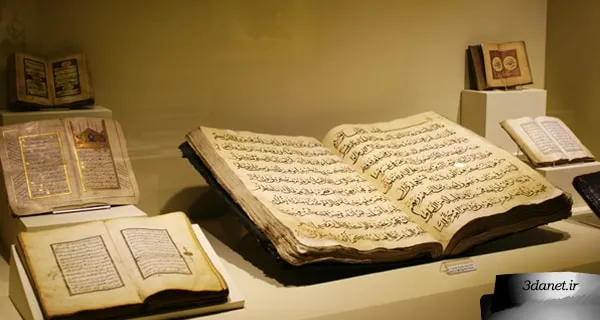
For years, I have been observing the argumentation methods of Islamic and non-Islamic scholars on the subject of "the distortion of the Qur'an" among various texts. However, I have always been confronted with serious questions; questions for which I have never found an answer amidst these disputes. These questions, in the belief of the author of these lines, are of great importance, and neglecting them can invalidate arguments both for and against the distortion of the Qur'an. Some of the most important of these questions are: 1- Is the discussion about the distortion of the Qur'an a historical-linguistic discussion or a theological one? 2- If it is a historical-linguistic discussion, can theological arguments answer it, and conversely, if it is theological, can historical arguments answer it? One might claim that it can be a historical-theological dispute, but in that case, the researcher must precisely answer what the boundary between history and theology is in their method of argumentation. There are two areas, reference to which can largely clarify the disputes surrounding distortion and their methodological flaws. "The collection and compilation of the Qur'an" and "Qira'at" (variant readings) are these two key discussions. In my opinion, two fundamental flaws are seen in these two discussions: 1- The fallacy of "inhomogeneous response"; and 2- The imprecise definition of "distortion." In this essay, by addressing the first flaw, we will arrive at a more precise explanation of the discussion of the distortion of the Qur'an and will explain why scholars have fallen into the trap of these pitfalls; pitfalls that will render their arguments sterile.
The fallacy of "inhomogeneous response to the question": This is a very important fallacy that, in my opinion, has been very common in various Islamic eras. This fallacy is based on the principle that, logically, there must be balance and homogeneity between the question and the answer. If a question is based on a historical approach, the answer must also be of the same kind. The same rule applies to all approaches. Of course, this does not mean that one cannot, under any circumstances, utilize other approaches for a question with a specific approach. This rule implies that homogeneous answers are the first priority, and after that, other approaches can also be utilized. But contrary to this principle, it has been very prevalent in Islamic history. One of the subjects in which this fallacy can be well observed is the very important subject of "the distortion or non-distortion of the Qur'an." Where proponents of distortion mainly cite historical reasons, but those responding to them resort to theological reasons and their interpretations of Qur'anic verses.
Regardless of the various and numerous definitions mentioned for distortion, the common denominator that can be considered in its meaning is "addition, omission, or displacement" in the text of the Holy Qur'an. If we are to judge according to this definition, the primary method for becoming aware of addition, omission, or displacement in the text of the Qur'an is facilitated by a historical-linguistic approach, not theology. However, scrutiny of the disputes that have taken place regarding this subject mainly proves a theological approach for them (for awareness of some of these disputes, see: Ibn Babawayh, 1970 CE: p. 66; Khoei, 1401 AH: 207-234; Jafarian, 1415 AH: 17-29). This matter has progressed to the point where some even believe that the theory of "the distortion of the Qur'an" arose from theological debates between Shia and Sunni on the issue of proving the caliphate of Imam Ali (AS) and refuting the claims presented for proving the caliphate of Abu Bakr, Umar, and Uthman based on the consensus of the Ummah (Kohlberg, 1380 SH: 36). Although such a theological origin for the distortion of the Qur'an is briefly demonstrable, there is much historical evidence presented by Shia and Sunni scholars proving the existence of numerous differences in the early codices of the Qur'an (see: Modarresi Tabatabai, 1380 SH).
For example, Abu Musa al-Ash'ari recalled two long surahs that he could not find in the Uthmanic codex: "If the son of Adam had two valleys of gold, he would seek a third." This verse has also been transmitted from other Companions such as Ibn Mas'ud, Ubayy ibn Ka'b, and Ibn Abbas (Ahmad ibn Hanbal, al-Musnad, 5/131-132; Tirmidhi, al-Sunan, 5/370; Raghib Isfahani, Muhadarat al-Udaba', 4/423; Suyuti, al-Itqan, 1/227; all cited from: Modarressi Tabatabai, 49). Also, two short surahs known as Hafd and Khal' were recorded in the codex of Ubayy ibn Ka'b, Ibn Abbas, and Abu Musa al-Ash'ari (Ibn al-Nadim, al-Fihrist, 30; Raghib, Muhadarat al-Udaba', 4/433; Suyuti, al-Itqan, 1/227; all cited from: Modarressi, 49). In the codex of Ibn Mas'ud, the three surahs of Falaq, Inshiqaq, and Hamd were absent (Ibn al-Nadim, al-Fihrist, 64-66; also for numerous other sources, see: Modarressi Tabatabai, 1380, 49). There is much other evidence in history indicating that many prominent Companions did not find parts of the revelation, which they themselves had heard from the Prophet or in another way, in the Uthmanic codex (see: Modarressi Tabatabai, 1380, 48-50). In the introduction to his valuable commentary, Shaykh Tusi, with a passing reference to this historical evidence, without providing any convincing historical reason for his claim, merely negates all these narrations by citing a few theological arguments (n.d., 1/3). Yet, in numerous instances within his commentary, he has explicitly noted the differing readings of the Ahl al-Bayt and other Companions from the Uthmanic codex (see: ibid., 2/441; 5/71-71; 10/52; 6/262; and so on). Of course, a researcher has made great efforts to show that Shaykh Tusi, by bringing this evidence, intended to demonstrate that these differences were used solely for the purpose of interpreting the verses and not for distortion (see: Kariminia, 1385). But even if Shaykh Tusi's intention was interpretation, given that he provided no convincing reason for these differences being interpretive, such an application cannot be considered proof that these differences do not constitute distortion. Demonstrating that the narrations containing differences in readings were only for interpretation requires a specific jurisprudential-hadith and historical study to be undertaken and the true intent of the Ahl al-Bayt to be extracted from them. Otherwise, one can consider some other scholars, such as Ali ibn Ibrahim al-Qummi, who regarded these very narrations as evidence for the distortion of the Qur'an.
Modarressi Tabatabai has also made great efforts to demonstrate the falsehood and fabricated nature of the historical evidence based on the distortion of the Qur'an, but however reasoned and precise he is in bringing forth and extracting this historical evidence, in criticizing them, without providing any reason for their being fabricated, he judges them to be fabricated merely because they conflict with narrations stating that a number of Companions compiled the Qur'an during the Prophet's time (ibid., 53 and 58). Elsewhere (p. 54), he considers the reason for the fabrication of these narrations to be a justification for why Ali (a.s.) did not pledge allegiance to Abu Bakr. But it is clear that the mere existence of a conflict between two sets of narrations is not a reason for one of them being fabricated. This is while it seems that the evidence for the compilation of the Qur'an during the era of the Prophet (pbuh) is more unstable, and given that the Prophet, until the final moments of his life, was still awaiting the descent of revelation, proving the compilation of the Qur'an during his time appears very difficult. Given such weaknesses regarding the narrations of the Qur'an's collection during the Prophet's (pbuh) time, how can the narrations of the Qur'an's collection by the Caliphs be considered fabricated without providing even a single positive reason?! The theological approach of Modarressi in considering such narrations fabricated is very evident. It is interesting that Modarressi Tabatabai, in this article, shows well that Sunnis and Shiites were in agreement regarding the existence of deficiencies in the Uthmanic codex, with the difference that Sunni works in this field are considered prior to Shiite works (ibid.: 58; 60-68). The historical approach of Modarressi Tabatabai is very prominent in this work. However, this approach is only seen in proving the existence of changes in the early codices and also the Uthmanic codex, but for answering them and their being fabricated, no convincing reason is provided, and he merely suffices with stating a few weak theological arguments.
Other historians have also fallen prey to this pitfall. For example, after extracting in detail the Sunni narrations concerning the omissions from and additions to the companions' codices compared to the Uthmanic codex (see idem, 1415: 39-58), Rasul Ja'farian makes a remarkable statement: "These narrations, transmitted from Sunni books and indicating distortion, are either the result of the companions' confusion, their inadvertence, or their erroneous ijtihad in that matter..." (Ja'farian, 1415: 61). Unfortunately, Ja'farian's basis for this extraordinary claim is entirely unfounded and, in some instances, theological. He continues: "As for the confusion of the transmitters who narrated these reports, attributing falsehood or fabrication to them, after the tawatur of the Qur'an is established among all Muslims, these narrations must be discarded" (ibid.). It is clear that here Ja'farian's first basis, namely "falsehood and fabrication attributed to the transmitters of such narrations," is completely groundless and futile. How has he deemed all these narrations to be lies? In the second part, he also refers to the issue of the "tawatur of the Qur'an," which is a theological discussion. We call this a theological discussion because the tawatur of the Qur'an has no connection whatsoever to the tawatur of the Uthmanic codex. According to reports that are definitive in indication and agreed upon, the Uthmanic codex was compiled during Uthman's time based on merely two witnesses. Even if it were proven that a single verse in the existing codex was included based on the testimony of two individuals, one could no longer claim the tawatur of the entire text. This is while, considering the procedure governing the collection of the Qur'an during Uthman's time, we must deem the entirety of the existing codex to be consistent with this method. Is it truly a correct method to suffice with two simple, non-historical reasons to critique twenty pages of historical narrations? Perhaps Mr. Ja'farian did not have the patience to critique and examine each and every narration in those twenty pages. But even in that case, scholarly ethics would have required him to refrain from baseless judgment upon them and to refer the matter to other research.
This inquiry has not afforded us the opportunity to address more theorists on this subject. However, what is abundantly evident in most such works is the lack of a precise historical study concerning the collection and compilation of the Qur'an during the era of the Prophet and the Caliphs. Unfortunately, the works produced so far all refer to a few specific narrations. Narrations that include instances such as: "the completion of the Qur'an by the companions during the Prophet's era," "the compilers of the Qur'an in the Prophet's era," "the memorization of the Qur'an," and so on. But the reality is that the implication of these narrations for proving the collection of the Qur'an during the time of the Prophet (PBUH) is very shaky, and opponents can easily consider other implications. Critiques of the narrations implying the distortion of the Qur'an also largely lack sound historical foundations.
Here, I deem it necessary to note that the author of these lines has by no means intended to defend the idea of the distortion of the Qur'an. This writing was merely an attempt to take a critical look at the method of reasoning of the opponents of distortion and to display the shortcomings and deficiencies that have existed. Proving such a thing requires robust historical evidence. Excessive insistence on the few historical proofs that our predecessors have left us proves nothing other than causing tedious repetitions. In the next note, I will try to point out another very important pitfall that exists in this matter, namely: the imprecise definition of distortion, and by focusing on the views of Ayatollah Khoei, I will examine its dimensions further.
Some sources:
- Ibn Babawayh, Risala fi al-I'tiqad, Tehran, 1951 CE.
- Ibn al-Nadim, Kitab al-Fihrist, edited, annotated, and introduced by Dr. Ayman Fu'ad Sayyid, London: Al-Furqan Islamic Heritage Foundation, 1430 AH/2009 CE.
- Ja'farian, Rasul, Al-Qur'an wa Da'awi al-Tahrif, Beirut: Dar al-Thaqalayn, 1415 AH.
- Tabatabai, Modarresi, "An Examination of the Ancient Disputes Concerning the Distortion of the Qur'an," translated by: Mohammad Kazem Rahmati, Haft Aseman, Fall 2001, No. 11, pp. 41-72.
- Tusi, Muhammad ibn al-Hasan, Al-Tibyan fi Tafsir al-Qur'an, Beirut: Dar Ihya' al-Turath al-'Arabi, n.d.
- Karimi Nia, Morteza, "Difference in Recitation or Distortion of the Qur'an (A Look at the Transmission of Shiite Narrations in Tafsir al-Tibyan)", Ulum-e Hadith, Summer 2006, No. 40, pp. 3-21.
.
.
A Methodological Reflection on the Disputes Concerning the Distortion of the Qur'an (1): The Sterility or Validity of the Arguments
Author: Ghasem Darzi (Assistant Professor, Shahid Beheshti University, Tehran)
.
.


Discussion0 comments
No comments yet; let yours be the first voice.