Religion
A Reflection on the “Greater Jihad” and Its Link to “Critical Thought”
The greater jihad is not merely a struggle against the self, but the defense of others' freedom and the rejection of self-centeredness; for critical thought is the antidote to destructive beliefs, and changing the world without inner transformation merely reproduces the status quo.
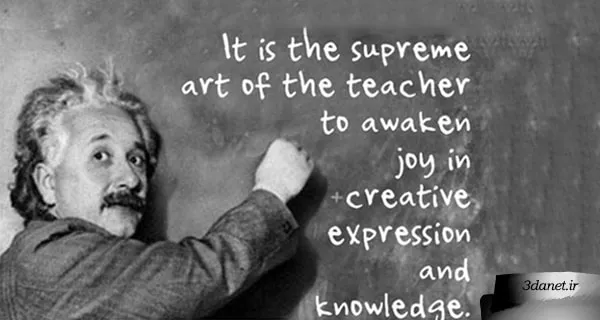
Improve yourself! — that is all you can do to improve the world — a true revolutionary is one who can revolutionize himself. (Wittgenstein)
If the “Greater Jihad,” according to the Prophet of Islam and many Muslim scholars and mystics, is understood as the “struggle against the self,” the scope and extent of this jihad and its effects are not confined to an individual, personal mentality, but are necessarily accompanied by an external, social objectivity.
The most important manifestation and objective, external measure of the “struggle against the self” is moving away from a self-centered and dictatorial spirit and disposition, and wholeheartedly defending the “rights and freedoms of others,” that is, the freedom of each and every human being; human beings who do not necessarily share your views and live by values different from, even contrary to, your own.
One who has truly engaged in the struggle against the self and has limited and subdued their own ego will never, like “Daesh,” dare to sit in the place of “God” and summon the seventy-two nations to war. Indeed, the most prominent manifestation of faith is creating security for others, and the true believer, above and before all else, is concerned with the security of other human beings and strives for its realization. In this interpretive horizon, a believer is one who lives and lets others live.
On the other hand, one who has not engaged in the struggle against the self is always predisposed to compensate for their own ignorance and indolence by waging war against the world and its people. In fact, they cling to the “possibility” that “with the improvement of the world’s conditions, our own state will also improve,” instead of fixing their gaze on the “necessity” that “with the betterment of our thoughts, the world’s conditions will become better.”
The capacity for doubt, questioning, and critical assessment is the sole antidote to destructive thoughts and the only human possibility for unmasking naive and frivolous beliefs. From this perspective, “Daesh” is the result of weakness and incapacity in critical thought, that is, the inability to question and cast doubt upon one’s own beliefs.
This bitter reality in the history of human societies is deeply thought-provoking: the most poisonous and destructive thoughts have always been the most “self-evident” and “innocent” ones. Therefore, it is no exaggeration to say that “critical thought” is the most essential human activity; for critical thought is, in the first place, “self-criticism,” that is, directed at the “self” and “one’s own.”
We abandon the self and abandon our own, Whatever is our own is now other to us. (Rumi)
This teaching of the mystics, “Be the executioner of your own nature!”, should not be understood through a pathological misinterpretation as a struggle against human natures and instincts and the suppression of one’s sensory and physical dimensions. In fact, the noble and justified meaning of this teaching is a kind of “radical self-criticism”; just as the requirement of the “struggle against the self” is not physical distance from people and taking refuge in mountains and deserts, but rather distancing oneself from one’s own hidden self-centeredness and selfishness, which are rooted in those very “self-evident” and “innocent” beliefs and thoughts, that is, the unexamined dogmas of the individual.
Self-conceit, my soul, is the proof of ignorance. (Hafez)
Human beings always shirk the responsibility of taking charge of themselves, which is accompanied by the pain of concrete individuation and critical thinking, and prefer to live comfortably by accepting and following absolutely the nearest models in their environment. Of course, when those same models engage them with fundamental challenges and questions beyond their capacity, they prefer, instead of criticism and questioning, to engage in absolute opposition and conflict with them, and thus, through a ridiculous display of freedom, continue their self-alienation and self-deception in an even more serious manner.
Revolutionary efforts and uprisings, if not accompanied by critical (creative and reflective) action, will be nothing but a desperate struggle that ultimately both dishonors the revolutionaries and burdens subsequent generations. In other words, “antagonism” toward an idea or phenomenon ultimately leads to the defeat of its own purpose and, instead of transcending it, becomes entangled and identified with it! Passive and uncritical hostility toward any “enemy” is, in fact, its covert consolidation and affirmation. As Lichtenberg said: “To be against something is to imitate it.”
Any revolutionary resolve and action to change the world, without a radical change in the agent’s interpretation of the world and humanity, only leads to the consolidation and reinforcement of the status quo and even its reproduction at a more stable and destructive level. Iron wills clad in armor, in the absence of luminous and enlightening ideas, even if accompanied by a thousand good intentions, will not only lead nowhere, but will merely pave the roads to hell.
.
.
A Reflection on the “Greater Jihad” and Its Link to “Critical Thought”
Author: Masoud Zanjani
.
.




Discussion0 comments
No comments yet; let yours be the first voice.