Religion
A Reflection on “Poeticness” and the Relation between “God” and “Silence”
'The thing most like God is silence,' for language is inherently divisive, while God lies beyond time and space. Poetry, however, is the ideal form of silence—a way of living that frees the human being from the prison of language and unites them with God.
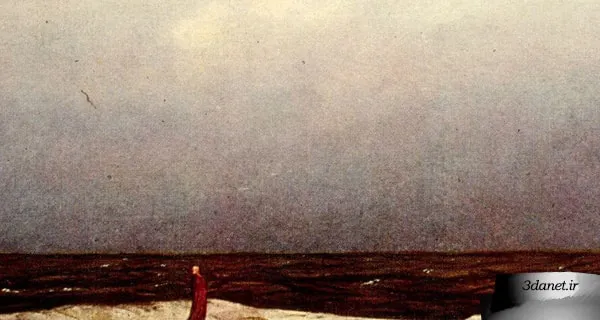
The thing most like God is silence. Meister Eckhart
This saying of Meister Eckhart, the great Christian mystic (13th and 14th centuries CE), that “the thing most like God is silence,” though very brief in wording and phrase, is very lofty in meaning and allusion. One possible interpretation and construal of it, within a horizon of philosophical reflection and analysis, could be as follows:
1) The structure of “language” is a “separating” structure and therefore always possesses a “dissecting” and “differentiating” character. In other words, the institution of language is for “severing,” not for “joining”!
2) The “determinacy” and “distinction” of phenomena are possible only in the light of “time” and “space.” Two things that share the same time and the same space will no longer be two things but one. Therefore, being “worldly” always means being “temporal” and “spatial.” In Schopenhauer’s interpretation of Kant: “Time and space are the principles of individuation (distinction) in the world.”
3) The assumption and attribution of “linguisticality” to a phenomenon always entails the assumption and attribution of “temporality” and “spatiality” to it. For linguistic distinctions are also made possible by a kind of temporal and spatial distinctions (“syntagmatic” and “paradigmatic”). Therefore, only a phenomenon that is worldly, i.e., temporal and spatial, can fall within the bounds of language. “Being worldly” is the condition for “becoming lingual.”4) If becoming lingual entails becoming worldly, this means that language is suited to the physical world and specific to “this-worldly” phenomena. Thus, if a phenomenon is timeless and spaceless and possesses a trans-worldly, metaphysical nature, it will necessarily be “languageless,” i.e., “silent.” By these accounts, God, by virtue of His trans-worldly nature, is beyond the limit of language and is silent.
5) When a human being falls silent and is released from the bonds of language and becomes, in Rumi’s words, “eloquently silent,” they experience a “trans-worldly being,” “God” in the theological-mystical expression. The experience of silence, for the mystic, possesses a kind of extraordinariness and God-likeness. Indeed, Meister Eckhart, in this profound and wondrous saying of his that “the thing most like God is silence,” unveils this experience. (Bayazid: I saw no lamp brighter than silence, and heard no speech better than speechlessness; I became a dweller in the abode of silence.)6) What is meant by silence is not silence in the conventional sense, or “verbal and physical silence.” In fact, the silence spoken of in various mystical and philosophical texts in East and West is a “value” category. Verbal silence (external | physical) stems from human inability and deficiency in the realm of speech and language, as a result of various physical disabilities and mental and linguistic deprivations, or practical limitations and inner and outer preoccupations. But philosophical and mystical silence (internal | metaphysical) stems from human ability and transcendence beyond the dominant and conventional boundaries of language and expression, as emerges from Rumi’s beautiful expression “eloquently silent” (the mute speaker) or from Heidegger’s saying that “to be silent, one must have something important to say.”
7) “Poetry,” in its philosophical interpretation, is the ideal form of silence, and it is for this reason that whenever the mystic turns toward language, they take the side of poetry. In the conception of the mystics, “language,” as a “prison,” is the cause of separation and severance of the human being from God, and in a philosophical expression, their “original sin,” but “poetry” can be an escape for them from this prison and, as a “nest,” can be the cause of their connection and union with God.
8- “Silence,” in its noble sense, does not mean “not speaking.” It can be said that the human being is always expressive, and in this sense, “not speaking,” even if desirable, is not possible for the human being. From this perspective, poetry is not non-expression and muteness, but a specific kind of expression; poetry is silent expression; it is endless expression.
9- Just as what is meant by “silence,” in this reflective context, is not something external and outward and possesses an “inner” character, poetry, too, in this context, is not merely a literary and expressive style and possesses an “existential” character. It can be said that poetry, in this context, is a “mode of being” (living); just as for Hölderlin, the German poet-philosopher (18th century CE), poeticalness is the mode of living amorously in the world, and poetry is the language of lovers. In this sense, one must go beyond outward, ascetic silence and adopt a poetic, amorous silence.
Poetically man dwells on this earth (Hölderlin)
10- I hope that on another occasion, I can engage more in dialogue with Rumi and Heidegger, because for Rumi, “silent expression” or “poeticness” was an ideal for whose realization he traversed the highest frontiers of language; just as for Heidegger, it was an idea through which he cultivated the purest thoughts in his contemplation.
.
.
A Reflection on “Poeticness” and the Relation between “God” and “Silence”
Author: Masoud Zanjani
.
.

Discussion1 comments
تكلم و سخن گفتن از رحمت رحمانيه الهيه است ولى سكوت و لب فرو بستن از رحمت رحيميه حق تعالى است لذا آن سفره عام براى همه است ولى اين سفره خاص است كه اهل دل از آن طرفى مى بندند. با داشتن آن ، نفس دائما مشغول است و انصراف از اين نشئه پيدا نمى كند ولى اين موجب انصراف از اين نشئه و موجب انقطاع الى الله است كه و المنصرف بفكره الى قدس الجبروت مستديما لشروق نور الحق فى سره تحقق مى يابد آن اشتغال به غير آورد و اين يكى اشتغال به خويشتن آن انسان را به غير خدا انس مى دهد و اين انس به حق را روزى مى كند. آن انسان را مى ميراند و اين درون را گويا و احيا مى نمايد. آن كثرت آورد و اين وحدت و توحد. آن دنيا را بروز مى دهد و اين قيامت برپا مى كند. آن انسان را اهل ظاهر بار مى آورد، اين اهل باطن . آن بيرون را مى شوراند و اين درون را. آن زيادش مذموم است ، و اين ممدوح آن خيلى پر خرج است و نيازمندى به قوا و اعضا و غير، آورد، اين اصلا خرجى ندارد و نفس فقط با ذات خودش كار دارد و به هيچ چيز حتى به قوا و اعضا هم نياز ندارد. آن پيرى آورد و اين جوانى و جوانمردى . آن گناه در بردارد و اين اجر و ثواب . آن يكى كوكو ظهور دهد و اين يكى هوهو آن خلق طلب نمايد و اين حق آن بغض آورد و اين حب و عشق . آن كاه آورد و اين آه . آن بى دردى و اين درد آن دور مى كند و اين قرب با دلدار. آن بسط آورد، و اين قبض . آن دل را سرد مى كند، اين آتش برافروزد و دل را آتشين . آن مال عوام است و اين از آن خواص . آن يكى جان را مى برد، و اين يكى دل آورد. آن شهرت بخشد اين گمنامى آن آئينه دل را زنگار دهد، اين زنگار را بزدايد آن يكى اغلاق آورد و اين يكى انفتاح . آن رنگ مى دهد، و اين بى رنگى . آن تكثير آورد، و اين توحيد. آن تفرقه ، و اين جمع . آن فرقان ، و اين قرآن . آن سوزنده است ، و اين سازنده . آن رزق ظاهرى طلب نمايد، اين رزق باطنى . آن غافل كند و اين بيدار. آن مقتضى جلوت است و اين مقتضى خلوت . آن ذكر آورد اين فكر. آن سقوط دهد، اين صعود. آن بار را سنگين كند، اين يكى بال پرواز بخشد و سبكبار نمايد. آن خفت آورد، اين عزت و سطوت . آن جدال آورد، و اين انسان مى سازد.