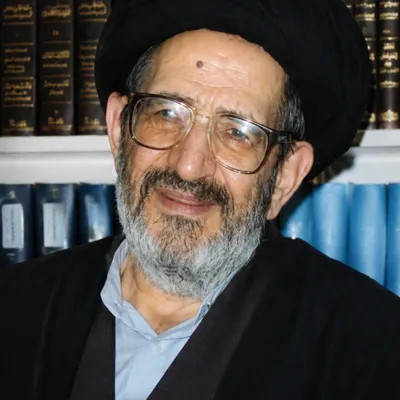
Iranian thinker
Sayyed Jalal-ed-Din Ashtiani
Sayyed Jalal-ed-Din AshtianiIslamic philosophy, Transcendent Theosophy, and theoretical mysticismIranian1925–2006


Life and Thought
Sayyed Jalal-ed-Din Ashtiani was an Iranian philosopher, mystic, university professor, and prominent researcher of Islamic philosophy in contemporary Iran. He conducted extensive studies on Transcendent Theosophy, the works of Mulla Sadra, and the Shi'a philosophical and mystical tradition, and played an important role in introducing the heritage of Islamic philosophy.
Sayyed Jalal-ed-Din Ashtiani (1304–1384 SH) was an Iranian philosopher, sage, mystic, and university professor who is considered one of the most important contemporary researchers in Islamic philosophy. He was born in Ashtian and continued his religious studies under prominent scholars in Iran. Throughout his intellectual career, Ashtiani developed a deep connection with Islamic philosophy, especially the Transcendent Theosophy of Mulla Sadra.
He carried out a major part of his scholarly activities in Mashhad and taught Islamic philosophy for many years at the University of Mashhad. He was among the leading teachers of Islamic philosophy in the contemporary period and played an influential role in teaching and expanding philosophical, mystical, and theological discussions.
His important works include the editing and commentary of philosophical and mystical texts, including the works of Mulla Sadra, as well as books such as A Biography and Philosophical Views of Mulla Sadra and numerous studies on Islamic wisdom. Through careful textual editing and analytical introductions, Ashtiani contributed to presenting the thought of Muslim philosophers to contemporary researchers.
His thought was based on the importance of the connection between philosophy, mysticism, and Islamic theology. He sought to examine the heritage of Islamic wisdom through a scholarly approach and to preserve and clarify its place in the history of philosophy.