Philosophy
How Philosophers Answer Why We Fall in Love, Video
From Plato to de Beauvoir, philosophers have explained why we fall in love as a search for our lost half, a biological trick for reproduction, an escape from loneliness, or a troublesome dependency. Some see love as a path to completion, while others view it as a source of suffering and illusion.
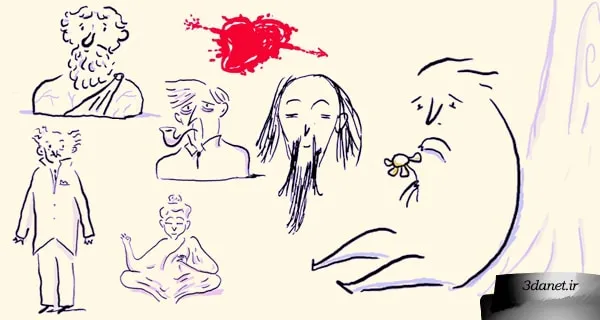
Ah... romantic love, beautiful and enchanting, a source of heartbreak and emotional damage, and sometimes all of these at once. Why do we decide to put ourselves in this emotional challenge? Does love give our lives meaning, or is it an escape from our loneliness and suffering? Is love a disguise for our sexual desires, or a biological trick for procreation? Is love all we need? Or do we all need it? Whether romantic love pursues a purpose or not, neither psychology nor science has yet been able to discover it. But over time, a number of the most accepted philosophers have offered fascinating theories. Plato, the ancient Greek philosopher, stated that we love in order to become whole. In the Symposium, Plato writes about a dinner party where Aristophanes, the comic playwright, entertains the guests with the following story. Humans were once creatures with four hands, four legs, and two heads. One day, they anger the gods, and Zeus splits them all in two. Since then, everyone has lost their other half. Love is the longing to find the lost half that gives you a sense of completion, or at least that is what Plato believed a cheerful comedian would say. Love tricks us into having children. Later, the German philosopher Arthur Schopenhauer claimed that love based on sexual desires is a lustful illusion. He said we love because our desires lead us to believe that someone else will make us happy, but we are sorely mistaken. Nature tricks us into reproducing, and the love we seek is consummated with our children. Once our sexual desires are satisfied, we return to our tormented existence and perpetuate the cycle of human drudgery. It seems someone needs a hug. Love is an escape from our loneliness. According to Bertrand Russell, the Nobel Prize winner, we love to quench our physical and psychological desires. Humans are designed to reproduce, but without the pleasure of passionate love, sex is not satisfying. Our fear of the cold, cruel world makes us build hard shells that protect us and keep us in quarantine. Love is delight, intimacy, and warmth, and helps us overcome our fears of the world. Come out of your cave of loneliness and become more engaged in life. Love enhances your entire being and makes it the best thing in your life. Love is a misleading affliction. Siddhartha Gautama, who later became known as the Buddha, or the Enlightened One, and Bertrand Russell would likely have had an interesting debate. The Buddha would say we love to satisfy our basic desires, but our passionate cravings are flawed, and attachments and romantic love are primary sources of pain and suffering. Fortunately, the Buddha discovered the Noble Eightfold Path, a program for extinguishing thirst and desire to reach Nirvana, an enlightened state of peace, clarity, wisdom, and compassion. The novelist Cao Xueqin illustrates this Buddhist notion. This romantic love appears foolish in one of the greatest Chinese novels, Dream of the Red Chamber. In a subplot of the novel, Jia Rui falls in love with Xi-feng, but Xi-feng deceives and humiliates him. The interplay of love and hate undoes him. A Taoist gives him a magic mirror that can heal him as long as he does not look into it. But, of course, he looks into the mirror and sees Xi-feng. His soul enters the mirror. He is dragged away in iron chains to die there. Of course, not all Buddhists think this way about romantic and erotic love, but the moral of this story is that such attachments create tragedy and, along with magic mirrors, should be avoided. Love allows us to go beyond ourselves. So let us end our discussion on a more optimistic note. The French philosopher Simone de Beauvoir says that love is the desire to merge with another, and this gives our lives meaning. However, she was more concerned with how we can love better than with why we love. She concluded that the flaw in traditional love is that it captivates us so much that we even want to make it the reason for our existence, but depending on someone else to define our lives soon leads to boredom and power games. برای جلوگیری از افتادن در این دام، بوار عشق ورزی حقیقی را پیشنهاد میکند که بیشتر شبیه یک دوستی عظیم است. عشاق به یکدیگر و همراه هم در کشف خود، پیشرفت و غنای زندگی و جهانشان کمک میکنند. با این حال که شاید هیچ وقت نفهمیم چرا عاشق میشویم اما میتوانیم مطمئن باشیم که یک سواری پرهیجان احساسی را در پیش خواهیم داشت. عشق ترسناک و روح بخش است؛ مار را رنج میدهد و به اوج میبرد. شاید خودمان را گم کنیم یا شاید خود را کشف کنیم. عشق میتواند دلمان را بشکند یا میتواند بهترین اتفاق زندگیمان باشد. جرئتش را دارید که بفهمید کدام یکی است؟
.
.
Video: How Philosophers Answer Why We Fall in Love (Persian Language)
Video: How Philosophers Answer Why We Fall in Love (English Language)
.
.
Source: Vidoal website (provider of general and specialized educational content)
.
.





Discussion2 comments
معرکه بود
خیلی عالی بود ممنون