Philosophy
Death and Immortality in the Thought of Plato: Absolute Faith
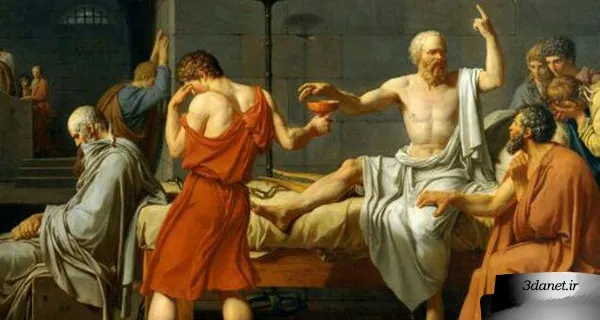
In the Phaedo, Plato defines death as the separation of the soul from the body and offers three arguments for the immortality of the soul. In his final moments, Socrates eagerly welcomes death, for the philosopher must be freed from the shackles of the senses in order to attain truth.
One of the most thought-provoking issues and among those irrepressible human desires is indeed the question and investigation of death, and, opposing it, the wish for immortality, which has always preoccupied the human mind. Plato is the first person who, for the first time, considered the soul to be entirely incorporeal and gave it a spiritual and metaphysical aspect, so much so that he explicitly writes in the Laws: the soul is an aspect of our being whose divinity is greater than all other aspects, and also the soul is the most personal thing that belongs to us. We will discuss Plato's views on this matter below in a commentary on the Phaedo, which is his most prominent work on the soul, but we will also make every effort to include in this writing references to this subject in Plato's other dialogues. What can we say of the importance of the Phaedo, these conversations that took place in the last moments of Socrates' life, except that Russell writes that the dialogue of the Phaedo has held the same value and credibility for non-religious or freethinking philosophers as the account of Christ's Passion in the Gospel holds for Christians. So, we will cut our words short and proceed to a commentary on this dialogue of Plato.
A Commentary on the Phaedo
The dialogue Phaedo is an account of the last hours of Socrates' life, who, at sunset of that same day, must drink the hemlock. But readers should bear in mind that the account before them is not exactly what actually happened, because Plato was ill that day and was not present at the gathering at all. According to the text contained in the Phaedo, Plato, through such a portrayal as a remembrance of his beloved teacher, elaborates his own thoughts in the form of this story and through the mouth of Socrates. In this dialogue, Socrates presents three arguments for the indestructibility of the soul, all three of which are based on the Theory of Ideas. The first two arguments are borrowed from the theories of predecessors, but the third argument is entirely Platonic, that is, based on the investigation of concepts, and as Hermann Bonitz and Gomperz explain, these three arguments, which are all based on this same Theory of Ideas, differ from one another. The first two arguments serve as an introduction and have taken only a part of their premises from the Theory of Ideas, while Plato, with full awareness, bases the other part of them on principles belonging to his predecessors, that is, the natural philosophers. However, what is presented in the third argument is a critique and examination of the objections of Cebes and Simmias, as well as a passage beyond the thought of the natural philosophers and the presentation of an argument based on the investigation of concepts. The dialogue Phaedo begins its discussion on the matter of death when Socrates tells Simmias to tell Evenus on his behalf to be eagerly prepared for death (as Socrates himself was), because, in Socrates' opinion, all true philosophers will take this path with the utmost eagerness (Phaedo 62). The reason why Socrates himself, who is passing the last moments of his life, is happy and believes one should be happy, stems from that religious thought which was common at that time – and still is today – as he himself confesses: If I did not believe that after death I would go to wise and benevolent gods and associate with the departed who are better than the people of this world, then indeed it would not be right for me to hasten to meet death. But know that I hope in that world to associate with just and fortunate men. Even if I cannot say this with complete certainty, I have no doubt that benevolent gods will take me under their protection. Therefore, not only do I not fear death, but I am joyful that there is another life after death, and as has always been said, the good have a better end than the wicked (Phaedo 63).
Socrates then proceeds to describe and explain death, clarifying what death is and why the philosopher should accept it with equanimity. He says that death occurs when the soul is separated from the body and the soul remains apart from the body, and he ultimately leads the discussion to speak of knowledge, which is the philosopher's task. He says that the human senses, which belong to the body, such as sight and hearing, which are the strongest among them, only lead man astray and have nothing for him but deception (for instance, the eye, looking along a railway track, thinks that the two lines meet, whereas this is not the case). He then concludes that it is only through thought and reason that the truth of anything becomes clear. And the human soul reaches its highest degree when it engages in pure thought alone, turns away from its senses, and, in his own words, is as far from the body as possible. Moreover, all concepts such as justice, virtue, essence, and so on are explicable and analyzable only through reason, which is further evidence of its importance. (Phaedo 65-66-67) Socrates concludes from this discussion that when death arrives and the soul is separated from the body, the soul that is no longer bound by the body and no longer follows the body is the one that can attain the truth, and since the philosopher's desire is to reach the truth, he should not fear death. As can be observed, Socrates here completely denies the senses and entirely rejects empirical knowledge. This is despite the fact that if man were to deny this type of knowledge (of which history and geography can be named as examples), we would not even know where Athens is, in what time Socrates lived, what befell him, or even be aware of the courage he displayed at the time of his death.
It seems that the nature of Socrates' beliefs up to this point has taken on a wholly religious character, and presuppositions such as that it is our soul that possesses thought and the faculty of reasoning, not our mind which is in the head, and also the belief that truth will be revealed to us in the abode after death (Phaedo 69) all attest to this claim of ours. But Theodor Gomperz attempts to answer the reason for this thought of Plato by posing the question of why Plato considers the soul simple and its substance to be reason. He writes: Plato fell into the trap of an error that usually exerts its influence through the mode of expression. In the Phaedo, he does not consider those actions of the soul that are performed under the influence of the body as psychic activity in the true sense, but rather calls them (affections of the body) and even considers active emotions such as anger, ambition, and the like from this perspective. Here, he only calls that thing 'soul' which, in his opinion, is immortal and eternal, and this thing, in his view, is only the reason existing in man, whose function is to govern man.(1) It should be noted that in Plato's dialogues, he uses the term soul in three ways, which Gomperz explains in his book as follows: the first is the rational soul, which is in the head; the second and third are the souls of passion and appetites, which reside in the chest and belly; and immortality belongs specifically to the first soul, which is nobler than the other two souls.
But at this point in the work, one of the Pythagorean disciples of Socrates present in the discussion, named Cebes, poses a question, and that question is: what reason is there that the soul is not destroyed after death? And he interestingly says: people suppose ... that when the soul departs from the body like smoke or a breath, it vanishes and no trace of it remains. (It is interesting that in the Holy Quran it is similarly recorded: (وَنَفَخّتُ فیهِ مِن روحی), (وَ نَفَخنا فیهِ مِن روحِنا), meaning 'I breathed into him of My spirit' or 'We breathed into him of Our spirit.' This matter shows that in religious thought, too, the word 'breath' (nafkha), which is like breath (nafas) and exhalation, is used, indicating the historical background and people's belief in this matter. Of course, I must remind the philosophically inclined reader that it was first in ancient Greece that Anaximenes said the primary substance of existence is air, a word that has various meanings such as air, space, wind, vapor, and mist, and it was his theory that could serve as a prelude to the emergence of the concept of breath (pneuma). (2)
Socrates, finding himself faced with this fundamental question, in the first step refers to the issue of reincarnation, which was among the Pythagorean beliefs, and says: It has been said from ancient times that souls, just as they depart from this world to the other abode, also return from there to this world again and begin life anew. And from this very issue, he concludes that, therefore, when we accept this matter, we must say that our soul is not destroyed but goes to another world from which it returns again. Then he refers to Heraclitus's theory of opposites and says that everything comes into being from its opposite. Since two opposites are two things, two kinds of generation and coming-into-being always occur between them. Meaning that this comes into being from that, and that is born from this. For example, between larger and smaller, decrease and increase always take place, one of which we call decay and the other growth.... And the opposite of life is death, just as the opposite of sleep is wakefulness. We wake from sleep and fall from wakefulness into sleep; the relationship between life and death is also like this (Phaedo 71). And the proof of the correctness of this claim, in his view, is that if there were not another becoming opposite every becoming, and if the two did not always follow one another and join together in a circle, every becoming would begin from a starting point and proceed in a straight line and end at a final point without turning back and returning to its original state; all things would become identical, take on a single form, remain in a single state, and generation and coming-into-being would cease. (Phaedo 72) And in order for Plato to give more solidity to his proof, this time, through the mouth of Cebes, he reintroduces the theory of Ideas that he had previously explained in the Meno (Meno 81-82), a theory based on the belief that "learning is nothing but recollection." This claim derives its validity from that same theory of Ideas, that our soul existed before it entered the body, and our soul had previously seen the world of Forms, and it is for this reason that if someone is a good questioner and knows how to ask questions, their interlocutor can answer all the questions and recollect everything they saw in the world before bodily birth. And the example given in this regard in the dialogue is the example of equality, which Socrates tries to explain more tangibly using his specific dialectical method, namely question and answer. He says that everything we recollect means that we knew it beforehand, and likewise, by seeing something, whether due to similarity or dissimilarity, we are reminded of something else. For instance, whenever Persepolis is mentioned, we are also reminded of the Achaemenid dynasty and probably Alexander the Great, or if we see a musical instrument, we might also be reminded of the person who was the best player of that instrument. Now let us give an example from concepts: there is something we call equality; what is equality itself? From where do we know it? How is it that when we see two similar stones or pieces of wood, we are immediately reminded of the concept of equality itself, and furthermore, how is it that when we see two equal things, we assume them to be unequal due to an optical illusion, while we can never swap the places of the concepts of equality and inequality and assume equality to be inequality and inequality to be equality? Moreover, by seeing two equal things and two unequal things, we do not arrive at the concept of equality itself, but rather consider them an imperfect instance of the concept itself. So it is clear that we knew equality itself beforehand, which is how we arrive at this conclusion, and since this is the case, it is necessary to judge that our soul existed before we were born, and we were aware of everything before birth and have merely forgotten them, recollecting them by seeing similarities in this world.
The second argument that Plato presents through the mouth of Socrates arises from a question he himself poses through Simmias. He says that while this argument has made it clear that our soul existed before birth, how do we know that it continues to live after death as well? Socrates, in order to answer this doubt, first puts forward the theory of reincarnation (as an inheritance from Pythagorean thought and, before that, the Orphic religion) and says: If our soul exists before our birth and, with our birth, comes from death to life, then it necessarily follows that it must also remain after our death so that it can return to life again. He even gives examples of this sort, that those who indulge excessively in eating and drinking return in the bodies of donkeys and similar beasts, and tyrannical, ambitious, rapacious, and bloodthirsty individuals go into the bodies of wolves and vultures. In my opinion, this belief of Plato in reincarnation contradicts another belief he puts forward, for in this very dialogue he seeks to say that Socrates will dwell with the good and the gods in another world, while on the other hand, the souls of individuals who were not good people are of the same kind as those souls that still haunt graveyards, bound to a body, and wander there. At any rate, the view that Plato presents through Socrates to answer this doubt is as masterfully laid out by Gomperz as follows: Every corruption is the dissolution of a composite thing; every simple thing is indissoluble and consequently incorruptible; the Idea, which is a being-in-itself, is absolutely simple; the knower and the object of knowledge are essentially akin to one another. Therefore, the soul, which is the knower, is essentially akin to the simple, that is, indissoluble, and consequently, incorruptible. (3) In short, composite parts may fall apart and be destroyed, but simple things are immune to this affliction because composite parts are a combination of simple parts and, at the time of destruction, break down into simple pieces; and it is these simple things that are immutable and indivisible, and since the soul is simple, it is indestructible; we have already explained why Plato considers the soul to be simple.
But the third argument is raised by Socrates in response to two questions posed by two of those present (Simmias and Cebes), which are as follows. Simmias begins his speech with an example, meaning that if we suppose the soul to be like a harmony, for it is both invisible and intangible, and if it is a beautiful sound, it can be considered beautiful, divine, and heavenly; and if we suppose the lyre to be like the body, which has corporeal, composite, earthly, and perishable strings and frame, then one could also argue that after the destruction of the instrument, the harmony remains, for we cannot accept that the harmony, which is divine and intangible, perishes sooner than the tangible and earthly lyre. But the point is that the harmony is the result of the tuning of the lyre's strings; consequently, one could argue that the soul is also the result of the balance and harmony of the body's parts, and it is obvious that when the body becomes ill, it no longer possesses that harmony and balance, so when this happens, the soul also perishes and vanishes, even before the body perishes. Now the question is: if someone were to say that the soul is born of the harmony and connection of the body's parts and perishes before the body at the arrival of death, what should we say in response to him? (Phaedo 86)
Cebes also frames his question with the example of an aged weaver: when he dies, someone might claim that he has not died because his work—his woven fabrics—still remains, and then say that a person is more enduring than the product of his hands; so, since his work remains, he too is well, for when the weaver's cloak, which is less durable than the weaver himself, is safe and remains, how can one believe that he himself has died? (Phaedo 87) The fallacy of the argument is clear, for the weaver wove many cloaks during his lifetime, but before this last cloak perished, he died, and after a time that cloak also perishes; so it is clear that a person is more enduring than the cloak of his immortality (his lifespan). But the point is that if someone were to say that the soul is indeed more enduring than the body, yet each soul uses up several bodies, especially if it has a long life, no objection can be made to his statement. For the body is continually changing and wearing out, but the soul reweaves and renews it. So when the soul dies and passes away, its last body still remains, and the soul itself, of course, perishes before this body, and after its death the weak body also succumbs to decay according to its nature and passes away. (Phaedo 88) In short, we cannot have faith in the survival of our soul, for at any moment we might be the very last body that our soul has woven. Socrates, or rather Plato, begins his answer to these two questions by raising the issue that one must never grow weary of discussion and argument, and then speaks ironically of the art of reasoning, saying that if you do not know the art of reasoning, you become helpless in the face of hollow arguments and ultimately come to think that there is no absolute truth (Phaedo 90); he then gives an explanation of why Simmias's and Cebes's arguments are fallacious and presents his third argument. Socrates' third argument is based on the principle of non-contradiction, meaning that two things that have no affinity with one another cannot be combined. Gomperz, in explaining the argument, writes: "A particular object that partakes of an Idea (that is, this Idea is its essential attribute) cannot possibly admit the Idea of its opposite, or an object that partakes of that Idea, into itself. Rather, one of two states occurs: either that particular object no longer remains what it was, that is, it is destroyed, or, without suffering harm, it flees.... The soul partakes of the Idea of life; the opposite of life is death; therefore, the soul is alien to death. If destruction approaches the soul, the soul is not destroyed but flees without suffering harm; therefore, the soul is deathless." (4) So that the reader does not confuse this argument with the earlier analysis concerning opposites—that everything comes into being from its opposite—Plato writes that in the previous discussion we said that everything comes into being and arises from its opposite. But what we are saying now is that no thing becomes its own opposite, neither in nature nor in ourselves. At that time, we were speaking of objects that have their opposites within them and we call them by the names of the opposites that are in them; but now the discussion concerns the (themselves) of those things which, when they are present in objects, cause those objects to derive their names from them, and we do not believe that those things themselves change into one another. (Phaedo 103) Now, a few points must be mentioned regarding the objections to Plato's views in this section. The first objection that can be raised against Plato's arguments is precisely that he has assigned an essential attribute to the soul (its opposition to death and being the source of life), which can be nothing other than begging the question; and of course, it should be noted that in Homer's age, the soul was considered an invisible entity, a double of this very body, but through the influence of the Ionian philosophers, especially Anaximenes, on this matter, the soul came to be regarded as a part of the nature that is the source of the world's objects, and this single nature was considered the source of the motion of inanimate things and the life of animate beings, or the very origin of the world's existence (5), and it is probably on this basis that this subject is also taken as a principle in Plato's discussion. Another criticism that Gomperz points to is that in the second argument, the soul is considered the source of cognition, and in the third argument, the source of life. Therefore, the validity of this argument for deathlessness cannot be confined to the human soul or even the animal soul, but extends to the life force of the plant as well, which from ancient times has been called the plant soul. (6)
According to many commentators on Plato, the Phaedrus was written after the Phaedo. In this dialogue, too, a discussion of the soul takes place (from section 245 onward) that contradicts one of Plato’s statements in the Phaedo. As you observed, in the Phaedo Plato considered the soul to be simple and immaterial and based his second argument on that, whereas in the Phaedrus, when speaking of the relations between soul and body, he divides the soul into three parts and likens it to a chariot with two horses and a charioteer who drives them. In this simile, he calls the charioteer the rational faculty, one of the horses the faculty of will—Dr. Davoudi has referred to it as the irascible faculty—and the other horse the representative of the appetitive faculty. (The recognition of the tripartite soul also appears in the Republic.) Plato also assigns these three souls to three different parts of the body, and in his view the rational faculty, which was the charioteer in the simile, is located in the head, a place farther from the other two faculties because it must be purer than the other two; the second soul, which is purer and nobler than the other faculty, has its place in the chest, which is closer to the head; this faculty can both be in contact with reason and, with reason’s help, can master appetite; and finally there is the appetitive faculty, whose place is in the belly. (7) Contrary to many commentators who think this opinion of Plato contradicts his earlier statement, we do not think so, and we wish to say that a distinction must be drawn between psychology and physiology in Plato’s thought, and this point must be examined with greater subtlety, for Plato never speaks of the immortality of the appetitive soul or the faculty of will; rather, he considers only the rational faculty to be immortal. Consequently, when we consider the soul in his thought, we must bear in mind that in the Phaedo Plato speaks of the rational faculty and regards that as the true soul, and attributes immortality to it. As Plato also says in the Laws: “The soul is that aspect of our being whose divinity is greater than all other aspects, and the soul is also the most proper of the things that belong to us.”
اما به نظر میرسد اساسی ترین نقد را به اندیشه های افلاطون در این خصوص هنگامی خواهیم داشت که بتوانیم نظریه ی ایده یا مثل افلاطونی را نقد کنیم چرا که همانطور که گفتیم سه استدلال افلاطون در خصوص بقای نفس مبتنی بر نظریه ی ایده است. البته ناگفته پیداست که نظریه ی ایده بیشترین تاثیرش را درعلم و وجود ذهنی ودر تبیین چگونگی آگاهی انسان به کلیات و بخش تصدیقات منطق میگذارد. یکی از اساسی ترین نقدهایی که به نظریه ی ایده مطرح شده است همانا نقدی است که ابن سینا به آن وارد کرده است ابوعلی پنج ایراد به نظریه ی ایده میگیرد که ما خلاصه ای از آنرا در اینجا مطرح میکنیم: اول اینکه افلاطون بین ماهیت لابه شرط که همان کلی طبیعی است، با ماهیت به شرط لا که مجرد از همه عوارض خارجی است ،فرقی قائل نشده است و پنداشته که اگر ماهیت بدون اعتبار آن و من حیث هی در نظر گرفته شود به لحاظ واقع و خارج از ذهن، مجرد از همه اغیار موجود است. به لحاظ واقع نیز آن ماهیت بدون آن عوارض می باشد و حال آنکه اینگونه نیست، هر ماهیت موجود در خارج از ذهن به دو لحاظ ادراک میشود: اول آنکه از جهت ذات آن، که با صرف نظر از اغیار لابشرط نسبت به غیر میباشد و دوم اینکه از جهت اضافه ای که نسبت به عوارض خاصه نظیر زمان و مکان و ... دارد؛ دلیل دومی که وی از جمله خطاهای این باور افلاطون میشمرد در تشخیص معنای واحد است. وقتی گفته میشود انسانیت معنای واحد است، مراد وحدت عددی نیست تا آنکه نسبت تحقق انسانیت در خارج از افراد فراوان آن نظیر نسبت پدری واحد با فرزندان آن باشد؛ یعنی در خارج معنای واحد انسانیت موجود باشد که به وحدت عددی در همه افراد خود موجود است. خلاصه آنکه افلاطون نتوانسته است بین دو معنای عددی و نوعی تمیز قائل شود. دلیل دیگری که شیخ میآورد آن است که افلاطون به این نکته توجه نکرده است که ماهیت من حیث هی درحد ذات خود به هیچ یکی ازاوصاف خارج از ذات متصف نیست واتصاف ماهیت من حیث هی به اوصاف خارج ازذات ،نظیروحدت کثرت، وجود یاعدم مستلزم تناقض است . به عنوان مثال اگر درمورد انسان از آن جهت که انسان است ،سؤال شود : آیا واحد یاکثیر است ؟ودرپاسخ گفته شود کثیر یا واحد است . این پاسخ به تناقض می انجامد،زیرا انسان از آن جهت که انسان است فقط انسان است و شیئی غیر از انسان نظیر وحدت ویا کثرت ،در ذات آن مأخوذ نیست لذا نباید انسان من حیث هو انسان رابه آن اوصاف ،متصف نمود. افلاطون به دلیل غفلت ازاین مسأله بانظر به تحقق خارجی انسان من حیث هی ، یعنی انسان لابشرط که کلی طبیعی است ، به وحدت آن نظر داده و به این نکته توجه نکرده است که وحدت وکثرت ،دو وصف زائد هستند که هیچکدام مأخوذ در ذات هیچ ماهیتی نبوده وبه لحاظ دوموطن ذهن وجهان ،طبیعی عارض آنها می شود. سبب چهارم درگفتار شیخ خلط بین بقاء فرد با بقاء نوع است که به تعاقب اشخاص می باشد . بقاء انسانیت،اعم از آن است که درضمن فردواحد ویا افراد کثیرباشد وبه همین دلیل از اخبار به بقاء انسانیت ،وحدت یا کثرت آن فهمیده نمی شود وتنها درصورتی از بقاء انسانیت ،وحدت یا کثرت آن فهمیده می شود که معنای انسانیت وانسانیت واحد ویا کثیر یکی باشد وچون اینگونه نیست پس هرگز از این گفتار که انواع درخارج باقی هستند ، این نتیجه گرفته نمی شود که درخارج ، انسانیت واحدی است که ازلی بوده وفساد وزوال درآن واحد شخصی راه پیدا نمی کند وافلاطون چون از امتیاز بقاء فردی وبقاء نوعی که در ضمن افراد متعاقب است غفلت ورزیده ، از آنچه درباره بقاء انواع گفته شده ، به بقاء فرد واحد ودرنتیجه به وجود فردی فاسدنشدنی از هر نوع گمان برده است . اما چون سبب پنجم از این امور، مختص به سبب بطلان قول کسانی است که وجود مثل رامخصوص صور تعلیمی می دانند وچون اینک دراینجابحث پیرامون گفتار افلاطون است که قائل به تحقق مثل برای صور طبیعی است به همان چهارسبب اکتفا شد.(۸) اما بهتر است از متفکران غرب نیز نقدی را به نظریه ی مثل یا ایده بیاوریم که در اینجا ما از ایراداتی که برتراند راسل وارد کرده است یاد میکنیم. راسل در تاریخ فلسفه ی خود در آن قسمت نظریه ی مثل پس از آنکه به خوبی به تشریح و تفسیر نظریه ی مثل پرداخت ایراداتی را به قرار فوق وارد میکند. افلاطون (ترکیب فلسفی) را نمیفهمد. من میتوانم بگویم: ( سقراط آدمی است.) و (افلاطون آدمی است.) و هکذا. در همه ی این موارد میتوان فرض کرد که کلمه ی ( آدمی) عیناً یک معنی دارد. اما به این موارد میتوان فرض کرد که کلمه ی (آدمی) عیناً یک معنی دارد. اما این کلمه هر معنایی داشته باشد، آن معنی چیزی است غیر از سقراط و افلاطون و سایر افراد آدمی. (آدمی) صفت است؛ بنابراین اگر بگوئیم( آدمی آدمی است) جمله بی معنی است.
اشتباهی که افلاطون میکند مانند این است که بگوییم ( آدمی آدمی است.) افلاطون می اندیشد که زیبایی زیباست می اندیشد که (آدمی) کلاً نام یک قالب است که خدا آفریده و آدمیان جزئی نسخه های ناقص و نسبتاً غیر واقعی آن قالب اصلیند. به هیچ وجه نمیتواند بفهمد که چه شکاف بزرگی میان (کلیات) و (جزئیات) وجود دارد. (مٌثٌل) وی در واقع جزئیات دیگری هستند که نسبت به نوع عادی اشیا از لحاظ علم اخلاق و علم الجمال برتری دارند. خود افلاطون هم متوجه این اشکال شد و این موضوع در رساله ی (پارمنیدس) دیده نمیشود، و این رساله در تاریخ انتقاد از خود یکی از جالبترین مواردی است که به وسیله ی یک فیلسوف صورت گرفته است.در ایراد دوم راسل اینگونه میگوید که : من گمان نمیکنم ایرادهای منطقی افلاطون بر واقعیت جزئیات از بوته ی آزمایش درست درآیند. مثلاً میگوید که هر چیزی که زیباست از برخی جهات زشت نیز هست؛ چیزی که دو برابر است، نیم نیز هست؛ وقس علی هذا. هنگامی که ما درباره ی یک اثر هنری میگوئیم که این اثر از جهاتی زیبا و از جهاتی دیگر زشت است همیشه (لااقل به فرض) میتوانیم اثر را تجزیه کنیم و بگوئیم ( این جز یا این جهت زیباست و آن جز یا آن جهت زشت است.) در مورد (دوبرابر) و (نیم) – مثالهایی که افلاطون میزند- باید گفت که اینها اصطلاحات نسبی هستند و در این معنی که ۲ دو برابر ۱ و نیم ۴ است تناقضی وجود ندارد. افلاطون بر اثر نشناختن اصطلاحات نسبی مدام دچار اشکال میشود. می اندیشد که اگر (فلان) بزرگتر از (بهمان) و کوچکتر از (باستار)باشد، در آن صورت (فلان) در عین حال هم بزرگ است و هم کوچک ، و این به گمان او اجتماع نقیضین است. این اشکالات از جمله ی امراض عقیم کننده ی فلسفه است.نقد سوم را اینگونه مینویسد که : یکی دیگر از نظریات عجیب افلاطون نیز با این موضوع بستگی دارد؛ و آن این است که معرفت و عقیده از حیث موضوع نیز با هم اختلاف دارند. ما میگوئیم که : اگر من بیندیشم که برف خواهد آمد، این عقیده است؛ بعد اگر ببینم که برف می آید ، این (معرفت)است؛ اما در هر دو مورد موضوع عقیده و معرفت یکی است، که همان آمدن برف باشد . ولیکن افلاطون می اندیشد که آنچه بتواند زمانی موضوع عقیده قرار گیرد، هرگر نمیتواند موضوع معرفت باشد. معرفت یقینی و خطاناپذیر است؛ عقیده نه همان خطاپذیر، بلکه ناگذیر از خطا است؛ زیرا چیزی را که صورتی بیش نیست واقعیت می انگارد. اینها همه تکرار گفته های پارمنیدس است ولی با این تفاوت که در نظر پارمنیدس فقط ( واحد) وجود دارد، حال آنکه نزد افلاطون مثل متکثرند. نه تنها زیبا و حقیقت و خوبی وجود دارند بلکه نمونه های آسمانی هر چیزی نیز وجود دارد. اما در اینجا راسل نقد جالبی را بدین مضمون میکند که خدا چگونه میتواند مثال را آفریده باشد؟ چرا که از یک سو هستی مثال فارغ از زمان است، و از سوی دیگر هر آنچیزی که خلق شود در بستر زمان خلق میشود. (۹) قبل از آنکه سخن را درباره ی افلاطون به پایان بریم لازم میدانیم که به دو نظریه ی دیگری که در خصوص جاودانگی است و افلاطون به آنها اشاراتی در رسالات دیگرش داشته است داشته باشیم، در رساله ی مهمانی (۲۰۶ تا ۲۰۹) افلاطون به گونه ای از جاودانگی نوع سخن میگوید بدین معنا که خواست تولید مثل در موجودات فانی نشان از خواست جاودانگی است. چنانکه خود افلاطون میگوید: مقصود از آمیزش زن و مرد .... کشش و اشتیاق به تولید و خود تولید جنبه ی خدایی و جاودانی موجودات فانی است. برای اینکه سخن آشکار شود مثالی میاورم؛ برای پدر ، فرزند نمادی از جاودانگی است، چرا که او بقای خود ونامش را در وجود فرزندش میبیند ، چرا که به نظر او تا قیام قیامت ، این اسلوبه ی اوست که بقا دارند و از نسلی به نسل دیگر میروند. افلاطون این نظریه را در رساله ی قوانین (کتاب چهارم ۷۲۱ و ۷۲۲) مطرح میکند. اما افلاطون نظر دومی را مبنی بر جاودانگی در همین دو رساله مطرح میکند که میتوان از آن به بقا در حافظه نام برد، به نظرم هیچ سخن در وصف این نظریه بهتر از آن بیت شعر سعدی نیست که میگوید: سعدیا مرد نکونام نمیرد هرگز مرده آن است که نامش به نکویی نبرند. این نظریه این نظر را بر ذهن متواتر میکند که منظور از آن این است که شهرت سبب میشود که انسان، جاودان شود. افلاطون در همین خصوص میگوید: می بینی که بسی کسان برای کسب شهرت و نام خطرهایی بر خود هموار میسازند که هرگز برای فرزندان خود آماده نیستند به آنها تن در دهند. در آن راه نه تنها مال خود را صرف میکنند بلکه هر رنج و مصیبتی را به جان میخرند و حتی از مرگ نمی هراسند.... هر آدمی آن گونه کارها را برای نام و شهرت جاودان به جا می آورد و هر چه بهتر باشد زودتر و بیشتر از دیگران به آن کارها دست می یازد زیرا این رفتار بهترین دلیل عشق او به جاودانگی است. (مهمانی ۲۰۸) این بود تمام آنwhat we have understood in this regard from the writings that have survived from Plato..
.
Sources:
All parts that directly contain text from the Phaedo, Phaedrus, and Symposium are from the book The Collected Works of Plato, translated by Mohammad Hassan Lotfi and Reza Kaviani.
1) Greek Thinkers, Theodor Gomperz, p. 980
2) On the Soul, Aristotle, introduction by Dr. Ali Morad Davoudi (y)
3) Greek Thinkers, Theodor Gomperz, p. 984
4) Greek Thinkers, Theodor Gomperz, p. 986
5) On the Soul, Aristotle, introduction by Dr. Ali Morad Davoudi (y)
6) Greek Thinkers, Theodor Gomperz, p. 987
7) Reference to this statement is found in Greek Thinkers (pp. 958 and 978) and in the introduction to On the Soul, p. lab
8) The Seventh Treatise of Avicenna's The Healing: Metaphysics, An Examination and Critique of the Theory of Forms, Mousavi Emadi
9) A History of Philosophy, Bertrand Russell, Vol. I, chapter on the Theory of Forms, translated by Najaf Daryabandari
.
.
Death and Immortality in the Thought of Plato
Absolute Faith
.
.
Related Content: The Soul and Immortality in the Thought of Aristotle, Absolute Faith
.
.


Discussion0 comments
No comments yet; let yours be the first voice.