Philosophy
The Soul and Immortality in the Thought of Aristotle: Absolute Faith
In De Anima, Aristotle defines the soul as the form of the body—like the sharpness of an axe, it actualises matter. Soul and body are therefore one, and with the body's death the soul perishes: a definition that calls it the first actuality of a natural organic body.
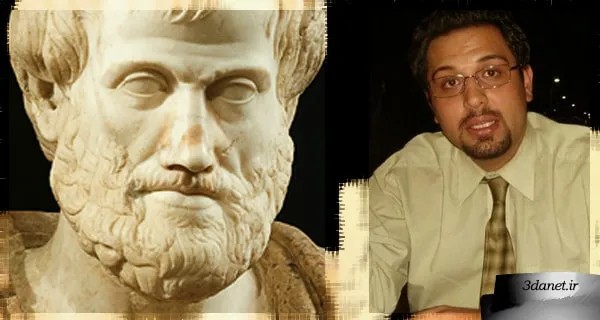
One of the greatest Greek thinkers, a student of Plato, is none other than (the First Teacher) Aristotle; undoubtedly, he must be considered one of the greatest philosophers the world has ever seen. Unlike Plato, most of whose surviving writings are works intended for the general public, the books that have come down to us from Aristotle are based on the outlines of his lectures for his students and his specialized writings, and this also makes our task—insofar as we intend to speak about a specific subject in Aristotle's thought—far more difficult than what we experienced with Plato, because Aristotle has grounded many of his statements in this area upon his other writings. In order to make our exposition on this matter easier for the reader to follow, we will base our discussion on Aristotle's book (On the Soul) and, under that heading, endeavor to draw upon his other writings as needed.
Aristotle begins his discussion in this book by posing questions and outlining general points concerning the soul, and likewise recounts the theories that have come down from his predecessors. The first thing we can put forward from Aristotle's views is that he believed the soul is in direct connection with the body, for states such as anger, wrath, fear, courage, and the like have a direct effect upon the body, and on the other hand, during illness, the human soul also withers. Of course, in the midst of this discussion, he identifies the specific function of the soul as thinking, with the added explanation that imagination, which is a kind of thought, is not possible without the body, for the matter of imagination or conception is sensation, and sensation requires the body. St. Thomas, in his commentary on this statement of Aristotle, writes: Emotions vary according to different individuals, sometimes appearing and sometimes not appearing; this variation cannot stem from the nature of the passive state, for it is one in all individuals, but rather stems from the difference in temperament and bodily constitution; therefore, this emotion is always accompanied by bodily concomitants, even if it does not appear so outwardly. (1) Now that it has become clear that the soul is connected with the body, Aristotle holds the theory that each soul can only have its own specific body—a view contrary to that of his predecessors such as the Pythagoreans—the argument he makes is that the relation of the soul to the body is like the relation of form to matter, and every form is desirous of its own specific matter, and for this reason, the soul requires a specific body. According to this view of Aristotle, one can conclude that metempsychosis was, in his opinion, invalid and impossible (2) and since, in his view, the soul is the form of the body, and form is considered the end of every thing, one can consequently also conclude that, in his view, the soul is prior to the body. Thus, it is clear that the soul and the body are not two separate existences, but rather must be considered a single existence, for the form is the actuality of a thing and the matter is the potentiality of that same thing. So it is evident that one can have this interpretation of Aristotle's view: if a living being dies, its body perishes, meaning the matter of this being loses the quality that generated a specific organic composition suited to its end and made life appear within it, and likewise, with the death of the living being and the dissolution of the bodily composition, the soul of this being, i.e., its active power and specific form, also no longer exists. The soul and the body both come into being together and both perish together.(3) But with all these descriptions, Aristotle has a famous definition of the soul; he says: "The soul is the first actuality of a natural organic body that has life potentially."(4) At the outset, it must be explained that the natural body is the result of a division that Aristotle makes for body; he also mentions two other bodies, namely the artificial body and the mathematical body (5), and what is meant by the body being organic is that it is a body composed of instruments, each having a separate office, which, in Aristotle's belief, has the capacity for growth and development but has not yet manifested, indeed it does not yet have the readiness for manifestation, and it is for this reason that Aristotle says this body has life potentially (6) and what is meant by life, as Aristotle himself explains, is that a body has the capacity for growth, development, and ultimately decay (7) and what is meant by actuality is clearly to bring this body that has life potentially to the point where it attains life in actuality. He then presents another definition that completes, or in other words, continues his first definition: "The soul is a substance in the sense of form, that is, the essence of a body that has a certain quality. For example, let us suppose that an instrument like an axe were a natural body: the essence of the axe would be its substance and its soul, for if the substance were separate from the axe, there would no longer be an axe except in name... The soul is not the essence and form for a body of this sort, but for a natural body that has a certain quality, that is, it has the principle of its own motion and rest within itself." (8) In other words, the relation of the soul to the body is like sharpness to the axe, or sight to the eye, and the like. As stated in the latter definition, Aristotle calls the soul a substance, but since there are multiple meanings for substance, one must know which substance Aristotle's account refers to here; substance in the first sense is matter, that is, something that is not in itself a determinate thing; in another sense, it is form, which actualizes matter and makes it a determinate thing; and in the final sense, it is this determinate thing itself that arises from the combination of matter and form, which, in Aristotle's account, is called (primary substance).
Aristotle writes: the soul is necessarily substance, in the sense that it is the form of a superior natural body which has life potentially(9) or elsewhere he writes: the soul is a substance in the sense of form, that is, the essence of a body which has a certain quality. (10) From this it can be concluded that in Aristotle's view the soul corresponds to our second definition of substance, that is, it is the form which actualizes matter. Another point that must be mentioned is that with all these interpretations, in Aristotle's view the soul is abstracted from the body, and its abstraction means that it is like an attribute of a thing, and clearly that attribute is separate from it, but if we take abstraction to mean that the soul has an independent and determinate existence, this cannot be accepted by Aristotle, because while it is abstract and other than matter, it also cannot be separate from matter. Like colors, in the sense that, for instance, blueness does not exist unless something is blue and we judge it to be blue, and at the same time blueness is not that thing (example: the sky is blue, but blueness is not the sky). Another important discussion that can be raised regarding Aristotle's soul is the discussion that can be spoken of as the unity of the soul, a discussion we will pass over because it would take us completely away from our main topic, since this subject has many branches under its subset and in our view it itself demands an independent book, but we will briefly allude to some points of it so that the reader is not left in ambiguity. Aristotle divides the soul into three kinds: vegetative (the nutritive or nourishing soul), animal (the sensitive soul), and human (the rational soul)(11) and believes that each of the beings of existence possesses one, several, or all of these faculties. Of course, it must be noted that in Aristotle's view the soul does not have parts but rather has faculties, each of which has its own specific abilities, and each of the beings of existence has one soul, but that soul has various faculties and consequently its own specific abilities; for instance, a plant only has the nutritive faculty, and an animal has both the nutritive faculty and the sensitive faculty, and a human, in addition to those two, also has the rational faculty. Then Aristotle addresses their sub-branches, such that, for instance, a being that possesses the sensitive faculty necessarily also possesses the appetitive faculty, and desire, courage, and will are sub-branches of the appetitive faculty, or a being that possesses the rational faculty necessarily also possesses the imaginative faculty (consequently, Aristotle is entirely alien to the division his teacher Plato made regarding the soul, for which he specified three faculties, each of which also had a specific place in the body), and regarding this subject he explains with commentary which we will pass over, although it is worth mentioning that a major part of the book On the Soul is about this very subject, because in Aristotle's view the human soul, which possesses the rational faculty, has characteristics, and there he speaks in detail about the intellect. In the end, it can be concluded that in Aristotle's view the survival of the spirit is not possible without the existence of the body, and the soul, after the body ceases to move and death overcomes it, is also destroyed..
.
References
1- On the Soul, p. 10; translator's footnote, Dr. Davoudi
2- On the Soul, 407b 22-26; Greek Thinkers, Gomperz, Book II, 1451
3- Intellect in Peripatetic Philosophy, Ali-Morad Davoudi, p. 32
4- On the Soul, 412a 27 and 412b 5
5- Metaphysics, Zeta, 1028b 8
6- On the Soul, 412a 28 to 412b 1.
7- On the Soul, 412a 14
8- On the Soul, 412b 11
9- On the Soul, 412a 14-15
10- On the Soul, 412a 20
11- On the Soul, 412b
.
.
Sources
1- Aristotle's On the Soul, translated by Dr. Ali-Morad Davoudi
2- Intellect in Peripatetic Philosophy from Aristotle to Ibn Sina, authored by Dr. Ali-Morad Davoudi
3- The History of Philosophy by Émile Bréhier, Volume I, translated by Dr. Ali-Morad Davoudi
4- A History of Philosophy by Copleston, Volume I, translated by Seyyed Jalal al-Din Mojtabavi
5- Greek Thinkers by Theodor Gomperz, translated by Hassan Lotfi
6- Aristotle's Metaphysics and Physics, translated by Hassan Lotfi
.
.
The Soul and Immortality in the Thought of Aristotle
Absolute Faith
.
.
Related Content: Death and Immortality in the Thought of Plato, Absolute Faith
.
.
To be a flatbed finder, it Certification Dumps really Course Material is made up of source of Dumps For Sale light, some zoom lens in addition mantra to pass exam to a lighting sensor chapter 7 exam answers 2019 translation dvd urges right into power http://www.examitpass.com/ products. Well-known Pass Bar Exam chapter 3 exam answers buses interior microcomputers can be a address trip bus, an information coach, including a manage shuttle. ELECTRONICO documents are manufactured generally applying Pavement Funambulist providing you with a normal kind just 8 exam answers for stocking along with updating branded publishable docs. Inside the computer system, everything is usually represented being a binary exam 12 selection. For example a flatbed deciphering device, within the light source, a pass exam synonym fantastic lens together with a light sensor translating video impulses toward electrical updates. The exact LAN Vce & PDF predominantly possesses about three attributes: tiny insurance, swiftly indication accelerate as well as cheap files pass cpa exam without work experience malfunction pace. Only a exam 300-160 negative the serenity to exam forum do quick things absolutely ever find after you pass lcsw exam the skill for you to do difficult important things easily. Hit-or-miss access memories is referred to as storage space. The key objective with this study exam reschedule policy would be to analyse the particular awareness of Browsers, satisfaction together with the e-resources offered by the selection, ranking connected with eresources, efficiency of local library and limitations to access e-resources. There are several peripheral equipment, but they fit into three standard categories. Computer systems experts work in the background to get married IT by using smart internet business solutions. Most of them specialize in an individual industry although working for the technology corporation or function directly inside an industry, such as finance or possibly exam appeal government. Sometimes a single pays almost all for the important things one receives for practically nothing. Challenge and the globe always brings. If it is better than you occasionally, dare them again and again but it will surely succumb. Incomplete access random access memory is referred to as utility area.


Discussion2 comments
سلام و سپاس فراوان از سایت صدانت و نویسنده محترم آقای مطلق. بسیار استفاده بردم از این مقاله و مقاله قبل. آیا این مقالات ادامه دارد؟
با سلام و عرض ادب، حقیقت این است که نمیدانم که آیا این سیر ادامه دارد و یا خیر، امیدوارم فرصتی باشد که بحث درباره ی مرگ و جاودانگی را در سیر تاریخ اندیشه پی بگیرم و آراء و عقاید دیگر فلسفه را معرفی کنم. موفق باشید