Philosophy
Lectures on the Metaphysics of the End (Aristotle, Kant, and Hegel) by Mostafa Zali
Zali’s lectures examine teleology in the thought of Aristotle, Kant, and Hegel. He explores Aristotle’s critique of materialist explanations, the place of purpose in nature, the soul, and metaphysics, and its relation to necessity and intentionality.
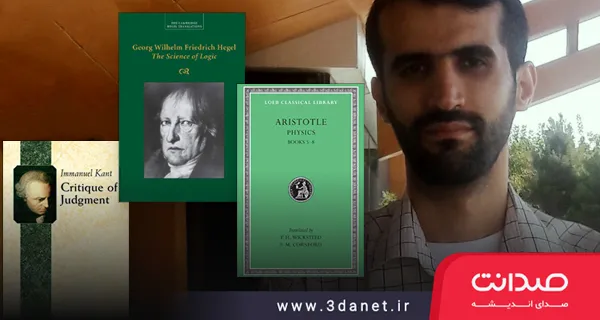
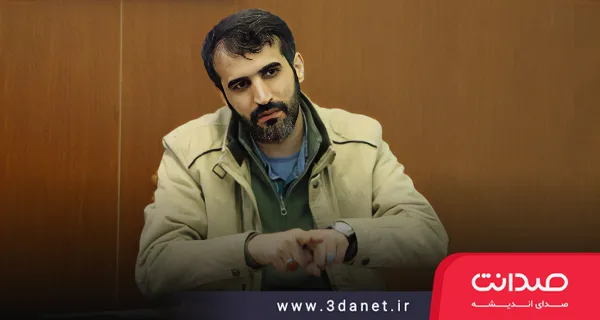
Mustafa Zali
InstructorThe subject of these lectures concerns teleology. This issue is pursued in the works of three major philosophers in the history of philosophy: Aristotle, Kant, and Hegel. Through an analysis of these philosophers' texts, we seek answers to questions such as: How does the concept of the end become a key and indispensable concept in explaining the phenomena of the world? Does this concept entail intentionality? What is the place of the human being in teleological explanation? What is the link between natural teleology and theology (the unconditioned)?
.
Session One:
In this session, an overview of the concept of the end in the thought of Aristotle, Kant, and Hegel is presented, along with a description of the overall program of the lectures. Teleological explanation means that an end must exist prior to the existing parts, and if it is set aside, a necessary concept in the explanation of the thing is removed. In Aristotle's thought, the end can also be considered a central concept discussed in nature, ethics, and metaphysics. Aristotle tries to show how concepts tied to the end can enter into scientific explanation. However, there are also questions about this concept whose answers are not so simple; for example, in Aristotle's philosophical system, when speaking of the end, is the end of individual substances meant, or the purposiveness of the world as a whole?
.
Session Two:
In the history of understanding Aristotelian thought, some important representatives of the Peripatetic tradition, namely "Themistius and Alexander of Aphrodisias," tried to offer a unified explanation of teleology so that the soul and motion could be understood under the concept of perfection. Alexander attempted to resolve an objection raised against Aristotle's system of thought. That objection was that providence is only attributable to the superlunary world, as if the sublunary world remained outside divine providence. Alexander demonstrated that the sublunary world is also within divine providence, in that the souls of the celestial bodies govern living bodies through their continuous motion. Here we depart from the Aristotelian paradigm; for in teleological thinking, governance is not involved. The Neoplatonic tradition seeks to introduce two important Platonic doctrines into the Aristotelian paradigm: a) the soul is in complete separation from the body. b) God is the efficient cause, and not merely the final cause, of the world's motion and order.
.
Session Three:
Are Aristotle's four causes (material, formal, efficient, final) all demonstrated through the middle term? The end (final cause) does not become the middle term of a demonstration but is rather posited as the major term. The main problem with the shifting of the middle term in syllogisms involving the final cause arises where, in the causal explanations of the other three types, their temporal and essential order correspond, but in the case of the final cause, the end is essentially prior to that which leads to the end, yet temporally posterior. The realization of the end possesses conditional necessity. Once the end is realized, we understand that the premises that were for the realization of the end were necessarily realized, but those premises do not necessarily lead to the realization of the end.
.
Session Four:
Among the things that come into being, some are necessary and some are eternal. Some things are neither eternal nor necessary. These are spontaneous and by chance. According to Aristotle, the lawfulness and order of the world cannot be explained by chance. Empedocles intended to replace any kind of purposiveness with chance. Aristotle's critique of Empedocles: If the end is set aside and replaced by chance, phenomena that were previously explained can no longer be explained.
.
Session Five:
Democritus attributed the genesis of the world to a spontaneous affair, that is, the necessary effect of matter. Responding to Democritus is more difficult than to Empedocles, because if the problem with chance was that it could not explain the order, permanence, and majority of phenomena, the necessity that Democritus proposes handles this matter quite well. If there is no end and explanation proceeds from necessity, that is, elements combine spontaneously without any external form being involved. In Democritus, necessity stands opposed to the end. Aristotle: Democritus explains the function of things based on their shapes and positions, whereas functions cannot be explained by reference to the juxtaposition of things. Aristotle does not reject necessity, but rather rejects the substitution of necessity for the end. Purposiveness means the priority of the whole over the parts, whereas Democritus cannot explain the whole.
Anaxagoras introduces intellect as the cause of the cosmos and all affairs. Aristotle says that if Anaxagoras's intellect is to have an explanatory aspect, it must have a relation to necessity. Merely saying that the world is the design of an intellect does not provide a rule for explicability.
Socrates mentions various examples of things that are products of art because they are useful for humans. These useful things are the product of the generosity of a wise craftsman or artist. In Aristotle's view, this kind of Socratic explanation only states how things are useful for humans and how humans benefit from them. It does not state how the various functions of animal organs are explained and how these are placed in relation to the whole function of the living being.
Plato places art and intellect together and in opposition to nature and chance, but Aristotle places intellect and chance in opposition to art and nature. In Plato's view, nature is considered secondary to art and intellect, whereas Aristotle claims that the existence of art as a final cause confirms that nature, a fortiori, possesses a final cause.
.
Session Six:
This session is dedicated to outlining the distinction between primary and secondary ends. The primary end possesses conditional necessity within itself, but the secondary end has a material necessity. In other words, primary purposiveness is the presence of a pre-existing potentiality for the realization of a form that determines the nature of formal actions. In contrast, secondary purposiveness is the existence of specific material predispositions that create the possibility of purposeful applications. Teleology of the first type pertains specifically to one species, but teleology of the second type includes the relation between species. According to Aristotle, in the relation among the things of the world, we do not have primary purposiveness, but we do have secondary purposiveness.
.
Session Seven:
Aristotle, in the second chapter of the third book of Parts of Animals, says: we must say what the characteristic of necessary nature is and how nature, according to an explanation of things that are present of necessity, uses them for the sake of something. Here he places necessity in opposition to the end. Aristotle defines teleological explanation as follows: we ascertain a function for the living being, and then, with regard to that function, we consider the existence of a series of organs for the living being. He introduces the function of the human being as life. Therefore, the function of the heart, lungs, etc., becomes explicable by reference to the concept of the end.
.
Session Eight:
Soul: the first actuality of natural organic beings. The explanation of the soul is teleological in that it explains the existence of each of the soul's faculties in terms of its own function. Thus, the different levels of the soul are faculties that are actualized for various vital functions. Why is the soul a final cause? It is evident that the soul is for the sake of something, just as intellect acts for the sake of something. All natural bodies are instruments of the soul, as are the bodies of living beings and likewise plants; for they are for the sake of the soul.
.
Session Nine:
For the sake of something (the end) has a twofold meaning: that for which (of which) and the beneficiary (for which). The soul has two aspects; a: the soul of this human being (personal and individual), b: the soul of the human being insofar as it is shared in the human species (specific). The soul in the first sense is the beneficiary, and in the second sense, it is that for which.
Why cannot eternal substances be ends in the sense of beneficiaries? If God is the end of the universe in the sense that He is always the final cause, then in what sense is He the orderer?
.
Session Ten:
Aristotle's claim: that which is prior in terms of complexity is potentially present in the more complex thing. The more complex faculties of the soul potentially contain the lower faculties within themselves. Here a teleological relation emerges. The higher faculty is considered the end in relation to the lower faculty. Thus, a distinction arises between those faculties whose actualization is necessary to make a particular species possible, and those faculties that are necessary for the better living of a particular species. Aristotle uses this rule in his biological works: if an organ is observed to be present in all members of a species, this organ is a necessary prerequisite; but if it is present in some and not in others, it is not necessary.
.
Session Eleven:
A response to an objection raised against Aristotle: Backward Causation; in living beings, the end must have some kind of priority. If something is to have priority, there must be a locus for the realization of this priority. Since we have no locus for the attainment of the end other than the locus of its temporal realization, we cannot speak of the necessity of the preconditions until the end is realized. Whereas, according to Aristotle, the locus of the end's realization is at the end of the process. That is, the end is posterior in terms of realization, and its kind of ontological priority is not temporal priority.
Types of necessity: conditional, material, unconditional. According to Aristotle, some organs have conditional necessity, such as the heart and the liver. The second group are not necessary in themselves but are necessary with regard to the functions of the organs of the first group. The last group are those that are not necessary and are for the best mode of living.
.
Session Twelve:
Material necessity is an alternative to teleology. Of course, teleology does not negate material necessity, but explanations that are confined to material necessity stand opposed to teleology. In the sublunary world, necessity cannot be discussed in an unconditional manner. Although this statement does not mean that everything in the sublunary world is conditional necessity. If the end is to be, then that which is prior to it will also be, but not as in mathematics, where if the conclusion is not present, the premises are also not present; this is the meaning of conditional necessity.
.
Session Thirteen:
Teleology in the human sphere is of particular importance because we are dealing with a being that possesses the power of deliberation. Thus, in the discussion of teleology concerning the human being, we encounter unique characteristics: free will and deliberation. In the human being, both meanings of end (primary and secondary) are realized from a single perspective. In other beings, the individual, insofar as it is an instance of a species, is considered an end in the primary sense, and insofar as it is perishable, it is a beneficiary and constitutes an instance of secondary teleology. But in the human being, with the thesis of the immortality of the rational faculty, the possibility of realizing these two ends in one being from the same perspective is provided, which leads to the formulation of the concept of happiness. Happiness, then, is where we do not posit the end at the level of the species but consider it individually.
.
Session Fourteen:
In the Metaphysics, Aristotle transforms God from the efficient cause of motion into the final cause of motion. The unmoved mover, as an end, becomes the origin of motion. If Aristotle's God were merely an end, He would become an ontological postulate rather than something that must be a principle. Aristotle's God is an efficient cause whose efficiency is realized through being an end. Now, if the unmoved mover has actuality, it must have a function. What is the specific activity of the divine? Intellection. Thinking about that which is in itself the best, and thought at its highest level is directed at that which is the best in the highest degree. The divine intellect thinks itself through union with the intelligible. When the intellect thinks itself, it is united with the intelligible, and in this respect, without needing to attend to anything other than itself, it attends to the intelligible through its own intellection.
.
Session Fifteen:
The continuation of the lesson is dedicated to the problem of teleology in Kant. We study Kant in relation to the tradition before him: empiricism and rationalism. When Kant speaks of the rationalist tradition, he considers Baumgarten to be the one from whom he was particularly influenced. Is a priori cognition possible? For the rationalists, such cognition is possible, and its objects are a kind of rational substances. That is, we can, without relying on experience and solely by relying on rational concepts, attain a cognition called rational cognition, whose objects are things of the nature of the soul, God, and the world. Thus, metaphysics, as a priori cognition, is a cognition directed at a series of rational substances. Kant, in agreement with the rationalists and against the empiricists, believes in the possibility of a priori cognition. However, contrary to the rationalists, he believes that a priori cognition can have only one subject, and that is cognition itself. It is for this reason that metaphysics in Kant's thought becomes the metaphysics of cognition and the determination of the limits of reason for encountering the world.
The problem of teleology in Kant's thought is also raised within the rationalist tradition before him. When Kant speaks of teleology, he always has in mind a kind of intelligent design and the act of an intentional agent. Even if he presents a negation or affirmation regarding teleology, it is still with reference to these presuppositions.
The Critique of the Power of Judgment introduces an important principle: purposiveness without purpose, for the formulation of the possibility of teleological and aesthetic judgments. In order to complete the critical project, he speaks of the principle of purposiveness without purpose as the transcendental a priori principle of judgment. What is meant by transcendental explanation is that we encounter a phenomenon, take it as a given of sorts, and speak of the transcendental as the condition of possibility of a phenomenon we encounter; thus, transcendental means the condition of possibility for the realization of something. If we accept the judgments of physics, in the discussion of transcendental deduction we seek the conditions that make possible the judgments of physics as universal and necessary judgments.
The principle of purposiveness without purpose: is articulated as a transcendental a priori principle of judgment and as the principle governing the third and final cognitive faculty. But for Kant, we regard things merely as if they were purposive, and if teleology is taken as an objective judgment, it becomes a cognition inaccessible to humans.
.
Session Sixteen:
In the third Critique, we seek to find a principle that enables us to issue judgments in which we establish a unity for a manifold. In the Critique of Pure Reason, under the three ideas, Kant assumes that the world has an order and that this order can be formulated by reference to the three concepts, but in the third Critique he wants to show that our investigation of nature is impossible without this assumption. Thus, if the principle of purposiveness did not exist, a certain kind of experience would become impossible. In order to have empirical cognition, the mere ability to judge using the categories is not sufficient. Rather, we need the power of judgment to form concepts in the face of nature's manifold; that is, we must bring the possible aspects of things under a concept. If reflective judgment is possible—that is, if we can form a system of empirical concepts—it is because our reason operates according to a principle, which is purposiveness without purpose.
.
Session Seventeen:
Analytic and synthetic unity: Analytic unity means having unity but no manifold. Synthetic unity is where you have acknowledged the manifold and yet seek to systematize it under a unity. In the third Critique, under the power of reflective judgment and based on the a priori principle of purposiveness without purpose, we seek synthetic unity. In reflective judgments, the issue is which concept we should choose to classify the manifold attributes.
In his discussion of the critique of the power of judgment, Kant ties purpose to the concept. Wherever there is a purpose, there must also be a concept; and since we cannot attribute a concept to nature, we therefore cannot attribute a purpose to it either.
.
Session Eighteen:
The first Critique and the explanation of the world based on matter and force show how Kant distances himself from Aristotle, and on the other hand, the limitation of this mode of explanation shows to what extent this distancing suffices for explaining the world, and that beyond a certain point we are compelled to return to Aristotelian concepts. The purposive unity of the world. As long as we remain in the realm of mechanisms and deal with the concept of matter and force, we have no need to refer to the concept as form and purpose, but when organisms come into play, we are forced to consider the world conceptually or to explain it as a concept. Teleology, as the highest form of systematic unity, provides a unity over and above other causal laws.
.
Session Nineteen:
For Kant, we see a unity in the natural world that cannot be referred to mechanical physical laws: contingent unity. The contingent unity that Kant proposes is equivalent to Aristotle's hypothetical necessity. In natural purposes, we encounter phenomena that are simultaneously both cause and effect of themselves. These phenomena have three characteristics: reproduction, growth, and elasticity. According to Kant, organic unity, which is the dependence of parts on the whole, cannot be explained based on mechanical laws. Since the specific problem regarding organisms is their unity, and because this unity is considered a contingent matter from the perspective of physical laws, organisms must be regarded as purposive.
.
Session Twenty:
Industrial products bear a certain resemblance to organisms. Industrial products, behind which stands an intelligent agent, are, like organisms, material objects that certainly fall under mechanical laws in one respect. Yet at the same time, although the concept of an end is central in both the domain of industry and that of the organism, in the domain of industry purposiveness is not without a purpose, and it is purposive because a maker is involved. In organisms, we can say that will and intentionality exist "as if."
Purposiveness is a kind of causality according to concepts, in which there is a reciprocal relation between parts and whole. The opposition Kant establishes between efficient and final causes indicates that purposive relations possess a unity different from that of efficient relations.
.
Session Twenty-One:
All living beings, insofar as they are in the physical domain, are homogeneous, but as living beings they are not homogeneous. The heterogeneous concepts that arise in the realm of life cannot be explained as homogeneous matters by reference to matter and force, and we must introduce the concept of an end. But the principle of teleology is necessary only for us humans, due to the requirements of our cognitive faculties. Kant emphasizes that organisms must be understood not only in analogy with artifacts but also in analogy with the causality in the technical use of reason. Kant cannot accept the reflective teleological judgment as a legitimate explanation of nature, that is, as an objective judgment, because in the first Critique he proved that any judgment about nature that employs the idea of God is illegitimate.
.
Session Twenty-Two:
What distinguishes teleological judgments from mechanistic ones, such that the latter are considered objective but the former are not? Unlike mechanical entities, which in their functioning are machine-like beings and have an end from without, at the level of nature we encounter an inner end, and unlike mechanistic explanations, which are descending, in teleological explanations we have a reciprocal causality and effect, that is, an ascending and descending series. In teleological relations, the function of a part cannot be understood without reference to the activity of the whole. For Kant, causality must always conform to time, and the cause must always be temporally prior to the effect. This very issue challenges the objectivity of teleological judgments.
.
Session Twenty-Three:
What is the antinomy between mechanical and teleological judgments? The mechanical principle could be constitutive only if, instead of saying that the world must be judged, as far as possible, according to mechanical principles, it were transformed into the claim that the entirety of the world proceeds according to mechanical principles. Thus, the two principles of mechanism and teleology become two regulative principles for guiding the power of judgment. In Kant's system of thought, the teleological principle is caught in a more serious dogmatism than the mechanistic principle. For the mechanistic principle is applied to spatiotemporal objects, but the principle of purposiveness takes us beyond the sensible.
.
Session Twenty-Four:
.
Session Twenty-Five:
In this session, we examine another teleological domain in Kant's thought: history. The problem of attending to history and its purposiveness is tied to the legitimacy of the modern age and the idea of progress as one of the fundamental ideas of the Enlightenment. Just as in organic nature we find lawfulness through a guiding principle called purposiveness without purpose amidst the contingent and possible state of nature, in the philosophy of history we also seek to find a regular lawfulness behind these seemingly contingent and lawless events we see in history. Making history meaningful: showing that the series of events we have in history pursues a specific aim, but in a non-intentional way, whose ultimate end in relation to the human species is the endless development of human talents, and for this ultimate end, we also have an intermediate end, which is the establishment of a just civil society and a peaceful international order among states.
After concluding the discussion of Kant's teleology, we will trace the fate of this problem in Hegel. Hegel seeks reason, that is, the rational in the world itself; on this path, the central concept for him is purpose, and he pursues the continuation and correction of Kant's project.
.
Session Twenty-Six:
In Hegel, we encounter a doctrine that we interpret as the doctrine of the concept: that which explains the behaviors of things and why a behavior emerges from a thing. Another central concept is the absolute idea: this idea has metaphysical priority, meaning it has priority in explanation over other things, and other things are dependent on the absolute idea for their explicability. The doctrine of mechanism is the most important rival to the doctrine of the concept. Hegel's approach is dialectical; that is, we start from the simplest concept and show that it is not self-subsistent. In dialectics, we start from A; if this A is considered in itself, it must be dependent on B, meaning B has metaphysical priority over A. So dialectical deduction means moving from what is metaphysically posterior to what is prior.
.
Session Twenty-Seven:
The course of the discussion in Hegel begins with mechanism and ends with teleology. Hegel praises Kant for introducing the discussion of inner purposiveness. Why? Because he considers this Kantian idea a return to an Aristotelian idea. Hegel defends the knowability and reality of teleology. We want to know how he does this. Hegel does not deny that teleology is dependent on the concept; rather, he denies that it is dependent on a conscious perceiver.
.
Session Twenty-Eight:
Kant believed we have a perfect, infallible divine intellect that grasps all of reality, and a fallible human intellect that can grasp reality through concepts, and as long as we know reality through concepts, we never reach the unconditioned. What is Hegel's answer to Kant?
.
.
Lectures on Metaphysics (Aristotle, Kant, Hegel)
Instructor: Mostafa Zali
Winter 2019 and Spring 2019
University of Tehran
.
.


Discussion3 comments
سلام و عرض ادب و خسته نباشید خدمت شما از زحمات شما متشکرم
سلام و خسته نباشید.برای من امکان دانلود با گوشی نیست.ممکنه لینک ها خراب باشه؟
سلام و درود لینکها مجددا بررسی شدند. مشکلی نداشتند.