Sociology
Social Justice and Its Critics: A Lecture Series by Mostafa Zali
Rawls's theory of justice has been challenged by communitarianism, libertarianism, and left-liberalism. Mostafa Zali's lecture series revisits the critiques of Sandel, Nozick, and Cohen on the principles of justice as fairness.


Mustafa Zali
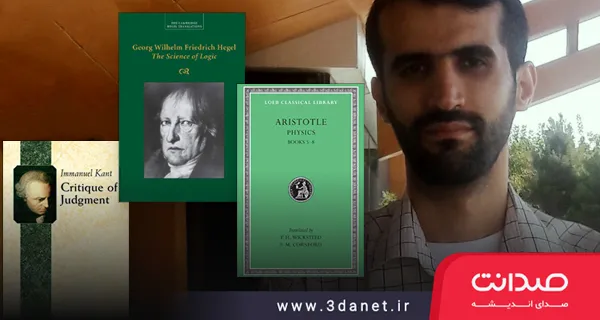
InstructorThe subject of this course is a re-examination of three sets of the most important criticisms leveled against the most influential and controversial issue in contemporary political philosophy: Rawls's theory of justice (justice as fairness). In his body of work, Rawls endeavors to argue for principles of justice governing the main social and political institutions on a Kantian basis (the acceptance of freedom and equality as fundamental values). In this course, after a brief overview of the framework of Rawls's theory of justice, a re-examination of three classic criticisms of the theory of justice is pursued based on the texts of his critics: criticisms arising from the three currents of communitarianism (Michael Sandel), libertarianism (Robert Nozick), and left-liberalism (Gerald Cohen). Michael Sandel, in his classic book titled Liberalism and the Limits of Justice, deems Rawls's liberal framework insufficient for deducing the principles of justice from a communitarian standpoint. Modern communitarians, inspired by Aristotle and Hegel, challenge certain assumptions of Rawls's theory of justice. Assumptions according to which the primary duty of the state is to guarantee and fairly distribute the freedoms and economic resources individuals need for the free choice of their way of life. Robert Nozick, in his book Anarchy, State, and Utopia, addresses the issue from another angle and considers any state intervention to reduce economic inequality as entailing interference in human freedom and illegitimate. Contrary to Rawls, Nozick claims that imposing any intervention on individuals' property for the sake of realizing something called the social good—even in conceptions that limit the social good to economic resources—cannot ultimately recognize the value of the human being as an end in itself and stands in conflict with Kantian values. Gerald Cohen, in his book titled Rescuing Justice and Equality, discusses the issue from yet another angle. In the first part of his book, he offers an internal critique of justice as fairness and argues that Rawls's account of distributive justice has been influenced by two competing motivations: efficiency and equality, and that Rawls has failed to reconcile the two. The second part of Cohen's book is dedicated to rejecting Rawls's claim that any conception of justice must be justified based on the actual conditions of social life. In Cohen's view, the effort to prove the stability of a well-ordered society (a society governed by the principles of justice) conflicts with the idealistic nature of political philosophy (a similar criticism is also raised by Habermas, which is outside the scope of the current term's discussion). In this course and under the aforementioned headings, some of the most important issues in political philosophy, such as the relationship between the good and the right, the justification of state legitimacy and the scope of its intervention, inequality, and idealism and realism in political philosophy, will be discussed.
.
.
Session One
Rawls has two principles of justice: 1. Each person is to have an equal right to the most extensive scheme of equal basic rights and liberties compatible with a similar scheme of liberties for others, and 2. Economic inequalities are to be arranged so that a. they provide fair equality of opportunity for all and are attached to offices and positions open to all under conditions of fair equality of opportunity, and b. they are to the greatest benefit of the least-advantaged, consistent with the just savings principle (the difference principle). Rawls's principles of justice are formulated within the framework of liberalism and have critics from the communitarian tradition (Sandel), Marxism (Cohen), and liberalism itself (Nozick). The roots of liberal thought lie in Locke's Two Treatises of Government, which was written against the feudalism of the society of that time. Locke says that man has dominion over his own person and labor, and through labor transforms objects and becomes their owner. Based on the social contract and the consent of individuals, a state is formed to preserve the rights of humans in the state of nature. Such a state must also guarantee the right to property and does not have the right to seize individuals' property through means such as taxation. Locke, alongside Hume and Adam Smith, is among the figures of classical liberalism, which places special emphasis on the individual's right to property. Alongside these, there is also high or left-liberalism, which permits the seizure of property to preserve other freedoms.
Session Two
At the end of the twentieth century, by reviving the concept of the social contract, Rawls constructs a framework for justifying normative propositions that is capable of competing with the two prevailing theories of his time, namely utilitarianism and intuitionism. Rawls's argument is that the principles agreed upon in the social contract will be fair when fair conditions govern the background situation of the contract (=the original position). In order not to presuppose any epistemological basis in his theory, Rawls does not use any of the common theories of justification and essentially has no deduction in its specific sense. His basis is deduction through comparison among the possible options in the original position. The conception that Rawls claims results from this comparison is the conception of his own two principles. In the first principle, basic liberties (the necessary conditions for the development and exercise of the two moral powers) are provided, and in the second principle, the worth of these basic liberties is guaranteed.
Session Three
Rawls's second principle is his point of departure from the classical liberalism tradition. In classical liberalism, individuals must have equal opportunities to benefit from social goods, but Rawls says that not only opportunities, but also the chance to make use of opportunities must be equal. Equal chance (which is secured by the difference principle) must, in Rawls's view, be guaranteed through fair processes; under conditions where just relations are established, whatever outcome results will be just. Rawls then proceeds to measure all existing conceptions of justice against his own principles of justice to see which conception is most compatible with the fair conditions of the original position. With the help of the veil of ignorance and other features of the original position, Rawls explains that free and equal citizens, endowed with the two powers of rationality and reasonableness, will prefer his principles of justice to classical liberalism, the principle of average utility, and, of course, other conceptions of justice.
Session Four
In his book Liberalism and the Limits of Justice, Sandel begins by examining Rawls's intended subject. Rawls's subject, insofar as it presupposes no end or virtue, stands opposed to teleological conceptions and is very similar to the Kantian subject. In the deontological conception of the human being, unlike the teleological conception, the justification of right and wrong cannot be based on a picture of human flourishing; for this reason, the justification of right and wrong in deontological liberalism must be independent of human flourishing. Sandel's claim is that deontological liberalism cannot defend justice independently of any conception of human flourishing. The first problem is that the relationship of the deontological subject, due to its abstract nature, is severed from the circumstances of justice, which are empirical conditions, and the deduction of Rawls's principles of justice is impossible without the circumstances of justice or without the deontological subject.
Session Five
Although, assuming that the circumstances of justice and the original position are hypothetical, not actual, conditions, the previous problem can be resolved, with the original position being hypothetical, questions arise about its other features. First, what is the basis for the mutual disinterest of individuals in the original position toward one another's interests? Sandel claims that the mutual disinterest of individuals toward one another's interests is rooted in Rawls's specific conception of the human being as a moral subject. Rawls considers the individual identity of the human being as independent of and prior to its ends, and because of this pronounced individualism, he cannot consider society as a good, and when he cannot posit society as a good, he will encounter a problem in justifying the difference principle. A problem he elaborates on in detail in the second chapter.
Session Six
Sandel also considers the possibility that Rawls can justify the difference principle solely with the help of the individualistic original position he depicts. The difference principle expresses that feature of Rawls’s thought whereby all individuals have an equal right to social goods and natural talents. This equal right arises because Rawls, just as he considers individuals’ social positions to be morally arbitrary, also does not grant individuals a moral right to their natural talents. In this way, with the difference principle, the distribution of natural talents, like that of social goods, will be collective. Sandel’s claim is that justifying the collective distribution of natural talents is impossible for Rawls without abandoning individualistic liberal presuppositions, unless the collective distribution of talents can be the result of an agreement in the original position.
Session Seven
To clarify the problem of justifying the difference principle, we must first determine whether the principles of justice are chosen or discovered in the original position. Sandel poses this dichotomy: there are two criteria for assessing the fairness of a contract: the freedom of the contracting parties in their choice, and the fairness of the parties’ share in the contract. If the sole criterion is the freedom of the contracting parties, the principles of justice are chosen; and if the criterion is the parties receiving a fair share, since this implies a standard independent of the contract for measuring its fairness, the principles of justice are discovered, and of course, because it presupposes a standard independent of the contract, it is incompatible with the negation of any presupposition in the original position. Thus, Rawls must adhere to the criterion of choice, but he does not consider the mere freedom of the parties sufficient for the fairness of the contract. Rawls seeks pure procedural justice; conditions under which any agreement would result in a fair outcome.
Session Eight
Session Nine
Session Ten
Session Eleven
Session Twelve
Session Thirteen
Session Fourteen
Session Fifteen
.
.




Discussion2 comments
10 دسامبر 75 امین سالگرد پذیرش اعلامیه جهانی حقوق بشر توسط مجمع عمومی سازمان ملل the Universal Declaration of Human Rights (UDHR)خواهد بود.اگر زمان اجازه دهد، خواهیم گفت که این بزرگترین ضربه به آزادی، اندیشه و حقوق مردم تحت سلطه حاکمیت میلیتاریسم جهانی بوده است.
لیبرالیسم یک شبه نظریه مرده و یک justification برای فاشیسم روز دنیا که با رشوه آزادی جنسی، بیبندباری اخلاقی، جسارت و با پشتوانه دهشتناکترین نسلکشی تاریخ بشریت و میلیتاریسم رادیکال در ناآگاهی کشورهای جنوب توسط ترجمه خوانان دانشگاهی شکل گرفت و ایلت متحده دویست چند ساله با راه اندازی بیش از دویست جنگ و سرنگون کردن چندین حکومت مردمی از جمله administration دکتر محمد مصدق و سالوادر آلنده در شیلی و بیشمار تحمیل military might در کشورهای جنوب توسط ترجمه خوانان دنبال شغل و social image در معنای ضد خود تدریس میشود.رفتار دانشگاه ایران خجالتآور است. در پی، نگاه یک تحلیلگر را از Quincy Institute Responsible Act برای اذهان افرادی مانند دکتر سروشها و سیدمحمدطباطبائیها که از فرط وحشت از اندیشه و استنتاج rational مستقل از اتوریته تحمیلی دیگران یک خط بدون اجازه اتوریته نمیگویند، آوردهام. در حالی که لیبرالیسم در جنگهای جهانی باعث disillusion و شوکه شدن اروپا شد و در حوزه فلسفه سیاسی خود شکن و پر از اشکال است، صنف دانشگاهی برای ابراز وجود و ostentation با تکیه بر موضع بایدنها علیه آزادی اندیشه قلم میزند. ّ It is time to speak up! Liberalism Against Itself ZOOM WEBINAR Is it time to let go of Cold War-era liberalism? This is the argument that Professor Samuel Moyn makes in his new book, Liberalism Against Itself: Cold War Intellectuals and the Making of Our Times. Moyn, a professor at Yale University and Non-Resident Fellow at the Quincy Institute, looks at the staying power of the version of liberalism that was constructed in the Cold War era. The book details Moyn’s view that this type of liberalism is devoid of a compelling positive vision and has actually impeded liberalism’s progress by giving fuel to the forces that are prone to restrict and dilute it. This most recent work builds upon his book from 2021, Humane: How the United States Abandoned Peace and Reinvented War, in which he documented how efforts in opposition to American wars have increasingly focused not on ending them, but on making them less brutal – but in doing so potentially has made them more endless.