Sociology
Human Nature and Social Theory
In a letter to Dobrenkov, Erich Fromm outlines his conception of man and society. By distinguishing between the needs of human nature and historical drives, he clarifies his thought's relationship to Marx and the existential contradictions of humanity.
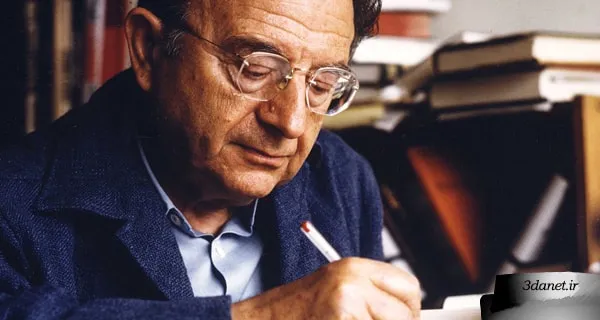
Erich Fromm wrote the following letter in 1969 in response to a letter from the Russian philosopher Vladimir Dobrenkov. This letter is the most valuable document showing that he was very interested in establishing connections with socialist thinkers and discussing his conception of Marx and socialism with them. Dobrenkov intended to write a book about Fromm, and for this reason, he initiated a correspondence with Fromm. Fromm, in turn, tried to clearly explain many of the issues that Dobrenkov had misunderstood in presenting his ideas. But in reality, it cannot be said that Fromm's clarifications had much influence on Dobrenkov's book; his book, Neo-Freudians in Search of Truth, was published in several languages in the 1970s (Moscow: Progress Publishers). Nevertheless, this letter is a compelling summary of Fromm's conception of man and society, and it will be welcomed by those interested in becoming acquainted with Fromm's understanding of human nature and social theory, as well as his conception of Marx.
Cuernavaca (Mexico), March 10, 1969 Dear Mr. Dobrenkov,
Your letter reached me a few days ago; with thanks to you, I now wish to reply to this letter and your previous one. I was very pleased to hear the news that you wish to write a book about my works and in it to develop and revise your own ideas. Obviously, in the detailed response I had promised to your detailed letter, I will be very happy if I can explain my ideas in the best possible way. I read your letter through completely once more and noted down several points, but addressing and answering all those theoretical points would require writing a small book. Therefore, I will try to answer only the main points; I hope that wherever my answers are unclear or you disagree with them, you will write to me again so that our dialogue may continue, and perhaps eventually everything can be clarified. Of course, I know that it may not be possible to clarify everything as you and I would wish, because you, just like me, have your own specific presuppositions, thoughts, and traditions; consequently, the question always before us is to what extent one can achieve that complete objectivity which is the desire of both of us. Although one must undoubtedly strive in this direction, one should never trouble oneself with the question of whether one will succeed or not.
The writing of this letter may lack a proper order; I may sometimes jump from one branch to another, but I am certain that you will not mind this and will grasp the appropriate connection of the subjects. In general, I think our discussion should encompass several topics: - Your interpretation of my theory, which I think is accompanied by several misunderstandings; I will try to resolve them as much as possible. - My criticism of your specific Marxist presuppositions. - Due to the perspective you will see in parts one and two of my letter, I believe that my works are far closer to Marx's thought than you think; nevertheless, this is, of course, something you must judge for yourself. - Finally, I must answer your question about some of the empirical studies I have conducted on the socio-psychological nature of man.
One
In my view, the most significant misunderstanding worth noting is the conflation of what I consider part of the needs of human nature with needs that appear as drives, wants, desires, etc., in any given historical period. This distinction of mine is not very different from Marx's understanding of the distinction between "human nature in general" and "human nature as modified in each historical epoch." The same distinction exists in Marx's thought, where he differentiates between "constant drives" and "relative drives." Constant drives exist under all circumstances and only their form and direction can be changed by altering social conditions. But the origin of relative drives depends on a particular type of social organization. My conception and understanding of human nature or essence, as I have stated in the book "The Sane Society" and other writings, is characterized by two factors: fixed and determinate instincts are minimized, and the growth and development of the brain and mind reaches its optimal state. A quantitative change in both factors turns into a qualitative change; this very contradiction between the lack of instinct and the power of the brain and mind becomes a turning point in animal evolution and the emergence of man as man, as a new species. Because of this characteristic, man as man is a unique species in the process of animal evolution. With the emergence of man, the living being becomes aware of its own existence for the first time. Thus, the evolutionary approach based on the natural factors of the growth of instinct and mind provides a basis for defining the essence of man as an empirical set of contradictions. From here I took the second step: the inherent contradiction of human existence requires a solution. Man cannot live, function, and maintain his equilibrium without satisfying needs that are psychologically necessary for his biological nature. Man needs connection with others. He needs a frame of orientation (and an object of devotion) so that he can recognize his particular place in an ordered picture of the world. He needs a character structure (in its dynamic sense) to substitute for instincts, so that he can act semi-automatically, consistently and orderly, without making a decision before every action. These universal human needs, resulting from the biological contradictions of humankind, shape human nature from the psychological aspect.
This conception of human nature and its needs does not specify what particular type of frame of orientation (and object of devotion) or what particular type of character traits an individual or group possesses. In fact, all of these are developed in a historical process, as adaptations of individuals to the particular social structure in which they live. One type of social structure leads to cooperation and solidarity, and another type of social structure leads to competition, suspicion, and greed; another type leads to innocent acceptance and yet another to destructive aggression. All empirical forms of human needs and drives must be understood as consequences of social practice (and in the final analysis based on the forces of production, class structure, etc.). But all of these must fulfill functions that are generally inherent in human nature, that is, to allow man to relate himself to others, and to share in a common frame of reference with others.
In my belief, the existential contradiction of man (and the contradiction I now add, namely the contradiction between the limitations that reality imposes on human life, and the boundless imagination that his mind allows him to pursue) is one of the motives and causes of human psychic and social dynamism. Man can never stand still. He must find solutions to resolve this contradiction, and always, to the extent that reality gives him room and opportunity, he must find better solutions.
The question that now arises is whether there is an optimal solution that can be deduced from human nature and that constitutes a potential tendency in human beings. I believe that such an optimal solution can indeed be deduced from human nature. I have recently found it very useful to think on the basis of what in sociology and economics is called "systems analysis." As a first step, one must begin with the idea that the human personality—just like society—is a system, and as they say, every part of a system is dependent on its other parts, and no single part can change unless all or a large portion of the other parts also change. A system is better than disorder and chaos. If the system of society disintegrates or is destroyed by a shock from outside the system, society falls into disorder and chaos, and an entirely new society is built upon its ruins; of course, elements of the destroyed system are often used to build the new society. This has happened time and again in history. But another event that may occur is that society is not simply destroyed, but rather the system is transformed and a new system emerges, a system that can be regarded as a transformation of the old system.
I believe that Marx's conception of socialism was like this: socialism as a systemic transformation of bourgeois society, in such a way that the old system, in Hegelian terms, is "negated and sublated," but not destroyed. It is for this reason that Marx does not believe in the constructive power of violence in and of itself, but rather sees violence as an actor that, like a midwife, plays its role at the birth of a new system already prepared within the old one. I believe the essence of Lenin's thought was of the same kind.
To return to the main subject and elaborate on it, I want to emphasize that the optimal functioning of a system as a whole can be defined as the optimal functioning of all its parts with the least waste of energy and friction between the various parts of that system and other systems with which it is inevitably connected. On the other hand, every system must prefer its own continuity and preservation over chaos or collapse. If we apply this definition to the human being as well, its meaning appears to be "the full and harmonious development of all human potentialities with the least waste and friction between the many spheres of each individual and between each human being and another"—that is, a general description of the goal and full development of the human being. But as to the extent to which this development can be realized, it must be said that this development is subject to historical factors, or in other words, subject to social development and the possibilities that promote or hinder the greater or lesser development of the human personality. For example, if the economic and social situation makes slavery or serfdom inevitable, the classes of slaves and serfs will acquire specific personality traits. Most of them will be submissive and obedient, and a minority will become defiant and rebellious. The submissive and obedient, by performing the work assigned to them, can be useful to their masters. They may even love their masters, but their submissiveness and obedience cause resistance and an obstacle to the development of independence, freedom, love, responsibility, and creative thinking; in other words, they become crippled and paralyzed human beings, meaning that their becoming listless and their emotional and intellectual paralysis are side effects of their situation of submissiveness and obedience. When the social circumstances of slaves are such that not only rebellion but also an independent life becomes possible for them, then the most progressive among them will become the leaders of the revolutionary movement, and their victory will change social conditions in such a way that the order of society will be administered in a more developed and humane situation. Here we engage in the concrete analysis of the psychological desires and needs that develop among certain classes as a response to specific social conditions and the needs related to that particular class.
در واقع، رابطه و پیوند بین فراشُد اجتماعی و رشد روانی فرد، پیش از این به روشنی توسط مارکس در نخستین جلد سرمایه، این گونه توصیف شده است: « سازواره های اجتماعی تولید باستانی، به مراتب ساده تر و شفاف تر از سازواره های جامعه ی بورژوایی اند. اما آن ها یا بر نابالغی انسان˚ از نظر فردی متکی اند،[انسانی] که هنوز بند ناف اش را از پیوند طبیعی با انسان نوعی نبریده است، و یا به مناسبات مستقیم خدایگانی و بنده گی متکی اند. این سازواره های اجتماعی [ از سویی] در قید و بند سطح پایین تکامل نیروهای مولدِ کار اند و [ از سوی دیگر] به همان نسبت اسیر روابط انسان ها در چارچوب فراشُد تولید مادی زنده گی شان ، و بنابر این [ اسیر] رابطه شان با یک دیگر و با طبیعت، هستند. این اسارت واقعی به شکل مینوی در مذاهب طبیعی و قبیله ای باستانی بازتاب می یابد. بازتاب مذهبی جهان واقعی تنها هنگامی می تواند ناپدید شود که مناسبات عملی انسان ها در کار و زنده گی روزانه شان با یک دیگر، هر روز، و به ساده گی و شفافی، رابطه ی عقلانی شان را با یک دیگر و با طبیعت در برابر چشمان شان بگذارد. چهره ی فراشُد زنده گی اجتماعی انسان، یعنی فراشُد تولید مادی، حجاب مه آلود و راز آمیز اش را تنها آن گاه از هم خواهد درید که هم چون محصول انسان̊ آزادانه و اجتماعیت یافته، در مهار برنامه ریزی آگاهانه ی او در آید. ولی رسیدن به این مرحله مستلزم شالوده ی مادی معینی در جامعه و یا گردآمدن یک سلسله از شرایط مادی در زنده گی است که خود محصول خود پوی رشد و تحول تاریخی دراز آهنگ و پر رنج است.» سرمایه، جلد نخست، ترجمه ی حسن مرتضوی، انتشارات آگاه. صفحه ی 108- 109 با تغییراتی چند. افزوده های درون [ ] از من است.
فکر می کنم تا این جا، فقط مبانی نظر ام را که شما با آن آشنا هستید، به زبان دیگر بیان کردم، بدون آن که به اندازه ی کافی به نکاتی که به باور من، شما بد فهمیده اید اشاره ای بکنم. پیش از این گفتم که به نظر می رسد بدفهمی اساسی و اصلی شما، درهم آمیخته گی نیازهای انسان به معنای عام آن در الگوی من از سرشت انسان، با تضاد اساسی و رانه های خاص و نیازهایی اند، که به منزله ی راه حل این تضاد عام مطرح می شوند، راه حلی که تابع شرایط اجتماعی است. من می پندارم که به طور کلی دیدگاه شما تا آن جا که به رابطه ی بین سرشت انسان و جامعه مربوط می شود، به جدایی به شدت مکانیکی و غیر دیالک تیکی آن دو منجر می شود، و بر پایه ی چنین تلقی مکانیکی است که شما مرا به دلیل جدا سازی نظم جامعه و نظام ساختار اجتماعی، مورد انتقاد قرار می دهید. به گفته ی شما، هنگامی که من می گویم، سرشت انسان قوانین درونی خود را دارد، و هدف رشد و تحول نیز بر پایه ی همین قوانین است، و سازمان اقتصادی- اجتماعی جامعه نیز قوانین خاص خود را دارد، که هیچ یک وابسته به دیگری نیست، شما ممکن است که جمله ی مرا به معنای واقعی کلمه، در واقع به معنای واقعی کلمه، نقل کرده باشید. من انکار نمی کنم که باید نظر خودم را با روشنی بیشتری در این جمله بیان می کردم، اما شما اگر این گفته را با مواضع کلی و همیشه گی من می سنجیدید، درمی یافتید که من هرگز فکر نمی کنم که عرصه های اجتماعی و روانی مستقل از یک دیگراند. از نخستین نوشته هایم در آلمان، در سال 1932، که باید نسخه ای از آن را برای شما بفرستم، تا به حال، برداشت من از منش اجتماعی، این بوده است که کارمایه ی/انرژی انسانی یکی از مواد اولیه ی وارد شده در فراشُد اجتماعی است، اما این کارمایه ی انسانی، هرگز به صورت عام وارد این فراشُد اجتماعی نمی شود، بل به صورت شخصیتی با ویژه گی های خاص وارد می شود، و منش آن بر اساس شرایط اقتصادی- اجتماعی و ساختار جامعه ای معین شکل می گیرد.
I differ with behaviorists and anthropologists especially in that I believe the fundamental situation of human nature as a whole, whether biologically or psychologically, makes only certain solutions possible and feasible in response to social situations, not an unlimited number of solutions. In the simple sense that man can love or hate, submit or dominate, but he can never completely separate himself from all human beings unless he becomes a fool or a madman, and this means either that the natural functioning of the human being ceases entirely, or it means that man can acquire and assimilate things through passive acceptance, through exploitation, hoarding, or what I call "marketing," or through production. But as a human being, he is compelled to exchange with nature, and this exchange can only occur in a few ways.
I must draw your attention to the fact that, in my view, human behavior requires a considerable amount of energy. But compared to Freud, who had a sexual understanding of this energy, I consider this energy to be the vital human energy that, according to biological laws, gives man the will to live, meaning that it adapts itself to the necessities and needs of society. Returning to what I see as your misunderstanding, my position has never been that society merely reshapes or reveals what already exists. If we distinguish the general needs of man from the specific desires and wishes of man, we then find that society fosters specific needs that are subject to the general laws of needs rooted in human nature.
When you claim that, according to my view, the entire dynamic of the historical process is reduced to a psychological battle between the needs of human nature and the possibility of their realization within a complete social structure, you are in fact drastically simplifying my position in an abstract and non-dialectical manner. For example, I conceive of human productiveness as an inherent potentiality of man, just like destructiveness, which develops through the growth of man himself in the historical process. I want to say that I completely follow Marx's evolutionary scheme; Marx thinks that history is a chain of developments that, following the development of the productive forces and human labor, and its contradiction with the relations of production, drives society toward higher forms of social structure, to the point where man, relying on his own activity and the existing socio-economic conditions, can reach a level of his historical development where the true history of man begins.
Two
In the following, I will try to express my critical observations regarding some of your views, or your Marxist interpretation. I say again that I cannot write systematically, but I hope to be able to explain my theory as clearly as possible. You have written that man has no nature, and his essence can only be defined historically. This statement of yours not only contradicts many of Marx's statements about the general and specific nature of man, which I referred to above, but its real meaning is also unclear. Is what you are saying not very similar to pragmatist positivism, which says that the transformation of man in the historical process occurs continuously, and the essence of man is in fact only his transformation in the historical process? When you say in the next sentence, "therefore, the realization of man's potentialities is always concurrent and coincident with the transformation of reality," this is something I have also said many times. You then say, "the primary psychological needs of man not only exist in him from birth, but are also formed in the process of human activities that lead to the transformation of the historical conditions of his existence." In fact, this statement also does not differ from my personal view, although you must explain what you mean by man's tendency toward transformation?
The victory of Nazism in Germany was largely due to the destructive, authoritarian, and sadistic character structure of the lower middle classes, which was itself a consequence of their situation in society (they had lost all their social functions and were, in fact, a declining class). They not only had no inclination to improve society, but were driven into the dangerous game of choosing between total superiority or total self-destruction. Indeed, this truth always holds for conservative and reactionary classes. Look at the American worker: he is one of the most conservative, or one might even say reactionary, elements in American society. For this reason, he has a very limited inclination to improve social conditions, and in many respects, no inclination toward progress at all. This inclination of his has many motives and causes. Perhaps one of the most important causes is the increase in automation; in fact, he feels that all—or at least a large part—of his existence is threatened. Undoubtedly, in the future technological society, a large part of working-class labor will become obsolete. He also feels threatened by the advancement of the position of Black people and the increasing demand for their labor. Moreover, as the most expensive worker in the world, his appetite for maximum consumption is constantly stimulated by the advertising industry. His somewhat paradoxical aspect is that while he earns more than the European worker, he is very dissatisfied and frustrated because he cannot buy everything the advertising industry tells him he should have. Therefore, once again, it is these psychological factors, produced within the conditions of the working class, that in any case cause his inclination toward reaction and his reluctance toward progress. I will return to this subject.
Here I would like to pose the question of what you really mean when you say, "the concrete historical world that surrounds man expresses the content of his essence and the limits of his possibilities." Is this not, in fact, the behaviorist view of the French Enlightenment philosophers, who believed that everything in man is the result of his environment and denied anything innate in man? They even denied any differences between men and women (apart from obvious anatomical differences), differences that cannot be attributed to the environment (as if the psyche has no sex).
You have written that the existential problem of man is nothing other than the realization of man's concrete historical needs and interests. This statement seems to me very abstract. Which of man's concrete historical needs and interests constitute his existential problem? If you mean eating, drinking, sleeping, building shelter and clothing, tools and weapons, preserving one's youth, and finding a mate, your statement is entirely correct. But when we speak of such needs, we mean the basic needs of human biological survival. But what are the interests beyond these needs that constitute man's existential problem? Is being free also one of man's inherent interests, even in a society where, historically, its concrete realization is impossible, for example, in ancient Greek society? Is this need to be free not rooted in man's nature—though man is unconscious of this need because the frame of orientation society has given him does not enable him to become aware of the perspective of freedom, a perspective you might refer to as the latent potentiality of man and animal (of course, the animal is not conscious of it, but its behavior shows that captivity harms it, makes it more aggressive, and even prevents it from reproducing, whereas when it lives in free conditions, its needs are satisfied more naturally and desirably)?
You have written that, it seems, for the criterion of judgment to be objective, one must be outside society, or generally outside history; and I, in order to evaluate history, have realized a special, trans-historical sphere of human understanding. Please note: the revolutionary and critical thinker, while always outside his own society, is at the same time also within society. His being within society is clear, but why is he outside society? Because he has not been brainwashed by the dominant ideology, therefore it can be said that he possesses remarkable intellectual and emotional independence, and as a result, his judgment can be far more objective than that of the ordinary individual. Many emotional factors are also at play here. I do not, however, intend to address the complex issue of the revolutionary thinker here. But in my view, the revolutionary thinker is, in a sense, beyond and ahead of his own society. You might say, because he is aware of new historical developments and possibilities, while most people still think within the traditional and old framework. There is no doubt in this truth either.
But what can be said about the utopian thinkers of other eras, from the prophets whose vision was eternal peace, to the utopian thinkers of the Renaissance and so on? Were they merely dreamers? Or were they people who had a deep awareness of new possibilities and the changeability of social conditions, people who could imagine and envision new forms of social life, even if these new forms were not yet part of the existing capabilities of their society? It is true that Marx wrote many critiques of utopian socialism, and for this reason the term carries a negative connotation for many Marxists, but Marx's polemics were against socialist schools that, due to a lack of realism, were far inferior to his system of thought. In fact, I want to say, the stronger and more unrealistic the basis of the human imagination of a free society, utopianism is the only logical form of expressing hope. Of course, these utopianisms, like the Christian conception of the Day of Resurrection, are not trans-historical. Rather, they are historical and the product of logical imagination, and are rooted in the practical abilities of humans and their clear understanding of the unstable characteristics of previous and existing societies. I really do not want to discuss the issue of utopianism here, which is one of the very important subjects of socialism, but rather I only want to point out that the objective criterion for judging the desirable society does not depend on a trans-historical perspective. But at the same time, it should not be forgotten that, as far as my understanding of human nature is concerned, human nature is as much "outside society" as the neural processes in humans, or any fundamental factor in their natural constitution. I repeat once more that humans have evolved in a specific way from the evolution and development of the animal. You might say, where evolution in its biological sense ends, history begins, but the evolutionary perspective in its broad sense is a historical perspective, and the definition of humans and their nature, as I have written it, is neither abstract nor outside history. The human is a historical given; now the question is whether this given can be conceived only as a neurophysiological apparatus, or, as I have shown, it must be considered as a set of contradictions and psychological consequences.
Now I turn to what you call Marxist theory. You say that historical developments cannot be evaluated on the basis of an indeterminate theory and an arbitrary viewpoint, but must rather be evaluated on the basis of laws, logic, and the very important social processes. By this logic, historical necessities can be evaluated as the result of the progress and evolution of a reality whose consequences are compatible and consistent with human needs. The reason for the concrete compatibility of historical necessities and concrete human needs can be found in the active historical essence of the human being. The human being is the product of social relations and, at the same time, the agent of historical activities.
I hope that if the expression of my view is very critical and meticulous, it does not cause you offense. I am certain there is no need to say that my critical and meticulous view is the result and consequence of my knowledge and thought, not of prejudice and emotional bias. In my opinion, your claim is, in fact, abstract, vacuous, and formal. You say that the laws, logic, and nature of the social process are the historical criteria. I suppose what you mean is that the criterion of social progress is the formation and expansion of new forms of social relations and production that are better and more compatible and consistent with the new productive forces. Of course, this is a fundamental Marxist concept, and I also believe it is correct. But at the same time, a problem lies hidden here that becomes apparent.
For example, we are told it can be proven that corporate capitalism is more compatible with the new productive forces than the socialist system; in fact, not only in Marx's model does this not hinder the productive forces, but it also aids their progress. So what is the criterion of progress? Of course, you can reject this argument and say that, at least in the long run, capitalism cannot manage the new productive forces better than socialism. That may be so, but this argument is highly speculative.
It is obvious that Marx did not predict that capitalism would progress to the point where it could change its structure as much as it has, and in my opinion, it is dogmatic to say that capitalism can still develop further, that it still hinders the full flourishing of the productive forces. I do not deny that such a possibility could exist, but I say it is highly speculative and cannot be a solid basis for a criterion of social progress.
What we can say is that capitalism in its current form is a centralized, bureaucratic industrial system that tends to increasingly alienate, cripple, and emotionally-intellectually paralyze not just the working class, but all human beings. But when I use this criterion to critique capitalism, I am no longer using the immanent criterion of the social process. In other words, the evolution and growth of the human being itself is the main criterion of historical progress.
But what is your criterion for human progress? I do not want to enter into polemics around the concepts of the "New Man," concepts with which I have been familiar since the Soviet debates, but to make the accelerated method of industrialization and many other things that are its consequence the criterion of the New Man seems to me highly questionable. I know that many characteristics of the Victorian-era human have been intermingled with the characteristics of the new American human, yet it seems to me that evaluating the social system based on the perspective of the growth of economic capabilities would be very difficult (we do not have to discuss the probability and possibilities of the capitalist system; as you yourself know, in my opinion, these discussions are very harmful and dangerous for the human being).
We can even imagine a world that has utilized all its productive forces, thus achieving great material wealth and ever-increasing consumption (and if you wish, we can say that such maximal development occurs only in a socialist country), but then, I will ask, what is our criterion for judging the advanced system? I believe that, although from the standpoint of historical progress, all obstacles to the full utilization of the productive forces have been removed, on the whole, the consumer has been transformed into a severely passive, alienated being and an insignificant cog in the system.
I have found that, according to your prescription, one neglects the concrete analysis of modern society and what happens to human beings within it, while the other becomes, in a way, trapped in a logical circularity. Consequently, when we speak of human needs created by society, there is no criterion by which to judge those needs.
In any case, healthy and unhealthy needs cannot be judged from a purely economic standpoint. One must have an image of the human being and its potentialities for becoming better or worse. This image, as I tried to say in the previous section, is neither abstract nor outside of history, but rather the result of observing the human being in the historical process, from the moment it begins its role upon emerging from animal evolution.
My main point is that we must always consider the intertwining of economic, social, and psychological factors. Of course, I do not mean that we cannot analyze society without psychological factors; if that were the case, Marx's theory would lack a scientific basis, for in Marx's theory, too, the role of psychological factors is only occasionally and implicitly considered. Of course, class struggle, the interests of the ruling classes, revolutionary transformation, and so on can be understood without psychological considerations. The theory of base and superstructure is also fundamentally correct. I believe that my contribution lies in developing Marxism and attempting to answer the question Engels posed, namely, understanding how the base and superstructure are connected and linked—a question whose details Engels himself did not study. What I am trying to show is that to complete this analysis, one must also take into account the psychological needs generated by the social organization of production (for example, Marx says: the hoarding of wealth is a passion produced by capitalist society). I have previously tried to say that these psychological needs are a response to the social situation and its necessities; nevertheless, they themselves are alternatives based on the biological nature of the human being and certain universal psychological needs, whose development may not be compatible or harmonious with the specific needs of the social structure.
Three
Up to this point, I have, to some extent, outlined the three points I have in mind. Now I wish to formulate them: In my view, the main problem is how society channels and directs human energy toward its specific goals, and how human needs, in turn, influence social production and transformation; although this influence is sometimes revolutionary, one should not forget that it is often regressive, because the character structure shaped in the past by tradition, culture, education, family, etc., changes much more slowly than socio-economic factors. In fact, one could say that this lag largely explains the slowness of historical processes; in truth, psychologically, the human being lives several generations behind the new economic-technical possibilities. If this were not the case, the birth of a new society would not have to be so painful and difficult. There is no need to speak further about my works, because you have shown in parts of your writing that you agree with aspects of my work, so no further explanation from me is necessary. Our real problem, in fact, is that while agreeing with aspects of my views, you have rejected a major part of the theoretical foundations of my work. My aim in writing this letter was to attempt to show your misunderstandings of the specific premises and assumptions of my views—misunderstandings rooted in your Marxist theoretical thinking.
Four
You asked about the concrete studies I have conducted on social character. I will speak a little about this. My first research was on the authoritarian character versus the revolutionary character, carried out in 1931 under the auspices of the Institute for Social Research at the University of Frankfurt. The aim of this research was to try to ascertain what the reaction of workers and employees would be if Hitler came to power. In public opinion, all of them would be one hundred percent opposed to Nazism. But we believed that whether they would fight against Hitler, or whether they would become Nazis if Hitler were victorious, or whether they would turn into ardent fighters against Hitler or his ardent supporters, depended on and was a function of the relative strength of authoritarianism and anti-authoritarian force in their character structure. By analyzing the character structure of these groups (workers and employees), we were able to make an almost precise prediction of the number of people who would choose one of these three paths (the accuracy of this prediction was later confirmed.) The instrument we used to ascertain the character structure was the "interpretive questionnaire"; in this type of questionnaire, the apparent and manifest meaning of the answers given holds little value, rather, through the specific formulation of the answers, which were written down word for word during the interview, we interpreted their unintended meaning. Such an interpretation is not much different from interpreting statements made in a psychoanalytic interview, where very small details indicate the character structure. If you have a hundred questions, then the coherence and consistency of the pattern obtained from the answers indicates that the interpretation of individuals from a sentence is not random and arbitrary. I must send you the detailed report of this study.
The questionnaire we used was printed and published in the book "Authority and the Family," published by Alcan, Paris, 1936. In fact, this thousand-page book contains very important material and issues on the subject of authority and the family. This book is currently out of print, and I do not know whether it can be found in the Moscow library or not.(1) In collaboration with several others, especially my former student, Dr. M. Maccoby, a similar study was conducted in a small village in Mexico with a population of nine hundred, using the same questionnaire method, albeit refined and expanded. This research lasted over ten years, and its results will be published late this year or early next year in a book titled "Class and Character in a Small Mexican Village."(2) In this research, we show the connection and link between the character of the peasants and their mode of production. With this method, one can even explain specific details such as the reason for planting sugarcane instead of rice, or even a more profitable crop like tomatoes, and so on. When this book is published, I will gladly send you a copy.
Incidentally, the book "The Authoritarian Personality" by Adorno was a continuation of our earlier work on the authoritarian character. Adorno was also a member of the Institute for Social Research in Frankfurt, and he used a very complex and extensive method, but due to his limited knowledge of psychoanalysis, he ignored many of my methods and makes no reference to our earlier research, which for personal reasons was not published. These reasons are so complex that they cannot be explained. I can only say that this itself was one of the factors that led to my separation from the Institute for Social Research in 1939.
Finally, I would like to mention a study that Dr. M. Maccoby has recently undertaken in the field of political characterology. In this study, he examines the difference between the life-loving personality and the anti-life-loving personality among American voters (this study was conducted before the last election in America). He used a questionnaire in this study that requires no interpretation. However, the questions are theoretically formulated in such a way that the "yes" and "no" answers have, psychologically, an immediate meaning of which the respondent is not explicitly aware. (I will send you a copy of this study). I have found that both the interpretive questionnaire method and meaningful questions are theoretically very effective in socio-psychological research. These methods, beyond mere behavioral descriptions, target deeper and often unconscious motivations. Currently, opinion polls and behavioral studies only show how an individual thinks today, whereas we know that most people follow a pattern of social thinking, and if circumstances assist them, what determines their future actions are the dominant elements in their character structure. And what is important in social predictions or even analysis is not opinion, but conviction; that is, an opinion rooted in the entire personality structure.
I do not know if, after writing these few pages, I have been able to clarify my views sufficiently. Of course, my main goal was to explain my own position, and for this I had to critique some of your positions. I can only hope that you will grasp the spirit of my letter; indeed, I have no doubt that you will. I am also somewhat at ease about the inadequacy of my letter, because I know that wherever my statements are not clear enough, or you disagree with them, you will be kind enough to state the reason for your disagreement and grant me the opportunity to explain again. Finally, as I said before, we may not reach a similar understanding, but at least we can try to understand each other better as much as possible. I believe that a psychological prolegomenon must be added to Marx's theory so that, theoretically and empirically, it encompasses a much broader realm. I am very pleased that you are making such an effort.
With the warmest wishes. Erich Fromm 1969
.
. Footnotes:
1- The results of Fromm's research in the thirties were published in a book titled "The Working Class in Weimar Germany. A Psychological and Sociological Study," edited by Wolfgang Bonss, London: Berg Publishers, 1984.
The Working Class in Weimar Germany. A Psychological and Sociological Study, edited and introduced by Wolfgang Bonss, London: Berg Publishers, 1984..
2- In fact, this research was published in 1970 under the title "Social Character in a Mexican Village. A Socio-psychoanalytic Study."
Social Character in a Mexican Village. A Socio-psychoanalytic Study, Englewood Cliffs: Prentice Hall, 1970.
This article is a translation of:
Human Nature and Social Theory. Erich Fromm.1969
.
.
Human Nature and Social Theory
Author: Erich Fromm
Translator: Parsa Nikjou (Translator's Blog)
.
.



Discussion0 comments
No comments yet; let yours be the first voice.