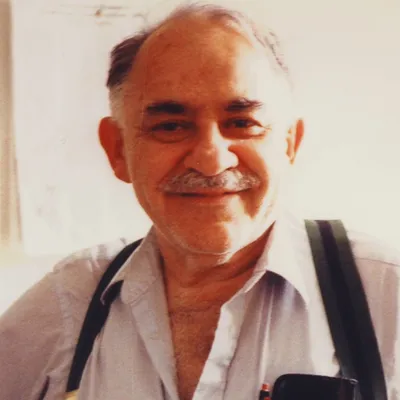
Foreign thinker
Murray Bookchin
Murray BookchinSocial philosophy, social ecology, and political theoryAmerican1921–2006
“Environmental problems are not separate from social problems; they arise from the same structures of domination.”


Life and Thought
Murray Bookchin was a social philosopher, political theorist, and the founder of the theory of “social ecology,” which examined the connection between environmental crises and structures of social domination. He was one of the influential figures in radical ecology, communalism, and critiques of political centralization in the twentieth century.
Murray Bookchin was born in New York City in 1921. He became involved in political activism from a young age and was initially influenced by Marxist traditions and labor movements, but later moved away from some aspects of traditional Marxism toward an independent theory of the relationship between society and nature.
Bookchin developed the theory of social ecology, arguing that environmental crises are not merely the result of technology or population growth, but are rooted in social structures based on hierarchy, domination, and inequality. He believed that solving environmental problems required transforming social and political relations as well.
Among his major works are The Ecology of Freedom, From Urbanization to Cities, and writings on post-scarcity and postmodernism. In his later years, he developed the theory of communalism and defended direct democracy, local assemblies, and decentralized political organization. His ideas influenced radical environmental movements, green political theory, and contemporary approaches to participatory democracy.