The end justifies the means.
In their times
Open in the Timeline of Thought


Life and Thought
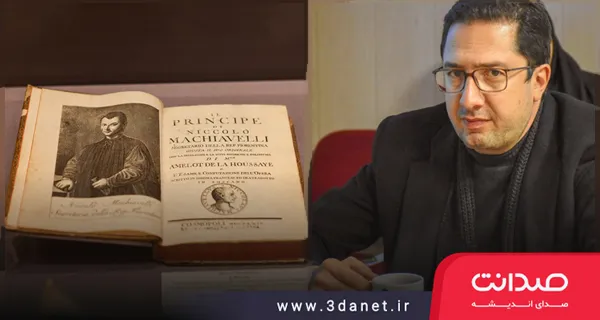
Niccolò Machiavelli (1469–1527) was an Italian political philosopher and writer of the Renaissance, and one of the founders of modern political thought. His fame rests above all on The Prince, which examines politics on the basis of power and historical experience.
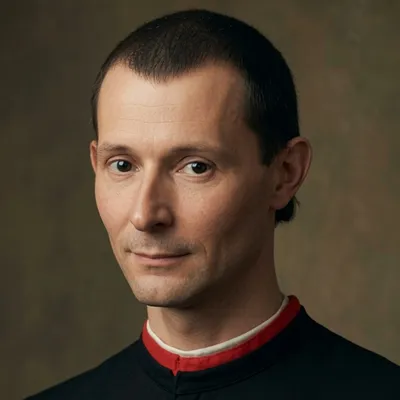
Niccolò Machiavelli (3 May 1469 – 21 June 1527) was an Italian political philosopher, diplomat, historian, writer, and playwright of the Renaissance. He is considered one of the founders of modern political thought because he examined politics not on the basis of ideal morality or theology, but on the basis of power, institutions, war, law, fortune, necessity, and historical experience. His fame rests above all on The Prince, but understanding his political thought is incomplete without attention to the Discourses.
Machiavelli was born in Florence; a city that in his time was one of the main centers of the Renaissance, political rivalries, and struggles among families, republicans, the Pope, France, Spain, and the Italian city-states. He grew up in a relatively cultured but not very wealthy family and became acquainted with Roman history, Latin literature, and practical politics. The turbulent atmosphere of Italy in the fifteenth and sixteenth centuries played a decisive role in shaping his realistic view of politics.
After the fall of Savonarola in Florence, Machiavelli entered the service of the Florentine Republic in 1498, attaining the position of Secretary of the Second Chancery and later responsibility for diplomatic and military missions. In this capacity, he negotiated with kings, popes, military commanders, and various governments, observing firsthand how politics operates in the real arena of power. His diplomatic experiences, especially observing the conduct of Cesare Borgia, were later reflected in The Prince.
With the return of the Medici family to power in 1512, Machiavelli was dismissed from office, arrested and tortured on charges of conspiracy, and then retired to his estate near Florence. The period of exile from politics was the period of writing his most important works. He wrote The Prince in 1513 and dedicated it to the Medici family, perhaps hoping to return to political service. However, the book was not published until after his death.
The Prince is one of the most famous and notorious books in the history of political thought. In it, Machiavelli speaks not of the ideal prince, but of a ruler who must acquire and maintain power in an unstable, corrupt, and dangerous world. He asks what a ruler should do in real conditions, not what he should be in an ideal world. This very perspective later linked his name with hard-nosed realism and unvarnished politics.
However, Machiavelli was not merely a theorist of individual power or tyranny. In the Discourses on the First Ten Books of Titus Livy, he speaks in greater detail about the republic, law, liberty, civic virtue, enduring institutions, and the role of the people in politics. This work shows that Machiavelli had a deep interest in the Roman republican tradition and considered the republic, under suitable conditions, a stronger and more durable form of government.
A key concept in Machiavelli's thought is "virtù"; a word not limited to the usual meaning of moral virtue, but encompassing ability, boldness, prudence, political energy, and the power to shape events. Opposing it is "fortuna" (fortune); the unstable and unpredictable force of history. The successful politician is one who can act against fortune with prudence and boldness.
Machiavelli also paid special attention to the role of the army and military force. Drawing on the experience of Italy, he was pessimistic about mercenaries and hired forces and believed that a stable state must rely on the strength of its own citizens. The Art of War reflects this view and shows that for him, politics, law, and military force are not separate.
Alongside his political works, Machiavelli was also a literary writer. The play Mandragola is one of the most famous comedies of the Italian Renaissance and shows that humor, understanding of human psychology, and social criticism are also present in his literary works. He also wrote the History of Florence, in which he examined the historical experience of his city with a political and analytical eye.
Machiavelli died in Florence on 21 June 1527. After his death, his name became one of the most controversial in the history of politics. For some, he was a teacher of deceit and political ruthlessness; for others, he was the first person to describe politics as it is, unvarnished and without moral or theological covering. For this reason, Machiavelli remains one of the most vital and debated thinkers in political philosophy.