اندیشهفلسفهخردگفتگوحکمتمعناپرسشفرهنگ
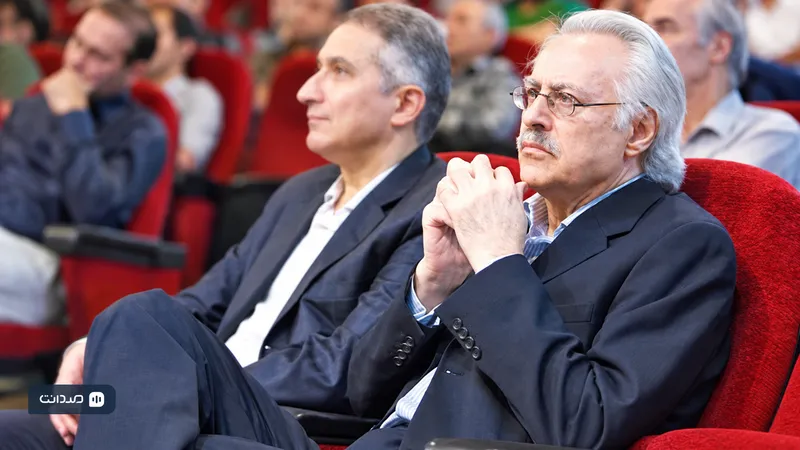
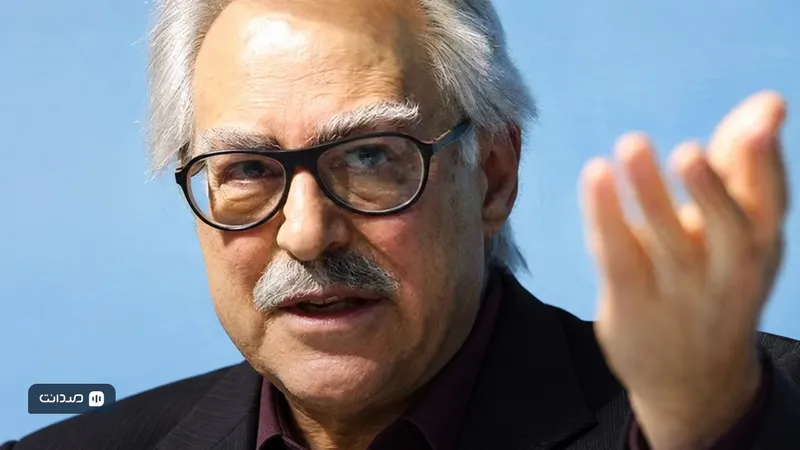
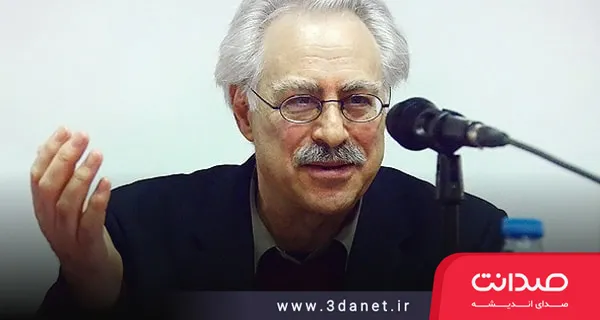
Seyyed Javad Tabatabai’s lectures locate the birth of modern political thought in the rupture of traditional relations and the shift from the court to the battlefield; power revolves not around justice but the interplay of forces, and The Prince is a manifesto for the salvation of Italy.

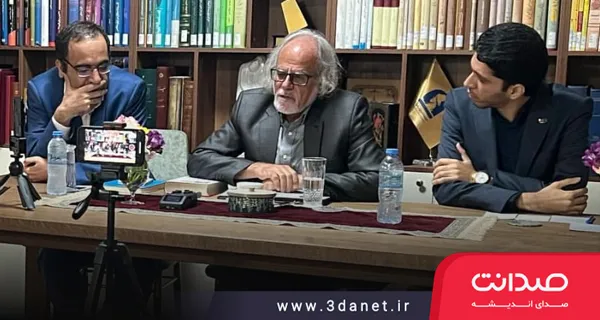
The Machiavelli lectures, which Professor Seyyed Javad Tabatabai taught in the late 1380s Shamsi, are among the most important lecture series that, in addition to challenging many of the falsehoods in the politics and culture of political science in the country, contain a comparative study and examination of the views of this scholar of political science (Machiavelli).
Since the thoughts and ideas of the erudite professor, especially the idea of Iranshahri which he expounds upon in the first part, belong to the entire Iranian world and are not the monopoly of any particular company, group, or faction, the audio files of these sessions are made available to the public for the use of all Persian speakers, people of Iranian descent, and enthusiasts around the world.
.
- Modern political thought begins with Machiavellian discourse. - Until Machiavelli's time, even in the West, politics was based on relations of unity with one person at the head; like a shepherd guiding a flock. But in Machiavelli's time, something happens that disrupts this type of relationship. Machiavelli is the theorist of modern warfare and is among the first to discuss strategy in his book The Art of War, and he creates the army for the first time. - The new Italian language had become common two or three centuries before Machiavelli, from the time of Dante. But Italy had not yet found the centralization that would make Italian the common language of the entire country. (Unlike England and France, etc.) In Machiavelli's works, there are two or three layers of the Italian language that are interwoven. - The beginning of every country is with fratricide, and politics means what must be done to prevent this killing from happening, and this is the beginning of modern political thought. From around 1300 AD onwards, two regions emerged in Italy; one was Venice and the other Florence (the Tuscany region), which had a prince or prince, and there was also a governing body equivalent to a signoria; a seed of a kind of republic appeared. The council that administered the city underwent transformations until one of the members of the Medici family returned to Florence, gradually gained power, and took control of the Signoria. Something called a città was formed, which is almost cognate with 'city' and has a meaning roughly equivalent to city-state, which is not always accurate. At that time, a città was a city with its suburbs and surroundings that had an independent political system, and thus a kind of republic was formed in Italy. It was a city of corporations or guilds that had rules, laws, and representatives in the government; which can be called a representative system of government or a guild-based republic. - Power is the resultant of the relationship between forces and representatives who exist alongside one another. Power is not a granite stone where nothing happens within it and nothing from outside can exert influence upon it. - In France, Charles VIII sought to conquer Italy, and in Spain around 1490 AD, a person from the Aragons came to power in one part and another king in another part (Fernando and Isabella). These two young monarchs, through their marriage, brought about the unity of Spain at that time. The center of Christianity, the center of the Holy Roman Empire, and also the center of the Renaissance was Italy, and it was obvious that these two great powers had designs on Italy. Since the Medici ruler had gradually turned his back on the republic and transformed the government into an oligarchy, the people took advantage of Charles's approach and rose in rebellion. In the midst of this, the unity of Italy was brought about by the sermons of Brother Girolamo Savonarola. He went to negotiate with Charles and his fame gradually increased, and he gained more influence. Florence was captured; but Charles left the city peacefully. Charles's entry and exit transformed this friar into a political figure.
- Francesco Guicciardini and Machiavelli realized that Italy was experiencing a rupture here, where the relations of forces had shifted and politics had been dragged from the court to the battlefield. Thus all relations changed compared to before. - The word “justice” does not appear even once in Machiavelli’s works; the only thing that exists is the relation of forces. For behind every word that is spoken, there is not justice, but the relation of forces. What they represent does not matter; what they are matters. Being versus appearance (appearance)... Therefore, there is no divine grace (farr-e izadi) in the sense of justice either. - Savonarola initially came to power with a claim of unity and a new plan; but like many reformers, he thought that fundamental reform meant moral reform and curbing human corruption. Then, as a monk, he went so far down this path that, according to the Bible, he assumed himself to be Cyrus the Second. After a year or two, the people gradually rejected him; for he was taking the place of the previous despot, had also put a stop to the people’s pleasures, and so on... In the midst of this, several also claimed to be the Promised One, all three of whom were burned at the stake. The person watching these scenes in the Piazza della Signoria – how someone rises to a position and then becomes nothing – was Machiavelli! In 1498, Savonarola was among those three who were executed. The religious republic that had turned into an autocratic rule prompted the people to once again demand the former republican system, and a man named Piero Soderini came to power, who was a friend of Machiavelli and led to Machiavelli becoming secretary of the city council, then secretary of the Council of Ten, and subsequently being sent to neighboring countries as a political diplomat. From here, Machiavelli began writing politically, and words became representatives of power relations. - The state, at that time, was not understood as an abstract entity independent of the people. Therefore, at that time, arte dello stato or stato in Machiavelli’s language was used to mean everything from the power and rule of one person and his dominance over affairs, to its modern meaning. - A man named Titus Livius wrote the early history of Rome, and Machiavelli wrote a commentary on its first ten books, reflecting upon them and expanding on their content (the Discourses). Machiavelli mentions at the beginning of The Prince that he had already started writing the Discourses earlier. - Until then, the principle was that only one type of government could exist. But the mixing of governments brings about their establishment and stability; this view has existed since Aristotle, and Aristotle also made a passing reference to it. (The theory of mixed government) This theory faced much opposition both before and after Machiavelli. But Machiavelli believed that such a government was feasible. - Midway through the Discourses, Machiavelli concludes that he should write a manifesto for the salvation of Italy, which is The Prince. People are very fond of the past and sanctify objects from the past; but they pay no heed to the writings and sayings of the ancients. In Machiavelli’s view, the ancients are, in fact, imitable and can serve as models. Through imitating the ancients, one can tread a path that no one has trodden before, so that future generations may move along that path. No founder can fail to rely on tradition, and this does not mean a return to the past. It is their actions that are of great importance to us.
- The transition from monarchy to republic is not such that power is taken from one group and given to another; rather, in a republic, each group is given a place and a share of power, the sum of which constitutes power, and this is the free system, or the republic, or the popular system. And enduring governments are those that combine the three systems of government (mixed systems). - Machiavelli is a republican and a theorist of the republic; thus, he begins his theories from this very point. The word res publica means the sphere of public interests. It is not the form of government that matters, but the content. - Machiavelli's model and the theoretical-intellectual basis of his thought is the ancient Roman Republic, and he makes no reference to the 1500-year history of Christianity. Only Savonarola is mentioned, because he is a republican who also speaks on the basis of Christian theology. For Machiavelli, the interesting question is: why, when someone comes to power, can they not hold onto it? What are the exigencies of power? - In Rome, gradually and over time, the Tribunes came into being; representatives who spoke on behalf of the people and were intermediaries and mediators between the people and the aristocracy, which ultimately led to the formation of a popular force. Three groups—the kings (rulers), the aristocracy (the Senate/Council of Elders), and the popular assembly—were created alongside one another. The discussion is that power exists among these three. Politics begins where all three groups enjoy power together, and power has not been taken from any group.
-------------------------------
- A discussion on the roots of words such as: Aristocracy, Oligarchy, Monarchy, Democracy The suffix archy/archie is equivalent to "-cracy" or rule. Monarchie: the rule of one person, or monarchy and the domination of an individual – archein is a Greek verb meaning to rule (to rule by domination). Aristocracie: the rule of a group of nobles and the government of the best or the aristocracy of society – kratein means to rule. In contrast to these governments, there is also government emanating from the common people. Isonomia, or the system of equality, is the first word used for this type of government. After the council system became established in Greece, the word Democracy/Démocratie became prevalent. (The word demos means people.) Therefore, rule by the people is Demoarchy, which is of the genus of dictatorial governments, not Democracy.
-------------------------------
Pre-Machiavellian political theories are based on unity. In today's language, this kind of unity is a kind of totalitaire. Machiavelli's intention is to disrupt this kind of unity. Thus, the ecclesiastical foundation of power is set aside, power is broken up, and the relationship among its components is specified. - Discussion of Chapter Four of the Discourses: The principal problem of a regime is its survival; therefore, it must be armed. There are two fundamental theories concerning man: A sinful and wicked creature (Machiavelli, Hobbes) A good creature who has been corrupted in society (Rousseau, Locke) Machiavelli believes that man is inclined toward evil and, given the opportunity, will not let this wickedness slip away; therefore, it must be prevented. This control has two modes: Control of individuals – but who controls the controllers? The education of man within a system of citizenship through laws (behind the law stand instruments of war, which morality is incapable of providing.) - In this section of the Discourses, the word "humor" is correct instead of "stratum." Arguing about politics in a medical manner is something Machiavelli does. If two "humors" exist, one will eventually prevail over the other. But man is a living being, and these concepts can be taken from the science of medicine. Contradiction is the basis of the universe. One cannot remove one of the humors from the human body. Consequently, one must believe in a theory of equilibrium, not the elimination of one of these humors. If an equilibrium between the humor of the people and that of the great is established, that society is a free society, and should one humor dominate, the society will be sick. (Machiavelli uses the word ottimati, meaning the nobles, only when he is speaking about the specific case of the Romans.) - Only law can establish equilibrium among forces and educate human beings to become accustomed to liberty and equality and to submit to nothing else. - Violent and straordinario (outside of institutions) methods are contrary to the custom that must exist; because the state, under certain conditions, finds itself in an extraordinary situation. ordine (in today's language, institutions, and in the older sense, arrangements or regulations) is a word Machiavelli uses to refer to the internal order of the country, and institutions arise from it so that the existing order is not disrupted. Power is broken up by institutions and flows through society; establishing these relations and connections is political thought. - It is not only for material interests that man accepts the tensions arising from relations with other groups. The two humors (the people and the great) also cannot be eliminated; therefore, it is through establishing equilibrium between these two that society survives. Crisis occurs where the equilibrium between the humors is lost. (The great, or grandi, were both the aristocracy and the bourgeoisie of that time.) A society without tension is impossible; what matters is that tensions lead to equilibrium. An unstable equilibrium that is constantly disrupted and then a new equilibrium is established again. Channels must be created so that a disrupted equilibrium can be re-established in another way. Therefore, what matters is that power can flow in some manner. - Free states or regimes (modes of governing a country) or free living (vivere), meaning in accordance with the laws, is where institutions and channels exist and prevent the disintegration of society (revolution). - Every occurrence (action, decision) in society produces effects (effetti). Liberty is the effect (consequence) of the tension that exists between two social groups. Therefore, there is one group which, if we entrust the guardianship of liberty to it, the result will be better (the people are better guardians of liberty than the great); the great, since they possess more power and enjoy more privileges, and because they have a desire to preserve these interests, are compelled to expand the scope of their power; whereas the people do not wish to submit to power and, consequently, are better guardians of liberty. - In government, one cannot, so to speak, avoid trouble by being trouble-free; rather, a great trouble can be prevented with smaller troubles. Society must accept that discontent will come out; a regime that corrects itself through protest. - Discussion of Chapter Six of the Discourses: From this point onward, the problem of necessity enters Machiavelli's discussions. In the world, nothing is stable, and everything is either rising or declining. Human affairs are also in flux. Laws can be derived for them; but there are always necessities beyond human will. Stagnation in power leads to the gradual decline of power. Power is a transformative thing and must demonstrate its capacity for expansion in its substantial motion.
In other words, one must be prepared for the time when necessity demands that power be displayed. - In politics there is no middle way. (Of course, in today's world this is no longer the case. Middle-ground solutions that lead to compromise can be found.) - If the path of institutions is blocked, protests will spill over through extraordinary means (straordinari), and thus the destruction of governments will be certain. The existence of institutions in societies is vital, but factions (parti, and in the modern sense: party) inevitably lead to revolution. Factions fracture the concept of the homeland. (In the concept of the homeland, two large groups are in tension with one another; yet they possess unity side by side.) Thus the homeland becomes an arena of factional strife. For this reason, preventing discontent from turning into faction is the task of institutions. Discussion on chapters nine and ten of the Discourses (from chapter eleven onward, Machiavelli speaks of the relationship between religion and politics.) Around the year 1513, Martin Luther rose up in struggle against the Church, and the currents of the Reformation began. After Luther, Jean Calvin also carried out propaganda in favor of religious reform in France and Switzerland. (Catholic, in its literal sense, means follower of tradition and the community.) The massacres that occurred in the midst of this (1572) forced many supporters of the Reformation into mass migration. Because of such events, some came to believe that Machiavelli's words gave monarchs a free hand for such massacres. In contrast, there was also the model of the Holy Scripture, which made the king's reign conditional upon the support of the people. Machiavelli had two opposing groups, who were themselves also opposed to one another (reform, counter reform). When a schism occurred in the Roman Church, a group called the Jesuits, who were devotees of the Pope and the Church, were ready to defend the Church at any cost; in other words, they were supporters of the Church within the state. A whiff of Machiavellian thought had reached the nostrils of these individuals, and that was a theory called Reason of State, for which the best equivalent is the expediency of the regime. Giovanni Botero, who had read Machiavellian literature and that which followed, wrote a book on the expediency of the regime (Machiavelli himself did not use this term).
Sovereignty is an abstract concept that persists and endures apart from the state and the person of the ruler. A person named Jean Bodin in France was the first to explain this concept. This abstract entity possesses an interest, and small groups that oppose that interest will be overthrown. Chapter Nine of the Discourses: 1. Foundation – Establishment (the main discussion of The Prince) 2. Reform (the main discussion of the Discourses) The people cannot establish a government, because there is too much disagreement among them and they cannot reach a single opinion. One person who discerns what is right and in the public interest can be the founder. The people can be the successor to the founder, and power can be transferred to the people through institutions (one person is more inclined to evil than a collective). Machiavelli gives the example of Romulus, who founded Rome, created its institutions, then assumed command of war and also created the council. (He was the founder of free institutions, not an autocratic system.) The main issue is the foundation and creation of institutions and the transfer of power to those who observe the common good. Since the creation of institutions is not necessarily possible through the laws of institutions, the founder must act from outside the institutions. (In Carl Schmitt's terms, decision-making in a state of exception: the leader is the one who has the right to decide beyond institutions in exceptional circumstances. This issue has nothing to do with what Machiavelli proposes; Carl Schmitt is the theorist of totalitarian and fascist governments. But for Machiavelli, the primary criterion is the public good and the good of the fatherland.) On page 66 of the Discourses, civil liberty is a meaningless term. What is meant is civic liberty. Machiavelli's ideal system is one that expresses the liberty of the citizen. Those who introduce religious institutions are the most worthy of praise. Machiavelli does not separate religion from politics, but merely clarifies its place. The founder is someone who, in addition to institutions, also creates new ethics. The pinnacle of ethics lies in religion. Machiavelli's first example is Moses, and his second is Romulus, and in later stages, he arrives at writers and artisans. And those who are most worthy of blame are those who introduce corruption into the foundations of religion.
.
Philosophy
Philosophy
Philosophy
Philosophy
Philosophy
Discussion3 comments
با تشکر صمیمانه از مساعی بزرگواران .امیدوارم دوستان تلاش کنند تا در دسترس قرار گیرد.
دقیقا بابک درست میگن. بنده چندین سال پیش در تبریز در یک کتابفروشی آثار مذکور را در قالب لوح فشرده دیدم و متاسفانه در تهیه آن تعلل ورزیده و بعدا دیگر جایی آنهارا پیدا نکردم
درود بر استاد طباططبایی بزرگوار بسیار استفاده کردم امیدوارم دیگر درسگفتار های ایشان مانند درسگفتار انقلاب فرانسه درسگفتار های فلسفه حقوق و ایدئالیسم آلمانی و ... نیز در صدانت منتشر شود.