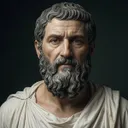
I die the King’s good servant, and God’s first.
Life and Thought
Thomas More was an English lawyer, statesman, Christian humanist, and Renaissance writer. Through Utopia, he became one of the most influential figures in the history of political thought, and he was executed for opposing the king’s supremacy over the Church of England.
Thomas More was born in London in 1478. He studied for a time at the University of Oxford before continuing his legal education at the Inns of Court in London. More gained prominence as a lawyer, judge, and statesman, eventually serving as Lord Chancellor of England under Henry VIII. His friendship and intellectual collaboration with Erasmus established him as one of the leading representatives of Renaissance Christian humanism.
More’s most important work, Utopia, was published in Latin in 1516. Through a literary and satirical narrative, the book depicts an imaginary society characterized by communal property, an orderly social structure, and a degree of religious toleration. Utopia is both a critique of the poverty, inequality, harsh punishments, and warlike policies of contemporary Europe and a complex inquiry into the possibility of establishing a just society.
Alongside his humanist commitments, More was a staunch defender of the Catholic Church and an opponent of the Protestant Reformation. In his polemical writings, he criticized Martin Luther and other reformers; his actions against religious dissenters also reflected the cultural and religious limitations of his age.
When Henry VIII declared himself Supreme Head of the Church of England and demanded recognition of the annulment of his marriage to Catherine of Aragon, More refused to accept the king’s religious supremacy. He was convicted of treason and executed on 6 July 1535. The Catholic Church canonized him in 1935. More’s intellectual legacy lies at the intersection of humanism, Christian faith, individual conscience, and reflection on political justice.



.webp)
.webp)