[The article "Two Heralds of the Modern World" was first published in Mehrnameh (Issue 11, 1390), but my efforts to develop and expand it led to several revisions. The second edition appeared in Negah-e No (Issue 92, 1390), the third on the Jostar blog. This is the fourth edition, published in the fifth issue of Andisheh-ye Pouya magazine, Dey and Bahman 1391, in Tehran.]
.
Two Heralds of the Modern World: Machiavelli and Thomas More
Dariush Ashouri
The sixteenth century is a wondrous era in which something called Europe and European civilization is born with unparalleled power and splendor from the heart of the medieval world. The forces that had been gradually accumulating since the twelfth century and had become intensely compressed from the fourteenth century with the Italian Renaissance, manifested their generative power in this century, on the one hand, in the cleaving of the oceans' breast by fearless and adventurous seafarers in search of "unknown lands," and, on the other hand, in the astonishing ferment of painters in artistry with new techniques of perspective display, as well as a newfound scientific understanding based on observation and experience, and a curious mind in pursuit of every kind of discovery and invention. It was in this era that Europe adopted this name and became conscious of its "European-ness" in the face of other human civilizations and cultures. Risk-taking European seafarers and landlopers traversed the globe by sea and land in search of everything visible, findable, and seizable. The pioneering of European adventurers in cleaving the oceans' breast, traversing other continents, and colonialist encroachments, among other things, led to the discovery of other cultures and civilizations, and hence the growth of awareness of their own "European" history and culture, and a sense of pride in it and their superiority over others. It was in this new arena of power struggle that the newly risen European nation-states—Britain, France, the Netherlands, Spain, and Portugal—rose to rivalry and conflict over mastery of the oceans and the newly found lands. Also, it was in this very era that cosmopolitan observations about the wonders of human lives and cultures across the world and their comparison provided the ground for the emergence and development of the human sciences.
With the fading of the notion of the absolute dominance of a supernatural will over the entire realm of nature and human life, a new horizon opened in human life that ultimately led to the emergence of the idea of free will in humans to organize their individual, social, and political lives. The idea of free will in humans had emerged with the advent of Christianity and the development of the concept of "sin" as a central concept in its anthropology, and it also had grounds in earlier religious notions, in Jewish and Zoroastrian faiths. In the religious notion, human volition in taking the side of "Good" or "Evil" was through choosing between the divine command and satanic temptation, with a view to the Hereafter and divine punishment for sin. But with the fading of the otherworldly view and the taking root of a this-worldly perspective, and the emergence of the rational, knowing "subject," the field of free human will's volition turned from the "Hereafter" to the "World," and instead of striving to accumulate "provisions for the Hereafter," it fell to thinking about organizing the affairs of the world and society in the light of its own self-founded rationality.
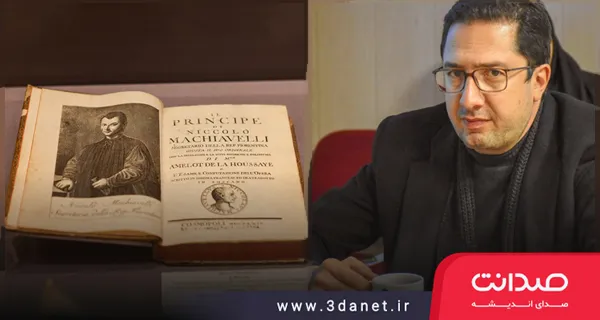
It was in light of this very turn at the beginnings of the sixteenth century that, two years apart, two small books were written. One in London, and the other in Florence. These two books, for all their smallness, held great meanings for the future of Europe. The first book was The Prince by Machiavelli, completed in 1513, and the other was Utopia by Thomas More two years later. It cannot be imagined that More and Machiavelli ever heard one another's names, yet both, without knowing it, not as an Englishman or an Italian, but in the capacity of a European, wrote a book that three centuries later, in the history of Europe, in the sphere of political thought and conduct, would find a great resonance, confronting one another. For these two books, with the dream hidden within them, lay out the two political dimensions of Europe's future — a Europe that has risen toward creating the modern humanist world. These two dimensions develop in opposite directions, but are fundamentally interconnected within the context of the humanist world. More's book places the earthly idealism of the modern world — the substitute for the otherworldly paradise — before the eyes of the European person in the form of an ideal city, which is the dream of a flawless moral world; and Machiavelli's book places the dimension of political realism and the relations of power and natural political conduct in the human world, as it truly is and whose effect can be seen with the eye and whose news can be heard with the ear.
And yet, the essential point is that the fundamentally antagonistic aspect of these two views, that is, idealism, on the one hand, and realism, on the other, within the context of the modern world, rests fundamentally on a common ground. And that is the emergence of the state in a new central position that it did not hold in such a way before, in the ancient and medieval worlds. That is, its placement in the social structure as the ultimate organizer of macro human relations and social institutions, with its unrivaled political and legal power and its monopoly on the use of the instruments of force, as Max Weber has said. The future of modern Europe takes shape on this secular foundation. And this is the very "Leviathan" whose spirit Hobbes, a few decades after Thomas More and Machiavelli, summons from the heart of the world of myth and speaks, in another language, of the inevitability of its rule as the orderer of the chaos of the "state of nature" in society. These founding thinkers could never have been aware of the astonishing and forward-looking implications of the inquiries in their books for Europe; rather, unconsciously, they reflected the secular spirit of the nascent modern European civilization, which, in the realm of politics and statecraft in the form of the nation-state, with a new meaning of the nature of human relations and the best form of organizing it through philosophical thought, in the form of a mixture of that very idealism and realism, was gradually taking shape.
Until that time, over the span of a millennium, it was the Church that, as the representative of omnipotent heavenly power on earth, held the management of the social system in its hands and supervised the realm of social relations, from the micro level of face-to-face relations in the smallest social and economic unit, from the family to a village, and from there to relations within the macro structures of society and the state, and imposed the formal "God-pleasing" norms of conduct upon them. For in the task of prescribing the norms of human conduct, it considered its will to be the revealer of the divine will. Consequently, in the medieval centuries, the system prescribed by the Church was considered a "divine" system and the representative of God's unquestionable, everlasting power. The Church, having seized the Roman Empire, had spread its network of power, centered on Rome and headed by the Pope, from a single village not only to the borders of that empire, but across all the lands of the Germanic and Slavic "barbarians" who had subsequently converted to Christianity under the rule of the Church.
But the sixteenth century, the era of the Reformation and the rise of Protestantism, was the century in which the power of the Church cracked and states gained power in the form of the absolute rule of monarchs within the burgeoning economic and social structures of the newly emerging bourgeois society, pregnant with modern nations. It is therefore no wonder that political philosophy—that is, thinking about the nature of political power and the ins and outs of social relations within the structure of the state and its all-encompassing, commanding power—took center stage in philosophical thought during this era. The two books we have named hold the vanguard banner of this thought and the world that follows in its wake.
By sketching an ideal society in his book, Thomas More harbored the ambition of reconstructing the political and social system of the Kingdom of Britain. For, as he recounts in the first part of Utopia, he saw it as deeply contaminated by turmoil, injustice, and corruption. Machiavelli, too, wrote his book to find a savior for a fragmented, politically tumultuous Italy, who could unify it like the newly risen great European powers such as France, England, Spain, and the Netherlands. But these two writers, whose gaze was fixed above all on the events and problems around them, were also the vanguard heralds of opening a new horizon of action and thought in the workings of state and politics for Europe, and unwittingly, beyond the issues of their homelands, wrote books for the future of Europe. The hidden historical meaning of these two works can be grasped in retrospect through the history of Europe in the centuries that followed. Insofar as these two books recount, in simple and clear language, the conscious thoughts of their authors in direct relation to the world around them, they truly say nothing so complex and astonishing that common human understanding would be incapable of grasping it. And had the story ended there, they would never have acquired such an astonishing weight of historical meaning. The greatness of these two books lies in their hidden historical meaning, which is inevitably not apparent to their authors and reveals itself in later centuries with the maturation of the modern, worldly world in the construction of modern society and the state. Modern hermeneutics has also taught us that behind the manifest and conscious meanings of every discourse, whether in prose or verse, there are also unconscious, hidden meanings that reveal themselves in the light of new readings or interpretations of the text within new or different spaces of human action and thought.
And so, the turn of fate's wheel brought it about that years ago I translated both of these books into Persian. And now, with this motivation, I address them in this article and compare them side by side, for I consider pondering the deeper, historically forward-looking meaning of these two works to be an enlightening inquiry that sheds light on two fundamental dimensions of modern European civilization. One dimension is a humanistic idealism that, through the voluntaristic organization of society by the power of the state, replaces the Christian promise of salvation in the afterlife and entry into its paradise with the dream of collective, this-worldly happiness and entry into a perfect moral society. This was the very dream that ultimately, in the form of communist regimes in the twentieth century, seized a large part of the globe and humanity in its grip to establish that dreamlike utopia which Thomas More was the wishful vanguard in devising. And astonishingly, More brings forth this this-worldly dream despite his steadfast Christian faith and its otherworldly promises. Although More had reached the highest state office in the shadow of King Henry VIII's reign, he did not comply with that king's demand to divorce his wife. For he saw it as incompatible with his faith in the Church and the spiritual authority of the Pope, who did not deem divorce permissible. And ultimately, he lost his head for this defiance.
Another dimension of modern civilization is political realism, far removed from idealistic romanticism, of which Niccolò Machiavelli was the pioneer; a civil servant in the city-state of Florence whose duty was to manage that city-state's relations with other city-states in Italy and the surrounding European powers. Machiavelli can be considered one of the forerunners of diplomacy in the modern world. For, as a representative of his city-state, he traveled to other Italian city-states, as well as certain other European countries, examining and interpreting their political systems and conduct. And he would write his interpretations in the form of reports to his government. Following those experiences and observations, far from any dreamy idealism for a perfect world, he fixed his sharp, clear-sighted eyes upon the scene of political conduct and the manner of seizing and maintaining power. Consequently, Machiavelli's work in analyzing the formation of political power structures and the criteria for evaluating them has rightly been considered the beginning of the modern scientific outlook on human action, arising from the spirit of the Renaissance.
Utopia
More's book, in the realm of imagination and in the form of a narrative, presents before the eyes a social and political order that has itself embodied a Platonic ideal. That is, a society with an ironclad moral order in the form of such a premeditated organization that leaves no breach for "corruption" to find its way in. This society, as More recounts through the narrator of the story of its visitation, is also geographically separated from the surrounding world polluted by corruption. For, according to the plan of its founder, it has been turned into an island, and the shipwrecking rocks beneath the water block the access of foreigners to it.
It seems that Thomas More, with the names he playfully used for people and things in that narrative, never believed in the actualization (realization) of such a utopia on earth. In this book, the names are in Greek, but in an ironic and jesting manner. Such that Utopia in it, from ou-topos in Greek, means "no-place." The name of the narrator of the story of its visitation is Hythloday, from huthlos in Greek, meaning "speaker of nonsense." The river that flows in that land is named Anyder, from an-hudor in that language, meaning "waterless."
Utopia, although, according to the narrative, has a location on earth, is fundamentally a metaphysical model of an ideal society in which all people, in their behavior, are exemplars of the ideal moral human being. As a result, no deviation is seen in their conduct from the “correct” norms established by the state—this time in place of God. Contrary to the author’s Christian faith, what rules in this utopian world is the worldly philosophical spirit of Hellenism, not the vision of the Christian spiritual realm. Here, nature is completely tamed. Not only external nature, which is in the grip of human technological ability and in the service of his needs, but also the inner nature or disposition of human beings. In that land, there is no trace of anything “wild” and spontaneous, anything natural, self-growing, and self-willed that lives and behaves according to its own inner law. Rather, everything has been molded within a culture, with absolute moral standards, by the force of the state. There, by eliminating the main cause of “corruption” and moral deviation, namely money, and by devaluing gold, ornaments, and wealth, the desire for them has been killed in the people, and thus everyone has been made entirely equal. Although the people of Utopia also have beliefs, rites, and religious institutions, their country is not a religious community, like medieval Europe, under the rule of a single church, and the country is not administered by divine laws derived from discovering God’s will through a sacred institution. Rather, it is a country and a state that also has a religion and a church, like the Protestant church, in its service. Here, it is not the theocracy of the church that holds the management of society and its guidance toward an otherworldly end, but a country with the rule of a worldly moral ideal, in the form of a legal system, of which the state is the guardian. In such an ideal moral-legal system, there is no trace of the rebellions of nature, ambitions, and excesses—that is, the behavioral and moral manifestations that are abundant in a spontaneous natural society and are considered the cause of “corruption” in it, and whose existence in the natural world the medieval system attributed to the “Devil.”
Utopia is an engineered and constructed society in which everything, all manifestations of nature outside and inside human beings, is tamed in the grip of “reason.” Among other things, behavior there is such that youth and old age, femininity and masculinity—that is, the fundamental manifestations of nature and natural existence in people—seem to have no role or effect in their lives and conduct. For here, “carnal temptations” are all curbed because, according to theologians and mystics, they are rooted in the animal soul and cause the debasement of the spirit. This is a world where, in Christian religious language, it can be said that the “Devil” has been completely banished and “God,” in the position of world-governing reason, or Logos, has gained absolute rule. In this world of tamed nature, where, based on “pure reason,” everything is predicted and predictable, human beings are so conformed to the fundamental political laws and the moral rules established by the state that they resemble mechanical humans, robots, more than historical humans. For they have been programmed from within and without to perform their moral role, and the “commanding self” has been entirely curbed in them.
Utopia is the paradigm of an ideal world outside of historical time, and consequently, free from its "corruption." It is as if a kind of eternal, history-less time flows there, a flat, primordial time, a time without ups and downs, without sudden and unpredictable events. For the historical time of life on earth is always pregnant with infinite vicissitudes, unforeseen events, great and small hopes and expectations for auspicious occurrences, as well as great and small anxieties about unpleasant and ominous happenings. The utopian world is, in truth, the end of the world of possibility. Because the intricate structure and convoluted process of the world of possibility is pregnant with infinitely many astonishing, unpredictable things. The world of possibility, by virtue of this very "pregnancy" and endless generativity, is the world of ambiguity. That is, "truth" is hidden within it, or at least obscured. And no one knows clearly what it harbors within itself and what it will give birth to. But utopia is the world of the manifestation of the "hereafter," that is, the emergence of the purified essence of everything from ambiguity, the manifestation of "truth," and the disappearance of "untruth." Or, based on Platonic ontology, the coming-to-completion of transient "metaphorical" being and its return and unification with the "real" world of eternal constants. Consequently, with the cessation of "metaphor" and its restlessness and instability, and the manifestation of "truth" with its stillness and stability, no further leap occurs within it, and no other world, no new world, springs forth from its heart. For it is the world of possibility that is always pregnant with new worlds. The world of possibility, in poetic language, is the world of the "magician's wheel," whose endless, wondrous turns can pull things out of its magic sleeve before the astonished eyes of humanity, things that may well disturb every sweet dream and leave fingers pressed to mouths in astonishment. But utopia is the world of stretched-out time, that is, the monotonous stretching of a single present time in which everything, with a permanent definition and role, remains in one "state."
Time in utopia is external, quantifiable time, the time of the physical world, measurable with instruments of measurement, namely the clock, or the cycle of day and night. There, inner or psychic time must be restrained and concealed, because within it flows ḥāl, which is impermanent: ḥāl, meaning both the present moment and the psychic state that every human experiences in their own present, from listlessness to joy, delight, and ecstasy, on the one hand, and boredom, depression, vexation, disgust, and hatred, on the other. The Persian language, in its abundant use of the word del (heart) in numerous compounds, expresses these states. This spectrum can be traced from del-mordegi (heart-deadness, dejection) to del-khoshī (heart-happiness, contentment) and del-shādī (heart-joy) and del-afrūkhtegī (heart-enkindlement, elation), on one side, to del-āzordegī (heart-vexation), del-zadegī (heart-weariness, disgust), and del-sūkhtegī (heart-burning, deep sorrow), on the other. The presence of del (heart) with all its figurative meanings in these compounds, and dozens of other compounds, expresses the diverse and contradictory human states in present time. Truly, the present time, meaning "now," is also the time of ḥāl (states); a time in which, at every instant, the experience of inner states flows, whether pleasant or unpleasant, whether passionate or dispassionate. This experience of states, in the language of our Sufis, is the very "cash of the moment" (naqd-e vaqt), which is the true finding of life or the gift of existence in the form of successive breaths. But in utopia, there is no news of this "cash of the moment" and its apprehension—as our mystic and non-mystic poets have so often said. For the cash of the moment is the gift of existence to the individual human, in which one must serve the "heart" and its desires and avoid any displeasing relationship. But in utopia, the human individual and their wishes, desires, whims, passions, or "follies," which are manifestations of their "selfishness," have no place. Rather, the human individual, in order to give being to the utopian ideal, must, bearing an eternal burden of duty entirely upon their shoulders, so dissolve into the collective that no trace of their "self-regarding" personal existence remains.
The utopian world is a world without a future, without a “tomorrow,” which is born once and, according to the narrative, in ultimate perfection, and in the monotonous, sterile course of its life is pregnant with no future. Human beings in historical time, with its countless ups and downs, are anxious about the future and live “in hope of tomorrow”; a tomorrow pregnant with expectations and small and great desires. This tomorrow may well be, in their view, the tomorrow of the emergence of utopia, or the “tomorrow of resurrection” in which eternal paradise is bestowed. Which is also a world without a tomorrow. In utopia, nothing sudden occurs to startle people out of joy or petrify them with fear. It is a world of no unfulfilled “reasonable” desire or hope. It is a world in which the path of every “unreasonable” whim, madness, and passion has been closed off forever. More, by comparing his utopia with the societies surrounding it and in relation to them, enumerates the “reasonable” and “unreasonable” aspects of both sides. The “reasonable” all manifest in the ideal society, and the “unreasonable” in the spontaneous, natural societies.
Utopia is a world defined once and for all and given in advance by the decree of universal reason and its eternal, everlasting ideas; a world in which all the fissures of “corruption” have been sealed with the cement of political “wisdom,” under the leadership of a wise leader. As a result, no change finds its way into it. But the place of this ideal world in the “imaginal realm” of pre-modern man was elsewhere, in the Platonic “world of ideas” or in the Garden of Eden of the holy books; that is, a world outside historical time and its undulating expanse. Whereas, with the secularization of the horizon of being in the view of modern man, he strives to establish it in a world that, according to the famous Aristotelian definition, is this very world of generation and corruption, that is, the world of nature.
And yet, “generation and corruption,” in Aristotle’s language, expresses the process of the formation and disintegration of things and their re-formation. That is all. “Corruption” (phthora) in Aristotelian language has not yet taken on a religiously moral weight and merely means the loss of “form,” that is, decomposition, decay, and passing away and becoming matter for receiving another form. But it is in its translation into Latin languages (corruptio; corruption) and Arabic, within the atmosphere of the religious civilizations of the Middle Ages, that it becomes heavily laden with religious-moral meaning. For in the atmosphere of those civilizations, the metaphysical spirit of Plato’s philosophy and its dominant ethically-oriented ontology, under the shadow of a powerful monotheistic faith, swallows up the spirit of Aristotelian scientific positivism. It is in the language of the New Testament (the Gospels) that corruptio (corruption) takes on the meaning of moral corruption due to “original sin,” as well as the eternal wretchedness of the sinful soul in hell. Thus, the salvation of the world from “corruption” reveals its hidden supernatural meaning, which is precisely salvation from the evil of time and its transformative or “corrupting” nature. That is, salvation from the “fall” into the world of evil and change—which are considered one—and a return to the world of eternal, unchangeable, and consequently “incorruptible” truth.
To clarify the historical significance of More’s book and the magnitude of its vision, one must recall the communist systems of the twentieth century. Marx and Engels, by calling the ideas and plans for a socialist society by the pioneers of such political and social thought, such as Saint-Simon, Charles Fourier, and Robert Owen, “utopian,” deemed those ideas imaginary. For, in their view, the foundation of “utopian socialism” rests not on an understanding of the scientific logic of history, that is, the recognition of its necessities and the final course of its trajectory, but on human and ethical idealism and the desire to reduce the injustices of wealth inequality among people. Whereas, the analysis of history with the concept of “class struggle,” which in Marx’s view casts its shadow over its entirety, derives the attainment of socialism as a necessary outcome from the heart of the logic of history’s movement. Engels took the label “utopian socialism” from the very name of this book by Thomas More and its ideal society, and set it against “scientific socialism,” which, in his view, is founded on the empirical understanding of history and its methodical analysis.
اما تجربهیِ عظیمِ تاریخی با هزینهیِ هولناک برایِ بخشِ بزرگي از بشریّت نشان داد که «سوسیالیسمِ علمیِ» نیز در عمل چیزي جز همان «سوسیالیسمِ یوتوپیایی» نیست. نظامهایِ کمونیست بر پایهیِ این آرزو و امیدِ بر پا شده بودند که بر بنیادِ شناختِ «قوانینِ تکاملِ جامعه و تاریخ» و منطقِ «علمیِ» شناسایِ ضرورتهایِ تاریخی در مارکسیسم-لنینیسم، با ایدئولوژیِ برابریخواهانه، جامعه را چنان سازماندهی کنند که، با یک جرّاحیِ خونبار و بسیار بیرحمانه، بنیادِ بیداد و بیاخلاقی را، که در مالکیّت است، یکسره از آن براندازند. نظامِ کمونیست، همانندِ آرمانشهرِ تامس مور، با فروگرفتنِ یکسرهیِ جامعه در دولت، خود را تنآوردگیِ نهاییِ داد و اخلاق میشمُرد و با کشیدنِ «پردهیِ آهنینِ» نامدار بر گِردِ خود بر آن بود که، باز همچون آرمانشهرِ مور، راهِ ورودِ هر گونه فساد را به درونِ خود ببندد. زیرا فساد را بیرونی و عارضی میدید و بس. حال آن که در عالمِ کون و فساد، یعنی جهانِ طبیعی، «فساد» در درونِ ساختارِ زمانمندِ عالم جای دارد و، در حقیقت، چیزي جز همان دگرگونیپذیری نیست که سرشته در ذاتِ هر چیز و در کلِ عالمِ کیهانی ست، یعنی هرآنچه ناگزیر بر بسترِ زمان پدید میآید و ناپدید میشود. بیرون از بسترِ زمان، یعنی در «عالمِ مثالیِ» وَرا-زمانی یا ماوراءِ طبیعی، زماني یا فرصتي در میان نیست تا چیزي پدید آید که «فساد» پذیرد و ناپدید شود. زیرا فساد، به مفهومِ ارسطوییِ آن، چنان که گفتیم، به معنایِ تجزیهپذیری و ترکیبپذیریِ هر چیز از نو و، از این راه، دگردیسیِ آن به چیز یا چیزهایِ دیگر است. امّا دیدگاهِ متافیزیکی به عالمي زَبَرین باور دارد که عالمِ پایداریِ ابدی ست و بر فرازِ عالمِ «پَستِ» زمانمندِ زیرین جای دارد. متافیزیک با ستیزي که با زمان و جهانِ زمانمند دارد، از جهانِ دگرگونیپذیر، و از «فساد»پذیریِ آن، گریزان است و، چنان که افلاطون باور داشت، «این-جهان» را جز سایهیِ بیبودِ گذرایِ «آنجهان»، جهانِ بودِ حقیقی، جهانِ «حقیقت»، نمیدانست. اما، هرآنچه که بر رویِ زمین و در عالمِ طبیعی ست، در زمانِ ویژهیِ خویش، برامده از دلِ طبیعت و طبعها ست، و در نتیجه، «فساد»پذیر. حال آن که، دنیایِ نظامهایِ کمونیستی بر الگویِ مثالیگونه (ایدهایِ) جهانِ دگرگونیناپذیر و فسادناپذیرِ آرمانشهرِ افلاطون و تامسمور بنا شده بود. و میبایست چنین نمایش دهد.
جهانِ طبیعی همچنان که جهانِ زایش است، جهانِ فرسایش نیز هست. هرآنچه در بسترِ زمان زاده میشود، میباید با ساز-و-کارِ سایشیِ حرکت در طبیعت، بفرساید، و بر اثرِ فرسودگی و از-توان-رفتگیِ پیری و پایان یافتگیِ «قوّه»ها در آن، جای به نوزادِ نافرسودهاي بسپارد که «قوّه»یِ بسیار در او در انتظارِ بودیافت است. فرسایش، در حقیقت، همان مفهومِ اصلی و اصیلِ «فساد» در طبیعیّاتِ ارسطو ست، خالی از بارِ اخلاقیاي که مابعدالطبیعهیِ الاهیّاتِ دینی بر آن نهاده است. بنا براین، گمانِ چیزي ابدی در هستی که فرسایش و «فساد» نپذیرد، آرزویي ست میراثِ ازدواجِ مابعدالطبیعه (متافیزیکِ) یونانی با ماوراءالطبیعهیِ یهودی، و سرانجام یکی شدنِ این دو مفهوم در الاهیّاتِ سه حوزهیِ دینهایِ یکتاپرست.
In the communist world of the twentieth century, with its claim of abolishing the class system and leveling all social inequalities in the name of "human equality," it was presented as though a system had been built on the model of eternal justice, for the preservation of which, against the infiltration of any corruption from outside, as we have said, an iron curtain had to be drawn around it, thus granting it eternal stability. For, according to that ideology, corruption infiltrates the socialist system from outside—from the capitalist system, from class systems—and threatens the permanence of the pure "classless" system. In this view, all natural desires, all aspirations and lusts, all human stubbornness, madness, and greed were considered phenomena of class society, which had to be curbed, in the light of "progressive" ideas championed by a "vanguard party," within the bonds of an iron order, just like More's utopia. But when the curtain fell, it became clear that nature and its "corruption"-generating force had been at work there as well. Yet there, all the dirt and grime, the incongruities, falsehoods, and corruption had to be swept under the rug with the broom of propaganda lies. There too, as a result of "diabolical" temptations, within the heart of that "ideal" society, a monstrous, mafia-like mold of power called the socialist state had seized everything, and with its decay from within and its collapse, its network spread throughout society like a cancerous tumor. This is why the state system that emerged from the collapse of the former "classless" system in Russia is now called a "kleptocracy."
The Prince
But Machiavelli's The Prince is not a reflection of any metaphysical world, nor a shadow of it. He does not turn from this "world of generation and corruption" to any eternal or everlasting ideal world. Rather, by fixing his gaze on what transpires in the natural-historical world, with empirical, scientific realism, without moral prejudice, through the direct observation of the behavior of the people of his time or by examining historical documents, he seeks to see what truly happens in the world of politics, that is, the stage of power relations in the world of natural occurrence. He is the forerunner of the perspective that the Germans, three centuries later, termed "Realpolitik," that is, political realism. Instead of fleeing the sensible world, which from the Platonic metaphysical viewpoint and its moral judgment is considered a base realm, instead of turning to abstract ideas in a purely rational world, instead of writing advice manuals for political ethics and dealing in generalities, Machiavelli looks at the functioning of natural ethics in political reality, the roots of which natural ethics he sees, more or less, in all human beings, in various forms ranging from selfishness to predatory savagery. And when he offers advice and issues a warning, it is also based on that same realism. He is a child of the Italian Renaissance, whose painters, for the first time, using geometric measurement, placed the third dimension and perspective on the canvas so they could show the correct place and correct size of each thing in relation to space and the things around it. By placing political behavior in a temporal and historical perspective, Machiavelli also makes it possible to compare various behaviors and understand their nature. His measure in understanding types of political behavior, as emerges from his numerous observations on the matter and the examples he provides, is the manner of targeting to achieve power and its outcome, that is, success or failure in reaching the goal. The world of politics is a battlefield for gaining power and maintaining it. But there are a thousand subtleties in the manner of this acquisition and its maintenance depending on circumstances and character, which is the subject matter of his inquiry. For this reason, he is the founder of political science in the modern sense. That is, a science based on testing and measurement, not on theorizing, moral evaluation, or abstract ideas alone.
The immutable moral world based on eternal values, as Plato and his followers imagined, is founded upon “rational constants” and, consequently, is a world removed from politics and the political process that flows in the transient natural world. The “death of the state” with the realization of communist society, as the Marxist-Leninists imagined, means nothing other than this. Its radical metaphysical meaning is, in truth, an exit from the natural world. For politics belongs to life in nature and the natural world (life outside nature and the natural world is a metaphysical fantasy, even if it is given the name of materialism). Politics, in its broad sense, consists of the methods and techniques that every living being, and every species, possesses for its own survival and for expanding the domain of its dominance in nature, for attack and defense, for increasing its kind, or, in Nietzsche’s language, for its “will to power.” In this sense, having politics and practicing politics is something natural and ingrained in the essence of the living being for living, or, in the language of modern science, ingrained in its genetic structure or gene pool and in its psyche. It is this very genetic structure that gives every microbe and virus the tools for “enemy recognition” and teaches it defensive politics and strategy so that, ultimately, over time, it can overcome the weapons of the “enemy,” i.e., human-made antibiotics, and by neutralizing them, save and perpetuate the life of its species. And then, according to its nature, it attacks other organisms and becomes the cause of their “corruption.” Therefore, scorning politics and the political world in a philosophizing language stems from ignorance and is a failure to recognize the politics that is at work in the foundation of all, all living beings, from plant to animal to human, including in the foundation of the existence of the politics-averse, “pious” philosopher.
However, it is in the human world that having politics and practicing politics operates in its most complex form for the mechanism of survival, attack and defense, and the expansion of the field of “will to power.” One end of the motivational forces of political action lies in the realm of human nature and disposition, and the other end, which consists of value-based motivations or inhibitions, lies in the cultural and moral realm. In the human world, even for the most ethical and altruistic goals, one must have politics. Having politics means considering the “economy” of attaining power and the goal. That is, how one should reach one’s goal through the least costly and shortest path—or paths. This “political economy” requires patience, flexibility, methodicalness, and shrewdness. Machiavelli says that attaining princedom can be through various paths. One may attain princedom through the art of warfare and by the force of his arm and sword, another by bribing the soldiers, as was done in the Roman Empire, another in the shadow of a superior power and with the aid of its arm, or someone may be raised to princedom by the people of the province. The next critical stage is the stage of management and prudence for maintaining power, whose various methods he assesses one by one. One’s state can be taken by weaponry and the force of arms, but to maintain it, one must practice politics and statesmanship. Among other things, keeping the people content is, for Machiavelli, one of the indisputable conditions of practicing politics and statesmanship. Just as in a household, for maintaining the husband, nursing and raising children, and keeping the family safe from external and internal harms, the specific politics of a successful housewife are essential. In other words, her “arts.” The housewife must also be a “politician” to be successful, just like the school teacher, the company manager, the head of state, and anyone else in their specific position with its specific function. And for “statesmanship,” one must possess the tools of the trade by nature. It is in the field of life’s politics that the “expedient lie”—which the shrewd Saadi points to—demonstrates its superiority over the “sedition-stirring truth.” The “expedient lie,” depending on every kind of expediency, from the most benevolent to the most malevolent, is, in almost every sphere and occasion, an inseparable part of human life.
In More’s Utopia, in that purely rational Platonic world, nature and the “soul” are held in bondage, but in the world of Machiavelli’s Prince, which is the world of the games of the age, human nature is the main actor on the political stage and in the power game. To enter this stage and this game, and to win at it, the political man must possess a nature that is forceful, agile, sharp-clawed, and opportunistic, which Machiavelli calls virtù [1]. And of course, in this world, which is the world flowing in time and pregnant with all manner of good and bad events, fortune (fortuna) must also be his ally, that is, the manner of time’s turning and its favorable and unfavorable occurrences. Virtù that fortune does not favor brings no success. Virtù, then, is the capability necessary for success and victory in any endeavor. But this capability arises from two paths and from the combination of two endowments: one is the endowment given by nature, that is, the physical and mental characteristics formed in the mother’s womb and born with human beings, and the other is what comes to him through education and culture for the manifestation and cultivation of those innate capabilities. Machiavelli’s book seeks to show the ways of attaining power in men who have possessed that innate endowment, so that this knowledge might be instructive and a source of cultivation for a prince who, in his view, is endowed with that essential substance and whom he wishes to rouse to undertake a historical task.
Human beings like to be virtuosos in every field and to perform virtuously so that others may look upon them with admiration. But every field, according to the nature of the game that unfolds within it, demands its own particular skills, and not every skill lies in every person’s nature. Although “virtue” in word always appears as something beautiful and praiseworthy, yet, in human nature, there are also ugly and unpraiseworthy skills that serve particular purposes and often prove themselves highly effective. In the arena of the political game, which is the battlefield for seizing power, particular skills come into play that are in the nature of some, while others have little or more or less no share of them. In political virtuosity, cunning and shrewdness, guile and deceit, and the possession of a nature adorned with innate tricks for deceiving rivals, driving them from the scene, or playing them, are essential. Machiavelli enumerates these “artful” characteristics in the nature of the man of the political power game, including not being bound by keeping one’s word. And in that famous chapter of The Prince, he offers this counsel, and by doing so, brings great infamy upon himself. Whereas, by presenting a vivid historical witness, he shows that he is speaking of a reality before him, one that can be seen daily on the stage of life in the sphere of human relations at every position and rank. He, among other things, also addresses the point that the most deceitful players on the stage of the power game are those who take license for their conduct from the cunning of “the best of schemers” (Khayr al-Makirin), that is, the occupants of the “sacred” realm of the Vatican. In this regard, Machiavelli recalls the triumphant conduct of the popes of his own time, who are among the most adept on the stage of the power game and political cunning.
Politics for morally commendable ends is called prudence, and for uncommendable ends, cunning. But from a deeper, trans-ethical perspective, no very clear boundary can be drawn between prudence and cunning. And it may well be that, consciously and unconsciously, there is an element of both in human behavior. For prudence and cunning both originate from the inherent “statesmanship” of nature in the human constitution, whose ethical and theological name is the “soul.” At any rate, the common aspect of prudence and cunning is that both involve a kind of concealment to achieve an end. Political prudence and cunning also take on more fitting names in human language: tactics and strategy. Knowing the tricks of attaining power, which is not very teachable, and possessing it as an innate capability, as an “art,” in Machiavelli’s language, as he shows in various examples, appears in different forms in people with different natures and in different circumstances and opportunities. Machiavelli, by foregrounding the concept of “art” in the nature of the political man, does not separate “prudence” and “cunning.” For such a separation inevitably carries a moral burden. Whereas he, as one of the forerunners of the modern scientific objective outlook, like a physicist or physiologist, has fixed his gaze on the mechanism of the power game and the struggle of forces on the political stage and distances himself, as much as possible, from the moral evaluation of behaviors.
However, a theorist like Machiavelli, who observes the various ways the mixture of prudence and cunning functions over time, in the arena of the game of power and politics, may well not have been someone who possessed that “art” himself. For he possesses the “scientific spirit.” He is an observer and a discoverer of laws. In other words, his artistry and his will to power manifest themselves in this field. Hence, he may well have been one of the most truthful and guileless people on earth. For, with his gaze fixed on the scene of power relations and the power game in his own time, he recounted his findings with complete clarity and boldness, without any fear of the consequences for himself. The story of his life and his personal failures also recount that he was endowed not with the arts of the lizard-like nature of the mediocre opportunist, but with the artistic nature possessed of a truth-seeking scientific genius; a nature that, in the most dangerous realm of the game of human hypocrisy and dissimulation, has no fear of knowing the truth and recounting it. His knowledge of the “art” in the sphere of political behavior unveils a profound reality in the human world, and in this regard, in this kind of thoughtful boldness, no better counterpart than Nietzsche can be found for him in the modern world.
Machiavelli’s Prince, as we have noted, appears on the stage of nature, which is the realm of displaying virtù and testing fortuna. In every chapter and in discussing every mode of princely rule, he recalls the role of “virtù” or “fortuna,” or a mixture of the two, in every arena of participation in the game of political power. Hence, “virtù” appears fifty-nine times and “fortuna” fifty-one times in this text, and seventeen times side by side. These two key concepts for understanding this text are neither pre-formed metaphysical concepts nor, in other words, “philosophical concepts,” but rather names for manifestations of nature, or human interpretations thereof, which appear in a thousand ways, each time, each place, and for each person in a particular guise. For this reason, these are not concepts for which one can provide a definition free of all ambiguity. The stage of nature is the field for the exercise of virtù and the trial of fortuna. It is in this field that the innate natural endowment, namely “virtù,” finds, through the field that fortuna provides, the opportunity for manifestation and success, or, unfortunately, meets with defeat and failure. Yet it seems that human alertness and learning from personal and historical experiences can also guide some to recognize the opportunities provided by fortuna, or that failure to recognize the opportunity turns the possibility of success into failure. Although “virtù,” in this sense, is born of human nature and “fortuna” is the outcome of the accidents of the age, in the formation and emergence of which human will plays no role, or not much of one, Machiavelli nonetheless leaves room for human will, for which the field of trial opens up in the combination of virtù and good fortune. Machiavelli’s age, that is, the height of the Italian Renaissance, is, in terms of the flourishing of art and the brilliant virtuosity of the most luminous human geniuses, one of the most exalted ages in human history. It is in such an age that his eye seeks the man of “virtù” who will perform virtuously for the salvation of Italy. And he enumerates what is necessary for this virtuosity.
However, Machiavelli’s ontology is not merely a “disinterested” scientific or philosophical motivation and an academic inquiry, but also an effort to provide the means for the existential realization of an ideal. Hence, the final chapter of his book, written in an impassioned language, begins with this title: “An Exhortation to Liberate Italy from the Hands of the Barbarians.” There he clarifies his purpose in writing the book. For, in the end, he wishes to give the prince whom he is addressing a directive for seizing the opportunity that fortuna has provided, and everything, in his view, is ready for achieving that ideal goal by the hand of a “virtuous” prince, namely “liberating Italy from the hands of the barbarians.” Yet here we face a paradox that has no “reasonable” solution, which is that it may well be the case that this recognition of opportunity is also part of the virtù that, as a given of nature and innate disposition, is placed beforehand, with the aid of fortuna, in the constitution of the “virtuous” man, and is not very teachable.
It is this view of disposition and nature in the form of the manifestations of “virtù” and “fortuna” and their endless fluid interminglings and interactions, the recounting of which demands a warm and captivating pen. That is why The Prince has taken shape as an outstanding, impassioned literary work, and many of its translators and scholars have praised it from this aspect. As a result, this book, with its unique language and atmosphere, has found a singular place in modern literature, and Machiavelli, among others, has been considered, on account of it, a great Italian prose writer and a pioneer of modern literature in that language. It is with the two fundamental concepts of “fortuna” and “virtù” and the dominance of the historical gaze over this book that, as we have noted, its account must be separated from other classic books of political theory and political philosophy contemporaneous with and after it—including the works of Hobbes, Montesquieu, and Rousseau—in the modern European space. For those others, through reasoning and based on purely rational presuppositions, seek to found the state upon fixed (metaphysical) or eternal and everlasting ideas, in which individual will, “virtù,” and “fortuna” play no role, or not much of one, and, as is their nature, do not cast dice and test fortune on the backgammon board of the earth.
But, returning to More’s Utopia, we see that there is no place in it for virtuosity and the trial of fortune. For there, everything is situated within a calculated rational system inside a mechanical order, such that it leaves no room for the manifestation of fortune, which is the realm of risk and risk-taking. A poet in our own world, too, a millennium ago, offered counsel on this matter, saying:
If greatness lies in the lion’s jaws, go, take the risk, and seek it from the lion’s jaws.
In the manifestation of political virtuosity, which also demands virtuosity in the field of war and warfare, there is also the risk of destruction and death. Hence, as Machiavelli, too, has emphasized this point, fortune and virtu must be coupled together for success to be achieved. Fortune and virtu, in the space of the “free market,” in the natural course of affairs, can well demonstrate their intertwined relationship. The other name for “virtu” in the space of the political and economic free market is shrewdness. In the space of the fully capitalist world, where democracy and constitutional law are the guarantors of the political and economic free market, they strive to demarcate political and economic shrewdness with law and to regulate it with the concept of justice and judicial guarantees. The legality of the capitalist system, in the finest examples of such a system, while giving rein to political and economic shrewdness, also sets a limit upon it. Among other things, it does not allow adversaries and rivals to proceed to the point of annihilating one another. As a result, political cunning has a field in this space, but it cannot gallop to the point of absolute power. But in Machiavelli’s time, this was not so, and the will to political power knew no limit in employing the tools of trickery and deceit to destroy rivals. And he shows the supreme example of this in the life and conduct of Cesare Borgia, a man of the highest degree of virtu in political machination and the bastard son of Pope Alexander.
Machiavelli’s The Prince, as we have said, is not a “philosophical” treatise of the kind written by Plato and Aristotle up to Rousseau, Kant, and Hegel. He is not in search of, or seeking to erect, an eternal system based on an abstract and universal concept of rationality or justice, but is engaged in studying the nature of politics, political action, and the conditions for success therein, as the observation of the conduct of the men of his age and historical data recount. The first chapter of The Prince begins with this sentence: “All states, all dominions that have held sway over men, have been either republics or principalities.” And, leaving the discussion of republics to another treatise, he proceeds to a typology of principalities, without making much value or moral judgment about them. Machiavelli, in the position of an observing scholar, bringing historical evidence, discusses how each type is acquired and how it is maintained. And in this path, he describes the method of seizing and holding several types of principalities, including the most villainous ones. Therefore, his “natural history” of political behavior is not of the kind of philosophical thought, in its classical sense, but of the kind of work that natural scientists had begun in the study of nature during the Renaissance; the very work that led to the scientific revolution in Europe. In this direction, Machiavelli constantly looks to the “nature” or “disposition” of groups of people, the common masses on the one hand, and the nobles and lords on the other, and assesses their interaction with one another. He adopts this view of the “disposition” of people from the very dedicatory preface of the book regarding its offering “to His Magnificence Lorenzo de’ Medici” and alludes to it throughout the book. It is with a view to the function of natures in the social and historical ecosystem that, in reporting and explaining each type of principality, he constantly speaks of the essential role of “virtù” and “fortune” in their formation, success, or failure, both of which are natural and historical factors. And alongside these natural factors, he also tries to address the role of wisdom and intelligence in recognizing and mastering historical conditions and possibilities, which itself, paradoxically, depends on “virtù” and “fortune.” Machiavelli’s era, that is, the height of the Italian Renaissance, is the era of the rise of scientific and artistic observation and experimentation. Alongside the great number of strivers on this path, one can mention two great figures, one of whom lived a generation before Machiavelli and the other a generation after him. Namely, respectively, Leonardo da Vinci and Galileo. Machiavelli’s The Prince, as its scholars and translators have said, is both a scientific work and the founder of political science, and a work of art in terms of its writing style and the passion of its pen.
Machiavelli is far from Thomas More’s simplistic metaphysical ethics regarding man and, contrary to him, not only does not turn his back on reality in the name of eternal moral values and ignore it, but he also does not deem it base and insignificant. He is aware of the complexity and intricacy of reality in human life and conduct and knows that “virtù” does not appear everywhere the same and in one form. He, contrary to the accusations of immorality leveled against him, is not an admirer of those who want power for power’s sake alone, that is, to bully others and lord over them for their own satisfaction at any cost, and in that path do not shrink from committing any crime, which is a characteristic of a nature devoid of human culture and ethics. On this matter, one can look at the eighth chapter of The Prince, titled “Concerning Those Who Have Attained a Principality by Wickedness,” and see that he is not only not an admirer of such a way and method but is also a condemner of it. On the contrary, we see his admiration where he speaks of men such as Moses, Cyrus, Romulus, and Theseus. That is, those who, in his view, have girded themselves to save their people. Great men, for him, are of this category. That is, those who, in difficult conditions, display virtù for the survival of their society and the restoration of its comfort and peace. But those others are also in the arena of the power game, that is, the opportunists and power-seekers who want power solely for the pleasure of lording over others and exploiting them. And he, in the position of a researcher, does not close his eyes to the reality of their existence and their mode of behavior.
At any rate, within the context of modern European civilization, humanistic utopianism on the one hand, and Realpolitik or political realism on the other, along with a combination of the two in the construction of legal and political systems, as well as in the sphere of political and social conduct, have had a fundamental presence and role. In this sense, Thomas More and Machiavelli, with their two books, can be seen as symbols of the two faces of Janus in this civilization; that Roman god, guardian of the cosmos, doors, and gateways, who in his statues, with two faces back-to-back, guards both this way and that simultaneously. Is not European social democracy, ultimately, a lucid combination of these two faces?
.
.
[1] In my view, in translating this text into Persian, one should not underestimate the fortune that Persian, possessing the word "honar" (art/virtue) in its long-standing literary usages, as a counterpart to "virtù" in the original text, alongside and in relation to "bakht" (fortune), can perhaps reflect the essence of this work better than other languages. As my investigation has shown, a word of such semantic richness and conciseness for the concept of "virtù" in this text is not found, at least in some other languages. (On this matter, see the introduction I have written to the translation of The Prince regarding the concept of "virtù" and its translation as "honar.")

Discussion0 comments
No comments yet; let yours be the first voice.