Philosophy
Mostafa Malekian on the Thinkers Who Gave Rise to Postmodernism
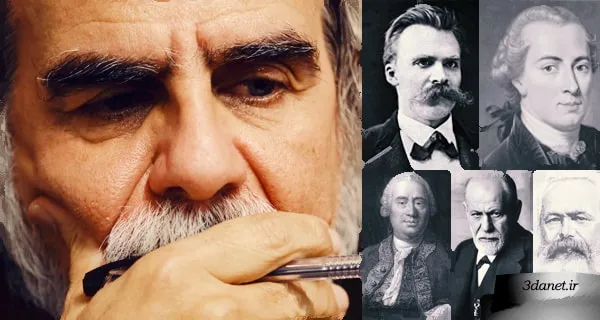
Hume, Kant, Marx, Freud, and Nietzsche—Western thinkers who, by puncturing reason, paved the way from modernism to postmodernism: a perspective that sees knowledge not as a reflection of reality, and is called the hermeneutics of suspicion. As recounted by Mostafa Malekian.
But if you have come to believe that the sole means of gaining knowledge about the universe is reason, and that we have absolutely no need to refer to tradition, then you are a modernist, you are a modernist. We have nothing but the empirical sciences and formal logic. Formal logic and the empirical sciences—one providing us with matter and the other with form—these two are our means of gaining knowledge about the universe. There is no other way.
Modernism, in fact, means the sufficiency of reason. That is, the self-sufficiency of reason. If we truly believe in the self-sufficiency of reason, we are, in the strict sense of the word, modernists.
Our epistemic grasp of the world is utterly limited. We receive mere phantoms of the universe, we have certain conceptions and images of the universe, but to claim that these conceptions and images are precisely accurate representations of reality is an unreliable assertion.
If we hold this belief—that is, if we say that reason does not provide us with an image of the universe as it actually is, but rather a dim, obscure, and possibly distorted image, yet we know of no other source, and this is all we have and nothing more is available to us—this view is the postmodernist view. It is the post-modernist view. This view does not emerge quickly. Several great thinkers emerged in Western culture. Each of them drove a wedge into reason, and gradually they prepared the ground for the emergence of the doctrine we refer to as postmodernism.
David Hume, the famous English philosopher, paid great attention to a point, and devoted a long period of his intellectual life to it: the ancient saying that instincts and emotions rule over human beings, but the difference between humans and animals is that other animals follow their emotions, passions, and instincts completely blindly, whereas humans, while they should not suspend their passions, emotions, and instincts, must bring them under the governance of reason. David Hume demonstrated that this control of reason over emotions, passions, and instincts is neither possible nor desirable. Firstly, it is not feasible; secondly, even if it were feasible, it would not be desirable. This is the first breach made in the invincible fortress of reason.
The second person who paid great attention to the point that the mind does not truly possess a mirror-like quality is Kant. In a famous statement that can summarize his philosophy, Kant says that human reason, instead of being a mirror, is a pair of spectacles. The mind is the spectacles of the human spirit. In fact, whenever our spirit seeks to attend to the world, it sees this universe from behind the spectacles of the mind. Now, returning to our example, we can propose three possibilities regarding the universe. One is that the entire universe is exactly as we see it; another is that no part of the universe is as we see it; and a third is that some parts are as we see them and some are not. In his view, what we perceive is the product of the interaction between the mind and the real world. This, too, somewhat weakened the position of reason.
The next figure who played a significant role in this current was Karl Marx. Marx believed that what people sometimes take to be the truth, they take to be the truth under the influence of their class interests, but this distortion of reality does not occur consciously. It is like wanting to know how my child looks when he is completely, utterly alone in the room. But as soon as I want to see how he looks, I enter the room, and the moment I enter the room, the very solitude I wished to observe is lost, and I have, in fact, interfered with the subject of my own experiment, which was the child's solitude.
Another breach was created by Freud, the famous Austrian psychologist. Freud says that we are not conscious of all the domains of our psyche; rather, we are conscious of only one part of the psychic domain. Freud argued that under the pressure of our unconscious psyche, we perform a series of actions, adopt a series of positions, or develop a series of beliefs. After these beliefs emerge, in order to present ourselves as rational, we adduce reasons in favor of our beliefs. In Freud's terms, everything that humanity considered reasoning is nothing but rationalization.
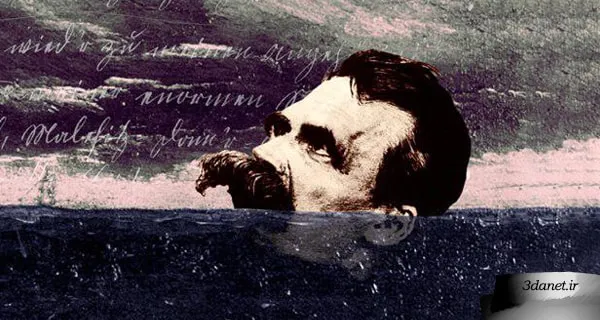
Another breach was made by Nietzsche, the famous German philosopher of the late nineteenth and early twentieth centuries. Nietzsche believed that the human being's primary drive is the acquisition of power, and all other drives are manifestations of the will to power, and knowledge is also encompassed within this will to power. That is, what we call knowledge, that which we imagine to be a report corresponding to reality from the real world, is in fact not a report corresponding to reality; it is a report that empowers us.
The sum of what these figures have said constitutes a kind of suspicion toward the human faculties of perception. That is, they have said that viewing with suspicion is more realistic. For this reason, this current of thought is sometimes called the hermeneutics of suspicion.
.
.
Mostafa Malekian | Traditionalism, Modernism, Postmodernism | Session One, 1999
Baztab-e Andisheh Magazine, Issue 6, Mostafa Malekian | Postmodernism
.
.



Discussion0 comments
No comments yet; let yours be the first voice.