Philosophy
Nietzsche Against Logic: How Postmodern Relativist 'Nonsense' Has a 'Logical' Root
Through genealogical historiography, Nietzsche challenges the transcendental validity of logic and principles such as identity, calling them a fable for human survival. Analyzing these hidden presuppositions makes Nietzsche's relativism more comprehensible to analytic philosophers.
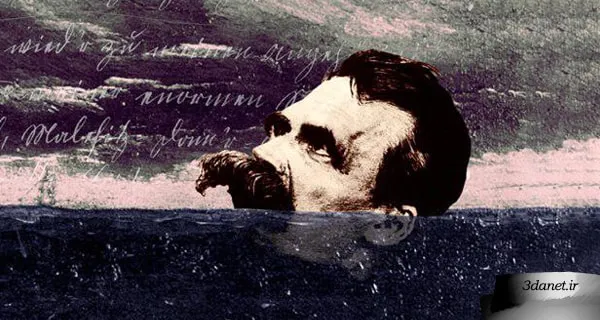
From the very beginning, the style of Nietzsche's philosophizing has made his relativism susceptible to misunderstanding and rejection; Nietzsche's poetic and epic language occasionally obscures the grandeur of his subversive "logical" arguments. This is how an analytic philosopher, when confronted with Nietzsche's logical paradoxes, rarely finds themselves exposed to argumentative persuasion; all there is are images and the literary genius of a man whose "hammer-like" tone intimidates and consequently mesmerizes the susceptible reader. That, for example, "man cannot live except by granting validity to logical fictions" (Nietzsche, 1394, p. 35) and "behind all logic and its apparent absolute rule over the movement [of thought] stand valuations, or, to speak more clearly, physiological demands for the preservation of a particular kind of life" (ibid., p. 34) or "How did logic come into being in man's head? Truly, out of [something] illogical" (Nietzsche 1974: 171) are, for the rationalist analytic philosopher, merely audacious claims resting on unexamined hidden presuppositions; if these same claims were written in the form of deductive arguments with their presuppositions clearly stated, their paradoxical and "illogical" nature would be revealed. This is how Nietzsche's "profound thoughts" are often regarded not as a logical-philosophical achievement but as a great literary work.
It is this poetic concision, taken-for-grantedness, and recklessness in argumentation that has made Nietzsche's relativism rejected and detested by the "analytic" atmosphere dominant in Anglo-Saxon philosophy: philosophers and proponents of "postmodern" theory—Derrida, Rorty...—following Nietzsche, speak of the "constructedness" of reality, truth, and logic with such certainty as if it were a self-evident principle requiring no rational proof. Thus, in many cases, the possibility of understanding between continental relativism and Anglo-Saxon rationalism is considered a priori foreclosed. Nevertheless, Nietzsche's writings on the "origin of logic" and, subsequently, perspectivism/relativism contain very subtle "logical" indications, indications that, upon elaboration and clarification, reveal the depth of Nietzsche's attacks on logic and his calling it a "fiction."
The aim of this article is to analytically "rehabilitate" the argumentative sparks of Nietzsche (in favor of relativism) and to elaborate his hidden presuppositions in his attack on the institution of logic, so that, ultimately, the paradoxes, contradictions, and possibly superficial "nonsense" of Nietzsche and his postmodern descendants regarding the "constructedness of truth" become more comprehensible and "logical" (for analytic thinkers and rationalists). In this regard, after conceptually clarifying Nietzsche's view of logic as a "fiction"—this most magnificent, most cherished, and most ancient arbiter of "truth" for us humans—I will examine three refutations and criticisms leveled against this view and respond to them.
Logic is Illogical!
For the rationalist philosopher—and also for those who believe in the intuitions of common reason—logic in its purest form possesses transcendental legitimacy and acceptability; meaning that (at least) the axiomatic and "self-evident" principles of logic and the valid arguments derived from them, independent of the narrow-minded historical and geographical prejudices of us humans, are eternally and perpetually "true"/"correct" somewhere beyond time and space. Furthermore, in this conception of logic, "truth" is always defined as "correspondence/conformity with reality," and it is by appealing to these unquestionable facts of the external world that any rational human being, after some introspection, for example, intuits the "truth" of the self-evident principle of identity (A=A).
Such logic, in its most rigorous formulation—deductive reasoning—has been the mainstay of the Enlightenment from Socrates to Voltaire. It was by appealing to the rigid propositions of formal logic that Enlightenment philosophers sought to disenchant the new world and rationalize it. Thus, over time, logic has acquired a sacred aura, to the point where even the most atheistic contemporary thinkers bow before the mysterious correspondence between human logic and an inhuman world; as Thomas Nagel begins his defense of the "transcendence" of rationality, the book The Last Word, by acknowledging this very enigmatic "correspondence": "How is it that creatures like us, equipped with the contingent biological capacities whose very existence seems entirely accidental [incidental], have access to methods of universal validity for attaining objective thought?" (Nagel 1997: 4)
After some exploration of this question, Nagel concludes that even in a meaningless, disenchanted, rationalized world, ultimately on the threshold of nihilism, it is this reason (logic) and the emanations of its "objective thought" that still promise a glimmer of hope for the Enlightenment of rationality.
Now, Nietzsche's long-standing, terrifying question is: why does logic (and subsequently, the rationality and science that accompany and are based upon it) appear sacred and unquestionable to a rationalist and atheist philosopher (like Nagel)? Why have the self-evident principles of logic remained immune to the disenchantment of the modern world? How is it that philosophers consider the principle of identity (A=A), which is the first and most fundamental "law of thought," to be (universally) "true" throughout the fourteen billion years that have passed in the life of the cosmos? In a cosmos where everything is in motion, change, generation, and corruption, what or who has guaranteed the "truth" of this "law"—how, or in what sense, is an object identical with itself over time? And in a word, why and from where are we certain that the self-evident principles of logic have not been anything but superstition and myth? A pervasive myth that has been merely useful for the "preservation" and safeguarding of the survival of a "form of life" of a species of "clever animal," and not "true"?
Questioning logic and reason has a long precedent in the history of philosophy; Protagoras's dispute with Socrates over the impossibility of attaining "certain knowledge" has always been met with a definitive response from Socrates and the Socratics: "Is not the point that cognition is relative, and the path to certain, definitive, and universally accepted knowledge is closed, itself a definitive proposition?" (Ahmadi, 1394, p. 113) A response that even today, among analytic philosophers including John Searle and Thomas Nagel, is considered the sole reasonable and internally consistent defense against radical relativism. Nietzsche's assault on logic and rationality in its entirety, however, is of a different kind: while Socratics, Scholastics, and contemporary analytic philosophers have always sought to answer skeptics in an immanent manner, by invoking arguments and counter-arguments, Nietzsche attacks logic and its three axioms by resorting to his own genealogical historiography. Thus, against the first axiom of logic, A=A, that everything is a priori and unquestionably identical with itself, Nietzsche posits a genealogical principle that every phenomenon has a history[ of change] behind it. It is the elaboration and clarification of this single methodological principle of Nietzsche that dissolves modern man's rigid faith in the universal authority of logic.
"Every phenomenon has a history [of change] behind it," and among these "phenomena" is the most fundamental axiom of logic, the principle of identity A=A; Nietzsche believes that reflection on the prehistory of the evolution of the cognitive faculty of the human species ultimately leads to the conclusion that there was a time (in the prehistory of the human species) when this "principle" did not hold!
In this regard, Nietzsche rightly made the principle of identity A=A the point of departure for his attacks on logic and rationality, because identity lies at the very foundation of all human representational systems; all other postulates of logic and human thought are ultimately derived from this principle or in some way presuppose it in their foundations—the other two principles of classical (Aristotelian) logic, the principle of non-contradiction and the principle of excluded middle, are all derived from the principle of identity, and without belief in identity the other two principles would be meaningless—as Nietzsche himself declares in The Will to Power: “Every thought, judgment, perception, which [ultimately] is a kind of comparison, has ‘positing as equal,’ and even prior to that, ‘making equal’ as its precondition. The process of making equal [in the human] is the same as the process of incorporation of [nutritive] matter by the amoeba” (Nietzsche 1967: 237-4); likewise, in the same vein, he argues about logical judgments that “Judgment—this is the belief [behind it]: ‘This and that are thus.’ Therefore, in every judgment there lies an avowal of having encountered an ‘identical case’” (Nietzsche 1967: 289).
Nietzsche’s latter claim is also acceptable and self-evident from the perspective of contemporary philosophy of logic, as Hilary Putnam, the contemporary American analytic philosopher and logician, argues in his discussion of “induction” that “fundamentally, every kind of cognition is based on the ability to recognize similarities among things” (Putnam 1992: 10); any induction, for example, is based on the perception of similarities among observed cases or experimental results. And since the very concept of “similarity” is itself a function of the principle of identity, meaning that “recognizing a similarity” between two objects is in fact the perception of several identical components or properties between those two objects, Putnam’s sentence can also be construed as meaning that every kind of cognition is ultimately based on a prior understanding and belief in the principle of identity.
Furthermore, without a presupposed belief in identity, classification, which is the basis and starting point of any kind of systematic science, is impossible; it is the perception of identities (maximum similarities) among different species of organisms that causes, for example, the dog, horse, rhinoceros, and human to be classified under “vertebrates”—all these animals possess an identical/same property called the spinal column, or from another perspective, it can also be said that the function of the spinal column in the horse is equal/identical to the function of the spinal column in the dog.
This is how identity is the basis of human linguistic representation; meaning that while all our beliefs, equations, arguments, and human thought in general ultimately contain the principle of identity A=A as their most fundamental presupposition, this principle itself cannot be reduced to any other principle or “presupposition.” In other words, this principle is the result of humanity’s most enduring “rational intuition,” and doubting its “truth” (correspondence with reality) is in no way conceivable: it is unclear what a world in which A=A does not hold would be like!
It is here that Nietzsche specifically subjects this very intuitive and indubitable “truth” of this postulate of logic to the test of natural history: while the rational philosopher (sometimes an atheist) considers the principle A=A to be transcendentally, abstracted from the becoming of time and space, and eternally and everlastingly “true,” Nietzsche believes that it was only through the very gradual evolution of the sensory and perceptual faculties of the human species over millions of years that this proposition that A=A, as a “self-evident” principle, (gradually) solidified in the human linguistic representation of its environment. From this perspective, the principle of identity is not the result of human rational discovery but the natural consequence of his gradual adaptation to a hostile nature in the course of the struggle for survival. As Nietzsche argues in section 111 of The Gay Science:
The Origin of the Logical—How did logic come into existence in man's head? Certainly out of illogic, whose realm originally must have been immense. Innumerable beings who made inferences in a way different from ours perished; for all that, their ways might have been truer. Those, for example, who did not know how to find often enough what is "identical" as regards both nourishment and hostile animals—that is, those who subsumed things too slowly and cautiously—had a lesser probability of survival than those who guessed immediately upon encountering similar cases that they must be identical. The dominant tendency, however, to treat as identical what is merely similar—an illogical tendency, for nothing is really identical—is what first supplied all the foundations of logic. (Nietzsche 1974: 171)
The power of Nietzsche's reasoning in these lines lies solely in the application of Darwin's theory of evolution to explain the origin of logic, a task that evolutionists and naturalists themselves are very wary of.
A naturalist scientist such as Richard Dawkins, according to the methodological requirements and achievements of the natural sciences and biology, necessarily studies every psycho-biological phenomenon from the perspective of "evolution through natural selection." From this viewpoint, every psycho-biological property in any organism is the product of millions of years of trial and error by the ancestors of that organism in the direction of adapting ever more and better to the environment. The human power of speech, for example, gradually evolved only because it somehow served to adapt humans to an ecosystem rife with hostility and the struggle for survival, an adaptation that ultimately ensured the greater survival of the human species—in that the power of speech, by creating greater coordination among the members of a primitive tribe, probably increased the tribe's efficiency in a group hunt.
Naturally, such a reductionist perspective on living beings disenchants the present glory of their psycho-biological properties; the human eye, which was once for many the very (indeed the sole) cause for belief in the "argument from design," now, in the light of its undeniable evolution and historicity, no longer astonishes thinkers as it once did: the notion that the currently extremely complex and delicate human visual apparatus is merely the evolved version of a single-celled tissue that (in the direction of its own survival) showed sensitivity to sunlight dispels any philosophical and scientific wonder about the origin of the eye, and thus the eye becomes human, all too human.
Many atheist thinkers and scientists today—and other philosophers influenced by the evolutionary paradigm—question and ridicule the institution of religion and belief in religious propositions precisely through such a line of reasoning: a biologist like Dawkins, a physicist like Lawrence Krauss, and a philosopher like Daniel Dennett, in their initial attack on religion, argue that the present glory of the institution of religion and its rituals, and the overall pervasive tendency of the human species toward supernatural and heavenly beliefs, is rooted in the entirely earthly and biological needs of humans; from this perspective, the formation of religious sentiments at a stage in the evolution of intelligent humans was merely a useful tool and contrivance for ensuring and promoting the survival of the human species. It is thus that religious beliefs and rituals lose their transcendental status and become disenchanted in the eyes of these thinkers.
And here Nietzsche's "abyss" emerges: if natural science and our knowledge of evolution thus disenchant all our animal endowments, how is it that the institution of logic itself—which is ultimately a faculty evolved in an animal—has remained immune to this destructiveness of evolution? Is it not the case that the order of our perceptual and cognitive faculties and their products, including logic and all its diverse and magnificent ramifications, from Aristotle to Gödel, has been merely a tool and a contrivance for ensuring the greater survival of a desperate species called man? If all our current biological and psychological traits and capacities, from digestion and urination to memory and the power of reasoning, are rooted in the fear and helplessness of our prehistoric ancestors in the face of nature's hostility, why should we not consider the very "logic" of today, despite its intuitive and unquestionable appearance, also a product of the fear and helplessness of early man? What has sublimated and transcended the "self-evident" laws and axioms of human logic so far beyond the evolutionary flux that doubting the "a priori" truth of the principle of identity A=A or the principle of non-contradiction ~(A.~A) is, for us, if not nonsense, then ultimately inconceivable?1
In the course of such subversive questionings, Nietzsche, far from being a poet of ecstatic utterances and nonsense, is in fact an Ultra-rationalist who merely pursues the consequences of evolution and the historicity of phenomena to their nihilistic and contradictory limits, a task that the analytical rationalist scientist and philosopher himself dreads to undertake, because such a "pursuit" (genealogy) will inevitably dismantle the foundation of his logical-scientific knowledge's authority.
In the passage quoted from The Gay Science, Nietzsche correctly shows that according to the "logic" of evolution, there must have been a time when the ancestor of modern man was not yet equipped with sharp perceptual faculties: imagine a very primitive human whose optic nerve and cornea had not yet evolved and complexified enough to distinguish the obvious differences between two plants, yet was simultaneously capable of recognizing vague and general similarities among objects—to the extent that, for example, he perceived only the roundness or elongatedness of things. Nevertheless, this primitive human, like any other living organism, was full of an instinctual drive for survival and the increase of his power. In such a situation, it was this very rudimentary ability to recognize very general similarities among objects that enabled early man to master natural threats and consequently survive better. That, for instance, this very primitive human, at some point in his evolution, was able to perceive similarities between a poisonous plant (from which a tribe member had died after eating) and another poisonous plant, must have ultimately enabled him to classify objects and events and, to some extent, predict future occurrences. This is how the human species, over time, inferred the identity of objects from the perception of superficial similarities among them, and how many other hominid species, thanks to their meticulous and precise sensory faculties, were unable to abstract such a useful identity and consequently became extinct, yet at the same time, as Nietzsche says, "perhaps they were closer to the truth than we are!"
The culmination of Nietzsche's account of the evolution of the most fundamental axiom of logic, A=A, leads to the conclusion that the intuitive and unquestionable 'truth' of this principle finds its meaning not in 'correspondence with an external objective reality,' but in fact in correspondence with the exigencies of the survival of the human species. Yes, no rational person doubts the a priori 'truth' of A=A, not because the objective facts of the external world guarantee its 'truth'—no two particles in the universe are identical; no particle in the universe is even identical with itself—but rather because belief in the 'truth' of A=A is so necessary for the continuation of life, and the inclination to believe in this principle has become so ingrained in the human psyche over millions of years, that the contemporary human simply cannot conceive of the non-'truth' of A=A. It is this very inadequacy of the human imagination to conceive of living in an entirely different world (with a different logic) that has been the basis of the most confident defenses of the 'truth' of the principle of identity from Aristotle to the present day. In other words, from this perspective, A=A is true in a transcendental and a priori manner only because it is impossible and insane to even conceive of its non-truth; citing the utilitarian context of Nietzsche's argument regarding the 'origin of the logical,' one can also add that for us 'modern humans,' A=A is unquestionably 'true' only because we would derive no benefit from the possible application of the negation of A=A in furthering our survival.
First of all, it must be noted that Nietzsche's critique targets the ontological status of logic, meaning that there is no objective state of affairs beyond human language that reveals the truth of the axioms of logic to us; logic is not a discovery but a human invention; logic does not exist 'out there' in the heart of being. Nevertheless, Nietzsche himself acknowledges that '...man cannot live except by granting validity to logical fictions'; even after Nietzsche's skepticisms, as long as the passion for life and survival burns in humans, belief in the utility—and not the 'truth'—of logic does not, or cannot, vanish. Logic remains the basis of all our daily theorizing, debates, speeches, critiques, thinking, and conversations.
The more fatal outcome of Nietzsche's arguments is the demystification of the universal legitimacy, the claim to objectivity, and the quasi-sacred aura surrounding logic: while logic has been and remains highly useful (enhancing human survival), it is by no means evident that it is also 'correct'/'true'—and it is fundamentally unclear whether the exigencies of the evolutionary process of our cognitive faculties have not concealed the external world from us as it is in itself.
Nietzsche completely transforms our attitude towards logic: a post-Nietzschean human no longer holds an admiring view and quasi-religious reverence towards logic, mathematics, and the modern achievements based upon them, including theoretical physics, quantum mechanics, and so on.2 In the face of the occasionally bold claims of the institution of science to have discovered the essence of reality, the post-Nietzschean human thinks to themselves that 'logic (like geometry and arithmetic) applies only to fictitious entities that we [ourselves] have created. Logic is an attempt to understand the real world by means of a schema of beings posited by [our]selves [so that ultimately the world] becomes ever more formulatable and calculable for us' (Nietzsche 1967: 280). Yes, geometry, like logic, is based on 'self-evident' principles that are constructed and arise from the inadequacies of the perceptual faculties of the animal species during evolution; if the first geometer in history had looked more meticulously at the 'point' (which in effect holds the status of A=A for geometry) and brought their eye closer to the page, they would never have seen a single 'entity' called a 'point'! Such an argument against geometry and geometers, as Aristotle reports in the Metaphysics, had been made earlier by Protagoras (Nietzsche's relativist ancestor among the Presocratics): 'No perceptible object is geometrically [perfectly] straight or curved; a circle does not touch a line [or a ruler] at [only] one point' (Quoted in Waterfield 2000: 219-20) .
'Logic is illogical!' is itself a logical statement!! (Rationalists respond.)
Contemporary analytic philosophers have grasped the exorbitant and fatal consequences of such a desecration of logic: if (as Nietzsche argues) logic is merely a human instrument—and not a gift from God or “Being”—arising from perceptual illusions and the human instinctual need for greater survival alone, then the value of logic will lie not in its capacity to disclose truths concealed in the heart of existence (as the ancients supposed) but in its utility for ensuring greater survival; or even more bluntly, logic will be a means for getting more “enjoyment” out of life! And how numerous are the illusions and fables that secure human pleasure or survival in a manner more abundant and optimal than logic. This is the conclusion that every rationalist and analytically-minded philosopher dreads accepting: “Is, in the end, my rationalist philosophizing also merely a form of enjoyment, and not steps toward the discovery of truth?”
Thomas Nagel is among those analytic philosophers who, in The Last Word, with the utmost honesty and candor and with an awareness of the nihilistic consequences of such an approach to logic and reason as a whole, emphatically criticizes the project of “Naturalizing Rationality” through “Evolutionary Epistemology.” The core of Nagel’s main argument, following Socrates, is that the negation or denial of the institution of reason by reason itself is, in any case, a manifest contradiction; so long as you employ rational devices and requisites such as deductive argument, induction, inference to the best explanation, reductio ad absurdum, appeal to empirical evidence, etc., to call reason and its theoretical achievements into question, you remain, wittingly or unwittingly, within the grip of reason’s pervasive authority: “the recognition of logical arguments as independently valid is a precondition of accepting an evolutionary account of the origin of that recognition…If one thinks in [the domain of] logic, one cannot at the same time regard these thoughts as merely [reflections of] psychological dispositions, however much [these dispositions] may be caused or rooted in biology” (Nagel 1997: 136).
Nagel’s argument, while simple, is very powerful and eloquent: how is it that Nietzsche and other relativists and perspectivists use valid arguments and other rational laws to prove their relativism, yet ultimately regard reason and its requisites as a “fable”?! If reason, in its very foundation (the axioms of logic), is nothing more than a “fable” and a lie, can one not conclude that Nietzsche’s own contentions and narratives concerning the origin of logic, which are necessarily based on these very same principles, are a fable of a different and more complex kind?
On the other hand, Nagel believes that such skepticisms about logic and rationality, besides being manifestly self-defeating, will be corrosive to our entire system of knowledge, such that we will ultimately be forced to concede that we in fact know nothing, or that whatever we know is, in a local and species-bound rather than universal manner, not “true” for us but merely useful. Nagel expresses this concern, quoting Alvin Plantinga in a footnote, as follows: “he [Plantinga] argues that the acceptance of evolutionary epistemology [what Nietzsche believes in and advocates] is irrational, because if it were true we would have no reason to rely on the methods by which we arrived at this theory [evolutionary epistemology] or any other theory” (ibid, 135).
Plantinga rightly exposes the absurd consequence that Nietzsche’s account of the natural evolution of logic places before us: if Nietzsche’s evolutionary epistemology is true, then evolutionary epistemology (itself as a theory) will not be true!
In response, it should be noted that although exposing the inconsistencies and contradictions of relativism has always been an effective recourse for rationalists, attacking relativism is not a defense of rationality; if all that rationality (needs) in defense of its own “truth” is the exposure of the inconsistencies and contradictions of relativism, then the exposure of the inconsistencies and self-refutations of rationality by relativists must also be considered a reason (the sole reason) for the “truth” of relativism.
The contemporary rational-logical perspective, while exposing the contradictions and absurd consequences of relativism, leaves unasked the inevitable question of the origin of the foundations of logic (A=A)—a question Nietzsche sought to answer empirically and “scientifically.”
Ultimately, by what means is the “truth” of A=A obtained? If we define “truth,” as the analytic rationalist does, as “Correspondence with Reality,” which state of affairs in the realm of reality would correspond to A=A? In other words, if A=A is abstracted or intuited from empirical observations, then what is the sensible counterpart of this principle in the external world? Are there two particles in the universe that are identical in every sense? Does a “particle” even fundamentally exist in the universe?—contemporary theoretical physicists, in the wake of splitting subatomic particles, speak of restless packets of energy or vibrating “strings.” Is each particle at least identical with itself? If so, how is it possible, in a world where everything (as science and the rationalist’s own intuition would confirm), from the sun to electrons and quarks, etc., is in constant motion and flux, for this particle to remain identical with itself? But can it not be said that this particle is self-identical at least “at any given moment” of time? In that case, at which exact moment of time is this particle self-identical? In one-hundredth of a second? A nanosecond?… An infinitesimal fraction of a second? Thus, is the said particle self-identical only beyond time, in the realm of eternity, in the world of Forms?! On the other hand, is “this ‘moment’ a pure mathematical abstraction, i.e., time zero? But it is in the dimension of time that everything exists;… [so] the principle… A=A means that a thing is equal to itself provided it does not change, i.e., provided it has no external existence”! (Novak, 2016, p. 40).
And if the principle of identity was fundamentally never abstracted from empirical observations in the first place, what would the “truth” of this principle mean? Has the certain belief in the “truth” of this principle been mysteriously deposited in human consciousness or in the heart of being, as a universal consciousness?! How is it that the base mind of us talking vertebrates risen from the muck of existence, apparently through a “pre-established harmony,” is capable of “truly” representing the objective States of Affairs of the world in the form of self-evident logical principles? Why is existence so generous with us?
A theist and believing philosopher like Plantinga (if he does not commit a circular argument) will naturally have little difficulty answering this question: according to such a view, God Almighty guarantees the “truth” of these self-evident axioms, and it is He who has breathed these principles into human consciousness or spirit. But for a philosopher like Nagel, who explicitly declares that “[it] isn’t just that I don’t believe in God and, naturally, hope that I’m right in my belief. [It’s] that I hope there is no God! I don’t want there to be a God; I don’t want the universe to be like that” (Nagel 1997: 130), the answer to why or how the principle of identity is “true” will be more perplexing.
Nagel himself, after concluding that “the evolutionary explanation of rationality is necessarily incomplete. Even if one believes it, one must [at the same time] believe in the self-standing validity of the reasoning that is the result [of this evolution]” (ibid, 137), acknowledges that “but this [conclusion] confronts us with the question of how we can reconcile such an attitude toward reason with the fact that we are members of a biological species whose evolution has been shaped by the contingencies [and trials and errors] of natural selection?” (ibid, 137). Elsewhere in The Last Word, Nagel expresses this predicament more simply by asking, “How is it possible that finite beings like us can think infinite thoughts?” (ibid, 74).
Finally, Nagel “accepts that this conception—that the ability of the cosmos to generate organisms with minds capable of understanding the cosmos is itself a fundamental property of the cosmos—has a quasi-religious [mysterious] aura, something vaguely Spinozistic” (ibid, 132).
Thus, pursuing the rational viewpoint to its furthest conceivable extent confronts the analytic rationalist philosopher with a “profound problem”: in Nagel’s words, “can we engage in reasoning without taking into account the fundamental biological contingencies of the human [animal] species? I think that here there is a conflict that remains unresolved” (ibid, 140).
The analytic philosopher’s answer to why this “fundamental pre-established harmony” exists between the certain intuitions of human logic/reason and the deepest layers of being is that yes, such a harmony is at work, but we cannot (by appealing to reason itself) grasp its cause! And this, put more simply, means that human reason is at its very foundation “Incomplete,” and belief in the cornerstone propositions of rationality (A=A) is a belief that is neither very “true” nor very “justified.” In other words, as Nietzsche concludes, even a rationalist like Kant, in the final analysis, has faith that the fundamental laws of logic (identity, non-contradiction, etc.) are “a priori” “true” (Nietzsche 1967: 287-8)—the existence of such a “conflict” at the core of formal logic, a conflict that on the one hand leads to the acknowledgment of logic’s “incompleteness” and on the other hand exposes the rationalist’s concealed fideism, has also been the subject of many devastating critiques by contemporary materialist dialecticians: George Novack, in An Introduction to the Logic of Marxism, after a “rational” analysis of the principle of identity and its scandalous consequences (for the rationalist), concludes that “formal logic seems to explain everything—except itself… Where, when, and why did these laws [the posited principles of logic] originate? How have they evolved? Are these laws eternal? Formal logicians, when they do not dare to state it openly, implicitly suggest that their logic has no earthly root but is rather the product of divine revelation” (Novack, 1395, p. 64).
Other Refutations: Covering Logic’s “Nakedness”
In general, by inductive enumeration, three responses or refutations to such Nietzschean doubts are conceivable:
1_ The first weapon in confronting Nietzsche’s skepticism regarding the “first axioms” of logic is to appeal to the intuitive undeniability of these self-evident principles, meaning that we humans are “incapable of not affirming” A=A; we fundamentally cannot imagine a state of affairs in which this principle is not “true.” In other words, in such arguments, the incapacity of the understanding or the insufficiency of the human imagination to conceive the “truth” of the negation of the principle of identity (or the principle of non-contradiction) is taken as proof of the “truth” of these principles themselves.
Contemporary rationalists owe such so-called “elenctic” arguments to Aristotle, where, for example, in response to the Sophists’ doubts about the principle of non-contradiction—which Aristotle considered the firmest principle of logic—he writes:
[If the Sophist does not believe in the principle of non-contradiction, then] why, when he thinks he needs to travel a long way, does he walk towards Megara and [instead] not stay quietly at home? Also, why at dawn one day does he not step towards a well or a precipice—which happens to lie in his path—and [instead] avoid it, thereby showing that in his opinion falling (into a well or precipice) is not at the same time both good and not good, for it is evident that he considers one better and the other not” (Aristotle. Metaphysics. IV. 4, b1008 15-20).
It is with such elenctic refutations that Aristotle and his contemporary followers reduce their Sophist opponent not to accepting the “truth” of the principle of non-contradiction, but to silence. This silence was, of course, the result of the ahistorical worldview and the insufficiency of the Sophist’s imagination in conceiving a different world. If Aristotle’s Sophist opponent, like Nietzsche, had possessed a historical ( “every phenomenon has a history of transformation behind it”) and evolutionary insight, he might well have been able to imagine other organisms and lifeworlds with entirely different posited and “logical” principles, a lifeworld in which the principle of non-contradiction either does not hold for an organism or is simply irrelevant.
Even assuming one submits to Aristotle's refutations, one can ask: why should the inability of an animal called man to conceive the negation of the postulates of his thought be considered the criterion of the "truth" of these very postulates? Fundamentally, why should the adequacies and inadequacies of human cognitive faculties be involved in determining the "truth" of a proposition? On the other hand, why should the cognitive faculties of the Greek human species from 400 BC, and not the human of several million years before or several million years after, serve as the point of departure for Aristotle's defenses of the impossibility of contradiction? Thus, if proving the universal "truth" of the cornerstone of logic thus requires resorting to concrete and local human feelings and perceptions, will it not, ultimately, be the case that "man is the measure of all things"?
Now, from the perspective of Nietzsche's evolutionary epistemology, all that Aristotle's refutations in the Metaphysics demonstrate is the natural-historical fact that human sensory perception is still at such a stage of its evolution that it cannot represent the surrounding world beyond the oppositional system of either-is-or-is-not; but in any case, this mere inability cannot be a "logical" reason for the metaphysical and universal truth of the three foundations of Aristotelian logic, because, as Nietzsche argues in his critique of the principle of non-contradiction, logically "the inability to contradict [merely] proves incapacity [of man], and not 'truth'" (Nietzsche 1967: 279). That a human cannot even imagine one day eating a boulder cannot be a logical reason for the metaphysical rightness of "not eating stones"! All that such an inability reveals is that the human digestive system has not yet evolved—or does not even need to evolve—such that digesting stones would provide a possibility for the continuation or enhancement of his life.
This is while, considering the mechanism of evolution and the course of natural history, the possibility of any quantitative change, and consequently qualitative change, in the human sensory and cognitive apparatus exists, such that it is conceivable that after several million years, the human species will no longer be incapable of conceiving the truth of the negation of A=A and might even be able to organize its life based on this negation.
And this means that Aristotle's defenses of the "truth" or, in any case, the legitimacy of the foundations of logic, would only be meaningful and effective in a world without evolution and historicity.
2_ The second tactic, as previously mentioned through Plantinga, is resorting to the untoward consequences of evolutionary epistemology or the naturalization of logic. On this basis, if Nietzsche's conclusion regarding the origin of logic is "true," one must necessarily accept that we know virtually nothing of the world; our knowledge, as we previously supposed, does not grasp the essence of reality, and all our knowledge is not "true" but merely useful for our species, our culture, and our narrow-minded worldview—a perspective referred to as "epistemological nihilism."
In response, it must first be recalled that Nietzsche's naturalization of logic has absolutely no effect on delegitimizing the application of logic; Nietzsche's account of the origin of logic and its naturalization merely disenchants the halo of realism surrounding logic. It is not the case that even after accepting logic as a "fable," the post-Nietzschean human washes his hands of logic entirely—and fundamentally, this is not possible given the biological limitations of the current human. What actually happens (if it happens) is the loss of that metaphysical solace resulting from the belief in the cosmic transcendence of logic: the belief that the realities of the cosmos/being also testify to the "truth" of our logical propositions and that we humans are not alone in believing in the "truth" of A=A, etc. The "fabulous" nature of logic for Nietzsche precisely means that not a single particle of the universe—Nietzsche does not even believe in the existence of particles or "atoms"—can be the truthmaker for our human, all-too-human logic; from this perspective, the "truth" of our logical (and illogical) beliefs finds meaning not in "correspondence with reality" but initially in conflict with nature—the conflict of the exigencies of our "will to power" and survival with the mechanisms of nature—and subsequently in struggle and dispute with other humans. It is such a conclusion that is exceedingly burdensome for the analytic rationalist philosopher.
For a philosopher such as Plantinga, Nagel, Searle, Boghossian, and others, preserving and safeguarding this “metaphysical solace” of reason and rationality is not only desirable but vital; their existence as “rationalists,” heirs to Socrates and Descartes, depends upon the existence of this transcendental and inhuman halo. Nietzsche’s “philosopher of the future,” however, has no need whatsoever for such metaphysical consolations, because he himself is the positer of his own values and axioms—it is his will to power that is the truth-maker of his beliefs.
Thus, Nietzsche’s arguments against logic and rationality merely result in replacing a realist approach with a pragmatist approach to logic (and the knowledge derived from logic). From the perspective of a pragmatist (functionalist) approach to logic and human knowledge, the discovery one day (after Nietzschean reflections) that our logic was not a “true” representation of the system of connections among the world’s objects and phenomena, that, ultimately, logic “does not grasp the essence of reality as we previously thought,” by no means presents a grave predicament for our rationality, because fundamentally (from this perspective) the ultimate end of the institution of logic and the rationality arising from it is not to represent Ultimate Reality, but to resolve the practical problems and obstacles arising from our encounter with Immediate Reality. In this vein, what Richard Rorty maintains about “language”—that “…language is not a medium of representation [of reality]. Language is the exchange of [written] marks and sounds undertaken to achieve specific ends. Language cannot fail to represent [reality] correctly and accurately, because it never represents [reality]” (Rorty 1999: 50)—also applies to logic—for logic too, in the final analysis, is a linguistic construct composed of written “marks” and “sounds” that is used in the pursuit of human ends.
3_ And the other prong of the “vicious consequence” of Nietzsche’s evolutionary epistemology is far more destructive and (in the history of philosophy) longer-lasting—a counter-argument that has been leveled against relativism in various ways from Plato’s Theaetetus to John Searle’s article “The Refutation of Relativism” and Paul Boghossian’s book Fear of Knowledge: that Nietzsche, in resorting to the theory of evolution—which is itself the result of applying the principle of identity to “classify” organisms—to refute/disenchant the principle of identity and logic as a whole, has fallen into a profound contradiction; in other words, if, as Nietzsche insists, logic is a “fable,” then the theory of evolution, or an evolutionist view, and fundamentally any existing or conceivable theory that is necessarily the product of applying the foundations of logic, must also be a “fable.” How, then, does Nietzsche, in the midst of his narrative of the “origin of logic,” presuppose the “truth” (non-“fabulousness”) of evolution? How does Nietzsche resort to another “fable” in refuting a “fable”?
In response, it must first be acknowledged that it is no secret that Nietzsche, following his pre-Socratic predecessor, Heraclitus, strongly believes that “in the world there is only ‘becoming’ and not ‘being’” (Nietzsche, 1386, p. 43); in a struggle as old as the history of philosophy itself, Nietzsche has always risen in defense of Heraclitus’s doctrine of “perpetual flux” against Parmenides’ doctrine of the one and static being. In Philosophy in the Tragic Age of the Greeks, Nietzsche expresses the foundation of his thought thus, through the words of Heraclitus:
Do not be deceived! It is the fault of your imperfect understanding, and not the nature of things, that you believe you see a patch of solid ground somewhere in the ocean of births and deaths, without being subject to change. You name things as though they endure at least for a time and remain unchanged, yet even the stream into which you have stepped for the second time is not the same stream into which you first set foot (ibid).
Such an ancient doctrine lies behind all of Nietzsche's thoughts and writings, such that the principle of "eternal flux" holds the same ontological and methodological status for Nietzsche as the principle of identity does for the rationalist. It can therefore rightly be claimed that the only belief whose metaphysical "truth" Nietzsche does not doubt is the belief in the eternal change and becoming of all phenomena—a belief whose "truth" he presupposes throughout all his critiques of "logic" and "truth." Now, how is it that Nietzsche never attacks the "truth" of the foundation of his own thinking? In response, one can only recall that if the analytic rationalist philosopher also subjects the metaphysical presuppositions of his own reasonings to ruthless reflection and questioning, he will logically arrive at a Heraclitean (or, in any case, an irrational) view of reality: what observation or argument truly compels the rationalist philosopher to accept the stability of (some) phenomena in the world? Does not knowledge of the findings of modern particle physics undermine his "faith" in stability? Do not all his sensory perceptions testify to the flux of all things? Has his own (Ego) not changed from several years ago until now? In what realm of reality is the stability of the "truth" A=A actually realized?—in the reality of the external world or the realm of the mental world?
Thus, in answer to the question, "How is it that Nietzsche, in refuting one 'fable,' resorts to another 'fable'?" it must be acknowledged that, in truth, Nietzsche does not consider the principle of Heraclitus's "eternal flux"—of which Darwin's theory of evolution is merely a scientific and modern formulation—to be a "fable"! But it should be noted that Nietzsche's belief in this principle does not stem from his philosophical caprices; it is his "logical" questioning that brings him to this point.
Another answer to the problem of the existence of a "profound contradiction" in Nietzsche's account of the "origin of logic" is the "logical" analysis of the presupposition hidden within the principle of non-contradiction itself, in such a way that Nietzsche, in section 516 of The Will to Power, responds to the rationalists' detection of contradiction with a far more devastating and radical detection of contradiction:
If, as Aristotle holds, the law [of non-]contradiction is the most certain of principles, if it is the ultimate and most fundamental [principle] upon which all demonstrative proofs rest, if the justification of every [other] self-evident principle (Axiom) is based upon it, then one must, with the utmost rigor, examine the presuppositions that already lie hidden behind it [non-contradiction]. Either [this principle] reveals something about reality, about being, as if [one] already knew this from another source; that is, as if contradictory attributes cannot be predicated [of reality]. Or the proposition [of the principle of non-contradiction] means: contradictory attributes ought not to be predicated [of reality]. In that case, logic would be an imperative, not for the knowledge of the true, but for the positing and arranging of a world that ought to be called true by us.
Ultimately, the question remains open: are the axioms of logic adequate to reality, or are they means and measures for constructing reality, the concept of "reality," for ourselves?— If the former is affirmed, as was said earlier, [one] would have to possess a prior knowledge of being—which is certainly not the case. Therefore, the proposition [of non-contradiction] contains no criterion of truth, but rather an imperative concerning what ought to be counted as truth (Nietzsche 1967: 279).
Nietzsche initially points out, correctly, that (contrary to what Aristotle thought) the principle of non-contradiction is not the “ultimate and most fundamental” principle of logic, because this principle itself rests on other “presuppositions.” The “most fundamental” principle is, by definition, a principle that cannot be reduced to another principle (another presupposition)—and cannot even be conceived as being reducible to a “more fundamental principle”; whereas, as the Polish logician Jan Łukasiewicz also notes in his classic essay “On the Principle of Contradiction in Aristotle,” the principle of identity is “more self-evident,” “simpler,” and “more ultimate” than the principle of non-contradiction, because “the principle of contradiction cannot be formulated without resorting to the concepts of negation and logical multiplication…; whereas the principle of identity holds perfectly well without resorting to these concepts” (Lukasiewicz 1971: 493). It is on this basis that Nietzsche consistently makes the principle of identity the target of his genealogical critiques.
Thus, given the logical internal inconsistencies of the principle of identity (examined earlier), Nietzsche, by drawing attention to just one of the “presuppositions” of the principle of non-contradiction, already calls into question the self-subsistent nature and formal legitimacy of this principle, despite Aristotle.
But Nietzsche then goes on to address a more fundamental “presupposition” of the principle of contradiction: how is it possible that “something about reality, about being, is revealed” prior to the application of the principle of non-contradiction? How, before the formulation and application of this principle, is the metaphysical “certainty” obtained “that contradictory attributes cannot be predicated [of reality]”? Is some other knowledge “from another source”! at work here?
In response to Nietzsche, one cannot claim that (well!) Aristotle intuited the metaphysical truth of this “most certain of all principles” from the actual world, because intuition here would simply mean drawing a conclusion from a set of finite empirical observations; that is, Aristotle, like any other human being, by observing the external world, through induction, noticed that, for example, no tree is both dry and verdant at the same time, and no pond is both full of water and empty of water at the same time, and so on… But can the empirical observation of finite instances provide a basis for the metaphysical “truth” of an a priori proposition (the principle of contradiction)? A proposition that is supposed to apply to an infinite set of instances—did Aristotle rule out, in an a priori manner, the existence of the “black swan” of the empirical principle of non-contradiction? Naturally, such a conclusion would be very costly for Aristotle (and contemporary Aristotelians), because in the final analysis (this conclusion) means that the universal “truth” of “demonstrative proofs” and deductive arguments—arguments that, by logical necessity, are based on the principle of non-contradiction—is based on the truth of particular instances obtained from empirical observation; or, to put it more simply, deduction is, at its foundation, based on induction!
Such a conclusion is subversive for Aristotle’s epistemology, which considered knowledge obtained through deductive reasoning to be the highest form of “certain” knowledge and, conversely, demoted inductive reasoning to an inferior status: for someone who holds that “it is not permissible, in order to obtain [a] universal [proposition], to pursue the path of induction from a group of particular instances… because induction does not prove the essential nature of a thing” (Aristotle, Posterior Analytics, II, 7, 92a33), such a conclusion (that “deduction is, at its foundation, based on induction!”) would not be at all welcome.
The result is that Aristotle could not have abstracted the metaphysical and “certain” truth of the principle of non-contradiction from “reality,” and it was the awareness of this very inherent insufficiency of “reality” in providing metaphysical certainty that finally compelled Aristotle to turn to a transcendental and unreal refuge: “Aristotle, in a thoroughly scientific passage in his book On the Generation of Animals, practically concludes that only reason, among all the manifestations of life, ‘alone enters from outside and is something divine’” (Guthrie, 1388, pp. 188-9). Fundamentally, in Aristotle’s worldview, reason (Nous), which is a spark of the eternal reason of the “Unmoved Mover,” has a self-subsistent, eternal existence prior to concrete human life; it is in such a realm that the “certain” “truth” of the axioms of logic, including non-contradiction, is established for Aristotle.
Thus, Nietzsche’s logical inquiries into the principle of non-contradiction rightly reveal the “other source” of Aristotle’s “a priori knowledge” of being; in this case, non-contradiction, rather than being a “conveyor of reality,” would merely be a recommendation or a “commandment” human, all too human for systematizing the subjective experiences of the human species—a systematization that ultimately serves the enhancement of survival or the increase of power of the human organism.
Now, the question Nietzsche poses in response to the analytically-minded rationalists who accuse him of a “profound contradiction” is this: to what “transcendental refuge” do you resort to attain the metaphysical and “certain” “truth” of the principle of non-contradiction? Could it be that you also believe in an eternal, cosmic reason (Nous)? Is it not you who, long before me and far more than me, are caught in a “profound” and scandalous contradiction?
Nevertheless, rationalists might still respond that Nietzsche is deflecting the question with a question and, in the final analysis, does not directly address the most enduring critique of relativism; the analytic rationalist philosopher, in unison with Nagel, would respond that, after all, “the self-refuting character of relativism, though familiar, is nevertheless valid: we cannot criticize some of our own rational claims without employing reason at some point to formulate and support those criticisms” (Nagel 1997: 15). To put it more simply, one cannot refute logic with logic; the refutation of logic is the refutation of the “refutation of logic.”
Despite this last argument against relativism being very “logical,” it must be noted that such a rebuttal presupposes an ahistorical and non-evolutionary world, meaning that the “mysterious” irrefutability of logic is inconsistent with the empirical truth of evolution (that “every historical phenomenon has a history of change behind it”). Resorting to such a rebuttal in Aristotle’s epistemology and worldview, of course, did not lead to a profound inconsistency, because “Aristotle had no conception of Darwinian evolution and strongly rejected its ancient analogues found among the views of Empedocles. The chicken exists before the egg and has always been so. The same applies to the soul: its highest and only complete manifestation—Pure Mind—exists eternally” (Guthrie, 1388, p. 187). But the disenchanted, post-Darwinian worldview of today’s analytic rationalist philosopher will by no means be compatible with this “eternal” view of “Pure Mind”—as Nagel previously conceded.
What can ultimately be reconstructed from Nietzsche’s views on logic in a logically and analytically palatable structural form is that the most colossal “fictions” of modern man’s current knowledge, logic and evolution, are in conflict with one another, such that if logic is “true,” evolution is a “fiction,” and if evolution is “true,” logic would be a useful falsehood. Following the preceding arguments concerning the “truth” of the principle of identity, this epistemological impasse can also be expressed in the form of a dilemma as follows:
Either our belief in the (metaphysical) “truth” of A=A is a product of the process of the biological evolution of our cognitive faculties through natural selection (Nietzsche’s view),
Or that our belief in (metaphysical) “truth,” A=A, is “eternally” inscribed in the core of our consciousness and “pure reason” (the Aristotelian view).
If the first alternative is true, according to the logic of evolution, one must accept that the belief in the truth of A=A (and thus logic) is merely (as Nietzsche explains in The Gay Science) based on the utility of this principle—because in natural selection, only the trait that ensures the survival of the species is “selected,” and not the trait that entails a correspondence between the organism’s consciousness and reality—and thus logic becomes another means for getting more “enjoyment” out of more life, rather than an “organon” for discovering truth.
If, on the other hand, the second alternative is true, the question arises (for analytic rationalists): on the basis of what rational evidence should one believe that something self-subsistent called “pure reason,” independent of the time and place of the animal life of the human species, exists “in an eternal manner,” before the Big Bang and after the end of the world!?
Thus, the most reasoned answer that can be given to the question, “How is it that Nietzsche, in refuting one “myth,” resorts to another “myth”?” is that Nietzsche, by confronting the most certain knowledge of modern man (what Nietzsche initially considers “myths” to himself) with one another, exposes their mythical nature, just as two flat mirrors, which in isolation from each other represent “reality” (have a correspondence with reality), when representing themselves placed face-to-face, represent something unreal (infinite regresses of reflections that proceed to infinity) and nonsensical.
In this context, while an analytic rationalist philosopher like Thomas Nagel struggles with the “quasi-religious” implications and unresolved “conflicts” of the second alternative, a pragmatist philosopher like Richard Rorty, while accepting the “truth” of the first alternative, does not find its “corrupt consequences” so “corrupt”; for Rorty, the fact that logic, mathematics, particle physics, etc., are merely tools in the service of advancing contingent human goals, that ultimately the final end of all human intellectual activities is the attainment of survival and more “enjoyment,” harbors no conflict. And it is for this reason that Rorty declares that “pragmatists do not believe that the [ultimate] goal of [rational] inquiry is [the attainment of] truth. The goal of inquiry is utility, and there are as many different useful tools as there are goals that people are in the business of advancing” (Rorty 1999: 54).
From this perspective, even philosophy itself is “a kind of writing” or another genre of literature, which, like other genres, has no goal other than enhancing human relations through the transmission of experiences and feelings (and consequently ensuring greater survival) or even pure entertainment. The result is that, while the analytic rationalist philosopher still, with Platonic stubbornness, seeks a transcendental anchor for his “pure reason,” the pragmatist philosopher accepts the more “logical” conclusion of Nietzsche’s arguments and, instead of “discovering truth,” engages in enriching his lived experience through philosophy, literature, art, and so on.
Therefore, while the pragmatist relativist may have a “fear of knowledge,” it is quite possible that the analytic rationalist also suffers from a “temptation of meaning.”
Beyond Contradictions...
In conclusion, in defense of Nietzsche’s relativism, it must be remembered that a subtle thinker like him could not have been unaware of the logical contradictions in his discourse. But for someone who (at least to himself) reveals the contradiction of the principle of non-contradiction, believing in the logical legitimacy of the prohibition of contradiction will be very difficult: why should one be logical when logic is not logical? Why should one refrain from contradiction when the (principle of) non-contradiction itself does not refrain from contradiction?!
What is clear is that Nietzsche was pathologically aware of his own contradictoriness, and yet, it is as if, on the one hand, he considered contradicting oneself a way to overcome the limits of current logical thought, and on the other hand, a way to gain an illumination of a different kind of truth!:
I was the first to discover the truth, for the simple reason that I was the first to become aware of untruth as untruth—meaning I smelled it out. My genius is in my nostrils. No one has ever contradicted himself as I do, and yet... I am the herald of a joy such as has never existed before... Only now that I have lived can humanity begin to entertain new hopes. (Nietzsche 2004: 90)
I am not a man, I am dynamite (ibid).
.
.
Endnotes
1_ Now, if "logic" itself, on a much larger and more pervasive scale, is also this all-too-human, should not the questionings and mockeries of the atheist thinkers and philosophers who are heirs to the Enlightenment also be directed at the very institution of "logic" and "modern rationality"?!
2_ I am aware that, in this case, the theory of evolution itself, as another achievement of logic (induction), would not be immune to Nietzsche's skepticism and demystification, and would thus disrupt Nietzsche's methodological appeal to evolution. I will address this dilemma and its consequences in detail later.
.
.
Persian Sources
Ahmadi, Babak, 1394. The Book of Doubt. Tehran: Nashr-e Markaz.
Aristotle, 1394. Metaphysics, translated by Sharaf al-Din Khorasani. Tehran: Hekmat Publications.
Guthrie, W. K. C., 1388. The Greek Philosophers from Thales to Aristotle, translated by Hassan Fathi. Tehran: Nashr-e Elm.
Novack, George, 1394. An Introduction to the Logic of Marxism, translated by Parviz Babaei. Tehran: Roozamad.
Nietzsche, Friedrich Wilhelm, 1386. Philosophy in the Tragic Age of the Greeks, translated by Kambiz Gootan. Tehran: Scientific and Cultural Publishing Company.
------. 1394. Beyond Good and Evil, translated by Dariush Ashouri. Tehran: Kharazmi.
.
.
English Sources
Aristotle, 1960. Posterior Analytics. Ed. Hugh Tredennick. London: William Heinemann Ltd.
Lukasiewicz, Jan, 1971. “On the Principle of Contradiction in Aristotle”. The Review of Metaphysics, Vol. 24, No.3, pp. 485-509 http://www.jstor.org/stable/20125812
Nagel, Thomas, 1997. The Last Word. New York: Oxford University Press.
Nietzsche, Friedrich Wilhelm, 1967. The Will to Power, tr. Walter Kaufmann. New York: Random House, Inc.
------. 1974. The Gay Science with a prelude in rhymes and an appendix of songs, tr. Walter Kaufmann. New York: Random House, Inc.
------. 2004. Ecce Homo How One Becomes What One Is & The Antichrist a Curse on Christianity, tr. Thomas Wayne. New York: Algora Publishing.
Putnam, Hilary, 1992. Renewing Philosophy. Cambridge, Massachusetts: Harvard University Press.
Rorty, Richard, 1999. Philosophy and Social Hope. England: Penguin Books.
Waterfield, Robin, 2000. The First Philosophers The Presocratics and sophists. New York: Oxford University Press, Inc.
.
.
PDF file of the article "Nietzsche Against Logic"
.
.
Nietzsche Against Logic: How Postmodern Relativist 'Nonsense' Has a Very 'Logical' Root
Author: Be'sat Elmi
.
.



Discussion10 comments
دم تان گرم! حظ بردم
تناظر با واقع ، تعریف حقیقت یا همان صدق است. برای تعریف صدق و کذب معنا ندارد. بنابراین اصل تناظر با واقع گزاره ای توتولوژیک و همیشه درست است . اگر نظر ویتگنشتاین در باب اصول موضوعه ی تفکر درست باشد ، باید این سخن در باب اصول بنیانی هندسه اقلیدسی هم صادق باشد. اما ناسازگاری نظام بشدت عقلانی هندسه اقلیدسی در کجاست؟ آیا در حیطه ی هندسی اقلیدسی سخن گفتن از قطعیت و یقین و عقلانیت مضحک است؟ بنظر من بعضی سخنان نیچه بویژه آنجا که در چند جمله نظریه ی اتمی را (که در زمان خودش نظریه ی جدیدی بود) رد میکند خیلی مضحک تر از دستاوردهای علوم تجربی و عقلانیت مدرن است. نظریات اخلاقی اش هم که نه مضحک بلکه هولناک است! باید خدا را شاکر بود که بشر غربی در عمل به اندیشه های جان لاک و کانت و استوارت میل و پوپر بیشتر بها داده تا نیچه
همیشه درست؟! بر چه اساسی همیشه درست است؟ خوشبختانه مضحک یا هولناک خواندن مسایل در تفکر اهمیتی ندارد.
جان سرل در Realism and Reason What is at Stake؟ اصل تناظر با واقع را نخستین و بنبادیترین اصل «سنت عقلانیت غربی» می داند و صراحتا اعلام می کند که هر کس که «خواهان به چالش کشیدن این سنت است باید به نظریه ی حقیقت به عنوان تناظر با واقع حمله کند». سرل در ادامه این اصل را خود اینگونه تعریف می کند که« یک گزاره صادق است اگر و تنها اگر با امر ی واقع fact تناظر داشته باشد»(p63). جالب اینکه خودِ این اصل بنا بر خودِ تعریف صادق نخواهد بود! زیرا هیچ fact ی در هستی با این اصل تناظر نخواهد داشت. پس بنیان عقلانیت طبق اصل تناظر با واقعیت «کاذب» است!! در عین حال، باید پذیرفت که اساسا اصول موضوعه ی تفکر، آنگونه که ویتگنشتاین در در باب یقین به طرز کاملا «منطقی» نشان داده است، نه صادق اند و نه کاذب بلکه «داده» given هستند، داده هایی که ما از زیست جهان گذشته به «ارث» می بریم. استدلال زیبای ویتگنشتاین در قسمت 206 در باب یقین مبنی بر اینکه اصول موضوع نه صادق اند و نه کاذب این است که «اگر صادق آن است که بنیان ground دارد، پس خود ِ بنیان نه صادق است و نه کاذب[زیرا که بنیان خود بنا به تعریف بنیان دیگری نمی تواند داشته باشد که بنا بر آن صادق باشد.]» طبق این چنین استدلالی تمامی نظام های بازنمودی اعم از عقل گرایی، نسبی گرایی پراگماتیسم...تناقض و یا به هر حال ناسازگاری ای در مرکز خود دارند. نسبی گرا این ناسازگاری ذاتی هر نوع موضعی، از جمله موضع خویش، را به جان می خرد. از نگاه نسبی گرا اگر همه به یک اندازه محق نباشند، حداقل همه(از جمله خودِ او)به یک اندازه از ناسازگاری رنج می برند. مشکل اینجاست که برخی عقل گرایان ،و در راس آنها جان سرل، ادعا دارند که گفتمان عقلانیت از این جهت که از این تناقضات تا حدود زیادی مبراست بر دیگر گفتمان ها برتری دارد. و اینجایست که کسانی چون وینگنشتاین و نیچه مضحک و ناسازگار بودن چنین حرفی را نشان می دهند. بی شک سنت عقلانیت غربی به گفته ی سرل در همان مقاله کارآمدترین سنت در راستای پیشبرد بقای انسان بوده و هست؛ اما آیا کارآمد بودن دلیل بر صدق است؟ عقل گرایان خود چنین استدلالی را pragmatic fallacy مغالطه ی کارکرگرایانه می نامند.
خوب پس تمامی ان چه فلسفه از زمان طبیعت گرایان باستان به اتهام طبیعی نبودن کنار گذاشتند و به این علت خودطبیعت گرایان برنامه فلسفی خود شکست خوردند شآنی لاقل برابر با معیار خود فلسفه غرب با اندیشه رقیب دارند. دیگر نمی توان عقل گرایان هیچ نحله فلسفی را متهم به غیر فلسفی بودن کرد. بونژور را بخوانید. فلاسفه غرب به تعهدات فلسفی برنامه فلسفی خود پایبند نبودند و نیستند. همان که پاپر در سه راهی فرایز گفت و لری لادن در آغاز کتب خود می گوید اما خود پایبند نیست. تجربه گرایی طبیعت گرایی فیزیکالیسم بیز گرایی اساسا پروژه های فلسفی میراث دار نامینالیسم موفق نبوده اند اما انقدر صداقت فلسفی ندارند که فلاسفه چین، عرب، و افرادی مانند ابن سینا و سهروردی را گوش کنند. پایه ای ترین باورهای فلسفه غرب ناموفق بوده اند.
و در پایان هنوز دلیل آوری نگارنده بر رد این مدعا که نسبی گرا خود دچار دور باطل است مغشوش است. نگارنده چند مرتبه و هر بار با عنوان کردن این مدعا و توضیحاتی کلی و از جنس غیر مستدل در تلاش است تا این گزاره را ابطال کند اما هربار پاره ای جملات عنوان میشود و باز در پاراگراف بعدی منتظریم تا بالاخره به یک جمع بندی مستدل برسیم اما همچنان متن آشفته و ابتر میماند و مخاطب از خود میپرسد پس بالاخره پاسخ به این استدلال چه شد؟
طرح موضوع شیرینی بود اما ضعیف ترین قسمت ایرادات جدیی است که در قسمت پایانی نگارش یعنی دلیل آوری مقابل ردیه های ادله ی موجود علیه افسون زدایی عقلانیت نیچه آمده است، که مهمترین آن به اختصار عبارت است از: در رد اصل امتناع از تناقض آشکارا از خود اصل بهره گرفته شده است! در متن ذکر شده که یا این اصل به شکل پیشینی و استعلایی موجودند، یعنی اذعان دارد که واقعیت چنین است (الف)، یا اصلی است که درواقع میگوید واقعیت چگونه باید باشد (ب). ... ودرادامه نتیجه گرفته است که چون الف نیست، پس ب است. شیوه ی تبیینی که در رد اصل امتناع تناقض استفاده شده همین اصل را آشکارا پیش فرض گرفته! یعنی باور دارد که الف و ب نمیتواند همزمان درست باشد. یا الف است که نیست، پس ب است! مشابه چنین ایرادی بر دلیل آوری های دیگر که در دفاع از نظرگاه نیچه و رد عقل باوری مرسوم در فلسفه تحلیلی عنوان شده اند نیز وارد است.
نقد مقاله ی نیچه علیه منطق مقاله بسیار خوبی بود هم از این جهت که نویسنده ی محترم تلاش کرده بود سویه ی استدلالی فلسفه ی نیچه را که کمتر به آن توجه می شود نشان دهد و هم قلم نویسنده بسیار روان و شیوا بود. اما در عین حال کاستی های مهمی نیز داشت که به صورت خلاصه به آنها اشاره می کنم: 1- تفسیر نسبی باورانه از اندیشه ی نیچه تنها یکی از تفسیرهایی ممکن است و پاره ای از مفسرین برجسته امروزی نیچه او را نسبی باور نمی دانند. در این زمینه می توانید این منابع را ببینید: Richard Schacht-Nietzsche-Routledge-1985 Nietzsche on Truth and Philosophy- Clark Maudemarie- Cambridge University Press- 1990 Nietzsche on Epistemology and Metaphysics_Tsarina Doyle _Edinburgh University Press 2009 2- اینکه همه ی فیلسوفان تحلیلی نیچه را به عنوان فیلسوفی جدی نادیده گرفته باشند سخن درستی نیست و پاره ای از آنها به صورت جدی به نیچه پرداخته اند و حتی از او تاثیرات فراوانی گرفته اند، برجسته ترین این فیلسوفان می توان از برنارد ویلیامز و جوناتان دنسی نام برد. 3- اینکه همه ی فیلسوفان تحلیلی عقل گرا- به معنای مورد نظر نویسنده- هستند سخن درستی نیست و برخی از مهم ترین فیلسوفان تحلیلی اتفاقا دیدگاههای بسیار شبیه به نیچه مطرح کرده اند (هر چند بر اساس مسیر متفاوتی به چنان نتایجی رسیده باشند). برای مثال این ایده که منطق خود در نهایت بنیادی تجربی دارد و اگر ما اصول منطقی را پذیرفته ایم ناشی از آن است که این اصول در نهایت به کمک می کنند تا دست به پیش بینی های موفق بزنیم و در نتیجه سیلان داده های تجربی را برای خود رام کنیم را و.و. کواین نیز مطرح کرده است. بنابراین فیلسوف تحلیلی بودن چیزی است و عقل گرا بودن به معنای مورد نظر نویسنده چیزی دیگر. 4- بحث های نویسنده درباره ی منطق دچار پاره ای بی دقتی هاست که پیامدهای مهمی در نتیجه گیری های او دارد، از جمله ی آنها : 5- اولا اصل اینهمانی (دست کم بنا بر دیدگاه ویتگنشتاین و فیلسوفان متاثر از او که بخش قابل توجهی از فیلسوفان تحلیلی را تشکیل می دهند) خود جزو اصول موضوعه ی منطق نیست، در واقع اصل اینهمانی از نظر ویتگنشتاین اساسا خود گزاره نیست ، و توجیه آن نیز بر اساس بداهت نیست، و دارای ارزش صدق نیز نیست. قوانین بنیادی منطق از نظر ویتگنشتاین نشان دهنده ی (نه بیان کننده) صورت گزاره ها است، و در نتیجه تعیین کننده ی قواعد ساخت گزاره. گزاره ی بدون ساختار منطقی نیز کاذب نیست، بلکه بی معناست، و خود قواعد منطقی نیز نه صادق هستند و نه کاذب، زیرا آنها چیزی را بیان نمی کنند، بلکه نشان دهنده، یا به بیان رابرت برندوم (Robert Brandom) تصریح کننده ی (Explicit) قواعد (هنجارهای حاکم بر) سخن معنادار هستند، یعنی قواعدی را که ما برای آنکه سخن مان معنادار باشد "باید" در سخن گفتنمان به صورت ضمنی (implicit) مراعات کنیم، تصریح می کنند. اما اینکه این قواعد را چه چیزی تعیین می کند، باید گفت خود زبان تعیین کننده ی این قواعد است. در اینجا منظور قواعد گرامری زبان های طبیعی مانند فارسی یا انگلیسی نیست، بلکه منظور آن قواعدی است که یک زبان (با موضوع خاص مثلا زبان اخلاق، یا زیبایی شناسی یا علم) را به عنوان زبان آن امر متعین می کند. برای مثال میان باورهای اخلاقی انسان های جوامع گوناگون تفاوت های فراوانی وجود دارد. اما برای آنکه خود این تفاوت ها فهم پذیر (intelligible) و بیان کردنی شوند نخست ما باید بتوانیم تشخیص دهیم که در حال مقایسه دو گونه از نظام "اخلاقی" هستیم. چه چیزی هست که این امور را با وجود همه ی تفاوت هایشان به عنوان نظام های اخلاقی بر ما نمایان می کند؟ آن کلیتی از قواعد که موجب می شود نظام های اخلاقی دو جامعه ی متفاوت، با همه تفاوت هایشان نظام اخلاقی دانسته شوند، در واقع قوام-بخش (constitutive) "معنای" اخلاقی بودن است. این کلیت از قواعد را می توان منطق اخلاق نامید. در واقع سخن پاره ای از فیلسوفان تحلیلی (از جمله ویتگنشتاین، دیویدسون و...) آن است که امر غیر منطقی نه کاذب که برای ما فهم ناپذیر است. ممکن است باز گفته شود از کجا می توان دانست که چیزی که برای ما فهم ناپذیر است آیا وافعا-مستقل از ما- هم فهم ناپذیر است یا نه؟ اما این پرسش خود یک شبه-مساله ی بی معناست. زیرا یا ما می توانیم فهم از آنچه برایمان فهم ناپذیر است داشته باشیم که در اینصورت برایمان فهم ناپذیر نیست، یا نمی توانیم از آن فهمی داشته باشیم، که در این صورت حتی نمی توانیم درباره ی آن سخن بگوییم. در واقع مرز معناداری ویتگنشتاینی بر خلاف مرز معرفت پذیری کانتی تنها یک سویه دارد و درباره ی آن سوی آن تنها می توان سکوت کرد و هر گونه تلاش برای پرداختن به چیستی آن سوی مرز معناداری خود منتهی به سخنانی بی معنا خواهد شد. به همین دلیل نیز ویتگنشتاین تاکید دارد که این مرز باید از درون تعیین شود. قواعد منطقی نیز خود این مرز هستند، نه درون آن اند که به بتوان از ارزش صدق یا کذب آنها سخن راند و نه بیرون آن که اموری فرا-اینجهانی باشند و در نهایت خارج از دسترس معرفتی ما. ما در خود کنش هایمان معرفتی ضمنی به آنها داریم و در پژوهش فلسفی این هنجارها را البته به صورتی ناقص و خطاپذیر (fallible) برای خود تصریح می کنیم و به این واسطه به فهم بهتری از آنها می رسیم. باز تاکید می کنم سخن گفتن از اینکه جهان مستقل از این مرزها/هنجار/قواعد چگونه است بی معناست، زیرا این قواعد قوام بخش فهم ما از امور هستند. 6- در رابطه با پاسخ تحلیلی-هگلیِ پر محتوایی بر روش تبارشناختی نیچه، فوکو و... می توانید این نوشته را از برندوم ببینید: "Reason, Genealogy, and the Hermeneutics of Magnanimity" 7- یکی دیگر از خطاهای نویسنده آن است که پذیرش اصل اینهمانی، عقل گرایی، نسبی باور نبودن و تحلیلی بودن را با بازنمودباوری و قائل بودن به نظریه ی مطابقتی صدق یکسان دانسته است. اولا امروزه برخی از پژوهشگران بر آنند که حتی نظریه ی صدق خود ارسطو را نیز نمی توان مطابقتی تفسیر کرد، بلکه او اینهمانی است (identity theory of truth). (ر.ک. Retrieving Realism, Charles Taylor, Hubert Dreyfus, Harvard University Press, 2015, p. 17) دوم آنکه بسیار از فیلسوفان تحلیلی خود از منتقدان هم بازنمودباوری و هم نظریه ی مطابقتی صدق بوده اند و هستند ولی در عین حال نسبی باور نیز نیستند. از جمله آنها می توان به فرگه، ویتگنشتاین، کواین، دیویدسون، دامت، پاتنم، مک داول، برندوم و... اشاره کرد.(ر.ک. The Nature of Truth, Michael P. Lynch, MIT Press 2001) 8- در دفاع از نسبی باوری، نویسنده در این مقاله میان دو نقد بر دیدگاههای غیر نسبی باورانه در نوسان است: یکی آنکه در دیگاه عقل گرا در نهایت امری رازآمیز (تبیین نشدنی) باقی می ماند و دوم اینکه دیدگاه عقل گرا هم در نهایت همانند نسبی باوری ناسازگار است در نتیجه از این جهت برتری ای بر نسبی باور ندارد. اولا صرف درست فرض کردن نظریه ی تکامل بر خلاف ادعای امثال نیچه دلیل کافی بر توهم بودن همه باورهای ما نیست. هم چنان که رابرت پیپین-فیلسوف تحلیلی هگلی- اشاره کرده است در اساس اینکه چه روند علت-معلولی و طبیعی طی شده است تا انسان به عنوان موجودی طبیعی توانایی اندیشیدن و خودآگاهی پیدا کند یک مساله است و اینکه آیا هنجارهای حاکم بر اندیشه ی او معتبر هستند یا نه مساله ای دیگر. صرف استناد به نظریه ی تکامل داورین دلیل کافی بر توهم بودن نظریات و باورهای انسانی نیست. بنابراین لزوما غیر نسبی باور دچار ناسازگاری نمی شود. اما اینکه در نهایت در اندیشه ی عقل باور امری رازآمیز باقی می ماند، باید پرسید در اینجا رازآمیز به چه معناست و آیا هر گونه توسل به چنین امری خود یک کاستی است؟ بلی در نهایت امری باید باشد که خود-تبیین گر (Self-explicating) باشد، هگل از آن با عنوان روح یا مطلق، ویتگنشتاین با عنوان صورت زندگی و هایدگر با عنوان هستی سخن گفته اند. اما این امر چیزی نیست که به معنای پیشا-مدرن آن رازآمیز باشد و ما نتوانیم از آن هیچگونه فهمی داشته باشیم. بلکه مساله آن است که چنین امری را تنها می توانیم در کنش هایمان و هنجارهای نهایی حاکم بر آنها بشناسیم، در واقع این امر همواره پیش روی ماست و بافتار یا کلیتی است که در آن برای ما هر امری فهم پذیر می شود و هر توجیه در دل آن انجام می گیرد، و آشکار است که منطقا چنین امری را نه می توان توجیه کرد و نه نیازی به توجیه آن هست، زیرا خود شرط امکان هر توجیهی و فهمی است. بنابراین قیاس دو حدی نویسنده قیاس دو حدی کاذبی است و نویسنده به شق های دیگر میان نسبی باوری و عقل باوری افلاطونی اشاره نکرده است.
تشکر از جناب ایمان بابت کامنت بسیار خوبتان که خود در حد یک مقاله مستقل بود
ممنون که پی دی افش رو هم گذاشتید. لطفا فیل پی دی اف مقاله تقریر حقیقت استاد ملکیان رو هم قرار بدید.باتشکر