Sociology
Ba'that Elmi's essay “Social Networks and the Shame of Uncultivation”
The expansion of social networks and advances in engineering have freed people from practical labor, shifting the focus to speaking about the self and ideas. Success now lies in being cultured, and falling behind brings the shame of being uncultured.

Social Networks and the Shame of Uncultivation
Ba'that Elmi
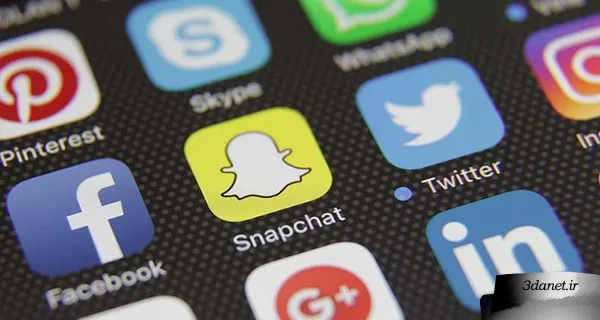
The most prominent consequence of the expansion of social networks has been the growing importance of speech: for contemporary humanity, articulating one's most personal thoughts (in the form of a "tweet," "story," "post," "comment," "YouTube video," etc.) and exchanging them with other thoughts seems to have become the most fateful daily task of human beings. Now, silence, seclusion, and introspection are no longer mystical virtues, for few are immune to the temptation of speaking-of-oneself; the internet is full of loquacious "mystics"!
Now, in step with the ever-increasing spread of media that demand the user "produce content," humanity increasingly flourishes its existence in speaking of itself: if before the rise of Instagram the "successful person" was that "engineer" who, relying on mathematics and physics, transformed the material world, now the "successful person"—and even far beyond this, the "happy person"—is that "YouTuber" who, with the art of eloquent speech, makes videos about their own life that garner millions of views; if until yesterday it seemed as though only engineers do important things in the world and, in the meantime, the sayings of poets, orators, intellectuals, bookworms, film critics, bloggers, etc., were merely a garnish to these "important tasks," now, gradually, those very engineers are realizing that those engineering works and structures were ultimately in the service of disseminating ever more rapidly the sayings and creations of this very "idle" stratum of poets, orators, and so on; if in the not-so-distant past, art and humanities students unconsciously suffered from not being engineers (or not being doctors, etc.), and perhaps in response to "What's your major?" would shamefacedly say "Performing Arts at the University of Tehran," now it is the engineers who, gradually, will be ashamed of not being bookworms (or not being film buffs, etc.), and will no longer be able to respond to "Haven't you seen Asghar Farhadi's The Salesman yet?" by pompously declaring, "I fundamentally don't have time for such things!" Now, not only engineers but many other people who do not even have a university education (but want to be in the loop of the heated conversations and debates on social networks) are also slowly sensing the emergence of a kind of shame within themselves: the shame of uncultivation, or, in other words, the envy of cultivation.
The cultivated person, in the sense I am using, is not necessarily someone who has a PhD in, say, philosophy, or is a renowned poet, or a lasting figure in history. The cultivated person, in a broader sense, is someone who considers exploring the achievements of human thought (non-mathematical thought) and imagination to be a highly fateful endeavor. For the cultivated person, reading, for example, the Divan of Hafez, Sophie's World, How Did We Become Us?, etc., is not a trick for passing time; reading, watching, writing, discussing, traveling, wandering through museums and art galleries are not "recreation" for the cultivated person; the cultivated person, by engaging with the products of culture, art, and thought, wants to peek into other ways of living; the cultivated person, who always suffers from the anxiety of not knowing, is always worried: "Could there be a good film I haven't seen yet? I haven't even finished watching all of the top 250 films on the IMDB site. Could there be a good novel I haven't read yet? It's a pity I don't have many poems memorized! What exactly is this 'Stoicism' they've been talking about lately? It wouldn't hurt to read a bit of contemporary Iranian history! How depressed I felt that day when they were talking about economics, and I knew nothing about 'socialist economic policies'!" and so on. Self-transformation through familiarity with the thoughts of other selves is the most precious concern of the cultivated human being. In this sense, one can be a janitor and cultivated; in this sense, many of us humans at the beginning of the third millennium AD, who have grown up in the embrace of the internet and then social networks, are cultivated, or at least aspire to cultivation.
The desire for cultivation in this sense—increasingly calling one’s own knowledge into question, exploring other ways of living by contemplating the thoughts of others with playful curiosity, articulating these intellectual quests with others, and, in short, becoming an ever more “cultured” human being—will intensify with technological progress. From the outset, the aim of engineering has been the “outsourcing” of repetitive practical tasks (such as opening and closing doors) or backbreaking labor (such as harvesting or mining); with the advancement of engineering, there is no longer a need for humans to themselves perform many of these formerly soul-wearing tasks; gradually, all those tasks that humans need for survival and well-being are being entrusted to machines and artificial intelligence. The ultimate goal of engineering progress is to render humans idle!
Now, the point is that engineering progress in this manner destroys old virtues and constructs new ones: today, even the most traditional women can no longer milk a cow, churn butter from milk, or sew a quilt, just as the most traditional men today can no longer hunt or slaughter a sheep, and even if they could, performing these tasks would no longer be considered a virtue. Such ancient virtues have vanished, and many others are on the verge of extinction—in a few years, with the proliferation of ready-made meals, fast-food restaurants, shrinking apartments, delivery drones flying over city skies, and above all, the human desire to live ever more in virtual space, even cooking will lose its last vestiges of prestige; women will no longer be ashamed of not knowing how to cook.
Since the internet began to globalize from 1990 onward, the process of the disappearance of such practical virtues has accelerated so much that in a few decades, humans (at least the middle-class human who can benefit from engineering progress) will have little work left to do. With the disappearance or even the diminishing of “work” in the traditional sense of the word—the compelled selling of one’s predominantly physical capacity to an employer for greater survival and perhaps more well-being—humans will be left with a mass of dead time and the heavy burden of freedom. With many biological and subsistence needs met by the products of engineering, the only task before humans will be cultivating new beliefs, feelings, and desires; with the “end of work,” humans will, for the first time, want to work on themselves, and this work is inevitably done through speaking with oneself (thinking) and with others (dialogue). Cultivation is precisely this “work on the self.”
In our own society, one can already see signs of the emergence of the desire for such work on the self: today’s (non-academic) book market is entirely dominated by books on “philosophy for everyone,” “the meaning of life,” “how to live well?,” “life coaching,” “ikigai,” “the subtle art of not giving a f*ck,” and so on; the most popular Instagram pages are “lifestyle pages,” whose administrators have turned living into their work; the hottest debates and arguments in virtual space erupt over normative questions concerning the rightness and wrongness of others’ moral, political, and cultural beliefs (as if everyone wants to know whether there is someone else who lives “more correctly” than they do!); everyone has now realized that working (in the traditional sense of the word) is a “necessary evil” that is better the less there is of it; “digital nomads” with fewer working hours and flexible schedules spend their free time making clips of their lives and on “personal development”; for many, watching and critiquing films and series has become a professional hobby, and so on.
All of this indicates a historical turn from an engineer-centric, mathematically-minded culture toward an artist-centric, literary, and discourse-nurturing culture; in the near future, when people gradually forget even the multiplication table, the figure of the “engineer” will no longer possess its former glory, just as being a hunter today no longer carries its former social status.
Hegel said that at the “end of history” humanity would recognize the essence of its being in philosophy, and Nietzsche said that in the future humans would turn to art. To put it more simply, in Hegel’s view, the destiny of humankind is to finally realize that the most important task in life has been to reflect upon life itself, and in Nietzsche’s view, humanity is fated to ultimately realize that the only task worthy of it is the creation of a work of art. It seems that we humans now find ourselves on the threshold of the emergence of such a Hegelian-Nietzschean self-consciousness: today, people on social networks either think (philosophize) or create, and most importantly, they consider this thinking and creating to be their most vital task.
Whether in Hegel’s favor or Nietzsche’s, whatever the future may be, it will be a future belonging to the cultivated, a future in which engineering has evolved to such an extent that it has destroyed itself and reached its end, a future in which, with the end of engineering (and even the end of science), new horizons will emerge for speaking (about life itself), a future in which a cultivated person, before the splendor of the James Webb’s enchanting images, this true masterpiece of engineering, like Hafez, that master of speech, might well say to themselves, “Untie the knot from the heart and think not of the celestial sphere / For no engineer’s thought has ever untied such a knot.”


Discussion4 comments
شبکه های اجتماعی از انواع تحمیل عقیده جدید و demogogyعوامفریبی با کنترل جریان نظر دهی و تمرکز و یا طرح برجسته تر برخی نظرها و یا synthetize به شکل مصنوعی نظر سازی برای مهندسی افکار عمومی.
جناب نویسنده، برخی دیگر مولفه های فرهیختگی بومی را فراموش کردید. از جمله خواندن کتاب ها زرد فلسفه و طبل توخالی بودن و ژست روشنفکری گرفتن و سر در آخور اینستاگرام و ده ها گرام دیگه فرو کردن نشخوار کردن و کلیپ های انگیزشی دیدن و یوگا و انرژی کیهانی و کوانتومی.
به نظرم این نوشته در کنار سخنرانی جدید آقای بیژن عبدالکریمی با موضوع انسان اصیل دربارهی رازهای زندگی، باید دیده بشه و اگر اینطوری دیده بشه بهتره...
«امروز، انسانها در شبکههای اجتماعی یا میاندیشند (میفلسفند) و یا میآفرینند، و مهمتر از همه اینکه این اندیشیدنها و آفریدنها را حیاتیترین کار خود میپندارند.» واقعاً این بوی مغالطه نمیده؟؟ واقعاً چند درصد از مردم همین ایران در شبکه اجتماعی فعالند؟؟ میپذیرم؛ گروه بسیار بزرگی ولی اینکه چنین حصری صورت بگیره و گفته بشه«می اندیشند» یا «میآفرینند»، قابل تأمل و خدشه هست. فیالواقع اکثر مردم در فضای مجازی فقط دنبالهرو هستند، اون هم سخیف ترین نوعش که دنبال روی از یک عده بلاگر که در همه چیز اظهار نظر قطعی میکنند در حالی که در هیچ زمینه ای تخصصشون بیشتر از مخاطبانشون نیست.