Literature
“Readings” and the Project of Postmodernization in Literary Studies
The proliferation of 'readings' has generated diversity, but it has also targeted singular truth and challenged the traditional role of the university. It is a reflection of postmodern logic and relativism that engulfs critical students.
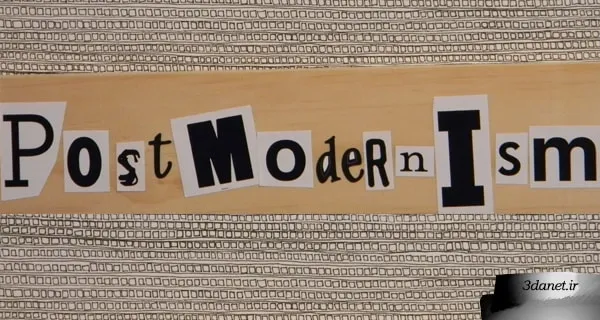
Among the most central components of humanities curricula, and especially English literature, is the presentation of a “reading” of a literary work; students seeking a name in these fields are expected to “apply” the views and principles of one of the schools of literary criticism (Marxism, Lacanian psychoanalysis, Formalism, etc.) in order to interpret a novel or poem. Thus, following the emergence of the “studies” movement in the humanities in the post-World War II era, numerous “readings” of literary works have been presented. The conventional view governing literary studies holds that each “reading,” by highlighting unknown narrative layers, opens a “new perspective” onto the work. While the explosion of such progressive “readings” has led to a more diverse and richer atmosphere in humanities departments, questions surrounding the truth or correctness of these “readings” have challenged the traditional ideal of “objective research” within the university institution. Despite the abundance of existing “readings” of The Great Gatsby, for instance, the question “Which of these readings is ultimately more correct/true?” will inevitably arise. If, once again, as the conventional view holds, these “readings” are not meant to be true or false at all—they merely offer a new perspective on the work—then the notion that literary texts do not possess a single true reading, a single verifiable meaning, will ultimately appear legitimate. If this is so—if, in other words, completely contradictory “readings” of a single text are possible—the consequence will be that, at least in relation to literary texts, as Nietzsche believed, “there are no facts, only interpretations [of facts].” Nevertheless, such a deconstruction of the concept of the truth of a text is severely incompatible with the traditional role of the university as the institution entrusted with objective research for the discovery of a single truth. Under such conditions, in the author's view, the mass production of various truths (“readings”) from literary works reflects the logic of the postmodern condition and its attendant relativistic spirit. In this sense, all students who are writing their desired “reading” of their desired novel are already postmodern relativists, even those students interested in Marxist studies who critique postmodernity in their theses—because their “critique,” too, will ultimately be merely another “reading” of a text.
.
.
Audio of this lecture
.
.
“Readings” and the Project of Postmodernization in Literary Studies
How Are We (Students of Literature and the Humanities) Already Postmodern Relativists?
University of Tehran
Speaker: Be'sat Elmi
.
.






Discussion0 comments
No comments yet; let yours be the first voice.