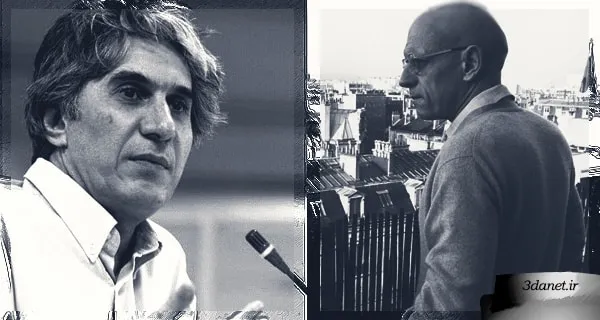
Foreign thinker
Michel Foucault
Michel FoucaultPhilosophy and History of ThoughtFrench1926–1984
Where there is power, there is resistance.


Life and Thought
Michel Foucault (1926–1984) was a French philosopher, historian of ideas, and social theorist. His works had a wide-ranging impact on philosophy, sociology, history, and the humanities, redefining concepts such as power, knowledge, and the subject.
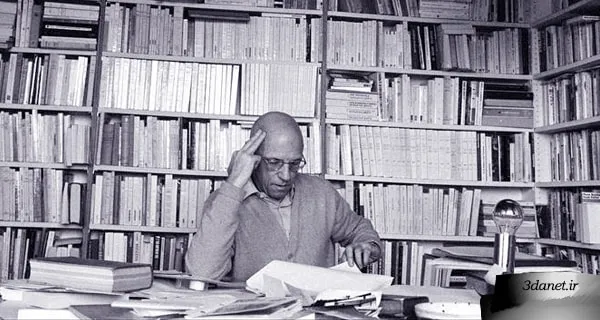
Michel Foucault (15 October 1926 – 24 June 1984) was a philosopher, historian of ideas, social theorist, and one of the most influential French thinkers of the twentieth century. Rather than a system-building philosopher in the classical sense, he was an explorer who reread the history of knowledge, power, institutions, and the human subject. Foucault's works have had a broad impact on philosophy, sociology, history, literary criticism, cultural studies, political theory, gender studies, medicine, criminology, and the humanities.
Foucault was born in Poitiers, France. In his youth he studied philosophy and psychology and was influenced by the intellectual climate of post-World War II France. He engaged with traditions such as phenomenology, Marxism, psychoanalysis, structuralism, and Nietzscheanism, but never remained entirely within any one of these currents. This intellectual independence meant his works always moved between philosophy, history, and social critique.
The first period of Foucault's thought is known primarily for the "archaeology of knowledge." In this phase, he sought to show that each historical period possesses invisible rules for producing knowledge—rules that determine what can be said, what counts as scientific, and what is excluded from the field of discourse. Madness and Civilization, The Birth of the Clinic, The Order of Things, and The Archaeology of Knowledge are the major works of this period.
In Madness and Civilization, Foucault examines the history of the exclusion, confinement, and definition of madness in the West. He shows that madness has not always been understood in a single way, but has acquired meaning in each period in relation to reason, medicine, morality, and social institutions. In The Birth of the Clinic, he analyzes the formation of the modern medical gaze—a gaze that turns the patient's body into an object of observation, classification, and knowledge.
In The Order of Things, Foucault addresses the history of the human sciences and shows that man, as an object of knowledge, is a historical and modern phenomenon. His famous statement about the "death of man" is understood in this context: Foucault is not saying that human beings will disappear, but that the image modernity constructed of man as the center and foundation of knowledge is itself the product of a specific historical moment.
The second period of Foucault's thought is usually identified with "genealogy," a method he adopted under the inspiration of Nietzsche. In this period, Foucault turned to the relationship between knowledge and power. He did not see power merely as command, repression, or overt domination, but understood it as a network of relations that shapes bodies, behaviors, habits, institutions, and ways of knowing. Discipline and Punish and the first volume of The History of Sexuality are the major works of this period.
In Discipline and Punish, Foucault examines the historical transformation of punishment from public torture to the modern prison. He shows how modern society, through instruments such as the school, the barracks, the hospital, the factory, and the prison, disciplines bodies and turns individuals into subjects who are observable, measurable, and reformable. The concept of "discipline" and the image of the "panopticon" occupy a central place in this book.
In The History of Sexuality, Foucault challenges the common notion of the simple repression of sexuality. In his view, modernity has not merely been silent about sexuality, but has turned it into a permanent object of discourse, knowledge, confession, medicine, psychology, and politics. It is from here that concepts such as biopower and biopolitics gain importance—forms of power that focus not only on death and law, but on life, the body, population, health, and reproduction.
From 1970 until his death, Foucault held the chair in "History of Systems of Thought" at the Collège de France. His lectures from this period were later published and play a crucial role in understanding the evolution of his thought. These lectures begin with penal institutions and psychiatric power and extend to security, governmentality, biopolitics, the subject, truth, the care of the self, and the courage of truth. The Collège de France also published the complete series of his lectures between 1997 and 2015.
In his final years, Foucault turned more than before to ethics, the subject, and modes of living. The second and third volumes of The History of Sexuality, The Use of Pleasure and The Care of the Self, show that he had moved from a mere analysis of power to the question of the individual's relationship with the self, truth, and freedom. Foucault died in Paris on 24 June 1984, but his works and lectures remain among the most vital sources of contemporary theory.