Philosophy
An Introduction to Michel Foucault: A Lecture Series by Seyed Jamal Same
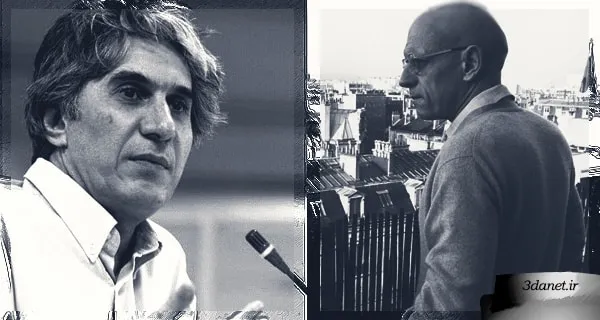
Moving from archaeology to genealogy, Michel Foucault placed the relationship between power and knowledge at the center of his thought. Seyed Jamal Same’s lecture series traces his intellectual evolution from the History of Madness to the repressive hypothesis and the concept of power over life.

With the publication of History of Madness in 1961, Michel Foucault established himself as a first-rate philosopher in the European intellectual landscape. He is called the philosopher of systems of thought and is influenced above all by Freud, Marx, and Nietzsche. In his first intellectual period, in which he adopts the method of archaeology, he believes that issues must be examined at the surface level and any delving into depth must be avoided. Foucault is also a philosopher of discontinuity, as he believes we must focus on the dispersions and ruptures of history. The archaeological method is an attempt to discover the structural rules governing discourse, an attempt that seeks to avoid any hermeneutics or structuralism. Ultimately, due to the discovery of methodological contradictions and the failure to achieve the goals of archaeology, Foucault turns to the genealogy of thought and focuses on the concept of power. In this period, the relationship between discourse and non-discursive factors is examined together. The most important non-discursive factor is power, which constructs the meaning of the power-knowledge nexus. In Foucault's view, the emergence of the sciences is not based solely on the pure intentions of scientists but is dependent on power relations. The domain of modern knowledge has a logical connection with power. In his works of the 1970s, two prominent concepts exist: 1. the "repressive hypothesis," which refers to the idea that truth is inherently anti-power and liberating; and 2. "power over life," which focuses on the human body as a site of intervention and control.
.
.
Session One
31 August 2017 Sheikh Abu Mas'ud Razi Book Hangout Prelude and Examination of the Book History of Madness
.
.
Session Two
7 September 2017 Sheikh Abu Mas'ud Razi Book Hangout Foucault's Methodology: Archaeology
.
.
Session Three
14 September 2017 Sheikh Abu Mas'ud Razi Book Hangout The Failure of the Archaeological Method and the Turn to Genealogy
.
.
Session Four
21 September 2017 Sheikh Abu Mas'ud Razi Book Hangout Foucault's Genealogy: The Repressive Hypothesis and Power over Life
.
.
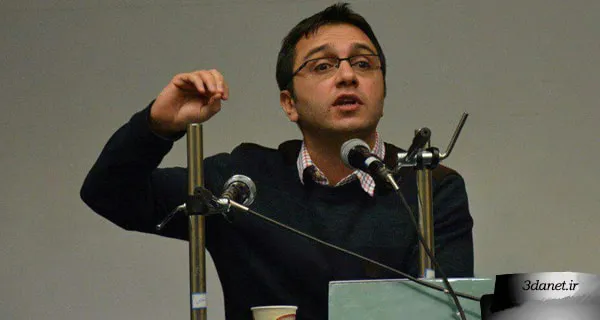
Instructor: Seyed Jamal Same
Lecture Series: An Introduction to Michel Foucault
Source: Nedaye Andishe
.
.



Discussion1 comments
سلا. خیلی ممنون. بسیار عالی و مفید.