Philosophy
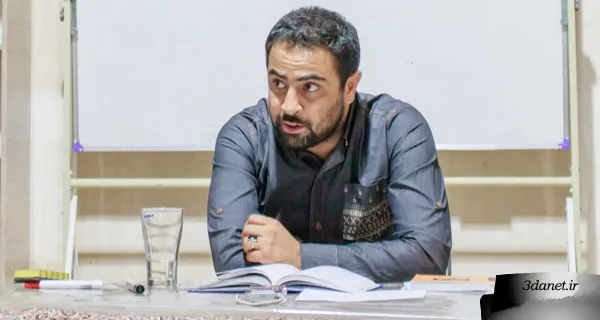
Yousef Abazari's Lecture on Michel Foucault's The Order of Discourse
In a lecture by Yousef Abazari on The Order of Discourse, Foucault sees the fabric of social life as interwoven with power and linguistic control; discourse and its rules are a manifestation of power for production and surveillance.
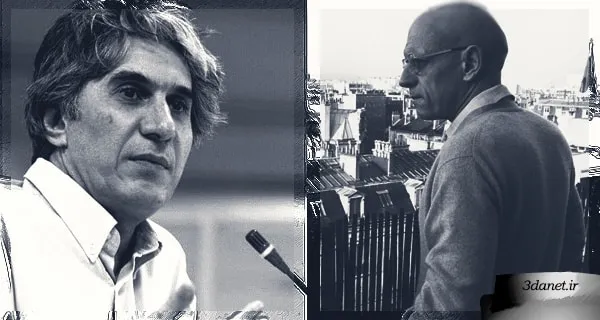
The book The Order of Discourse is Michel Foucault's inaugural lecture for his courses at the Collège de France. Foucault's remarks in this lecture are aimed at acquainting the audience and those interested with the outlines of his courses in the coming years, as well as providing a general explanation of the foundation, basis, and roots of his thought, and also setting the course material for the years ahead. However we look at the matter, examining the book The Order of Discourse is of great importance: 1) Because by leafing through and reading it, we undoubtedly observe all the minutiae of the substructure of Foucault's thought. 2) This lecture was certainly not merely an introduction and outline of his courses; rather, in it, Foucault recounts all the possibilities and limitations of speech in order to draw the listener at the Collège de France ever more closely along with him. 3) The main subject of this lecture deals with discourse and all the limitations and presuppositions of encountering speech and discourse, and from its analytical foundation, the methods of ordering discourse and the limitations and constraints of speech are brought into focus.
By examining divisions and limitations in the fields of language, medicine, and psychiatry, methods of surveillance and punishment in the socio-political order, and finally sexual relations and their transformations throughout history, Foucault shows that the warp and woof of human social life is interwoven with power in all areas, and along with the transformations of power, the structures and frameworks of human relations in the aforementioned fields change. In The Order of Discourse, Foucault considers the essential characteristic of Western civilization to be the effort to control human life and order it through language. In Foucault's view, the reason-centered linguistic structure is built upon binary oppositions. But these oppositions carry strong discursive charges and are described in a particular way such that one is always preferred over the other. Foucault believed that both Western rationality and the concept of power within it emerged largely based on discursive orders and formations. In every society, discourse is produced, monitored, selected, organized, and distributed, and this is done by power. Thus, discourse and its rules are one of the manifestations of power and prevent the emergence of random events or discourses. He initially begins his speech in the form of desire and social institution, but this desire and institution are nothing but two contradictory responses to a single anxiety: the anxiety about the material reality of discourse. In this way, he begins his discussion with discourse: what conditions in each era cause specific types of discourses to be used and become prevalent, while conversely, many other phrases and statements that are correct both in terms of grammar and logical principles are not used and are neglected. The sole reason for this is the existence of necessary and unconscious forms of thought that are independent of grammatical rules, which is the episteme. Foucault employs certain measures to keep discourse from heterogeneity, and that is the principle of exclusion or rejection, which he refers to as methods of controlling discourse.

Discussion1 comments
لینک دانلود خراب است. در صورت امکان اصلاح بفرمائید. با تشکر