Sociology
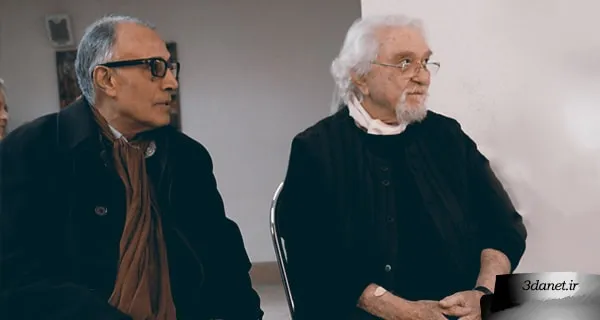
Yousef Abazari's Lecture at the Social Critique of Celebrity Deaths Conference
Yousef Abazari argues that Iranians' interest in being ill is a way of seeking freedom, and accuses the medical system's structure of becoming neoliberal. He sees reliance on lab tests as having replaced the patient's lived experience and calls for a return to the doctor-patient relationship.
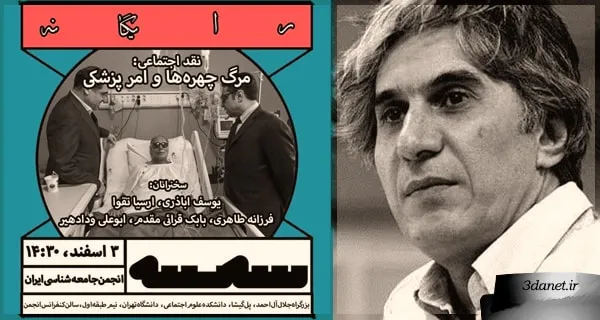
Yousef Abazari (sociologist) considered Iranians' interest in being ill as one of the noteworthy points for research in this meeting and said: The important point is why Iranians are interested in being ill. Iranians love illness, and I have not the slightest doubt about this matter. Nevertheless, it is interesting that none of the physicians, nor even psychiatrists and psychologists, make the slightest reference to this issue. From the perspective of Iranian society, illness is entirely romantic.
This sociologist identified the reason for Iranians' interest in illness as its relationship with freedom, stating: There is a direct relationship between illness and freedom; ill individuals are free and are relieved of any responsibility and duty in every field. So, whenever someone becomes ill, the result is the acquisition of freedom. Unfortunately, this topic has not been raised at all and has not been discussed.
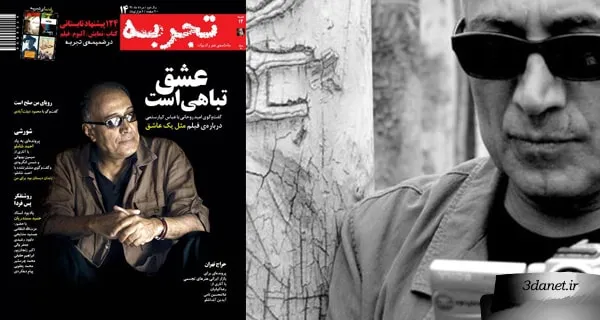
He then made a detour to the death of Abbas Kiarostami and his medical file, remarking: Regarding Abbas Kiarostami's case, two issues are debatable. First, it has been said that the medical staff did not recognize him, and for this reason, the necessary attention was not given during treatment. Meaning, for instance, our healthcare system pays full attention to celebrities and not to ordinary people. Another point that can be inferred from this justification, and which is even more horrifying than the previous one, is that our medical community and physicians are absolutely detached from the cultural atmosphere of society. Unfortunately, our physicians are at low levels in terms of general knowledge. Now, they might not have recognized Kiarostami by face, but not knowing his name is truly horrifying.
Abazari added: We entrust ourselves to physicians who have not the slightest knowledge of the cultural and philosophical situation of Iran and the world. Of course, there are friends who read mysticism and philosophy, but I personally detest these separations because then everyone evaluates themselves within the spectrum of the culture-oriented group.
This sociologist reminded: In psychology, Freud himself says the ill individual must recover their lost dignity, but at present, no one is dignified anymore.
Abazari then, referring to two main axes in the doctor-patient relationship, said: The doctor-patient relationship is either drug-centered, which is a remnant of the Enlightenment era and considers all humans to have identical functions. In this method, it does not matter at all what history the patient themselves provides; it is only the doctor who, relying on knowledge, diagnoses which surgery or drug to use for their treatment.
He added: In contrast, there is a patient-centered method in the world that emphasizes the different side effects or efficacy of drugs and treatments on different individuals. In this method, the doctor-patient relationship is not part of medical ethics but a part of the essence of the medical profession. The first step for us is the formation of a proper doctor-patient relationship.
This sociologist also commented on the importation of the rational perspective and reliance on logic in the medical profession from the West to Iran, stating: The application of reason-centered or empirical methods in the treatment process in Iran gave a magical aspect to medical tools and equipment. Tests and methods of examining the body turned the patient into a mathematical formula. Matters have progressed to the point where the sole basis for judgment and treatment diagnosis is the test result, not the patient themselves and the history they provide. In the treatment process, we must accept that centrality lies with the patient, not the drug and the test.
Abazari noted: With this purely empirical view, the main issue is determined by the image and the test, and the patient is a forlorn person who talks nonsense about themselves, and the correct location of the pain is diagnosed not by them but by the image and the test. The goal-oriented rationality that has been exported to Iran has taken on strangely transformative dimensions. The right approach is to refer to the image and the test but also to consider the patient's experience. The Iranian physician has forgotten this experience, and the severance of the patient-doctor relationship has transformed the patient into a number and formula in the test result.
The sociologist added: In the past, there was a family doctor who even knew that a certain child had feigned illness today because of an exam. Neoliberalism wants to eliminate this family doctor. In the old days, definitive treatment was decided based on the doctor's own diagnosis; today, 90 percent of cases are referred for MRIs and so on. The power of diagnosis has been lost due to this reliance on empirical rationality and has been completely entrusted to tests and images. Like relying on the power of magic.
He then spoke about the entry of medicine into the realm of artificial beauty: Neoliberalism is built to create artificial satisfaction and self-confidence. Fashion is no longer confined to clothing and dress, and cosmetic surgeries have practically employed the body for the dictates of fashion as well. In such a mode of treatment and medicine, the lower classes have been practically driven out and completely excluded, and hospital-hotels have emerged.
Abazari also made a reference to the phenomenon of grave-sleeping, saying: The addicted individual who has become a grave-sleeper no longer has the strength or tolerance for this competition and struggle for false prestige, and reaches a form of pleasure that, in Freud's interpretation, lies beyond death. An interpretation that, in a way, also resonates with mysticism.
The sociologist, however, considered the problems raised to be structural, not personal, and emphasized: If, when discussing the structural deficiencies of the medical system, specific examples are sometimes mentioned, it is not directed at individuals. We are talking about the flaws in the structure of the medical system; doctors individually say that we are honorable people. Essentially, all problems in our society are structural, even within the field of sociology itself.
Abazari noted: We speak of the shortcomings of the structure, regardless of the individuals who operate within that structure. Our issue is the structure of the medical system, which is moving towards neoliberalization, and the Minister of Health also defends it. A structure that has created a situation where some classes of society cannot even mention the name of a doctor, let alone receive medical services. It is this same structure that cannot even tolerate a superficial, vulgar comedy program and has caused these deficiencies to be shrouded in an aura of sanctity.
He added: To articulate structural problems, we are compelled to name some agents and causes. Medical science is rooted in science, ethics, and philosophy; why should they become agitated by the slightest criticism?
Regarding certain theories about paying attention to cultural differences in providing medical services, he also stated: When liberalism needed cheap laborers, it raised the issue of cultural diversity and cultural coexistence, which today, with Trump coming to power, has failed one hundred percent. To solve problems, not just in the discussion of medicine and health but in all affairs, we have two solutions: either a fascist approach like Trump's, or the intensification of democracy and allowing the presence and use of facilities for all people at every level.
Abazari concluded by emphasizing: Changing the dominant structure and discourse is very difficult. Iran's medical system, which was based on wisdom, has today reached this flawed structure, and its problems will not be solved overnight. I hope young doctors will come forward and stand against this situation and present a new and correct structure. The people should also stand behind them and support them. Essentially, when we cannot reform a system, we must rebuild it.
Farzaneh Taheri, referring to Houshang Golshiri's medical file, once again emphasized the necessity for patients and their companions to be familiar with patient and treatment rights.
In a part of her speech, Taheri said: Doctors are aware of their rights, but the people who end up in the medical system do not have the slightest knowledge of their own rights and the duties of doctors. Even if people in our society have become accustomed to being humiliated, this humiliation should not be repeated in relation to the doctor. Why don't doctors ask themselves what this widespread public reception of the satires made about them is? Truly, today's doctors no longer bear the slightest resemblance to the doctors of my childhood and adolescence.
This translator emphasized: Taking a stance and looking down from above so intimidates the patient that they cannot provide an account of their own condition. When euthanasia or abortion are discussed, ethics are quickly invoked, but when medical malpractice and negligence are spoken of, no attention is paid to human lives.
He continued: The medical field is so shrouded in an aura of reverence that it reduces the patient to the level of a serf. The patient's trust in the physician's knowledge for their treatment certainly places a heavy burden on the physician's shoulders, but most of the time, the patient suppresses their questions or need for further explanation because they see the physician as omnipotent, not wanting to fall from their grace and wishing to keep themselves dear to the physician. We are so stuck in the preliminary discussions of medical ethics that truly speaking of medical ethics in a field like stem cells seems like a luxury born of insensitivity.
Taheri reminded: Physicians must be trained and practice to learn and apply communication skills with patients. Today, the dignity of the human duty in the physician-patient relationship has been forgotten.
Arsia Taghva, Babak Gharaei Moghaddam, and Abouali Vedadhir also raised points during this session regarding the medical system and the issues discussed.
.
.
Audio of Yousef Abazari's Lecture at the Social Critique of Celebrity Deaths Conference
.
.
Yousef Abazari's Lecture at the Social Critique of Celebrity Deaths Conference
Yousef Abazari's Latest Views on Physicians and Abbas Kiarostami
Text Source: ILNA
.
.


Discussion1 comments
علاقه ایرانی ها به بیماری یک حرف نادرست و غیر علمی و خنده دار است. آن هم با این وضعیت هزینه های درمانی در ایران. باز اگر وضع مثل کانادا بود یه چیزی! وقتی استاد دانشگاه این طور غیر علمی و خیالی حرف می زند چه توقع از دیگران ! اگر این جامعه شناس با همین روش برود سراغ تحلیل مشکلات وای به حال ما .