Art
A Note by Dr. Soroush Dabbagh on Abbas Kiarostami
Abbas Kiarostami was “death-aware,” and in works like Taste of Cherry, he portrayed the affirmation of life in the shadow of death; an essay on the relationship between his cinema and the poetry of Sohrab Sepehri, and his enduring legacy in film, photography, and literature, by Soroush Dabbagh.
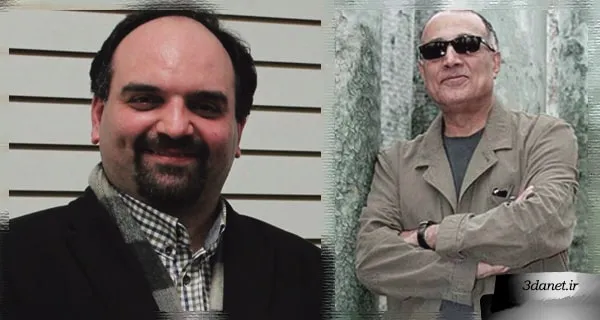
Abbas Kiarostami, the eminent contemporary filmmaker and photographer, passed away yesterday in Paris due to a stroke and flew toward the boundless. I was saddened to hear this news. I was still a high school student when I came to know Kiarostami by watching the film “Where Is the Friend’s House?”; in those days I did not know that Sohrab Sepehri had a poem with the same title in the collection “Green Volume.”
.
What Made You Heartsick?
Soroush Dabbagh
“And he went to the lip of nothingness/ and lay down behind the patience of lights/ and never thought/ that we, amidst the distraction of pronouncing doors,/ for eating an apple/ were left so alone.”
Abbas Kiarostami, the eminent contemporary filmmaker and photographer, passed away yesterday in Paris due to a stroke and flew toward the boundless. I was saddened to hear this news. I was still a high school student when I came to know Kiarostami by watching the film “Where Is the Friend’s House?”; in those days I did not know that Sohrab Sepehri had a poem with the same title in the collection “Green Volume.” Later, when I entered university and took up the serious study of Sepehri’s “Eight Books” and watched “Where Is the Friend’s House?” again, I realized the delicacy, intimacy, and profound, original simplicity of this film. Years later, upon seeing the brilliant and unforgettable films “Taste of Cherry” and “The Wind Will Carry Us,” I plainly saw Sepehri’s deep influence on Kiarostami’s cinema, and I greatly admired Kiarostami’s poetic, spiritual, and humane gaze in his works and became interested in his cinema. Some time ago, watching “Taste of Cherry” again, I enjoyed myself and murmured these lines from Sepehri’s poem “The Motion of the Word of Life” under my breath:
“Life means: a starling flew away/ What made you heartsick?/ There is no shortage of delights: for instance, this sun/ the child of the day after tomorrow/ the pigeon of that week/ someone died last night/ and still, the wheat bread is good/ and still, water flows downward, horses drink” [1].
One can be indifferent to the death that will one day arrive and ensnare us in its grip, ignoring and denying it, practicing “blind-death”; as if humans live forever and will never turn their faces to the mask of earth. Also, many people fear the arrival of death and are “death-fearful”; they are not in denial of this strange matter, yet at the same time, from the overwhelming recollection of this important fact that one day they must relinquish their attachments, possessions, and enjoyments and leave the stage of life, they are deeply bitter and terrified, for “whoever lived sweetly, died bitterly.” In addition to these two types, one can find those who are “death-aware”; this group neither denies death nor fears it; rather, they see the duality of “life/death” together and simultaneously, and they have well understood and tasted the urgency, temporariness, and transience of the opportunity given to them to live and play a role on this earthly sphere for a short while, and they seek to lead an authentic and considered life [2] and make the most of their being alive, taking life’s revenge upon death; so that when death arrives, no regret claws at their being and they deliver scorched earth to death [3]:
Seize every joyful moment that comes your way,
No one knows what the end of the matter will be.
Life’s bond is tied to a single hair, be aware,
Be a caretaker of yourself, what concern is the sorrow of the age?
As I understand it, Kiarostami was “death-aware,” and in works such as “Life, and Nothing More…” and “Taste of Cherry,” he has beautifully depicted this kind of encounter with death. For him, “life has a wing and feather with the breadth of death,” and death “in the essence of the village night speaks of morning” and “is responsible for the beauty of a butterfly’s wing”; a death that “comes to the mouth with a bunch of grapes” and “sometimes picks basil”; a death that “dwells in the pleasant climate of thought” and “sometimes sits in the shade and watches us”; therefore, one must not wholly “trust the living word of destiny that we hear from behind the fences of sound.”
Over the past twenty years, in addition to the works mentioned above, among Kiarostami's films I have seen and greatly enjoyed
[6] In my view, Ashuri is right in this regard, and the connection and relation between Rimbaud's "one must be absolutely modern," which Kiarostami invoked, and his engagement with Hafez and Hafez scholarship is by no means clear. Kiarostami was a first-rate filmmaker, but the publication of this work did not add to his stature; "Hafez According to Kiarostami" can only be considered a kind of artistic dabbling, nothing more. In a similar vein, although Ahmad Shamlou was a first-rate poet, the publication of his edition of Hafez's Divan did not add to his standing either, and Baha' al-Din Khorramshahi's scholarly critique exposed his glaring errors in this undertaking.
.
.

Discussion0 comments
No comments yet; let yours be the first voice.