Art
Landscapes as Old as the World's Memory
Dariush Shayegan sees the worn, unadorned doors in Abbas Kiarostami's photographs as the embodiment of pure humility and silent witnesses to the passage of time, guiding us toward a hidden initiation and the contemplation of vistas as old as the world's memory.
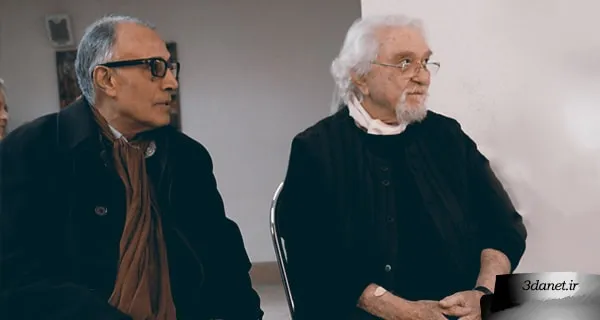
Dariush Shayegan:
The doors that Abbas Kiarostami has framed in his photographs, like his other works, invite us to a spectacle contrary to habit. In his photographs, Kiarostami not only refrains from explaining, but also does not reveal the intention he harbors. He merely presents. With that subtle secretiveness we know in him, he guides us toward an initiation in concealment and solitude. The doors Kiarostami shows us are devoid of that abundance of elements we find in the magnificent and imposing art of eighteenth-century France. On these doors, there is no sign of those masks and bas-reliefs, nor any trace of those floral wreaths. Neither the figure of a lion's head is visible on their lintels, nor do masterful, elaborate carvings and mythological creatures appear upon them. Kiarostami's doors are all old doors, tired and ruined doors, worn by time and eroded by the years, faded, blistered and bubbled, flaking from a thousand invisible sparks. Doors with shapeless rags, and wounded by rough, thick nails. Some so bound in chains, as if they have forbidden every entry for eternity. And another door, with cast-iron rings hanging from the corner of a monk-like bust, as if fixed in anticipation of a wandering pilgrim's knock. All unpretentious and without affectation, without glitter and without ornament, with an unbelievable simplicity, the embodiment of a pure humility that rises to the exalted station of freedom. Not those garrulous doors that proclaim the sumptuous interior of manorial palaces, but silent as an undeciphered inscription and a buried pictograph, laden with the dust of time's patient passage.
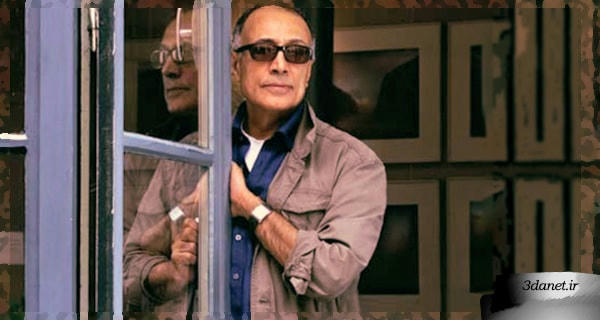
These doors, fallen into the neglect of ages, surrendered to the point of non-existence, having withstood the terror of calamities[1], seem to openly recount the long and distant afflictions that have befallen them from all sides. These doors are silent witnesses to what has passed in their presence: the hesitant steps that have wandered around them, without the courage of a certainty to carry them across the threshold; the steps of those who found their way into seclusion and, from the rosebush of a love they had sought since eternity, attained fortune[2]; the steps that, with passion and patience, wore away at the threshold of their waiting and turned back, yet left a little of their soul behind there; the steps of those who, behind these doors, met with happiness and, worn by the year and month[3], lived out a lifetime and passed on; and those who, in the solitary retreat of mystery, remained staring at the vista of enchanting visions. Are these doors not the arbiters of two contradictory worlds that, according to the changing nature of the moment, yield their place to one another? The world outside and inside, and the world of solitude and society. Who knows, perhaps behind these doors some have witnessed the blossoming of magical spaces, those spaces that open onto legendary gardens, and with the eye of contemplation, one can sit and gaze upon landscapes as old as the world's memory.
[1]) Derived from a poem by Hafez: If wine does not carry the heart's sorrow from our memory / The terror of calamity will uproot our foundation. [2]) Derived from a poem by Hafez: O young rosebush, enjoy your fortune. [3]) Derived from a poem by Hafez: I am not old in years and months, it is the unfaithful beloved / Who passes over me like a lifetime, and from that I have grown old.


Discussion0 comments
No comments yet; let yours be the first voice.