Art
Love Is Ruin
In his first press interview in Iran after Cannes, Abbas Kiarostami discusses the facets of Like Someone in Love—from an eighteen-year-old idea to the stylistic shifts and creative energy that drive him to make films at seventy-two.
1 Two months have passed since the Cannes festival. Everyone has returned. The films are now being released publicly. The black-and-white views of the Cannes crowd may turn a little grey from now on. The cheering, the tearing of collars, the rallying of supporters… and what will remain are the enduring values, and the forgetting of the ordinary. The films, no longer in an exhausting, cursory marathon, are now watched with care and scrutiny, and become subject to criticism, analysis, and interpretation. Abbas Kiarostami, too, was a guest at Cannes with his new film Like Someone in Love, and as always, he and his film were met with a reaction. A group devoted, and some with swords drawn and collars torn. They either loved it or opened their tongues in criticism. 2 And it was thanks to Cannes that newspapers, print magazines, and the virtual space were filled with offhand conversations conducted with the filmmaker during his two- or three-day stay, often devoid of content, or at least low in content. But now, thanks to the quiet and calm, one can read the filmmaker's conversation with an Iranian critic. In fact, this is the first conversation with Abbas Kiarostami in the Iranian press. But this very conversation you are reading led us to start with the film and then move on to other topics. To the thematics of the filmmaker's recent years, to his new formal tendencies, to the changes he has found in style, execution, perspective, and more broadly, in art. To the rediscovery of "cinema," image, sound, language, and to his own place in the pantheon of art. That our filmmaker has made major changes. His art has expanded and he has mastered new tools, that he has grown, and from now on we will witness a different artist. 3 Personally, I envy Kiarostami. At 72, this amount of energy, freshness, power and ability to create, and the search to find new words, a new perspective, and a new style is worthy of admiration. He starts each day with something new. A new idea, constantly making, constantly creating, he is tireless, and this is apart from his filmmaking workshops around the world, and apart from reading and writing and seeing and observing the world, far from the idleness and fatigue and ivory-tower seclusion that threatens any artist of this age and this stature. 4 And the new discovery that our artist has attained an awareness of death. He wishes to reach the age of Manoel de Oliveira and present his final manifesto at 95, and why not, like the Portuguese filmmaker, at 104.
One
Your new film Like Someone in Love is not a film whose story just pops into one's head. It is not a simple story that gets written all at once. The story of the autumnal love of an 80-year-old man for a 22-23-year-old girl. It is a strange story. I doubt it comes by inspiration. Where did this story come from? How did it take shape?
I completely agree with you. This can only be the result of an old man's life experiences!...
... So, in fact, like many of your feature films, is this a soliloquy?
... Yes, but not in the sense that I give you an indication that this exactly happened to me. You know better than anyone that every film is a collage. A collection of personal experiences and the knowledge you have of your contemporaries and the people around you. All my films are the result of such an outlook and experiences. As you know, I do not write or make my films under the influence of any novel or any film or any short story, and naturally, it must come from somewhere, which is that inexhaustible and endless reservoir of my experiences in life, my own life and that of others. However, there are signs in the film that take it beyond the frivolous philandering of an old man or an elderly love, or as you say, autumnal. Again, you know that I am not in the habit of highlighting signs, underlining them, making them obvious, or flaunting them. These signs can easily be missed and are hard to see, but they exist, though I do not like to point to the signs.
The original seed of the film took shape around this young woman. I first saw a girl like her about 18 years ago. She was around 18 or 19. This profession was, and still is, very common among young women in Japan. The women in this line of work are mostly between 17 and 22 years old. I saw a girl in a wedding dress in a busy commercial district, late at night, around midnight. I was surprised and asked who this girl was and what she was doing there. They told me it was a common phenomenon. These girls are often university students. Especially girls who don't come from affluent families or don't receive financial support. They are mostly psychology and sociology students...
... And was that girl in the wedding dress getting married?
... No, it was part of the arrangements of the profession. Back then, of course, they usually had uniforms. When I went back years later, I didn't see them anymore, meaning they no longer had uniforms, and they still don't. When I saw this scene, I actually shaped the story right then and there, I started building the film in my mind. Of course, my story was that one of these girls has a grandmother who, after a long time, has come from her village to see the girl but cannot see her. 17 years ago, that was the original seed of my story. I even have the mock-up rushes of the film.
And why didn't you make the film back then?
For a simple and slightly childish reason. I had an image in my mind, and I wanted that image. I envisioned the point-of-view shot of the girl looking at the grandmother like this: the grandmother is standing in a square, and the girl, while circling the square, sees the grandmother from a distance, and I wanted to capture this shot in a single take.
This was my ideal shot. But I couldn't get this shot. I couldn't find a square because, in Japan, squares simply don't exist. In the architecture of Tokyo, as our learned folks would say, the square has not been considered, has not been defined. You almost never see a square in Tokyo. For that reason, I abandoned making the film. But years passed, and age made me relent, and I said, well, now I can forgo that shot. Naturally, three or four related stories came together, and the screenplay was written. But as you yourself said, the story is not purely a product of the mind and sheer imagination; it is the result of a tangible, known, or directly heard experience, like all my films.
So, the initial story, it turns out, comes from the girl. The story of a young university student or a part-time job helper whose grandmother comes to Tokyo to see her but cannot. But in the present film, we encounter another, new story. The story revolves around an 80-year-old man who, one night, wants such a girl, and wants this very girl, and of course, it's not clear at first why this girl and not another. The story has no sexual direction whatsoever. So, where did this story come from? Was it added later?
Naturally. When you have one main axis, you can't finish or advance your film with just this one axis. To develop a character, you need accompanying or additional characters to move the story forward, and you cannot characterize a solitary person without their connection to others. The presence of other people is essential. These people are created gradually, and very often, these peripheral characters get the chance to become main characters, because you, too, are working day by day, and as the story progresses, they slowly emerge from the periphery. Of course, many of them also remain on the periphery, just enough for your needs. Sometimes, in characterizing this peripheral character, so much thought, idea, and opportunity may arise that they surpass the main person. I also thought that to show this woman, her work, her environment, and to develop her character, she must have clients and must go to someone. Well, who? I had a few options. To be honest, I must owe the choice of an 80-year-old man to censorship. The self-censorship that has formed and exists in all our minds over all these years.
I could have chosen a young man. In that case, the audience’s expectations would have risen, and I officially could not have had explicit sexual scenes. I am simply not that kind of person. No matter how I tried to evade this issue through my taste, perspective, and style, it was impossible. I would have had to show at least something. Even though I knew it did not need an Iranian exhibition license, perhaps modesty, taste, choice, or simply that self-censorship which is a reality and not even conscious, led me to make a choice that allowed me to avoid showing many things. In fact, I had to give censorship a logical form. For this very reason of avoiding the depiction of certain things and censorship, this persona became an old man.
Now I am faced with a new character who must be fleshed out, characterized, and gradually, in fact, becomes the main character. He became a respectable man who lives alone; we do not know what happened in his life. It is evident that he has a family, it is evident that he is a well-known person, a man of thought and reflection, a former university professor, a writer, and so on. So naturally, it is not merely a simple case of an old man’s love. To flesh out all the information about him and develop his character, you also need a few peripheral people, including two of his former students who encounter him. One we see as a sort of procurer of affection right at the beginning of the film—indeed, the film starts with him in that café—and the other is a student he meets at the repair shop. Then we see a neighbor across the way, a middle-aged woman who has a disabled brother and was, in fact, interested in marrying the old man years ago, and as she herself says, in taking care of both of them, her brother and the old man. It is through these peripheral details that the old man was fleshed out, gained a past and a background, and became a professor.
But with the entry of a young man into the story as the girl’s lover, the film sort of turns into a love triangle, which, although not very prominent, nonetheless features a confrontation between an old man who gradually becomes interested in the girl and a young man who desires her. Was this also a later addition, or was it there from the beginning, in the original idea and screenplay?
The young man was there from the start. This girl, alongside her work and studies, had to have an emotional relationship as well. If you get to know women better, you can say that there is definitely a difference between these two categories, and this is more distinct in women than in men. Even among women in this profession, love has its own place. A woman can have a profession and naturally can also have an emotional relationship. The profession does not take the place of love. We have a young provincial student girl living and working in Tokyo, but she also needs love and emotional care. Given what we come to know about the old man, he logically should not enter this triangle and behave like a romantic rival. So one of the sides of this triangle does not want to enter this game; therefore, it is not a love triangle in that real sense. In fact, one vertex or apex of the triangle is a wise and sagacious man who, based on his life experiences, plays a different role and does not become a rival. In fact, he himself says that he is more of a grandfather and a little bit of a lover.
All of this becomes a pretext for a different theme. A balanced, reasonable, seasoned intellectual old man who suddenly finds himself in the middle of the situation. At the end of the film, the young man, who now sees the old man as a rival, throws a stone from below at the window of the old man’s apartment, and the old man suddenly finds himself in the middle of a fight... meaning, if an old man’s love stirs... and scandal.
I did not want it to be seen this way. I prefer it to be seen as an incident. The old man does not deserve such an incident and behavior. Misunderstanding is the most important incident in all our lives. In fact, the young man has fallen victim to a misunderstanding. He fundamentally did not know the woman’s profession. If he had known, he would certainly have reacted differently. The old man himself says that he told the young man, “I am as much the girl’s grandfather as I am yours.” He sees being a grandfather as a characteristic of caring and supporting. In fact, it is not a biological grandfather but a caregiver and supporter. This is a tragedy born of misunderstanding.
So this opposition between reason and wisdom versus youthful fanaticism, this opposition between tolerance and cultivation and youthful jealousy and anger, is an interpretation you are not satisfied with?
Why not. That is also part of the thematic. The end of the film comes as a shock to many. To be honest, it was a shock for me too. I first have to see the film in my mind and write it. I write the dialogues after seeing the film. First I see the people and the location, then I add the dialogues. I move my designed characters through the story, I see their behavior and gestures in my chosen environments in my mind, I write the scene description, and then the dialogues. When I reached this point and the stone was thrown by the boy and I saw it hit the glass in my mind, I wrote in English, The End—the very same The End we used to see in silent, classic, black-and-white cinema—but I myself did not believe this could be the end. However, because the producer was in a hurry, I quickly translated it and sent it to them. Strangely enough, they did not react in any particular way.
Of course, I explained to them that I would think about this ending later. I thought this might not be the end, just as the film's beginning was not a beginning either. I wrote that I needed to find a beginning for the film and an ending, and that I needed time. But during the two or three months I had to think, I realized that I could reach neither a better ending than this, nor a beginning. Now the film's beginning has the logic of any beginning. I believe that no beginning for a film is actually a beginning. It is we who enter a story and begin it. Any story you hear or see. It is you who begin it by entering it, but in reality the story started long ago. And now we have entered this story. No ending is an ending either, not even death. Life and life's stories continue. In the film's current beginning, we are in a café, eavesdropping on a girl's private conversation, and then we follow her. We just enter the story like that.
By the end of the scene, when the girl goes from the café stairs to the street, we know everything about her. She has a grandmother she hasn't seen for a long time and misses, she is a student, she has an emotional relationship with a curious boy—and naturally jealous, since jealousy is the process of love—she has a coworker friend and a kindness broker who studied before and now must go visit a high-ranking professor who was once this broker's teacher. In fact, I begin in such a way that we have entered the story ourselves by listening to the girl's words, and now we accompany the girl. I thought this was a good beginning. Why and what should I add to it? The ending, in my opinion, also does not matter where these people end up. A small tragedy has occurred. We have an old man who has lived respectfully in a neighborhood for 50 years and now finds himself in an exceptional, unexpected situation. That is enough. I cannot find a better ending than this. Some people loved this ending. Gilles Jacob wrote that the ending of this film is magical. There are many opinions from viewers who believe the film is unfinished. There are viewers who like to see everything naked and exposed. At the end of my film, I follow the old man in his apartment for three minutes as he hears the young man's voice, then sees him from the window in the street, and then the stone is thrown at his apartment window.
Here too, there are signs in the film, like in your previous film Certified Copy, that suggest the old man and the girl have known each other before. It seems as if in your mind there is no initial acquaintance, and everything is a return to a past.
The girl does not know the old man, or at least not this particular old man. She knows the traits of a grandfather but not this man, yet the old man knows the girl. In the film it is presented simply: resemblance, but a more complex and indeterminate form, something like reincarnation, might also come to mind. It often happens that you see someone and think you have known them for years. Saadi has a poem with the same theme: “I shall never lift my head from this drunken hangover / For I was not yet, when you sat within my heart.” Meaning my love for you transcends and outlasts my life. You are a lost part of me. At the beginning of the film, the girl is told that she must go visit the old man, because he wants to see her. On that very first visit in the old man’s apartment, the girl tells him that his pillow smells of perfume, and the old man protests that no one else has ever been there. The girl does not even know the old man’s name. When the old man drops her off in front of the university, she only then asks his name.
As far as I know, you are not someone who sits down and writes a story from beginning to end in one go. How long did it take to write this screenplay?
My stories have a seed, but when I arrive at one of these stories, or think about it and choose it, I write very quickly. I might get stuck somewhere and set it aside for a week without touching it, but once the block is resolved, I write very quickly, simply, and easily, within two or three days. I never have much trouble with the elaboration. The reason is that I have real-life models for all of them, so I set a persona as a model. I even go and talk to them, without, of course, talking about the subject of my film or story. I take the words, the way they look, their mannerisms, and everything from them. For instance, I might come to your house one day, or Dariush Shayegan’s house, or Aydin Aghdashloo’s house, and observe the way you sit, rise, and speak, your reactions, and take a model from you all. Now my persona, depending on the situation and age, becomes similar to one of you...
... Yes, now that you mention it, one can sense that the persona of the university professor in the film is somewhat like, say, Dariush Shayegan...
... Yes, I took his philosophy from him. I said this old man in my film is a philosopher and translates philosophical works into Japanese. He even writes and gives conferences; his writing, conferences, and his attachment to contemporary philosophy, thought, and ideas bear similarities to Dariush Shayegan.
Two
In your films, there are very few instances where you have dealt directly with love... I mean love and romantic relationships between a man and a woman, but these two recent films of yours, “Certified Copy” and this “Like Someone in Love,” are about the emotional and romantic relationship between two people. Your age, of course, is not that advanced, but what has happened that at this stage of your filmmaking, at this age, the complex intricacies of romantic relationships between two people have occupied your mind to such an extent?
I know you do not mean love in the general sense, but if you are speaking of love in the general sense, my impression is that from my very first films until now, all of them have been about love. The actor in the film “The Traveler” later said about the film that “The Traveler” is a love story, in the sense that love does not necessarily have to be only for a woman or the opposite sex; it can be love for nature. In any case, life, in its passing, imposes something upon a person that, no matter how much you want to avoid clichéd loves and no matter how hard you try to preserve your freedom and not come to terms with the common interpretations of love and have a personal interpretation, you are afflicted by it. You cannot run away from many things. An incident happens in your neighborhood, among your colleagues, your friends, and you cannot avoid it. Practically, you cannot avoid clichéd loves—and I readily say clichéd. Let me say here that my interpretation of love is, unfortunately, cliché. The more time passes, the more I see it is repetitive.
It is a fixed, permanent, and repetitive pattern. A story that repeats itself for me, for others, for everyone. When this grip takes hold, culture, intellectualism, and thought can in no way influence it. If I say influenza, I don't mean it as an insult; I mean it in terms of its difficulty and hardship. With any culture and background, wealth or poverty, illiteracy or great knowledge, when you catch the flu, you suffer a certain set of symptoms. That is why I say love is a cliché. Something that your information, culture, and personal views cannot moderate or alter is a cliché. When you are afflicted by it, you turn into a very banal, superficial, demanding, selfish, and nervous creature. This is the result of love. If you are in love and can manage your love as an intellectual, use your culture to manage this crisis, then one can live well with love, but you see that you lack the ability. Love brings only clichés with it, and in fact, managing it is difficult.
In the several instances where you have worked with the theme of love in romantic relationships between men and women, you have always presented it in crisis, from "The Report" to this latest film. From "The Report," which surely goes back to a personal experience in those years, in "Through the Olive Trees" we deal with the beginning of a love that is in misunderstanding and crisis from the start, to "Certified Copy," where it seems a man and a woman are trying to overcome a previous crisis again and cannot, to this film "Like Someone in Love," which is essentially two types of love and relationship, both in crisis... It seems this is a mental preoccupation?
It is all crisis because crisis is a part of love. We cannot imagine that two human beings who are completely different from each other can have a romantic life together and continue it for years. Of course, we have exceptional cases. Let me give an example from the last romantic film I saw. Michael Haneke's film "Amour." An old man in his eighties suffocates his wife while telling dozens of love stories. For me, this was a shocking tragedy. At first, I did not like the character, but then I thought perhaps there is a truth in it, and this question: isn't this kind of life imposed on a person? Or is it a reality that when you get the license, you can destroy your life partner, whom you claim to love, in this horrific way? Isn't this the result of years of accumulated anger? Anger that no one has the strength or courage to express. Everything I hear, everyone is complaining about each other, so I am forced to conclude that the essence of the matter is flawed. The relationship itself has problems. I don't know who said this brilliant sentence, but it is brilliant: love is the result of a misunderstanding, and when we reach understanding, love diminishes. Why does someone feel betrayed? It stems from this same misunderstanding. It is like stepping on a nail or a thumbtack with your bare foot and then saying, what a bad thumbtack. There is no such thing as a good thumbtack. That is, you cannot say after a few years that your life partner was a bad partner. This is the price of love.
Love also has its time. A deadline that expires. The intoxication is not permanent. In the film "Like Someone in Love," another young man shows a photo of the girl to the girl's lover, which shatters the man, and our cultured old man says a sentence to him that is, in fact, the definition and instance of a beautiful verse of our own: "If you lack a lion's liver, do not embark on the journey of love." The young lover in the film asks the old man, how can I believe that she couldn't find a charger for her mobile phone, and the old man says that now is not the time for you to marry; you can marry when, firstly, you do not ask questions, and if you do, you must be satisfied with any answer. The young man asks how one can be satisfied with a false answer, and the old man replies, I am not saying be satisfied, but rather show that you are satisfied. If you can do this, you can carry the title of a lover for your entire life.
My entire question is whether your preoccupation is crisis in romantic relationships?
The time of love is a short time. Sunrise and sunset are not only beautiful, but they carry you into a safe light; yet the shadow of the sun drains your strength, and love is the shadow of the sun. When you praise the sunrise, you must also remember the shadow of the sun. Love is not fixed; it does not remain in one state. It is constantly changing. The reality is that love cannot be managed. You cannot make it your own. The old man in my film tells the boy a difficult rule for managing love, but again, the reality is that at least the boy lacks this ability, and the stone that, at the end of the film, strikes the old man's apartment window out of the boy's jealousy says just this: that here, this case too has failed. It was not manageable, meaning the young lover is not of the same type and substance as the mature old man.
It seems, from the beginning of the film, that the old man had a romantic life in the past and is now seeking that same past love in the existence of this girl?
Yes. That is exactly it. With all the wisdom he possesses, nothing remains in his hands. The lover must know that in the end, his hands will be empty, or at least only a memory will remain. I know this conversation will create many new enemies for me, but I ask all these new enemies to wait two or three years. Then we will talk.
The fact that these romantic and emotional relationships in your films end in crisis and never reach stability or settlement—which naturally must be the product of your own life—is it a kind of manifesto, so to speak? A sort of epistemological view on love?
No, not in that sense. My work is not about issuing manifestos. I am stating a reality without pretense. I am simply saying that we should not entangle ourselves in this matter...
Meaning one should not fall in love? It is not possible.
... Why, it is possible; it can be controlled. It can be controlled with realism and understanding. Love carries with it a kind of inevitable failure. If you accept this, you can enjoy it as a very pleasurable intoxication and ecstasy. All your art should be in being able to prolong the duration of this intoxication. That is all. Like the advice doctors give for health and longevity, but this advice should not make me forget death. If you accept death as an obvious, certain, and inescapable truth in every relationship and in life as a whole, then longevity, and naturally the duration of intoxication, will be greater.
But in "Certified Copy," you also negate this solution. There, it seems that the man and woman, again and after the failure of the first time, and now in a second attempt, fail once more?
No, I don't think so. It is not that we repeat it in the hope of succeeding the second time. It is true that now your understanding and power of management have increased, but at the same time, you have become more broken. When you place these two sides of the equation opposite each other, you see that this experience is of no use to you. I think one solution is that awareness must be raised the very first time. In "Certified Copy," it is clear that if the man stays, misunderstanding and crisis will happen again. At the same time, this experience carries no love with it; it proposes an unavoidable, inescapable bitterness and compromise. A peaceful life does not signify love. In fact, both have reached this bitter conclusion with maturity: that they must compromise and try to have a peaceful life together, and their maturity grants them this possibility and permission. In "Like Someone in Love," our old man sees no place for himself to become the second side of an emotional relationship. He sees himself more in the form of the nervous, lovesick young man's future. In fact, the old man demonstrates the crisis and mistake of the young couple. He is actually pointing out that this young couple will later turn into that couple from "Certified Copy." The old man is a powerless, aware character.
In the opera Così fan tutte, which I also directed, there was a similar character. There, a man of awareness named Don Alfonso expressed and conveyed all his reflections on the relationships he saw with awareness, which the young couples did not see. In the opera, too, he became a marginal character and merely drew our attention to the problems of the young couples in the opera, perhaps similar to the function of the old man in the film Like Someone in Love. From this comparison, one can understand that this issue has historical roots and is not specific to our era. Of course, social crises, economic pressure, and all of today's afflictions also have destructive effects, but the main problem apparently existed in the late eighteenth century, or Chekhov shows that it existed intensely in the late nineteenth century as well. This is a central theme in Balzac, Flaubert, Chekhov, and many others. It seems we are captivated by something we need.
When nature has four distinct seasons, each beautiful in its own way, and God has placed this four-season structure with all its diversity in nature, such that in the cold of winter we long for summer's arrival and in the heat of summer we complain of the heat, how has God designed it so that one woman lives her entire life with one man, or vice versa? This conventional formula has a flaw. Why all these emotional afflictions? This naturally cannot be a violation of creation. God, with all His kindness, must have considered not to take us suddenly from summer to winter or from winter to summer, and has also designed an autumn and a spring so that we can adapt. Logically, this rule of relationships must also be properly designed, and the problem lies with humans who cannot solve the problems. Philosophy must solve this problem.
At the time of the film's screening at the Cannes Festival, there were many reviews, both in the press and in the virtual space, which alluded to the fact that this film lacks many of the elements, devices, and motifs of Kiarostami's films, but there are also things—though no one mentioned these—that were not in your films before, such as the expressive or emotionally evocative use of music, and here the song "Like Someone in Love" by Ella Fitzgerald. You had never used music so overtly, a song that explicitly and clearly explains the film's theme and even anticipates and raises the possibility of the film's original seed. This was strange. It was a bit heavy-handed, although it was used in the form of atmospheric music.
Firstly, regarding the first part of the questions, I must say how is it possible for me to make a film and my signs not be in it? This is impossible, but here it is the viewer's duty to understand that when my geography changes, my culture, language, personages, and people change, they should naturally try to find the signs in this new text and context.
Here I no longer have the rural people and the village atmosphere, I don’t have the external nature, but this is a place for the lazy critic and the intelligent spectator to understand that this is not the “Friend’s House.” When Jean-Claude Carrière saw the film, he told me it was another “Friend’s House.” That is, for him it revived a feeling similar to Friend’s House. I am farther from my own film than anyone, but this is inevitable, it is a compulsion that you repeat yourself. I have of course grown older, but I carry signs of my youth. Every line that has appeared on my face has introduced a new element and substance into my spirit and mind, into the reality that has existed and continues to exist as a foundation. Perhaps new lines have entered, but it is not only natural, they have also penetrated that intellectual, mental, and cinematic foundation. The second point is that I have said my piece about the use of music in my films and I still refrain from that kind of use of music, but if in some place music can help, why not use it? To be honest, I am a little disappointed with today’s critic and spectator because they want everything to be explicit and even heavy-handed, and I cannot satisfy them. But I thank God that so far I have not bribed this lazy spectator much. I claim that because I still know how to make low-budget films, I can make any film I desire and not give a bribe to today’s spectator who wants all the information, but I still give signs to my spectator. I still insult neither myself, nor the intelligence of the spectator, nor the critic who is the chosen spectator, so if I feel somewhere that music can help me a little, I use it. I have no formula.
I also do not believe in this point that Kiarostami breaks here. Which Kiarostami? If I am supposed to forget all my experiences by adding a piece of music, why make films at all? I do not see it necessary to constantly copy myself. Because I have said I do not use heavy-handed music, I see no reason not to use music if a piece of music helps me today. I will certainly do it. Music helped me. This music helped me so that all these 3 or 4 personages are like a lover. Birth and death have certainty, but love has no certainty, it is born of circumstances and does not have a long life, naturally like a lover is a better proposition than a lover and can be generalized to the old man, the girl, the boy, and that middle-aged woman whom, to be honest, I have borrowed from Ozu’s cinema, who imagines she is in love. All of these are like a lover. To be honest, when I wrote the screenplay, I remembered this song. I once had its 33 rpm record. I searched on the internet and fortunately it was there, and it sat on the film. This was the only help that could reduce the film’s need for more heavy-handed and exaggerated dialogue and conversations.
So you remembered the song after writing, or was the song itself the seed for writing the screenplay?
Neither, it was midway through filming that I was constantly thinking about the end of the film. I did not like the word The End, and the film’s title
was The End or this very “The End.” I did not like that in the last shot, when the old man falls to the ground, the word “The End” and the film’s title would give the spectator the feeling that, for example, the old man dies. I changed the film’s title. For the new title, I went through all the combinations with the word love, romances, and one of the choices was “Like a Lover,” and then I remembered the song. I was not even sure it was by Ella Fitzgerald. I liked Ella Fitzgerald’s late-career works, when her voice had become raspy.
Three
A formal change has also appeared in your work, in that your camera is no longer at eye level. You used to try, and this was one of your stylistic signatures, to always set the camera at the eye level of the personage. Here you have a different approach, a kind of diverse grammar in terms of angling, camera placement, and the use of all kinds of shots has appeared in the film.
Yes, that is correct to an extent. In recent years, after seeing handheld camera films, this mentality arose in me that one principle in cinema is disappearing, and that is mise-en-scène.
... Let me say right here that part of that framing at the character’s eye level, apart from your way of looking in the sense of not judging or not looking down from above — you were working very much in the style of Ozu, but from Certified Copy onward it seems this is gradually giving way to a more varied use of a more varied cinematic grammar. Though you still retain the non-judgmental stance...
... Yes, all of this goes back to that same loss of mise-en-scène, to considering handheld camerawork easy. Handheld camera is one of the simplest things. With handheld camera, the need for arrangement, for mise-en-scène, diminishes. The director in the old definition, meaning the god of the stage, meaning the metteur-en-scène, meaning giving the mise-en-scène, arranging people in space, but now with this handheld style everything is entrusted to the cinematographer. It is he who decides to go from which character to which character. He decides. To be honest, there was a time I really disliked theatre, I couldn’t bear sitting in a theatre, perhaps because of its artificiality, but as time passed, I now think theatre has become more watchable than cinema, because it respects the spectator. Through theatre I rediscovered the value of mise-en-scène. When actors move in a calculated way and you, as a camera, have the permission to follow them. This is completely lost in the prevalent handheld cameras. I decided to give importance to movements, to the arrangement of people, and to return to mise-en-scène. I tried to place the camera, akin to theatre, in the position of the theatre spectator’s eye. Fortunately, I saw this year too, especially at Cannes, that attention to films possessing mise-en-scène had increased; the era of handheld camera and ease and shorter time and creating a kind of movement in scenes seems to have come to an end. With handheld camera, even set design’s role is diminished. With handheld camera, set design loses its expressive value in cinema. It was for this reason that for some time now I have arrived at the older definition of cinema, but I still think my first choice for camera placement is that same eye level. My camera, if it isn’t necessary, does not look from above or below, except in reaction shots.
Could one say it is a return to the forgotten values of “Cinema”?
Yes. Absolutely, in my opinion and according to many cinephiles, this film can now be viewed as a classic cinema film. The old man in my film is a character that no longer exists in today’s films. This man is in relation to the mise-en-scène, and if we approach him with a handheld camera, he is no longer that person. The dignity of this man, in his own characterization, recommends his mise-en-scène and his camera angle and the camera’s gaze upon him. He says I move better in mise-en-scène, and my dignity and gravity and erudition emerge in this type of treatment.
Recall men of this age and this dignity in the history of cinema, like Curt Jürgens, or Spencer Tracy and the giants of cinema moved within mise-en-scène. None of them appeared on stage with a handheld camera, they didn’t. It is the character’s recommendation. The combination of mise-en-scène, set design, determined and calculated movements, and the eye-level angle and direction gives the viewer a classic film. In my view, this is a type of cinema whose treatment resembles the cinema of the 1950s. Gilles Jacob, in a piece he wrote for the film, said that no one produces cinema anymore. This type of cinema has vanished. This type of treatment, influenced by the characters, and the character himself influenced by the mise-en-scène, no longer exists in today’s cinema.
Of course, in instances where you work with the film’s younger characters, the scene is a bit more turbulent.
Yes, absolutely.
Could one say that Certified Copy and this film, Like Someone in Love, are two films of a trilogy?
If a third is made, a trilogy will take shape...
Four
Well, apparently the film you are making in Korea, and for which you have built the maquette, meaning The Man Who Loved Women, cannot be this third one?
ظاهراً بیربط نیست، نمیتواند بیربط باشد. این فیلم راجع به دروغگویی مرد است؛ دروغی كه حقایق بسیاری در آن نهفته است. روزی كه به این قصه و فیلم فكر كردم حدس میزدم كه به یك فیلم سبك بامزه بدل خواهد شد اما كمكم دیدم كه فیلم شخصیت مردی را دارد كه به زنها دروغ میگوید تا آنها را اغوا كند و آنها را داشته باشد و در این یك حقیقت پنهان است و كمكم احساس كردم یك كمدی تراژدی است. البته خندهدار هم هست اما نوعی برخورد تراژیك هم دارد. اما فیلم بعدیام این نیست. فیلمی كه میخواهم بسازم اسمش هست «محاكمهی افقی» كه دربارهی زنی 95 ساله است كه 70 سال پیش شوهرش را كشته است و این قتل تازه كشف شده و دارند محاكمهاش میكنند. او مردش را كشته است و جنازه را داخل دیوار جاسازی كرده و حالا كه خانه را خراب میكنند جسد كشف میشود و حالا دارند محاكمهاش میكنند و او به راحتی اعتراف میكند و با جسارت و شهامتی كه حاصل بینیازی و پختگی است حقایقی را راجع به رابطهی زناشویی و زندگیاش با مردش میگوید كه تكاندهنده است.
این میتواند سومین باشد كه یك تریلوژی را كه تو به آن علاقهمندی بسازد. فیلمنامه آماده است و میخواهم آن را در جنوب ایتالیا بسازم. شروع و پایان دارد. به نظرم اگر فیلمنامهای را در یك صفحه توانستی بنویسی كامل است و اگر نتوانی آن را در یك صفحه بنویسی ناقص است. امسال یك کارگاه در كن بود با شركت و حضور نورمن لوید، پسر هارولد لوید كه خاطراتش را از سینما و سینماگران تعریف میكرد و خودش یك تاریخ سینما بود. خاطراتش را از جان فورد گرفته تا ارسن ولز و هیچكاك تعریف میكرد. نكتهای از هیچكاك گفت كه خیلی جالب بود. میگفت كه هیچكاك به سراغ او میآمد و مینشست و با حرارت و علاقه شروع به تعریف قصهای میكرد و همیشه از همان ابتدا با كلمهی دوربین شروع میكرد كه دوربین از اینجا به سمت چپ یا راست میرود و فلان پرسوناژ را در قاب میگیرد و بعد با پرسوناژ به راه میافتد و چرخی میزند و با آب و تاب و ذكر همهی جزئیات صحنه و حركات دوربین و دیالوگهای پرسوناژها تعریف میكرد و بعد سكانس بعدی را و باز با همهی جزئیات میزانسن و حركات دوربین و همهچی... گاهی مثلاً طی نیمساعت فیلم تدوین شده را تعریف میكرد. بعد میرسید به لحظهای كه میگفت خلاصه و تا میآمد كه بقیهی قصه را به شكل خلاصه تعریف كند خودش متوقف میشد و میگفت نه، بعداً دوباره میآیم و بقیهاش را تعریف میكنم.
این یعنی قصهاش كامل نبود. وقتی به نقطهی خلاصه میرسی یعنی قصهات كامل نیست و وقتی قصهات كامل نیست یعنی فیلمی نخواهد شد. خود من هم همینطور بودم و بارها و بارها با شور و علاقه قصهای را كه طرحش به ذهنم زده تعریف میكنم و بعد به نقطهای میرسم كه از آنجا به بعد را ندارم. این یعنی فیلم یا قصهاش كامل نیست. این را نمیشود ساخت. در مواقع تدریس هم تا شاگردانم به كلمهی خلاصه میرسند متوقفشان میكنم. اگر توانستی طرح قصهات را در یك صفحه بنویسی آن فیلم ساخته شده است، یعنی ساختناش كاری ندارد. دشوار نیست اما اگر نتوانستی و نشد یعنی این یك قصهی ناقص است. وقتی استخوانبندی اصلی را داری دیگر جزئیات به دست میآید. در واقع فیلم را ویرایش میكنی. وقتی خط اصلی فیلمنامهات را داری و توانستی آنرا در كوتاهترین شكل بنویسی در واقع فیلم در ذهن و چشم تو ساخته شده است. ساختن فیلم بعد از این مرحله یعنی پرداخت همان فیلمنامهی یك صفحهای.
حالا میدانم كه این فیلمنامهی فیلم تازهام، «محاكمهی افقی» كامل است. میدانم چیست. همهاش را دارم. چارچوب اصلی را دارم، حرفهای جسورانهی یك پیرزن 95ساله را دارم كه با تندی و جسارت و حتا اندكی مهاجم داستان كشتن شوهرش را در 70 سال پیش تعریف میكند. اگر روزی سن من به 95سالگی برسد حرف آخرم را در فیلمی میزنم ـ البته اگر در آن سن توان فیلمسازی داشته باشم ـ و بعد به همه شب به خیر میگویم.
باز تغییر فرمی كه در فیلم اخیر و حتا فیلم قبلیات دیدیم افزوده شدن تعداد زیاد نماهای متوسط است. تفوق در فیلمهای قبلی تو با نماهای دور بود و كاربرد كمتر نماهای متوسط، اما اینجا جز یكی دو مورد و صحنه، دیگر نمای دور نمیبینیم و بیشتر با تعدد نماهای متوسط و درشت متوسط سروكار داریم...
The reason, naturally, goes back to the story’s setting. I never say that ridiculous sentence beforehand—that since I am a man of long shots, now that I’ve entered a small apartment and lost nature, I must, by any means necessary, capture a long shot. Which two ordinary, sane people socialize in a long shot?
... But in Certified Copy, which had both nature and exterior scenes, we saw this same use of medium shots...
There too, our subject was socializing, talking, and establishing a connection between two people. You and I have been sitting here talking for an hour and a half now. Perhaps this place allows for a long shot, but it would be foolish for me to film this conversation in a long shot. The necessity of this dialogue leads me to medium shots, medium close-ups, and close-ups. The relationship itself, the incident within the scene, determines the lens size, the camera placement, and the form for you. The bulk of the film is the professor’s conversation with the young female student, then with the young man, then the first conversation inside the café, and especially the three-way conversation inside the car; the lens must become a 50 and the distance around 1 meter or 1.5 meters...
... And it is in these places that you work at eye level.
Even my long shots are always at eye level, but the question is, whose eye? The eyes of two people conversing with each other, or the eye of the camera? You cite your own eye or mine, but the camera also has an eye, and when two people are sitting in a car and you have them in the frame and want to work at eye level, you must think of the camera’s eye and show them at their eye level through the camera’s eye.
A series of questions you are constantly asked, and were asked a lot here in Cannes regarding the screening of this film, concerns the occurrence of events and the story unfolding in a car, and the abundance of car scenes in your films. Does this go back to your solitude and your many travels, with the major part of your life spent in a car?
Yes. This isn’t unique to me; all of us spend parts of our daily lives in a car. Besides, I’ve explained this so much that I don’t want to talk about it anymore.
It seems it was a difficult production? Was that because of the language or working in an unfamiliar environment?
I don’t want to point to that. I was just getting to the point where the Japanese would fall out of favor with me, but then I thought about it and realized the problem wasn’t the Japanese. I have no problem with language. Everyone speaks in their own language, but the relationship is a human relationship. He said, “When he looked closely, he saw his own feather in it / He said, of whom shall we complain, for it is from us that comes what is upon us.”
What became of that film you were making in Gorgan?
It’s strange how all these films are very similar to one another. That film was also about a man and a woman—actually a woman and her husband—in very primitive conditions, in unbelievable economic and cultural poverty, and there we were, truly wallowing among the limbs of people, and seeing what similarities we have with them, and they with us, and everyone.
When will it be finished?
I have never worked so hard for any film, never built so many maquettes, never searched so much for an actor. One of my troubles, which caused that project to be temporarily shut down, or rather suspended, three times, was the work coinciding with Muharram and Safar. The film’s story revolves around a marriage, and just at the times when everything was falling into place and we wanted to work, we would hit winter or Muharram. I hope it will be possible to finish it soon.
You also had a film you were making with Hamed Behdad, what happened to that?
That film has one hitch. In that film, I must use a famous, well-known actor who gives it a shocking authenticity, but there is absolutely no way I can count on that particular actor.
But it seems you are quite withdrawn, and it’s almost finished, needing just a little time, patience, and the resolution of that problem?
All of these are films that have been made; they just haven’t had an output. The problem with this recent film of mine is that only one face, that same single actor, can be in it, and practically it’s impossible.
Was the screening of Shirin successful in your own view—I mean showing the film in Tehran cinemas?
They were kind and granted a permit. Television was kind and ran free teasers for the film, but the niche audience had already seen it on DVD. I had said beforehand that the film’s revenue would go to the elderly at Kahrizak. The film sold 21 million tomans with a general, ordinary audience in those limited halls. When I realized the box office wasn’t high, I announced that not just the profit but the entire gross would go to Kahrizak. The distributor announced that our share of the box office came to 9.5 million. When after a while I saw the money hadn’t been paid to Kahrizak, I called the distributor with some annoyance, and he said that despite no one having taken their money—even the municipality was kind and didn’t take its money or share—the cost of those small ads and the rest of the promotional materials came to 11 million tomans, and I’m now in debt on that film.
I’m also in debt many times over for screening this same film in a Paris cinema, and I have to spend the money that came in from the successful run of Certified Copy on the debts for this film, and the very actor who is supposed to play Hamed Behdad in that film is the only one out of those 117 cinema actors who has asked me for a fee. But the film, which is also very compelling and fresh, has one brilliant sequence. Hamed Behdad plays a blind man in it. For this film I have ten interview tapes with blind people, and from those interviews I understood that the blind see films they cannot watch with their eyes with the eye of their mind. In this very sequence, the blind man in the film, played by Hamed Behdad, recounts the story and dialogue of a film by a famous actor with such precision that it is astonishing.
This film is also ready and is only held up by this one sequence. The dialogue and the subject of the film are such that the scene can only be made with that one actor.
What happened with the continuation of the Divan poetry books? Is it on hold?
Yes, because the distributor’s license has been temporarily revoked, and I hope it will continue once this problem is resolved.
Five
Right now a major part of your activities is devoted to photography. The Railings photo series, a collection one of which we saw at this “Art for Tomorrow” visual arts auction, which is a series, and the part you’re doing now, about artists, which of course is no longer called photography and...
... yes, these are not photography. Let me borrow a term from the catalogue of the Museum of Modern Art in New York for what I do. Six years ago, when they exhibited a collection of my works, they wrote in the description of my artistic work that I am an Image Maker. I think that’s a better title. In every instance where I take photographs, I work on all my photos, because the photo alone no longer satisfies me. Day by day, the quality of cameras improves, and more precise, cleaner photos can be taken. Many people can take exactly the same photos I take—in fact, copy them. But the photos you see from me don’t actually exist. What you see exists with me. This photo does not exist in nature. The title of photographer is not a suitable title for what I do. I make all these photos; in fact, it’s exactly the work I do, or we do, in cinema. We don’t make documentary films; we create these characters and these spaces, we craft them. It’s true that these people exist and may even be in our neighborhood, but that person is not this person. I have constructed it entirely. These people have been crafted.
For some time now I’ve realized a privilege that I myself was oblivious to for years. Let me be frank: I started on-set sound recording—before me it wasn’t customary—and I believed that characters should sound like themselves. But now I’ve come to the conclusion, what’s the necessity? I created this character, so I can also create a voice for them that isn’t their own. I’m only now beginning to appreciate the value of dubbing as a creative act. Dubbing might even be a better job. I change a person’s home, their clothes, their makeup, their face; I can also change their voice to create a persona. Why did I think that wasn’t the right thing to do? What was this attachment of mine to realism for? Fellini also changed everything, even the voices, he fabricated them. The person you see in a Fellini film doesn’t exist at all. It’s all artificial... ... And this is in line with what the body of contemporary cinema is built upon today. That is, using the animation format. Yes... we are, so to speak, “anime-ifying” everything, rebuilding it from scratch. There was a time I prided myself that my personas had their own real shadows, but now I’m not so much a believer in that.
Doesn’t American cinema talk nonsense?
Yes. Americans, at least in cinema or sound, don’t talk nonsense
.
.
Love Is Ruin
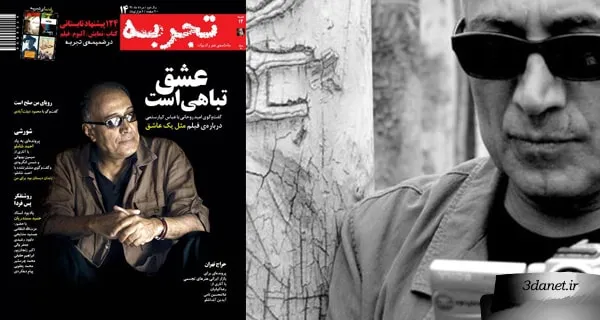
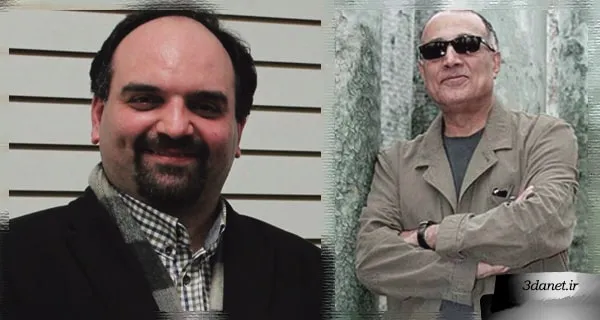
Omid Rouhani’s Conversation with Abbas Kiarostami about Like Someone in Love
Tajrobeh Monthly, Issue 14, August 2012
.
.
Discussion0 comments
No comments yet; let yours be the first voice.