Literature
Mehrnameh Monthly's Conversation with Dr. Mohammad Ali Eslami Nodushan
Dr. Mohammad-Ali Eslami Nodooshan speaks of his childhood in Nodooshan, ancient pre-Islamic customs, and his motivation for writing. Longing to write a definitive book, he sees life as an enigma and writing as a way to share his solitude.
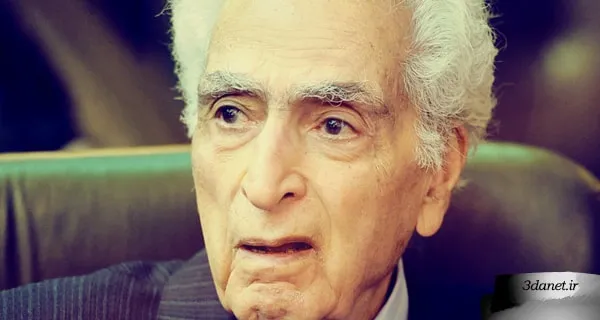
Dr. Mohammad Ali Eslami Nodushan (born 1925) is a renowned Iranian translator and writer who has produced such esteemed works as: “Let Us Not Forget Iran,” “The Story of Stories,” “The Life and Death of Heroes in the Shahnameh,” “Iran and Its Loneliness,” “The Warning of the Age,” “What Does Iran Have to Say?,” “The Way and the Byway,” “Let Us Hear the Words,” and others. And if one could say something about him that is both brief and complete, and that introduces him well, no words could be more fitting than those of Dr. Asghar Dadbeh, who, when inviting him to the podium to speak at the international conference “From Balkh to Konya,” said: “To introduce the master, it suffices to say that if in these years he has forgotten himself, he has not forgotten Iran for a moment.”... In the conversation before you, I have delved into the life of Dr. Eslami Nodushan. Of course, in his book “Days,” three volumes of which have been published (and the fourth volume has long been held up at the Ministry of Culture and Islamic Guidance), he has addressed the various periods of his life. Therefore, I also conducted this interview after rereading “Days” in order to somewhat reduce repetition of material.
.
The Scales of the Iranian Nation Are Not Swayed by Weights
.
A Conversation with Dr. Mohammad Ali Eslami Nodushan
If you agree, let us begin the conversation with your childhood. I had read in the first volume of “Days” that your date of birth was not written in a book so that you would not suffer the fate of the family’s previous children, and whatever had been done for them was not done for you, and for this reason you were entrusted to a wet nurse, whom, you state, you came to appreciate more for her virtues as you grew older.
I have recounted my childhood in “Days” (the first volume). I had heard it from the elders. Two of my brothers had not survived childhood, and my parents feared that I might become like them, hence they took this precaution... I was the last child of the family; the other child was my sister, who was the first. The rest, several boys, had died in infancy from smallpox or other childhood diseases. For this reason, it was not considered auspicious to record my date of birth in a book, because recording the birth dates of the others had not led to their survival, and they wanted nothing that had been done for them to be done for me. They even prevented me from drinking my mother’s milk, under the notion that this milk contained some misfortune and would not nourish children (which was baseless), and from the very beginning they entrusted me to a wet nurse who suckled me to the end, a noble and eloquent woman who recited the Quran with very correct pronunciation... My childhood floated amidst the stained-glass windows and the light and sunshine that streamed through them... We were six people in the house: my father and mother, my sister and I; and also Masoumeh and Seyyed Abolhassan, who were the household servants. Seyyed Abolhassan’s job was carrying messages back and forth and miscellaneous errands outside... But Masoumeh was another story. She was born in our house and grew up there, and although she had married, she never went to her husband’s house and had no children, and later, until the end of her life, which was over seventy years, she remained in our house and died there. Her mother, Gohar, had had the same situation in my grandfather’s house. She had spent her entire life there. This mother and daughter had become inseparably bound to our lives. I was as attached to Masoumeh as I was to my mother.
What kind of place was Kabudeh? And what condition is it in now?
Nodushan, the pseudonym I have adopted, is a remote village situated among the three regions of Yazd, Isfahan, and Fars. Very ancient. A hundred kilometers from Yazd, its people, before the advent of Islam, lived by a different creed, which we do not know, for graves are visible there that do not face the qibla. Recently, in nearby caves, petroglyphs several thousand years old have been discovered, indicating habitation by people from prehistoric times. Nodushan, whose very name speaks of its antiquity, still retained ancient pre-Islamic customs and rites when I was a child, including the veneration of fire, which I have described in Days. In my childhood, it was known to house four hundred families, that is, around two thousand people. Now, although its youth have scattered in search of work, population growth and transformation have nonetheless spread there. In the new administrative divisions, it has been recognized as a city, while it has not a trace of 'urbanity.' But it has expanded and changed, so much so that if I were to enter it now, I would not find the location of our old home.
Apart from classical literature and the books your maternal uncle and aunt introduced you to (the works of Rumi and Saadi), what other books had you read?
There was a tattered, worn-out book containing the miracles of the Imams, which described each miracle with great flourish. I would read it and be astonished. Of course, I also loved Amir Arsalan and Hossein Kord Shabestari. Reading books was not common in our village. For this reason, my mother worried about my reading and considered it an unusual interest for an adolescent.
There is an interesting point in Days, and that is the wish you harbored. In their fantasies, children always dream of what they will do when they grow up, but what went through your mind was different: "The model of the ideal human before me was neither an emir nor a vizier; power, wealth, and pomp were not involved. My wish was that one day I could write a book that would be the finest of books." For this very reason, that sayyed reciter of elegies you see in the bookshop in the "Mir" bazaar, who had also written a book, attracted your attention more than the merchant, the governor, and others. In other words, you wanted to provide an answer to the human questions arising from your existential concerns. Now that many years have passed since that wish and cultivated imagining, how do you think?
Just as before, I am in a state of 'search.' Life is both simple and natural, and enigmatic. Hence, all the books written in the world have revolved around this subject: what is life, and what is its end? Wherever you wander across the globe, you see the sky in this same color. The inhabitants of the earth are all alike. They do not differ in essence, yet no two individuals resemble each other. The wonder of life lies in this. Among creatures, the human being is both the most abject and the greatest. He knows that this life will one day come to an end, and despite all the illusions he holds about life in another world, deep within, he does not wish to relinquish this earthly life, unless a great pain—physical or spiritual—makes him desire it. I, of course, bound my destiny to the pen from that very adolescent age. I found my greatest joy and success in writing. Perhaps the reason was that a human being finds himself alone and defenseless in life, and through speaking and writing, he imagines he disperses into others, shares his solitude with them; everyone grasps at a branch. This is a solace for him. I had such an expectation from writing. I believe all who have taken up writing have been subject to such an expectation. Great and small. Why does Ferdowsi say: 'I shall not die henceforth, for I am alive!' And Hafez says: 'In the breasts of the people of wisdom is our tomb!' And in the New Testament, it is also stated: In the beginning was the Word... (Gospel of John), meaning life begins with speech. I am still on this same path now. I believe that if the pen were not in my hand, my life would have passed in vain and bitterness. With the unevenness that exists in everyone's life, a person must have a support so as not to feel the futility of existence. Mas'ud Sa'd said:
The world would be slain by pain and suffering if / The life-giving verse did not become the bond of my life
It is not important whether what each person writes is valuable or not; first and foremost, he wants to satisfy himself.
In the craft of writing and intellectualism, you are among those who avoid complexity and obscurity, and emphasize simplicity of style (not the simplification of issues and concepts). For this reason, I sometimes think to myself how much you resemble the master of speech, Saadi... One of the beautiful passages of your life during childhood and adolescence is perhaps those moments when you sat beside your aunt—who, despite possessing wealth and property, had contented herself with a modest life—and listened to the didactic and admonitory poems of Saadi. In your own opinion, how much did that initial acquaintance (with Saadi) influence the methods you later adopted when you turned to writing?
I can say that I became acquainted with language through Saadi, the story of which I have recounted. The fluency and pleasantness of Saadi's language is such that it reaches everyone, from child to elder. I wonder why today's youth show no interest in Saadi. It is because the times have changed and new entertainments and pastimes have entered life. Perhaps thirty years from now, reading books will not hold much place for children either. Everything will convey meaning through the internet and the word. I think we were the last generation that was not so severed from the spiritual capital of the past. For instance, we derived as much benefit from the poetry of Masud Sa'd as Masud Sa'd's contemporaries did, and the language of our predecessors was comprehensible to us. But the next generation must obtain its peace of mind from other sources. For example, action films, or watching football.
Several times, when speaking with our mutual friend—Professor Fereydoun Majlesi—about your works, he has pointed to Days and the part where you address the sorrowful life of 'Naim,' and we both become immersed in pleasure, because you have created a highly artistic portrayal of Naim's forlornness and relentless sufferings: 'After my father's death, my mother decided that we too should have a number of sheep. So we bought about a hundred goats and a shepherd was hired. After two years, my mother realized we could not manage this task and sold them again. Naturally, the shepherd, whose name was Naim, became unemployed. He was one of those men of little talent who had no other skill besides the rudimentary herding of sheep. But he too had a wife and children and had to provide for their livelihood. He was a man of about fifty, somewhat inclined to plumpness unlike other shepherds, with dull, narrow eyes and a puffy, sunburnt face. He spoke little. It was as if engaging his brain and uttering even that necessary number of words was a difficulty for him. The day we had to let him go, he came and stood in the vestibule of the house. My mother put on her chador and settled his past account, which amounted to a total of twenty-some tomans. She counted out a number of red two-toman banknotes and placed them in his hand. He wrapped them between his thick fingers and then put them in the pocket of his cloak, strapped his nosebag to his back, took his shepherd's crook in hand, said goodbye, and set off. He was from one of the surrounding farmlands, which was four leagues' distance from our village. He headed toward the gate. I came to the door of the house and watched him from behind as he went. He had a broad back upon which the knapsack rested, and he stepped heavily. He was a sack of forlornness, of dead-end, of
گویا منظورتان آن است كه چرا وارد یكی از جریانهای سیاسی چپ و دستهبندیها نشدم. من همیشه از ورود به دسته و گروه ابا داشتم، زیرا آنها را موافق با طبع خود نمیدیدم. وضع اجتماعی به گونهای نبود كه بتوان با اطمینان خاطر در موضعی جهتگیری كرد. جریانهای بعد هم نشان داد كه اگر به سوی یكی از آنها رفته بودم، پشیمانی میآورد. به طور كلی خود را آلوده به سیاست نكردم. ممكن بود كه از هر مسلك سیاسی جزئی از آن را قبول داشته باشم، ولی مجموع آن را قبول نداشتم. البته عاری از دل مشغولی سیاسی نبودم، ولی آن را از طریق فرهنگ دنبال میكردم كه آن را پایه كار میدیدم. دورانی كه من در آن زندگی كردم، پر از چشمكزدنهای گوناگون بود، ولی اكنون خوشوقتم كه نسبت به آنها بی اعتنا ماندم، بر سر هم قدمی برنداشتم كه اكنون از آن پشیمان باشم.
وقتی به تهران میآیید، در همان روزهای نخست، به دیدار مهدی آذر یزدی (در چاپخانه علمی) میروید. از آن دیدار بگویید، فكر میكنم در جستجوی كتابهای تازه هم بودهاید.
آشنایی ما از كتاب شروع شد كه وی یك كتابفروشی در یزد داشت، و بعد همین علاقه مشترك به كتاب، دوستی ما را تا دم آخر ادامه بخشید. مورد آذر یزدی یكی از نمونههای تأسفبار است. تا زنده بود كسی به او اعتنا نداشت، و بعد كه دیگر نبود او را بر سر دست بلند كردند. آذر همیشه همان بود، مردی ساده زیست و خانه به دوش كه مرگ چیزی بر آن نیفزود، و چون زن و بچه نداشت به بچههای دیگران روی آورد و برای آنها قصه نوشت.
در دورهای كه در دبیرستان البرز تحصیل میكردهاید، شخصیتهایی همچون ذبیحالله صفا، یحیی مهدوی، پرویز ناتلخانلری و... آنجا تدریس میكردهاند، همین طور مهدی حمیدی شیرازی كه در جدال میان قدیم و جدید در سرودهای با نام «شعری كه زندگیست» از سوی احمد شاملو به شدت كوبیده شد:«یك بار هم حمیدی شاعر را/ در چند سالِ پیش/ بر دارِ شعر خویشتن/ آونگ كردهام...» حمیدی شیرازی را چگونه یافتید؟
در جریان برخورد كهنه و نو در شعر، حمیدی مظلوم واقع شد، و این، به آن جهت بود كه خود بیش از دیگران به خود ارج مینهاد. جریان شعر نو و سنتی، تا حدی نمودار سیاست چپ و راست شد كه بحثش مفصل است، زیرا برای ورود به آن باید اجتماع و سیاست زمان را باز كرد و اینجا مجالش نیست.
در آن روزگار نشریهها را هم به دقت میخواندهاید. نشریه «یادگار» از شهرتِ نشریه «سخن» برخوردار نیست، به چه دلیل یادگار را از بهترین نشریههای فارسی زبان میدانید؟
«یادگار» نشریه معقول و سنجیدهای بود و بیشتر به فرهنگ و تاریخ گذشته میپرداخت. «سخن» به نوآوری و تا اندازهای به فرهنگ غرب روی داشت. هر یك جایگاه خود را داشتند و خوانندگان خاص خود. سخن، البته بیشتر جوانان و نواندیشان طالب آن بودند، متأسفانه سخن با عمر درازی كه داشت، تا حدی رو به شیب حركت كرد. «یادگار» دوراناش كوتاه بود و تا به آخر بر قرار خود ماند.
پس از گذراندن امتحان نهایی در دبیرستان حكیم نظامی كه به ده بر میگردید، دید و بازدیدها شروع میشود و جالب است كه بحثهای سیاسی و حرفهایی درباره حزب توده هم در میان بوده، آن هم در كبوده كه چندان ارتباطی هم با محافل سیاسی كه به طور عمده در تهران و شهرهای بزرگ جریان داشته، نداشته است، چگونه آن مباحث تا كبوده هم میرسیده است؟
ایران در دوران بعد از شهریور 1320 خیلی سیاسی شده بود و سیاست به روستاهای دوردست هم راه یافته بود. به خصوص حزب توده تبلیغات وسیعی داشت و میشود گفت كه كشور به دو دسته توده و ضدتوده تبدیل شده بود. ندوشن از این جهت یك خصوصیت اضافهتر هم داشت و آن این بود كه یكی از سران معتبر حزب توده، یعنی دكتر مرتضی یزدی از ندوشن برخاسته بود، و خویشاوندان او هنوز در ده بودند و در جلب نظر به توده بیتأثیر نبودند، هرچند وی پس از گذراندن نشیب و فرازهای بسیار، جزو «توابین» شد. حزب توده با تبلیغ وسیع خود، چپ روی را باب كرده بود، كه نشانه روشنفكری و بیدارشدگی شناخته میشد.
نخستین شعر جنابعالی در خرداد 1325 و در «سخن» منتشر میشود كه روشن است نشریهای مشكلپسند هم بوده، سرمقاله نشریه با نام «جوانههای شعر نو» هم به همان شعر میپردازد. چرا شاعری را ادامه ندادید؟
احساس كردم كه نثر بیشتر به من جوابدهنده است.
Since we’re talking about your poetry, I remember a while ago when we were walking, we discussed your quatrains “Spring in Autumn,” which you said were the product of walking in Qeytarieh Park. I’d like you to elaborate a bit on this.
“Spring in Autumn,” which is a collection of seventy-seven quatrains, does not actually mean I have returned to being a poet. These are a kind of instantaneous spark that I don’t know how they detached from me. If I say they emerged somewhat spontaneously and unconsciously, it wouldn’t be far from reality. During my daily walks in “Qeytarieh” Park, I wouldn’t say unthought, but sudden. I can say that this small number of quatrains contains the essence of my life and worldview. Fruits of the tree of life, each expressing an approach to life; therefore, unlike quatrain-writing in the Persian language, there is no repetition in them; seventy-seven quatrains express seventy-seven subjects. Ultimately, I am pleased that they have been published in the most elegant manner, with the fine calligraphy of Master Amirkhani.
You have also written stories, and you’ve mentioned that you had given them to Sadegh Hedayat before publication. What was his opinion?
I have made a few experiments in story-writing, but the main weight of my pen-work has been on the essay. Two stories of mine, named “The Future” and “Life,” were published in the magazine “Payam-e No,” whose editor-in-chief was Bozorg Alavi, and one of them was immediately translated into Russian. I showed it to Sadegh Hedayat before publication. He read it but said nothing. He was not in the habit of praising anything.
With all this literary taste, why did you choose the Faculty of Law?
I didn’t want to become a professional literary figure. Literature took hold of me, but law also taught me things. To me, these two are like two stepsisters.
You write about Hedayat: “Hedayat made me alert to look upon the frivolities of the time, positional determinations, and certain literary and pseudo-intellectual arrogance, and in short, anything that smells of falsehood and deceit, with indifference or contempt...” It seems that Sadegh Gouharin first introduced you to Hedayat at Café Ferdowsi. One night you also invite him to Kuy-e Daneshgah, and the last meeting occurs in the Paris Metro, where you find him listless. If I’m not mistaken, that was your last meeting, and then you read the news of his suicide in Le Monde, which was also printed incorrectly (famous Iranian poet ends his life with gas)... But before that, when you pass the exams of the Faculty of Law at the University of Tehran and intend to return to your ancestral land, you go to say goodbye to him. What do you remember of him then?
Regarding the acquaintance with Hedayat and the numerous meetings, I have spoken of it elsewhere. Hedayat was a translator at the Faculty of Fine Arts; therefore, he could sometimes be found on the University of Tehran campus, and he would sit in the Faculty of Fine Arts for an hour and do translation work. I would also occasionally go to his room to see him and benefit from a few minutes of his company. Sadegh Hedayat was kind to me, and I had great respect for him, for he had turned his back on the vulgarities of the time and was known as a free-spirited writer.
After finishing your studies, you are sent to work at the court in the city of Shiraz. In your own words, in the city of love and in the service of a system far from love...
My stay in Shiraz did not last more than six months. My heart was set on going abroad. Hence, I had the disposition of someone who was “among the crowd, but whose heart is elsewhere.”
Why did you choose France to continue your studies?
I was more intimate with French literature. French culture seemed more familiar to us Iranians. At that time, Iran was called the “France” of Asia, meaning they saw some similarities between the two.
What was the first book you published (authored or translated)? And now, after all these years, how do you feel about it?
My first book was a translation of The Future Victory of Democracy, written by Thomas Mann, the famous German author who also won the Nobel Prize. This book was printed twice, but its third printing has remained “awaiting permission.” I published it with a detailed introduction (Amir Kabir Publications). It was a fortunate coincidence, but I am pleased that I began my first writing on the subject of “democracy.” I took it as a good omen for the start of my work. In that same introduction, the line of my thought was delineated, which continued later on.
You, sir, are familiar both with the ancient culture and civilization of Iran and with modern human culture and civilization. Some of those who, like you and in that era, were able to go to Europe for their studies, upon returning to the country and due to their encounter with modern global (Western) culture and civilization and the desire for the establishment of values arising from new ideas, also turned to politics, but such an interest cannot be found in your life. You have a love for the homeland, such that after presenting your dissertation you do not hesitate: “There is no fire in this city to do a thing / Unless the candle of your fingertip devises a plan of escape for me / We have tarried long in this house of smoke / Unless that wind, the bearer of pure tidings / Comes down from the tent of Alborz...” Of course, you are sensitive to what is happening in Iran and the world, and sometimes address it in your articles, but it seems you have other concerns. What is most striking in the course of your life (and your books) is the dedication to the work of cultural reform. Based on this, can it be said that in your view, the root cause of many of our problems is cultural?
After I finished my work in Paris, I returned to Iran immediately. I have never wanted to live in a country other than Iran. “On this I was born, and on this shall I pass!” And as for culture, which I have constantly spoken of over these fifty years, its importance lies in the fact that a country must be led with its people, and the people must be led with their culture. If one falters, the other falters too, and then, as Sa’di says:
One path leads to a good end / One path to a bad end, now you have a choice
Mr. Fereydoun Majlesi, when he was a conscript officer (winter of 1967) and attended your class, says that you drew attention to important issues. One was the subject of political prisoners and the necessity of different and respectful treatment towards them, with the explanation that, above all else, one should not forget that many of them will be the future political leaders of their own societies. Another was about the concept of democracy and the role of elections in a democratic government and majority rule, with the explanation that democracy is a government reliant on the approval of the majority, but with a slight slip, it can lead to a kind of dictatorship of the majority... But when you were putting forward these views, there was neither any news of democracy, nor any concern for democracy; those who were in prisons were mostly concerned with justice and other things. What was the reason for presenting these opinions at that time?
Mr. Fereydoun Majlesi recalls the “Constitutional Law” course I taught years ago at the National University (now Shahid Beheshti). At that time, it was well known that political prisoners were not treated properly. So, during the lesson, I brought up the difference between a political prisoner and a common prisoner, and I said that since it is assumed that a political prisoner has a motive of public interest, and an ordinary prisoner has a personal motive, therefore they should be treated differently. Not that an ordinary prisoner should not be treated humanely. But regarding democracy and the majority vote, the experience of these years has shown that all that glitters is not gold. This experience shows to what extent the matter can be abused. When Saddam Hussein was in power, in one vote, he secured 95 percent of the votes, and later those same people toppled his statue. A vote is respectable when it is cast without blemish, not fabricated by deceptive propaganda and the simple-mindedness of the public. In this very democratic America, if an election candidate announces that he will reduce taxes, votes will flow towards him, regardless of his true nature. There are a thousand subtler points here than a hair...
When Dr. Gholamhossein Sedighi was chosen by the Shah to take up the post of prime minister, it seems he also invited you to join the government. What was your response?
Your reference is to the events of the winter of 1979, when, in an emergency situation, the late Dr. Gholamhossein Sedighi, a professor at the University of Tehran, was tasked with forming a government. Sedighi, who was a patriotic man, initially accepted because the country was in a critical state. Kurdistan was in a state of semi-war, and, above all, there was fear of a military coup and bloodshed in the country. Therefore, under such circumstances, accepting responsibility required a necessary sacrifice. The late Dr. Sedighi, owing to the good opinion he had of me, invited me to join the government, but because the task seemed impossible under the existing conditions, I declined, and fortunately, he reached the same conclusion and withdrew.
I would also like, in this conversation, to address the scholarly and personal qualities of your friend, the late Dr. Mostafa Rahimi, who was a full-fledged intellectual, and of whom it might be said that he and his valuable works have not received the attention they deserve?
Perhaps this is because he was concerned with both "freedom" and "justice." The peak of his brilliance, in my view, was when he addressed the subject of the Prague Spring and the humanistic socialism proposed by Alexander Dubček, delving so deeply into the matter and presenting his analyses that I can confidently say he confronted this issue in the stature of a global intellectual... For this very reason, he was not included in political and intellectual groupings (especially during the two critical decades of the 1960s and 1970s), and furthermore, I believe he thought and wrote beyond the ideological thinking of his time. I had a long-standing acquaintance with the late Mostafa Rahimi, dating back to our school days at Iranshahr High School in Yazd, though he was a year ahead of me. This acquaintance continued later, although life in Tehran did not permit regular meetings. Thus, our visits were occasional. Dr. Rahimi was a humane and dignified writer. If, as you say, his worth has not been recognized as it should have been, it is not surprising. Someone who does not engage in factionalism and literary quid pro quo should not expect more than this, but in the long run, the Iranian nation has a scale that does not tip unfairly; time is an unforgiving judge.
As a final question, what are you working on now?
I am working on the Shahnameh, which is being published in the form of ten separate stories, calligraphed and in a very exquisite edition by Kalhor Publications, with the introduction and arrangement being my responsibility. Two of its stories, Rostam and Sohrab and Bijan and Manijeh, have been published so far, and the rest will be released gradually. It is a new presentation of the Shahnameh that combines three arts: calligraphy, illustration, and the elegance of print. It is expected to establish an easier connection between readers, especially the youth, and the Shahnameh.
.
.
Mohammad Sadeghi's Conversation with Dr. Mohammad Ali Eslami Nodushan The Scale of the Iranian Nation Does Not Tip Unfairly | Mehrnameh Monthly, Issue 20, April 2012
.
.

Discussion0 comments
No comments yet; let yours be the first voice.